
Warm Your Ocean-View Evenings, Any Night of the Year.
Clean, instant gas heat for the marine-layer chill on the Palos Verdes Peninsula. Find the right unit and connect with a trusted local dealer.
Every Project Starts From One of These Five Situations
Coastal charm, real flame convenience.
Rancho Palos Verdes sits atop the Palos Verdes Peninsula at roughly 1,039 feet, where the marine layer rolls in off the Pacific most mornings and winter lows average a mild 47°F. With such a short, mild heating season—a fraction of what a place like Duluth, MN or Bozeman, MT logs in a single cold snap—nobody here is burning wood to survive the winter. Wood-burning fireplaces and stoves are essentially absent from local building plans, both because the mild coastal climate doesn't call for them and because the South Coast Air Quality Management District classifies the greater LA Basin as a non-attainment area, with wildfire-smoke season already straining local air quality each fall. Pellet stoves face the same headwinds. Gas, by contrast, is the fireplace fuel of choice up and down the Peninsula.
Most homes in Rancho Palos Verdes are connected to natural gas service through the regional utility serving Los Angeles County, making a direct-vent gas fireplace or insert a straightforward add-on or retrofit. Gas delivers instant, thermostatically controlled heat with no ash, no smoke, and none of the wood-burning curtailment concerns that occasionally hit other parts of the county during inversion or no-burn advisories. For hillside homes built around ocean views, a clean-burning gas unit also avoids the soot and glass fogging that can dull a fireplace facing a window wall—often the whole point of installing one here.
Three steps. No salesperson until you're ready.
Tell us about your project
Your zip code, your situation, and the fuel you're leaning toward—or let the answers point you to one.
See what's actually available
The brands dealers within 100 miles genuinely carry—real options, never a catalog mirage.
Get your dealer & Project Guide
A trusted local dealer, plus the free Project Guide & Parts List that names every component of the job.
Frequently Asked Questions
How much does a gas fireplace installation cost in Rancho Palos Verdes?
Installing a gas fireplace or insert in Rancho Palos Verdes typically runs $5,000 to $12,000. The low end usually covers a direct-vent insert dropped into an existing masonry fireplace that already has gas service nearby; the higher end covers new built-in units, extended gas line runs on a hillside lot, or work bundled into a larger remodel. Homes in the City's coastal bluff or view-corridor overlay areas sometimes face added review through the City of Rancho Palos Verdes Building & Safety Division, which can add both time and modest cost to bigger projects.
Can I convert my existing wood fireplace to gas?
Yes, and it's one of the most common upgrades on the Peninsula. Many Rancho Palos Verdes homes built in the 1960s and '70s came with open masonry wood fireplaces that see little real use today—partly because of the mild climate, where winter lows rarely dip below the mid-40s, and partly because the South Coast Air Basin's non-attainment status makes air quality officials discourage new wood burning. Converting to a gas insert usually runs $4,500 to $9,000, uses your existing chimney as the vent path with a stainless liner, and turns a rarely lit firebox into one you'll actually use on a foggy evening.
Do I need natural gas to install a gas fireplace, or can I use propane?
Nearly all of Rancho Palos Verdes is on the natural gas grid, with utility service covering the surrounding Los Angeles County area—if your home already has a gas water heater, range, or dryer, adding a fireplace is usually a simple tie-in. A handful of more remote canyon or hillside properties without gas mains nearby rely on propane tanks instead. Either fuel works in the same fireplace models; your installer just sets the orifice and regulator for whichever supply you have.
Will my gas fireplace work during a power outage?
Most direct-vent gas fireplaces with intermittent pilot ignition (IPI) include a battery backup that keeps them running when the power drops—worth knowing given how often Southern California Edison initiates Public Safety Power Shutoffs during high-wind, high-fire-risk conditions across the Peninsula. Valor fireplaces take a different approach: their pilot assembly generates its own electricity through the thermocouple, so there are no batteries to remember or replace. If wildfire-season outages are a real concern for your household, ask your local dealer specifically about ignition type before you buy.
What's the difference between a gas fireplace, gas insert, and gas stove?
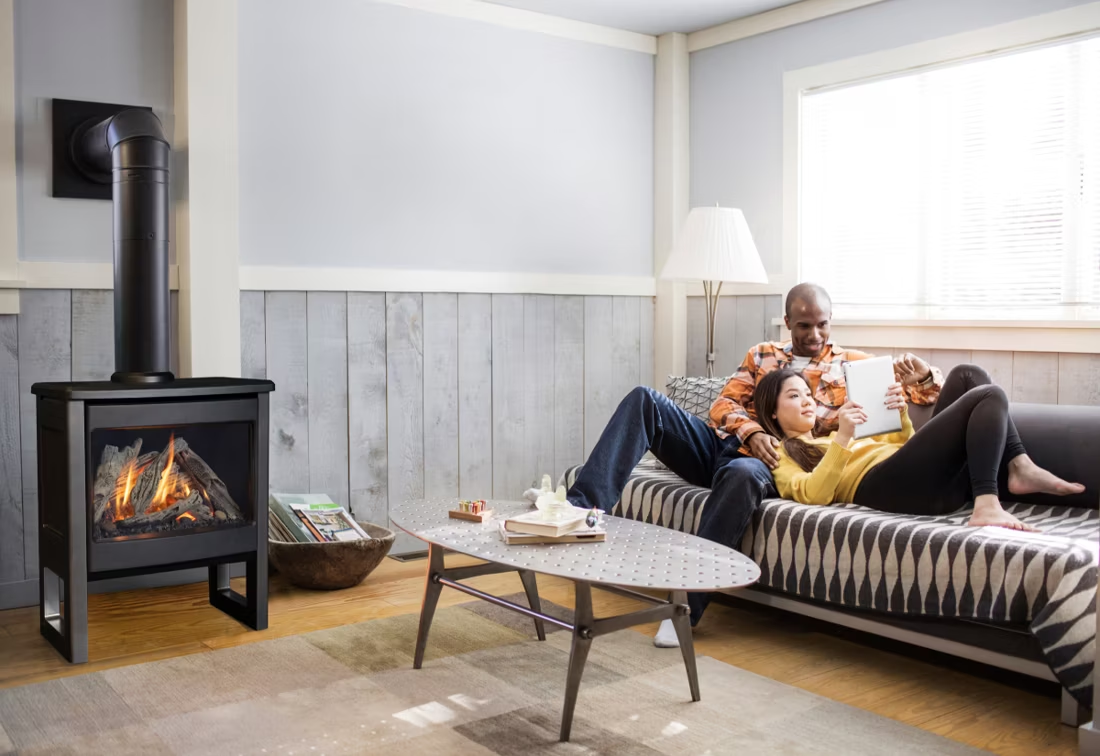
A gas fireplace is a fully built-in unit framed into a wall—common in newer Peninsula construction and remodels. A gas insert slides into an existing masonry firebox, which describes a large share of Rancho Palos Verdes's older ranch and mid-century homes, using the existing chimney chase as its vent path. A gas stove is a freestanding cast-iron or steel unit that sits on the floor and vents through a wall or existing flue—less common here, but occasionally chosen for guest units or converted garages. For most Peninsula homeowners with an existing fireplace, an insert is the natural fit.
Do I need a permit to install a gas fireplace in Rancho Palos Verdes?
Yes—the City of Rancho Palos Verdes Building & Safety Division requires a building permit and, separately, a permit for any new gas line work, which must be pulled by a licensed gas fitter. Many neighborhoods on the Peninsula also carry HOA design guidelines or view-preservation restrictions that can affect exterior venting placement, so it's worth checking with your HOA before finalizing a direct-vent termination on an ocean-facing wall. Local dealers who install gas fireplaces regularly in RPV are generally familiar with both layers of review.
What's the difference between vented and vent-free gas fireplaces?
Vented (direct-vent) gas fireplaces draw combustion air from outside and exhaust it back outside through sealed venting—the standard, code-compliant choice everywhere, including California. Vent-free (unvented) gas fireplaces burn directly into the room air, and California's mechanical code restricts their use far more tightly than most other states; in practice, nearly every gas fireplace or insert installed in Rancho Palos Verdes is a direct-vent model. That's also a good match for the tight building envelopes common in newer coastal construction on the Peninsula.
How often should my gas fireplace be serviced?
An annual inspection is recommended for any gas fireplace, even one used mostly for ambiance rather than primary heat. A technician checks the burner, pilot assembly, venting, and gas connections, and cleans the glass—glass that tends to need more frequent attention here than inland because of the salt air and marine-layer moisture common on the Peninsula. Local hearth service providers typically charge $150 to $250 for this annual visit.
Gas vs. electric fireplace—which is right for my Rancho Palos Verdes home?
With Southern California Edison's residential rate near 28 cents per kWh—well above the national average—running a large electric fireplace as a real heat source gets expensive fast, while a gas unit's fuel cost stays comparatively low even with regular use. Electric fireplaces do have real advantages here, though: no venting or gas line needed, simple installation in condos or HOA-restricted units, and a simulated flame that sidesteps exterior-alteration rules that can complicate a direct-vent gas install on a view-corridor lot. Wood isn't really part of the conversation in Rancho Palos Verdes—the mild climate and the South Coast Air Basin's non-attainment status mean almost nobody heats with cordwood here. For most Peninsula homes, the real choice is gas for genuine flame and heat output, or electric for flexibility in more restricted spaces.
Is my gas fireplace wasting gas?
If it was installed more than 15 years ago, probably. Older gas fireplaces keep a standing pilot light burning all the time, and that little flame can cost a couple hundred dollars a year. Newer models use pilot-on-demand ignition—the pilot lights only when you use the fireplace and goes out when you turn it off.
What's the difference between an insert and a zero-clearance fireplace?
An insert is a fireplace that slides into a pre-existing wood-burning fireplace—if you don't have one, there's nothing to insert it into. A zero-clearance fireplace is built into a framed wall, which makes it the answer for remodels and new construction. Simple test: existing masonry fireplace means insert; blank or framed wall means zero-clearance.
What is an in-home preview and do I need one?
It's a visit where a hearth professional measures your space, confirms the model you picked actually works in your home, and walks the specs—framing, gas line, venting, finish work—before anything is ordered. Some details you just can't know until you see the house. Never make a down payment without one; it's the single most-skipped step that burns buyers.
How much should I budget for a fireplace?
For an average home—covering the fireplace, the vent pipe, and basic installation—a budget between $3,900 and $5,500 gives you a lot of options across wood, gas, and pellet. By the time you add finish work, gas line, and electrical, the average complete installation lands between $5,000 and $12,000 all-in. In a remodel or new build, a good rule is to put about 2.5% of the total project cost toward the fireplace.
Nearby Dealers
Hearth shops serving Rancho Palos Verdes and the surrounding area.
All Valley Distrib. Dba Marco Distrib
The Heat Source (Burrico) - Lancaster
Tropicana Outdoor Living
Bring real flame to your Rancho Palos Verdes home.
Tell us a bit about your home and I'll match you with a trusted local dealer and send over a free Project Guide & Parts List—the exact parts, including the vent kit, for your gas fireplace project.
Find Your Fireplace →