
Find the right pellet stove for Plumas County's long, cold winters.
Consistent, thermostat-controlled heat for the Sierra Valley and Feather River communities—from Quincy to Chester to Portola. We match you with a trusted local dealer who sizes and installs it right.
Every Project Starts From One of These Five Situations
Steady heat, without the wood-splitting.
Plumas County sits high in the northern Sierra Nevada, with towns ranging from roughly 3,400 feet in Quincy to well over 5,000 feet around Chester and the Lake Almanor basin. With a winter heating load comparable to Bozeman, Montana and average winter lows near 19°F, this is a genuinely cold-climate county—closer in feel to Bozeman, Montana than to the California coast most people picture. Wood heat has deep roots here thanks to national forest land surrounding nearly every community, but pellet stoves have become a strong second option for households that want steady, hands-off heat without hauling and splitting cordwood every fall.
Plumas County is also a state-designated non-attainment area, and wildfire smoke is a recurring seasonal concern in the Feather River canyon and Sierra Valley. Pellet appliances burn cleaner and more consistently than open wood fires, which matters here both for air quality and for households managing respiratory sensitivities during smoke season. Bear Mountain, Lignetics, and Pacific Pellet all distribute in the region, so fuel supply is generally reliable even in a county with fewer than 16,000 year-round residents spread across a large, rural footprint.
Three steps. No salesperson until you're ready.
Tell us about your project
Your zip code, your situation, and the fuel you're leaning toward—or let the answers point you to one.
See what's actually available
The brands dealers within 100 miles genuinely carry—real options, never a catalog mirage.
Get your dealer & Project Guide
A trusted local dealer, plus the free Project Guide & Parts List that names every component of the job.
Frequently Asked Questions
How much does a pellet stove installation cost in Plumas County?
A typical pellet stove or insert installation in Plumas County runs in line with statewide norms, generally landing between roughly $4,500 and $7,500 depending on whether you're installing a freestanding stove, converting an existing wood fireplace to a pellet insert, and how much venting work is required. Homes in more remote parts of the county—around Portola, Greenville, or the Lake Almanor communities—may see a modest travel charge added to the quote simply due to distance from dealer locations in Quincy or Chester. Your matched local dealer will confirm exact pricing after seeing your home.
How does pellet stove heat compare to wood heat at Plumas County's elevation and cold?
At elevations above 4,000 feet with winter lows regularly near 19°F, both fuels can carry a home through the coldest stretches, but they behave differently. A wood stove loaded with dense local oak can hold heat through a long night without power. A pellet stove requires electricity to run its auger and blower, but it delivers steadier, thermostat-regulated output and doesn't need daily splitting or seasoning of firewood. In a county where winter power outages do happen—often tied to storms or PSPS events—some Plumas County households pair a pellet stove for daily convenience with a battery backup, or keep a wood stove as backup heat for outages.
Do I need a permit to install a pellet stove in Plumas County?
Yes—new pellet stove and insert installations require a building permit, typically through the Plumas County Building Department for unincorporated areas, or the relevant town jurisdiction if you're inside Quincy, Portola, or another incorporated area. Most local installers handle the permit application as part of the install package. Because Plumas County is a designated non-attainment area, appliance emissions certification matters for permitting—your dealer will confirm the unit you choose meets current EPA standards before it's installed.
What size pellet stove do I need for my home?
Sizing depends on square footage, ceiling height, insulation quality, and elevation. As a rough guide for Plumas County's cold, high-elevation homes: smaller units (up to roughly 1,000 sq ft) suit a cabin or single large room, mid-size units (1,000–2,000 sq ft) cover most main living areas, and larger units (2,000+ sq ft) can serve as primary heat in a well-insulated home. Homes at higher elevation—Chester, Lake Almanor, and the higher Sierra Valley communities—often need to size up compared to a similar home down in Quincy at lower elevation. A local dealer will size your specific space during an in-home visit, which is the safest way to avoid an undersized unit that can't keep up on the coldest nights.
Where can I buy pellet fuel in Plumas County?
Bear Mountain, Lignetics, and Pacific Pellet are the regional brands most commonly stocked by dealers and hardware retailers serving Plumas County. Given the county's rural spread, it's worth confirming pellet stock and delivery options before your first cold snap each fall—supply can tighten during peak winter demand in a county this remote. Your matched dealer can usually point you toward reliable local or regional suppliers as part of your installation consultation.
Are pellet stoves exempt from wood-burning restrictions during smoke advisories?
In many California non-attainment counties, certified pellet stoves receive more lenient treatment than uncertified wood stoves during air quality advisories, since they burn more completely and produce less particulate matter. Plumas County deals with both winter inversion concerns and wildfire smoke intrusion during fire season, so having a cleaner-burning appliance is a genuine practical advantage here, not just a marketing point. Confirm current local air district rules with your installer, since specific curtailment policies can be updated.
What's the difference between a pellet stove and a pellet insert?
A pellet stove is a freestanding appliance that sits on its own hearth pad and vents through a wall or existing chimney chase—it can go almost anywhere with the right clearances. A pellet insert is built to slide into an existing masonry fireplace opening, turning an old wood-burning fireplace into an efficient, thermostat-controlled heat source while using the existing chimney as a vent chase. For Plumas County homes with an existing fireplace—common in the county's older cabins and mountain homes—an insert is often the more straightforward retrofit.
How often does a pellet stove need cleaning and maintenance?
Pellet stoves need regular ash removal (weekly to biweekly with daily use) and a more thorough cleaning of the burn pot, exhaust vent, and hopper components at least once per season—typically before the heating season starts in the fall. Because Plumas County winters run long, with a heating load comparable to Bozeman, Montana, households running a pellet stove as a primary heat source should plan on a full professional service annually to keep the auger, igniter, and blower working reliably through the coldest months.
Pellet stove vs. wood stove—which is right for my Plumas County home?
Wood stoves work without electricity, pair well with self-cut oak, madrone, and douglas fir from Plumas National Forest or Lassen National Forest permits, and deliver the most heat per dollar for households willing to handle and season their own firewood. Pellet stoves offer steadier, thermostat-controlled heat, less daily labor, and cleaner burns—a real plus during wildfire smoke season and non-attainment air quality rules—but they need electricity to run. For remote parts of the county where power outages are more common, wood or a hybrid approach often makes sense. For in-town homes with reliable power who want convenience, pellet is frequently the better fit. A local dealer can walk through both options for your specific home.
What's the difference between an insert and a zero-clearance fireplace?
An insert is a fireplace that slides into a pre-existing wood-burning fireplace—if you don't have one, there's nothing to insert it into. A zero-clearance fireplace is built into a framed wall, which makes it the answer for remodels and new construction. Simple test: existing masonry fireplace means insert; blank or framed wall means zero-clearance.
How often does a pellet stove need cleaning?
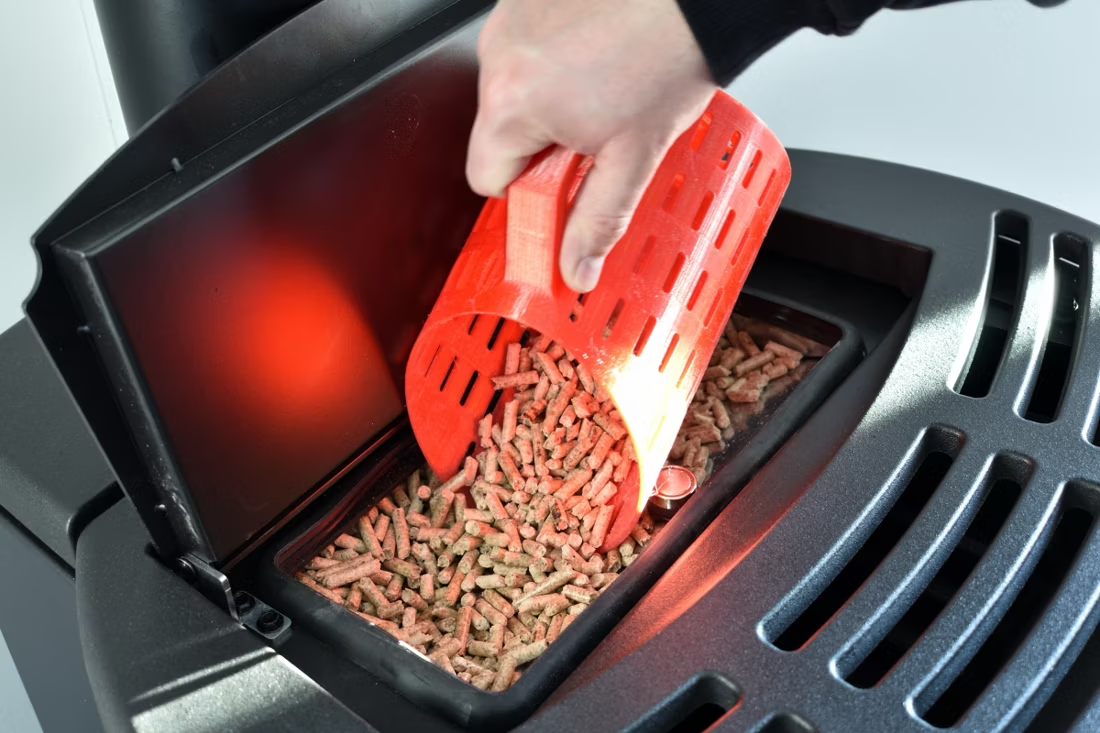
A clean pellet stove is a happy pellet stove. Plan on cleaning the burn pot about once a week when you're burning regularly—ash and clinkers gum up the air holes just like a pellet barbecue. Most pellet stove problems trace back to skipped cleaning that nobody explained up front. Some designs make it easy with a trapdoor burn pot: pull a lever and the gunk drops into the ash pan.
Does a fireplace add value to my home?
On average, a fireplace adds back to the home about the same amount you spent installing it. Add the monthly savings from heating the rooms you actually use instead of the whole house—often hundreds of dollars a year—and the value case is strong before you even count what a fire does for how your family uses the room.
How much should I budget for a fireplace?
For an average home—covering the fireplace, the vent pipe, and basic installation—a budget between $3,900 and $5,500 gives you a lot of options across wood, gas, and pellet. By the time you add finish work, gas line, and electrical, the average complete installation lands between $5,000 and $12,000 all-in. In a remodel or new build, a good rule is to put about 2.5% of the total project cost toward the fireplace.
Stove and Fireplace Dealers in Plumas County
Pellet Brands Stocked Around Plumas County
Manufacturers will point you to the nearest stocking dealer.
Find your pellet stove in Plumas County.
Tell us about your home and we'll match you with a trusted local Plumas County dealer, plus a free Project Guide & Parts List—the exact parts, vent kit included, for your pellet install. We don't sell stoves or take manufacturer money to rank brands; we just connect you with the right local pro.
Find Your Fireplace →