
Find the right hearth for a Sierra winter in Plumas County.
Wood, gas, pellet, and electric fireplace resources for every town and mountain community in Plumas County—from Quincy to Graeagle. Find the right unit and connect with a trusted local hearth retailer.
Every Project Starts From One of These Five Situations
Mountain heating across Plumas County, California.
Plumas County sits deep in the northern Sierra Nevada, with towns ranging from Quincy's American Valley floor near 3,400 feet up to Sierra Valley communities and passes well above 5,000 feet. With a long, deep heating season and average winter lows near 19°F, the heating season here rivals Bozeman, Montana more than it does the rest of coastal California. Snow loads are heavy, power lines through the forest are exposed to falling trees and wind events, and wood heat—split oak, madrone, and douglas fir cut under Plumas National Forest and Lassen National Forest permits—has long been the practical backbone of staying warm when the grid goes down.
What you'll find on this hub: hearth retailers, service technicians, and fuel suppliers serving every community in the county—from Quincy and East Quincy to Portola, Chester, Greenville, Taylorsville, and the Graeagle/Blairsden corridor near the Plumas-Sierra line. Pick your fuel below to drill into specifics—local dealers, installation costs, recommended units, and the resources that match your project. Whether you're heating a Feather River Canyon cabin or a Sierra Valley ranch house, this is the starting point.
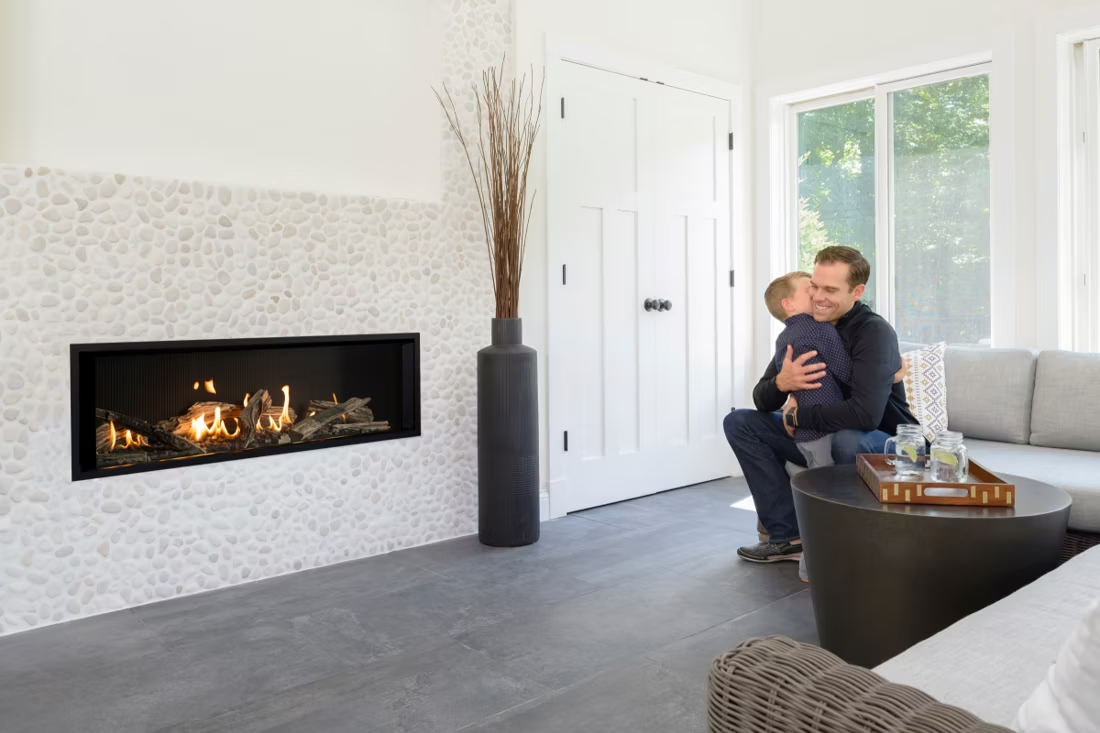
Four fuels. One honest answer for Plumas County.
Three steps. No salesperson until you're ready.
Tell us about your project
Your zip code, your situation, and the fuel you're leaning toward—or let the answers point you to one.
See what's actually available
The brands dealers within 100 miles genuinely carry—real options, never a catalog mirage.
Get your dealer & Project Guide
A trusted local dealer, plus the free Project Guide & Parts List that names every component of the job.
Frequently Asked Questions
Which fuel works best for a Plumas County home?
It depends on elevation, power reliability, and how much labor you want to put in. Wood remains the backbone fuel across most of the county—oak, madrone, and douglas fir cut under Plumas National Forest or Lassen National Forest permits keep fuel costs manageable, and a wood stove keeps running through the PSPS (Public Safety Power Shutoff) events that hit forested parts of the county during wind and fire-risk periods. Gas is the convenience choice where propane service is reliable, especially in Quincy and Portola, giving instant heat without wood-hauling. Pellet stoves split the difference—cleaner and easier to load than wood, with Bear Mountain and Lignetics pellets both distributed regionally—but they need electricity to run the auger and blower, which matters during outages unless paired with a battery backup. Electric fireplaces work well as supplemental heat in bedrooms or added rooms, but given a long, deep heating season and winter lows near 19°F, most homes here want a wood, gas, or pellet unit as the primary heat source.
Do I need a building permit to install a fireplace in Plumas County?
Yes, in nearly every case. New wood stoves, wood inserts, gas fireplaces, gas inserts, gas stoves, and pellet stoves all require a building permit through Plumas County's building department (or the relevant town's permit desk if you're inside an incorporated city). Wood-burning appliances must meet current EPA emissions standards, and gas installations need a separate gas line permit plus a licensed gas fitter for the connection. Electric fireplaces are usually permit-exempt unless the install involves a hardwired built-in with a new circuit. Most local hearth retailers in Quincy and Portola handle the permitting paperwork as part of the installation quote, so you're not filing it yourself.
Does wildfire smoke or air quality affect wood burning in Plumas County?
Yes. Plumas County deals with both winter wood-smoke buildup in valley towns like Quincy and Sierra Valley, and—increasingly—summer and fall wildfire smoke that can linger for weeks during active fire seasons. The county is classified as a non-attainment area for particulate matter, which means new wood stove installs are required to meet EPA-certified emissions standards; older uncertified stoves generally can't be installed new. During heavy inversion or smoke events, local air districts may issue burn advisories. None of this eliminates wood heat as an option—it's still the dominant fuel here—but it does mean choosing a modern EPA-certified catalytic or non-catalytic stove matters both for compliance and for cutting down on the smoke that settles into these mountain valleys on cold, still nights.
Can one local retailer handle all four fuel types, or do I need to shop around?
Coverage varies by dealer, and Plumas County's retailer footprint is thinner than a bigger metro county's, so it's worth checking fuel coverage before you drive out. Some Quincy and Portola-area dealers carry wood, gas, and pellet units with working showroom displays, which is useful if you're comparing a catalytic wood stove against a pellet insert side by side. Electric fireplace selection tends to be more limited in-store, since demand is lower relative to primary-heat fuels—but most retailers can special-order electric units or point you to what fits. If a specific brand or fuel type isn't in stock locally, ask about order lead times before winter, since mountain-pass shipping delays can stretch a fall order into a late arrival.
How does fireplace service work for the more remote parts of the county?
Most chimney sweeps and gas/pellet service techs are based in Quincy or Portola and travel out to Chester, Greenville, Taylorsville, Graeagle, and the smaller Feather River Canyon communities. Expect a modest travel fee for the more remote calls, and expect scheduling to tighten up fast once cold weather hits—booking your annual chimney sweep or pellet stove cleaning in late summer or early fall, before the first snow closes mountain roads, is far easier than trying to get someone out mid-January. Given how often PSPS events and winter storms interrupt power here, it's also worth asking your technician about backup options—a battery-run blower for a pellet stove, or keeping a wood stove as a non-electric backup heat source.
What does fireplace installation typically cost across fuel types in Plumas County?
Costs run close to statewide Sierra averages but can run higher for remote properties due to travel and site access. Wood stove or insert installation: roughly $4,500–$9,500 for a standard install, more if new chimney or hearth-pad work is needed for new construction. Gas fireplace, insert, or stove: $4,500–$11,000 depending on whether propane line work is required, with straightforward conversions on the low end. Pellet stove or insert: $4,500–$8,000 for a typical install. Electric fireplace: $200–$3,000 for the unit itself, plus $400–$1,200 in labor for anything beyond a simple plug-in placement. Exact numbers depend on the retailer and the specifics of your home—see the county + fuel pages above for cost detail tied to local dealer pricing.
Can I install a fireplace myself?
If you're putting a fire in your house on purpose, it's best to work with an expert. Unless you're genuinely experienced in framing, gas line, vent pipe, and the national code on clearances to combustibles, have a professional do it—and ideally the same company that sells you the fireplace, so warranty, service, and liability all live under one roof.
I know I want a fireplace—where do I actually start?
Do two things today: snap a photo of the wall or fireplace you want to transform, and take a tape measure to the space—width, height, depth. Those two artifacts answer most of a hearth professional's first questions. Then settle fuel (wood, gas, pellet, or electric) and set a realistic budget: $3,900–$5,500 covers fireplace, vent, and basic install for most homes.
Can a fireplace actually lower my heating bill?
Yes—by creating a comfort zone. A furnace heats every square foot of the house just to warm the one room you're in; a gas fireplace on low burns roughly a sixth of the gas a typical furnace does. Set the furnace around 55–60 degrees as a baseline, then heat the rooms your family actually uses. Families who heat this way commonly save $20–$60 a month.
What is an in-home preview and do I need one?
It's a visit where a hearth professional measures your space, confirms the model you picked actually works in your home, and walks the specs—framing, gas line, venting, finish work—before anything is ordered. Some details you just can't know until you see the house. Never make a down payment without one; it's the single most-skipped step that burns buyers.
Stove and Fireplace Dealers in Plumas County
Listings include WhyFire partner dealers, dealers we have verified as authorized for the brands we recommend, and established local businesses that carry hearth products. Every listing shows which one it is. The ones marked Preferred run on WhyFire's software, so they can show you real pricing and book your appointment right here. No manufacturer pays for placement. How we verify dealers →
Find your fireplace in Plumas County.
Pick your fuel below, and I'll match you with a trusted local dealer and send over a free Project Guide & Parts List—the parts, the vent kit, and the recommended installer for your home.
Find Your Fireplace →