
Keep Your Family Warm and Safe—No Matter What
Wood-burning is tightly restricted here—but for homes with an existing chimney, a certified insert is still a legal, real option. Here's how to do it right, and who can help.
Every Project Starts From One of These Five Situations
One of the strictest wood-smoke rules in the country, in one of the mildest climates to ever need it.
Palo Alto sits on the San Francisco Peninsula at 214 feet elevation, in climate zone 3C—one of the mildest climates in the continental U.S. The average winter low here is 39°F, and the city's heating needs add up to roughly a third of what a Sierra Nevada town sees in a normal winter and a small fraction of the heating load in places like Duluth, MN or Bozeman, MT. Most Palo Alto homes don't need a primary heat source beyond central gas or a heat pump, and new-construction wood-burning fireplaces are essentially a non-issue here: the Bay Area Air Quality Management District's Regulation 6, Rule 3 has prohibited installing new wood-burning fireplaces in new construction since 2015.
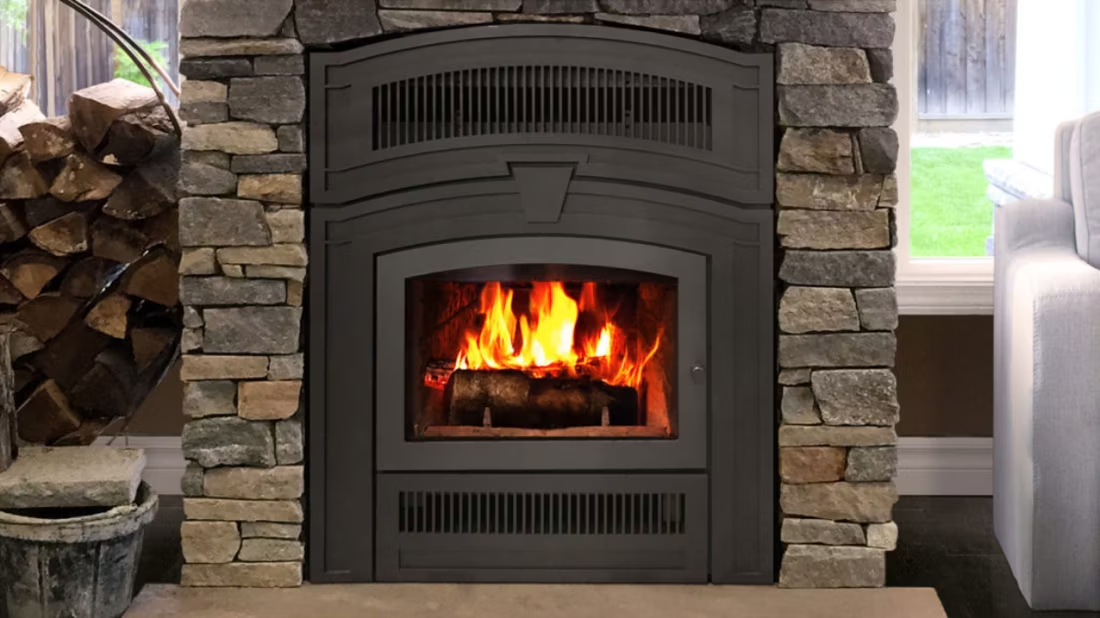
That doesn't mean wood is entirely off the table. Older homes—particularly in Old Palo Alto, Professorville, and Crescent Park—often have existing masonry fireplaces built before the rule took effect, and BAAQMD still permits retrofitting those with an EPA Phase 2-certified wood stove or insert. What you can't do is burn on demand: the district's Winter Spare the Air program (November 1 through February 28) issues mandatory no-burn alerts on high-pollution days, and lighting any wood device—certified or not—is illegal on those days unless the home is registered as having no other adequate heat source, a designation almost no Palo Alto property qualifies for given near-universal PG&E gas and electric service. For the smaller number of homeowners who still want a wood-burning insert for ambiance or backup, working with a dealer who understands both the City of Palo Alto's Development Services permitting process and BAAQMD's rules matters more here than almost anywhere else.
Three steps. No salesperson until you're ready.
Tell us about your project
Your zip code, your situation, and the fuel you're leaning toward—or let the answers point you to one.
See what's actually available
The brands dealers within 100 miles genuinely carry—real options, never a catalog mirage.
Get your dealer & Project Guide
A trusted local dealer, plus the free Project Guide & Parts List that names every component of the job.
Frequently Asked Questions
Can I install a new wood-burning fireplace in Palo Alto?
In almost all cases, no. BAAQMD Regulation 6, Rule 3 has banned installing new wood-burning fireplaces in new construction and major remodels since 2015, and this applies citywide across every Palo Alto zip code from 94301 to 94306. The only wood-burning appliances still permitted are EPA Phase 2-certified wood stoves or inserts installed into an existing, already-approved masonry chimney, plus pellet stoves in rare cases. If you're building new or doing a full remodel, a gas or electric fireplace is the standard path—both remain unrestricted.
What is the Winter Spare the Air program, and does it apply to me?
Yes, it applies to every household in Santa Clara County, including Palo Alto. From November 1 through February 28 each year, BAAQMD issues a Spare the Air Alert on days when fine particulate pollution is forecast to reach unhealthy levels. On those days, burning wood in any device—fireplace, wood stove, or insert, certified or not—is illegal, with fines starting around $100 for a first violation. The only exemption is for homes registered with BAAQMD as having no other adequate source of heat, which is essentially nonexistent in Palo Alto given how thoroughly PG&E's gas and electric service covers the city.
I have an old fireplace already—can I still use it?
You can use an existing, uncertified masonry fireplace on non-alert days, but many Palo Alto homeowners choose to retrofit it instead. Installing an EPA Phase 2-certified wood stove or insert into your existing chimney is still allowed under BAAQMD rules and cuts particulate emissions dramatically compared to an open masonry fireplace, sometimes by 90 percent or more. It also gives you a legal, permitted path to enjoy the fireplace on non-alert days, and BAAQMD has periodically run wood stove change-out incentive programs offering a rebate toward replacing an old uncertified unit.
How much does a wood stove or insert installation cost in Palo Alto?
Because most local projects involve retrofitting an existing masonry fireplace rather than building new venting from scratch, costs typically run $6,000 to $12,000 for a certified insert, chimney liner, and permit—on the higher end of national averages, reflecting Bay Area labor rates and the added step of BAAQMD compliance documentation. A dealer familiar with the City of Palo Alto Development Services permitting process can give you a firm number after inspecting your chimney and confirming it can be relined and vented to code.
Why isn't wood heat more common here given how many older homes there are?
Two reasons: climate and regulation. Palo Alto has a mild, short heating season with an average winter low of 39°F, mild enough that central gas or heat-pump systems handle nearly all heating needs without any supplemental wood heat. Compare that to a genuinely cold-climate city like Duluth, MN, which has a much longer, harder winter heating season and where a wood stove can serve as real backup heat during outages. On top of that, BAAQMD's wood-burning rule and Spare the Air restrictions mean most homeowners who want the occasional fire find a gas insert easier to live with day to day.
What wood species are available locally for those who do have a wood-burning device?
Oak, madrone, and Douglas fir are the most common species sold by Peninsula and South Bay firewood suppliers, with oak generally preferred for its longer, steadier burn. Because Spare the Air alerts can be called on short notice throughout the winter, most Palo Alto wood-burning households keep a smaller stock on hand for occasional fires rather than laying in the multi-cord winter supply you'd see in a colder climate.
Are there rebates for removing an old wood-burning fireplace?
Yes, periodically. BAAQMD has run wood stove and fireplace change-out programs offering incentives, sometimes several hundred dollars, toward removing an old uncertified device or replacing it with a cleaner option, including EPA-certified wood inserts, gas inserts, or electric fireplaces. Funding and availability vary year to year, so check the district's current program status before budgeting one into your project.
How do wildfire smoke and non-attainment status affect wood burning here?
Santa Clara County is designated a non-attainment area for particulate matter, meaning the region already struggles to meet federal air quality standards, which is part of why BAAQMD regulates wood smoke so tightly. Add regular wildfire smoke events from August through October, and Palo Alto residents are often breathing compromised air for several weeks a year before a single wood fire is lit locally. That combination is a big part of why the district treats wood burning as an exception to manage carefully rather than a default heating choice.
Should I choose wood, gas, or electric for my Palo Alto home?
For nearly all Palo Alto homeowners, gas or electric is the more practical choice: both are unrestricted by Spare the Air rules, don't require a masonry chimney, and suit the city's mild climate and reliable PG&E-served grid. Wood makes sense in a narrower case: you already have an existing, code-compliant masonry chimney and specifically want the experience of a real wood fire for occasional use, understanding the Spare the Air restrictions that come with it. If that's you, an EPA-certified insert is the only appliance that keeps you compliant; if not, a gas insert or electric fireplace gives you flame and ambiance without the permitting hurdles.
Why won't my new wood stove get going like my old one?
New wood stoves are 70%+ efficient, so far less heat goes up the flue—which also means less draft to get a fire established. The rule: build a genuinely hot fire for about 45 minutes before you choke it down. Skip that and you get smoke in the room, creosote in the chimney, and a fire that never takes off. Most performance complaints trace straight back to this.
What's the difference between an insert and a zero-clearance fireplace?
An insert is a fireplace that slides into a pre-existing wood-burning fireplace—if you don't have one, there's nothing to insert it into. A zero-clearance fireplace is built into a framed wall, which makes it the answer for remodels and new construction. Simple test: existing masonry fireplace means insert; blank or framed wall means zero-clearance.
Can I install a fireplace myself?
If you're putting a fire in your house on purpose, it's best to work with an expert. Unless you're genuinely experienced in framing, gas line, vent pipe, and the national code on clearances to combustibles, have a professional do it—and ideally the same company that sells you the fireplace, so warranty, service, and liability all live under one roof.
What is an in-home preview and do I need one?
It's a visit where a hearth professional measures your space, confirms the model you picked actually works in your home, and walks the specs—framing, gas line, venting, finish work—before anything is ordered. Some details you just can't know until you see the house. Never make a down payment without one; it's the single most-skipped step that burns buyers.
Nearby Dealers
Hearth shops serving Palo Alto and the surrounding area.
See what's possible for a wood fireplace in Palo Alto.
Tell us about your home and whether you already have a masonry chimney, and we'll match you with a local dealer who knows BAAQMD's rules cold—plus a free Project Guide & Parts List laying out the exact EPA-certified insert, vent kit, and permitting steps for your Palo Alto project.
Find Your Fireplace →