
Warmth That Fits Palo Alto's Mild Winters.
With average winter lows near 39°F, most Palo Alto homes want a gas fireplace for ambiance and backup warmth, not brute-force heat. Find the right unit and connect with a trusted local dealer.
Every Project Starts From One of These Five Situations
Comfort heat for a climate that asks little of it.
Palo Alto sits at just 214 feet in climate zone 3C, with a mild Mediterranean winter that averages a 39°F low and racks up only about 2,733 heating degree days a year—a fraction of the roughly 7,000+ HDD a place like Duluth, MN logs each winter. That reality shapes how gas fireplaces get used here: less as a home's main heat source, more as a zone-heat comfort feature for a family room or primary suite, and as a real amenity in a market where a well-appointed hearth adds to a home's appeal.
Wood and pellet appliances see very little demand locally—Santa Clara County falls under the Bay Area Air Quality Management District's non-attainment rules, wildfire smoke is a recurring seasonal concern, and Palo Alto's 2020 all-electric Reach Code steers new construction away from combustion appliances entirely. Gas remains the practical fuel-burning option for existing homes, especially the older Craftsman and mid-century housing stock in neighborhoods like Old Palo Alto, Professorville, and Barron Park, where original masonry fireplaces are common candidates for a direct-vent insert upgrade. Electric service comes from Pacific Gas & Electric, and at $0.317 per kWh—among the higher residential rates in the country—that price point matters when homeowners weigh gas against electric heat for anything beyond occasional ambiance.
Three steps. No salesperson until you're ready.
Tell us about your project
Your zip code, your situation, and the fuel you're leaning toward—or let the answers point you to one.
See what's actually available
The brands dealers within 100 miles genuinely carry—real options, never a catalog mirage.
Get your dealer & Project Guide
A trusted local dealer, plus the free Project Guide & Parts List that names every component of the job.
Frequently Asked Questions
How much does a gas fireplace installation cost in Palo Alto?
Expect a range of roughly $6,000 to $13,000 in Palo Alto, on the higher end of national averages because of Bay Area labor rates and the permitting coordination required here. A direct-vent gas insert dropped into an existing masonry fireplace with a gas line already run—common in the older homes around Old Palo Alto and Professorville—lands toward the lower end. A new built-in gas fireplace requiring fresh gas line work, framing, and venting runs higher. The City of Palo Alto Development Services Building Division requires permits for the work, and local installers typically handle that paperwork as part of the job.
Can I convert my existing wood-burning fireplace to gas?
Yes, and it's a common project in Palo Alto's older housing stock. Beyond the convenience factor, converting matters here because the Bay Area Air Quality Management District calls Spare the Air alerts during wildfire smoke events and winter inversions that restrict wood burning—a gas insert sidesteps that entirely. Installers typically slide a direct-vent gas insert into your existing masonry firebox using a stainless liner through the original chimney, which keeps the mantel and surround intact while eliminating ash, smoke, and curtailment days.
Can I install a new gas fireplace in a new-construction home in Palo Alto?
It's worth checking early. Palo Alto adopted an all-electric Reach Code in 2020 that generally requires new residential construction to skip gas infrastructure in favor of electric appliances, including space heating. Existing homes and most remodels aren't subject to the same restriction and can typically still add or retrofit a gas fireplace with a permit. If you're building new or doing a major addition, talk to the Building Division and your contractor before assuming a gas line will be approved—an electric fireplace or heat pump-based system may be the required path instead.
Will my gas fireplace still work if the power goes out?
Most direct-vent gas fireplaces with intermittent pilot ignition (IPI) run on a small battery backup that kicks in the moment power drops, so the fireplace lights normally even during an outage. That matters in Palo Alto specifically because PG&E occasionally initiates Public Safety Power Shutoffs (PSPS) during high fire-risk wind events, sometimes for a day or more. Valor's gas fireplaces take a different approach—the pilot's thermocouple generates its own electricity, so there's no battery to remember to replace. Ask your local dealer which ignition system a given model uses if outage reliability matters to you.
What's the difference between a gas fireplace, gas insert, and gas stove?
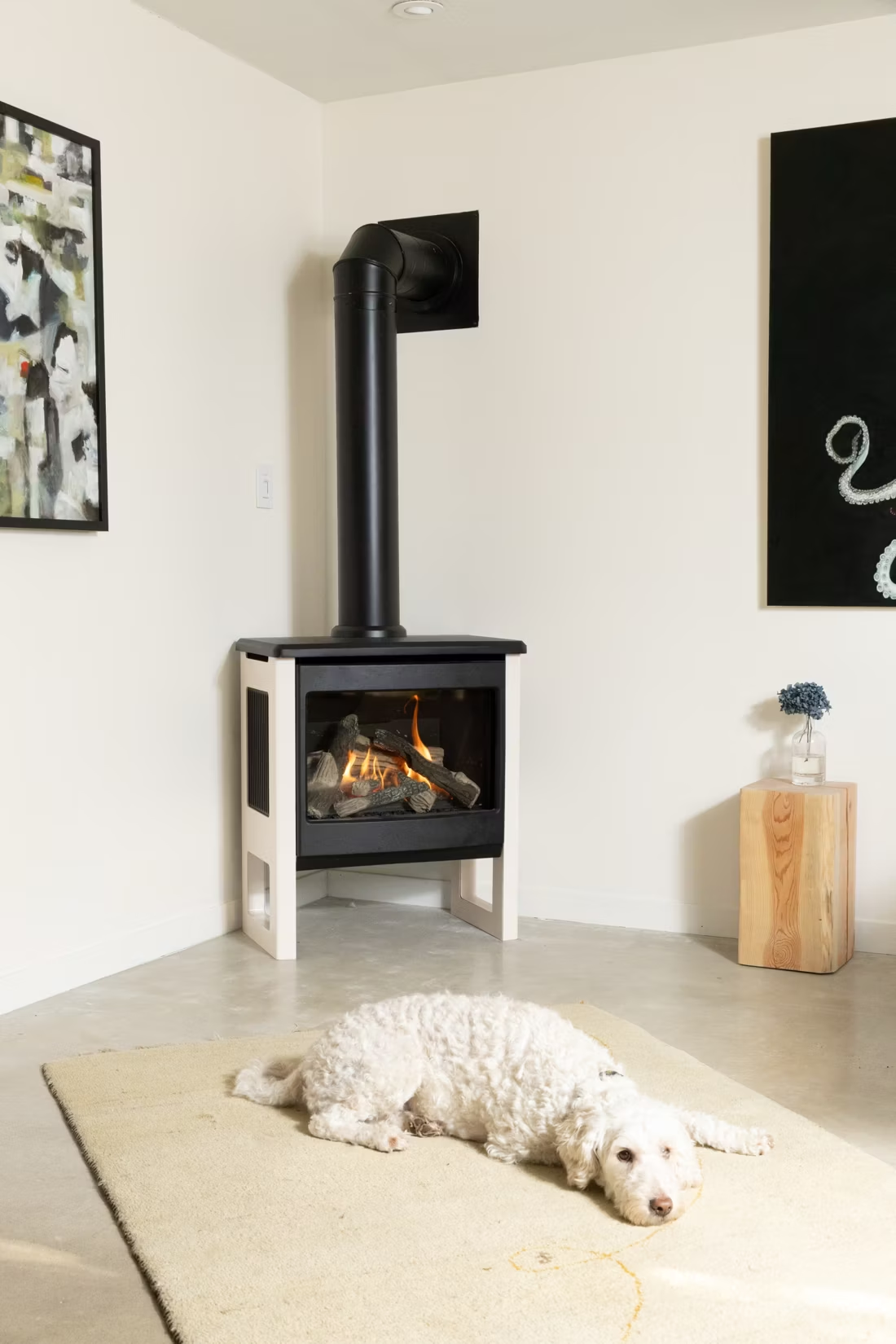
A gas fireplace is a fully built-in unit framed into a wall, typical in newer construction or major remodels. A gas insert is built to slide into an existing masonry firebox, which is why it's the go-to choice for Palo Alto's older homes with original brick fireplaces. A gas stove is a freestanding cabinet-style unit that sits on the floor and vents like a wood stove but burns gas—a good fit when there's no existing fireplace opening to work with. For most Old Palo Alto and Community Center-area homes with an existing hearth, an insert is the simplest and most cost-effective upgrade.
Do I need a permit to install a gas fireplace in Palo Alto?
Yes. The City of Palo Alto requires a building permit and gas line permit for new gas fireplace or insert installations, and the gas piping itself has to be run or modified by a licensed gas-fitter. Because Palo Alto's Reach Code specifically targets new gas infrastructure, it's worth confirming with the Building Division whether your project counts as a retrofit into existing piping (typically straightforward) versus new gas service (subject to more scrutiny). A certified local hearth dealer will usually manage this coordination for you.
Can I install a vent-free (unvented) gas fireplace in Palo Alto?
Generally, no—California is one of a handful of states that heavily restrict vent-free gas fireplaces for space heating in residential dwellings, and Palo Alto's building officials enforce that standard. Direct-vent gas fireplaces, which draw combustion air from outside and exhaust it back outside through a sealed vent, are essentially the only option a code-compliant local installer will offer. That's not a real limitation in practice: direct-vent units produce strong heat, come in a wide range of styles, and don't introduce combustion byproducts into the living space, which matters in a region already dealing with wildfire smoke air quality concerns.
How often does a gas fireplace need to be serviced?
Plan on an annual inspection, ideally before the winter months when you'll actually be using it. A certified technician checks the burner, pilot assembly, venting, and gas connections, and cleans the glass and interior—a much lighter lift than wood-stove chimney sweeping but still important for safety and warranty compliance. Local gas appliance service providers in the Palo Alto area typically charge $150 to $250 for this visit.
Gas vs. electric fireplace—which makes more sense in Palo Alto?
Given Pacific Gas & Electric's residential rate of $0.317 per kWh—well above the national average—running an electric fireplace as a real heat source for hours at a time gets expensive fast, while gas delivers more heat per dollar for sustained use. Electric fireplaces do have real advantages here: no venting or gas line needed, simple installation in condos or homes where running new gas piping is impractical, and a clean fit with Palo Alto's broader push toward electrification under its Reach Code. For a primary living room where the fireplace runs often through the mild winter, gas usually wins on running cost. For a bedroom, home office, or a newer all-electric build, an electric unit is often the simpler and code-friendlier choice.
Why is a fireplace insert so efficient?
An insert does two things: it seals the chimney completely, so you stop losing air you already paid to heat, and it radiates warmth into the room through the firebox and glass. Most add a heat-exchange fan that pulls cool room air underneath, wraps it around the hot firebox, and pushes it back out warm. Your home is more efficient before you've even lit the first fire.
Can I put a TV above my fireplace?
Yes—with an asterisk. Fireplaces are hot and TVs don't like heat. Either put a mantel between them to deflect rising warmth, or choose a fireplace with heat-management technology that creates a cool zone on the wall above—the wall stays around 125 degrees, barely warm, while the room still gets full heat. If you like clean lines and don't want a mantel, heat management is the answer.
Does a fireplace add value to my home?
On average, a fireplace adds back to the home about the same amount you spent installing it. Add the monthly savings from heating the rooms you actually use instead of the whole house—often hundreds of dollars a year—and the value case is strong before you even count what a fire does for how your family uses the room.
How much should I budget for a fireplace?
For an average home—covering the fireplace, the vent pipe, and basic installation—a budget between $3,900 and $5,500 gives you a lot of options across wood, gas, and pellet. By the time you add finish work, gas line, and electrical, the average complete installation lands between $5,000 and $12,000 all-in. In a remodel or new build, a good rule is to put about 2.5% of the total project cost toward the fireplace.
Nearby Dealers
Hearth shops serving Palo Alto and the surrounding area.
Find your gas fireplace in Palo Alto.
Tell us a bit about your home and we'll match you with the right gas fireplace or insert, plus a free Project Guide & Parts List with your recommended local dealer—permits, venting, and code questions included.
Find Your Fireplace →