
Pellet heat is rare in Palmdale—here's when it still makes sense.
With mild Antelope Valley winters and strict local air rules, pellet stoves never became the norm here. If one still fits your home, we'll connect you with a local dealer who can tell you honestly.
Every Project Starts From One of These Five Situations
A mild high desert climate with strict air rules.
Palmdale sits at 2,600 feet in the Antelope Valley, and while summers run brutally hot, winters are comparatively mild—average lows around 35°F and only a modest winter heating load each year. Compare that to a genuinely cold-climate market like Bozeman, Montana, which racks up more than double that heating load, and it's clear why solid-fuel heating never became a household staple here. Most Palmdale homes lean on central gas furnaces or electric heat pumps for the handful of cold weeks each winter, not a stove that needs daily fuel loading.
The Antelope Valley also falls within a state-designated non-attainment area for particulate matter, and wildfire smoke from nearby foothill fires already stresses local air quality for weeks each fall. That combination makes regulators and dealers alike cautious about new solid-fuel combustion appliances, pellet stoves included, even though pellet units burn far cleaner than open wood fires. Regional pellet brands like Bear Mountain, Lignetics, and Pacific Pellet are sold in Southern California, but the demand mostly comes from mountain cabin owners in places like Wrightwood and Big Bear rather than valley-floor homes in Palmdale or Lancaster.
Three steps. No salesperson until you're ready.
Tell us about your project
Your zip code, your situation, and the fuel you're leaning toward—or let the answers point you to one.
See what's actually available
The brands dealers within 100 miles genuinely carry—real options, never a catalog mirage.
Get your dealer & Project Guide
A trusted local dealer, plus the free Project Guide & Parts List that names every component of the job.
Frequently Asked Questions
Are pellet stoves actually installed in Palmdale homes?
Occasionally, but they're a genuinely rare choice here. Palmdale's mild winter lows—averaging around 35°F—mean most homeowners are adequately served by central gas or electric heat, and few local hearth dealers stock pellet units as a primary line the way dealers do in colder mountain markets. When we do see a pellet stove request from the Antelope Valley, it's usually tied to a specific reason: a detached workshop or converted garage that isn't on the main HVAC zone, a household that wants heat during a Southern California Edison outage, or a second property up in the San Gabriel or San Bernardino mountains where the owner also lives part-time in Palmdale.
How much does a pellet stove installation cost in Palmdale?
Because installations are uncommon locally, pricing isn't standardized in the Antelope Valley the way it is in colder regions with a dozen competing hearth shops. As a general benchmark, a freestanding pellet stove or insert installed by a licensed dealer typically runs in the $3,500 to $6,500 range nationally, depending on the unit, venting path, and any electrical work for the hopper and blower. Expect Palmdale quotes to land in that same neighborhood, though you may need to work with a dealer based in the San Fernando Valley or the Victor Valley who's willing to service Palmdale and Lancaster.
Why doesn't Palmdale have more pellet stove dealers?
Two things work against it: climate and air quality policy. With only a modest winter heating load each year, Palmdale's heating season is short and mild compared to a place like Duluth, Minnesota, so there's simply less year-round demand to support a dedicated pellet stove market. On top of that, the Antelope Valley sits in a state non-attainment area for particulate matter, and wildfire smoke already degrades local air quality for weeks each fall—a backdrop that makes local air regulators and builders cautious about promoting any new combustion heating appliance, even a comparatively clean-burning one.
Do I need a permit to install a pellet stove in Palmdale?
Yes. Any new solid-fuel heating appliance, including a pellet stove, requires a building permit through the City of Palmdale Building and Safety Division (or Los Angeles County Building and Safety if your property is in an unincorporated pocket of the Antelope Valley). The permit process checks venting, clearances, and hearth pad requirements, similar to a wood stove install. A licensed hearth dealer who has actually pulled Palmdale permits before will save you time versus a generalist contractor unfamiliar with the local process.
Where can I buy pellet fuel near Palmdale?
Bagged pellets from regional producers like Bear Mountain, Lignetics, and Pacific Pellet show up at some Southern California hardware and farm supply stores, though selection in Palmdale itself is thinner than in mountain towns like Wrightwood or Big Bear Lake where pellet stoves are far more common. Many Antelope Valley pellet stove owners end up stocking up during trips to the mountains or ordering pallets delivered directly, since local retail turnover is low and shelf space for pellets isn't guaranteed year-round the way firewood or propane is.
Is a pellet stove a good backup heat source during a Southern California Edison outage?
It can be, with one caveat: pellet stoves need electricity to run the auger and combustion blower, so a standard unit goes dark in a power outage just like your furnace does. If backup heat during an SCE outage is your main goal, you'd need to pair the stove with a battery backup or small generator, or consider a wood stove or electric fireplace instead—though wood-burning appliances face the same rarity and air-quality headwinds in Palmdale that pellet stoves do. Some homeowners find a simple electric space heater is the more practical fallback for the Antelope Valley's occasional outages.
Pellet stove vs. gas fireplace—which fits a Palmdale home better?
For most Palmdale homes, gas wins on practicality. Natural gas service is well established across the city, gas fireplaces and inserts install cleanly into existing masonry or new construction, and they don't require hopper loading or ash cleanup. Pellet stoves offer a real wood-like flame and lower per-BTU fuel cost, but given the area's mild winters and thin local dealer network, most homeowners find a direct-vent gas insert easier to buy, install, and get serviced in the Antelope Valley. Electric fireplaces are also common here, especially given Southern California Edison's residential rate of roughly 28 cents per kWh makes them a supplemental rather than primary heat source.
Can I install a pellet stove in a Palmdale rental or HOA community?
It depends entirely on your HOA's covenants or your landlord's policies, since Palmdale itself doesn't broadly prohibit pellet appliances the way some coastal non-attainment jurisdictions restrict open wood burning. Many newer Palmdale subdivisions built since the 2000s have HOAs with specific rules about exterior venting and roof penetrations, which a pellet stove's vent pipe would require. Renters should get written landlord approval before any installation, since it involves permanent venting and electrical work that isn't easily reversed.
What's the best use case for a pellet stove in the Antelope Valley?
The strongest fit is a detached space that isn't tied into central HVAC—a converted garage, a workshop, or a guest casita—where you want independent, thermostat-like heat without running new ductwork. It's also a reasonable choice for someone who splits time between Palmdale and a mountain cabin near the Angeles or San Bernardino National Forest, where pellet stoves are already a familiar sight and pellets are easier to source locally. For a primary living space in central Palmdale, most homeowners are better served by the gas or electric options that already have an established local dealer and service network.
Why is my open fireplace making my house colder?
Open fireplaces suck—literally. As the fire burns, it consumes air your furnace already paid to heat and pulls it out through the chimney, so the house is actually colder after the fire goes out than before you lit it. An insert fixes this: it seals the chimney, puts fixed glass across the front, and turns that hole in your house into a real heat source.
What does it take to replace an existing fireplace?
Fireplaces are like icebergs—bigger behind the wall than in front of it. Replacement means removing the surrounding tile or stone (the finish material laps onto the fireplace face), pulling the old unit, setting the new one in the same enclosure, and re-finishing the wall. A hearth professional can determine what's behind your wall without demolition during an in-home preview.
Can a fireplace actually lower my heating bill?
Yes—by creating a comfort zone. A furnace heats every square foot of the house just to warm the one room you're in; a gas fireplace on low burns roughly a sixth of the gas a typical furnace does. Set the furnace around 55–60 degrees as a baseline, then heat the rooms your family actually uses. Families who heat this way commonly save $20–$60 a month.
Can I install a fireplace myself?
If you're putting a fire in your house on purpose, it's best to work with an expert. Unless you're genuinely experienced in framing, gas line, vent pipe, and the national code on clearances to combustibles, have a professional do it—and ideally the same company that sells you the fireplace, so warranty, service, and liability all live under one roof.
Nearby Dealers
Hearth shops serving Palmdale and the surrounding area.
All Valley Distrib. Dba Marco Distrib
The Heat Source (Burrico) - Lancaster
Tropicana Outdoor Living
Pellet Brands Stocked Around Palmdale
Manufacturers will point you to the nearest stocking dealer.
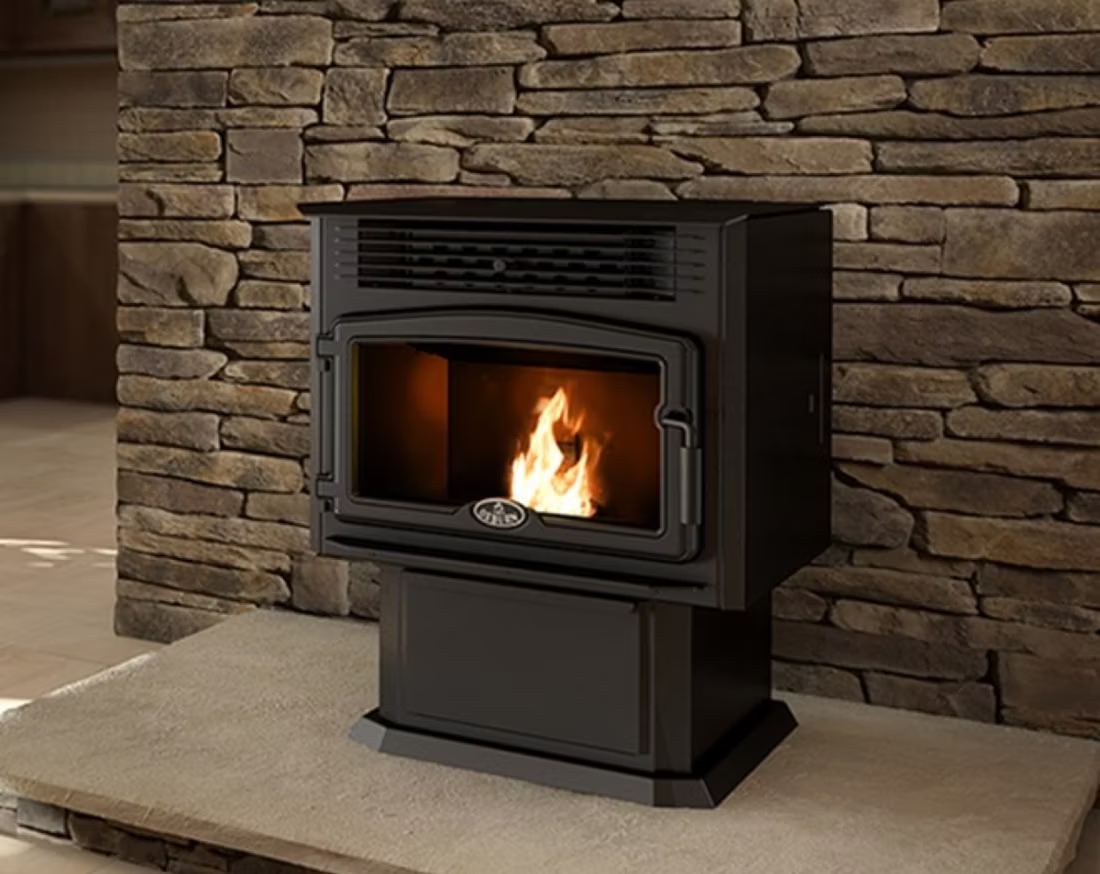
Find your pellet stove option in Palmdale.
Tell us about your project—including why pellet interests you—and we'll give you a straight answer, match you with a local dealer if it's a good fit, and send over a free Project Guide & Parts List with the right vent kit and parts for your home.
Find Your Fireplace →