
Electric fireplace heat, built for Orange County living.
With winter lows averaging 44°F and strict South Coast Air Quality Management District rules on combustion appliances, electric is the fireplace fuel that fits how Orange County actually lives—condos, HOAs, and stucco tract homes included. Find the right unit and get matched with a trusted local dealer.
Every Project Starts From One of These Five Situations
Mild winters and strict air rules make electric the practical choice.
Orange County sits in climate zone 3B with only about 1,377 heating degree days a year and an average winter low of 44°F—a fraction of what a place like Duluth, MN or Fargo, ND racks up in a single January. There's essentially no scenario here where a household needs a fireplace to survive the night, which changes the entire calculus. Wood heat is functionally a non-factor across the county's 3.6 million residents—not because people dislike fire, but because the South Coast Air Quality Management District's non-attainment status for particulate matter, combined with regular wildfire-smoke events from Santa Ana wind season, makes combustion appliances a poor fit for most homes. Pellet stoves face the same headwind.
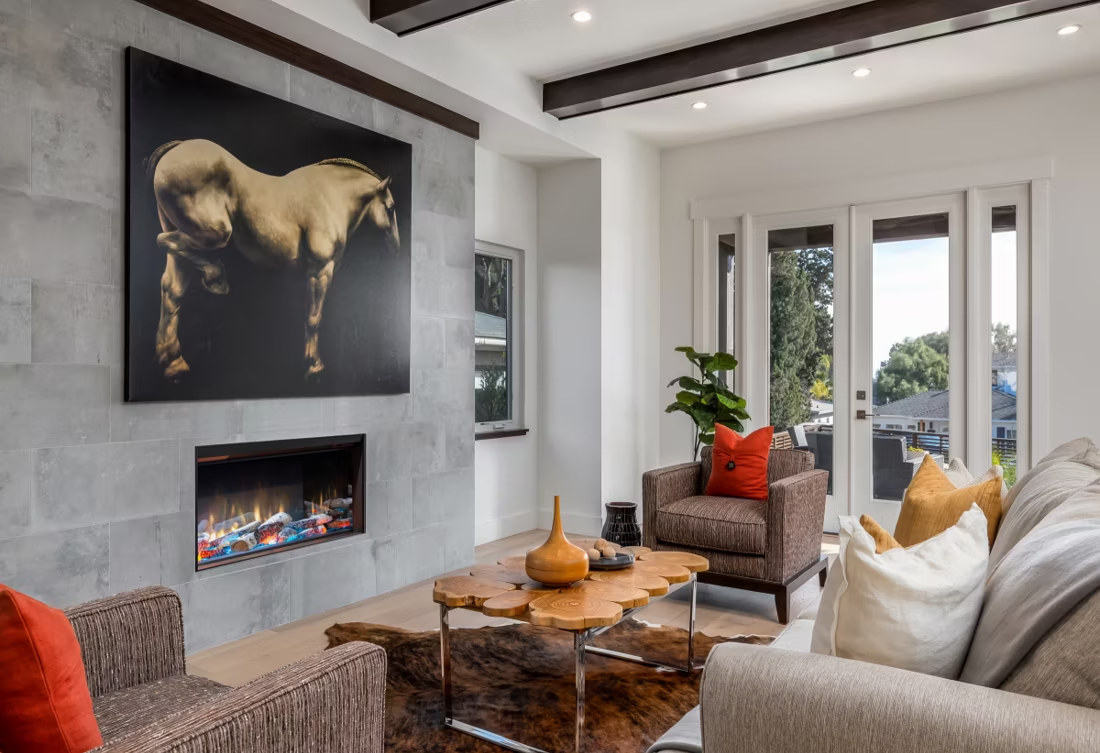
Electric fireplaces sidestep all of it. There's no chimney, no flue, no combustion byproducts, and no risk of tripping a mandatory no-burn advisory during a fall smoke event. That matters in a county built largely on stucco tract housing and dense condo and townhome stock—think Irvine, Mission Viejo, and coastal Newport Beach and Huntington Beach neighborhoods—where masonry chimneys were never part of the original construction and HOA rules often restrict anything that vents through a roof or wall. A plug-in electric insert or a hardwired built-in unit installs in an afternoon, adds real ambiance and useful zone heat on the county's cooler December and January evenings, and never runs into an air-quality rule.
Three steps. No salesperson until you're ready.
Tell us about your project
Your zip code, your situation, and the fuel you're leaning toward—or let the answers point you to one.
See what's actually available
The brands dealers within 100 miles genuinely carry—real options, never a catalog mirage.
Get your dealer & Project Guide
A trusted local dealer, plus the free Project Guide & Parts List that names every component of the job.
Frequently Asked Questions
How much does an electric fireplace installation cost in Orange County?
Plug-in electric fireplace inserts and freestanding units are the least expensive fireplace option in Orange County by a wide margin—often $400 to $1,200 including a stand or mantel surround, with no dedicated circuit or permit required if it plugs into a standard 120V outlet. Built-in wall units or larger inserts that require a dedicated 20-amp circuit run higher, typically $1,200 to $3,000 once an electrician runs new wiring and a local dealer handles the surround and trim. Because there's no venting, no chimney work, and no gas line, electric installs are consistently the fastest and cheapest fireplace project available in the county—most are done in a single day.
Why is electric so common in Orange County when wood and pellet stoves aren't?
Wood and pellet stoves are essentially absent from Orange County's fireplace market, and for good reason: the South Coast Air Quality Management District regulates the region as a non-attainment area for fine particulate matter and issues mandatory no-burn advisories during winter inversions and wildfire-smoke episodes, which are common during Santa Ana wind season. On top of that, most of the county's housing—dense subdivisions in Anaheim, Santa Ana, and Mission Viejo, plus condo towers along the coast—was never built with masonry chimneys or forest-adjacent firewood access the way mountain or high-desert counties were. Electric avoids the emissions question entirely, which is a large part of why it's the standard fireplace fuel here rather than a fallback.
Will an electric fireplace actually heat my home?
In most Orange County homes, an electric fireplace is best understood as zone heat and ambiance rather than whole-home heating—and that's a good match for local weather. With an average winter low around 44°F and only about 1,377 heating degree days per year, Orange County simply doesn't generate the sustained cold that would require a fireplace to carry real heating load the way it does in colder climates. A typical electric insert puts out 4,000–5,000 BTUs, enough to noticeably warm a living room or bedroom on a cool December evening, while central HVAC (or nothing at all, on most days) handles the rest of the house.
Can I install an electric fireplace in my condo or under an HOA?
Yes, and this is one of the biggest reasons electric dominates the fireplace market in Orange County's dense condo and townhome communities. Because a plug-in or hardwired electric unit doesn't require a chimney, flue, or exterior venting, it typically doesn't trigger the roof, wall, or exterior-modification restrictions that many HOAs enforce for gas or wood installations. Always check your specific HOA's CC&Rs before a built-in wall installation that involves cutting into drywall, but a freestanding or insert-style electric unit is almost always allowed without a variance.
Do I need a permit to install an electric fireplace in Orange County?
Most plug-in electric fireplaces don't require any permit—they connect to a standard household outlet like any other appliance. If you're installing a built-in unit that requires a new dedicated circuit or any electrical panel work, your city's building department (Anaheim, Irvine, Santa Ana, and most Orange County cities process these individually) will require an electrical permit pulled by a licensed electrician. A local dealer or installer can tell you within a few minutes whether your chosen unit needs one—it usually comes down to amperage and whether new wiring is involved.
What's the difference between an electric insert, a built-in wall unit, and a freestanding electric stove?
An electric insert is sized to slot into an existing fireplace opening—useful if you have an old masonry or gas fireplace shell you want to convert without touching the chimney. A built-in wall unit is framed into new construction or a remodel and often becomes a focal point with a full surround, common in newer Orange County builds and remodels. A freestanding electric stove sits on the floor like a traditional wood stove but plugs into an outlet, which works well for renters or condo owners who want a movable, no-commitment option. All three use the same core heating technology; the choice mostly comes down to your existing structure and how permanent you want the installation to be.
Electric vs. gas fireplace—which is right for my Orange County home?
Gas fireplaces remain a solid option in Orange County for homeowners who want a more realistic flame and higher heat output, and natural gas service is widely available across the county. But electric wins on install simplicity and cost—no gas line, no venting, no combustion inspection—and it carries zero exposure to any future air-quality rule changes, which is a real consideration given the South Coast Air Quality Management District's ongoing non-attainment status. For a primary living space where you want a strong visual flame and don't mind the gas line work, gas is worth considering. For a bedroom, condo, rental, or any space where simplicity and speed matter most, electric is usually the better fit.
What will an electric fireplace cost to run on my utility bill?
Most Orange County homes are served by Southern California Edison, and electric fireplace running costs are modest because the units are typically used for supplemental heat and ambiance rather than continuous whole-home heating. A standard 1,500-watt electric insert run for a few hours on a cool evening adds roughly 30 to 60 cents per session at typical SCE residential rates—noticeably less than running central HVAC to warm the same room. Many owners run the flame effect alone, with the heater switched off, for most of the year given how rarely Orange County actually needs supplemental heat.
What features should I look for in an electric fireplace for Orange County's climate?
Since heating output matters less here than in colder climates, flame realism and finish options tend to matter more to Orange County buyers—look at LED or water-vapor flame technology from established brands, which local dealers can demo in person so you can judge the effect before buying. If you do want supplemental heat, confirm the unit has a separate heater control so you can run the flame effect year-round without warming the room during Orange County's long mild stretches. A local dealer can also advise on trim kits and surrounds that match the stucco-and-drywall construction common throughout the county's newer subdivisions.
Can I put a TV above my fireplace?
Yes—with an asterisk. Fireplaces are hot and TVs don't like heat. Either put a mantel between them to deflect rising warmth, or choose a fireplace with heat-management technology that creates a cool zone on the wall above—the wall stays around 125 degrees, barely warm, while the room still gets full heat. If you like clean lines and don't want a mantel, heat management is the answer.
Does an electric fireplace need a vent or chimney?
No—that's its superpower. An electric fireplace needs a wall and an outlet, period. No vent pipe, no gas line, no clearances to design around, which is why it works in bedrooms, offices, apartments, and walls where venting a gas or wood unit would be impractical or impossible. Installation is typically the simplest and least expensive of any fireplace type.
Does a fireplace add value to my home?
On average, a fireplace adds back to the home about the same amount you spent installing it. Add the monthly savings from heating the rooms you actually use instead of the whole house—often hundreds of dollars a year—and the value case is strong before you even count what a fire does for how your family uses the room.
How much should I budget for a fireplace?
For an average home—covering the fireplace, the vent pipe, and basic installation—a budget between $3,900 and $5,500 gives you a lot of options across wood, gas, and pellet. By the time you add finish work, gas line, and electrical, the average complete installation lands between $5,000 and $12,000 all-in. In a remodel or new build, a good rule is to put about 2.5% of the total project cost toward the fireplace.
Stove and Fireplace Dealers in Orange County
Find your electric fireplace in Orange County.
Tell us a bit about your home and we'll put together a free Project Guide & Parts List—the right electric fireplace or insert for your space, plus a trusted local Orange County dealer to install it.
Find Your Fireplace →