
Warmth and ambiance, without the smoke restrictions in Brea.
Brea's mild winters don't call for a wood-burning system—but the right electric fireplace still adds real ambiance and zone heat, with no venting and no air-quality restrictions to work around.
Every Project Starts From One of These Five Situations
Mild winters, tight air rules—electric fits both.
Brea sits at 553 feet in inland Orange County, where winter lows average 49°F and the city logs roughly 792 heating degree days a year—a fraction of what a place like Fargo, ND or Duluth, MN racks up in a single cold snap. That climate reality is why wood stoves and pellet inserts are essentially absent here; there's rarely enough sustained cold to justify a cordwood supply or a pellet hopper, and almost nobody in Brea is heating a home with either fuel.
Orange County also sits inside the South Coast Air Basin, a federal nonattainment area for ozone and fine particulates, and late-summer wildfire smoke already stresses local air quality most years. SCAQMD Rule 445 limits new wood-burning appliance installations across the region, which pushes homeowners who want fireplace ambiance toward gas or electric instead. Electric fireplaces sidestep the issue entirely—no combustion, no emissions, no venting, and no Spare the Air-type advisory ever applies to them. With Southern California Edison serving the area at a residential rate around $0.2825/kWh, the tradeoff is a higher per-hour running cost than gas, offset by installs that are simpler, faster, and dramatically cheaper than wood or gas venting work.
Three steps. No salesperson until you're ready.
Tell us about your project
Your zip code, your situation, and the fuel you're leaning toward—or let the answers point you to one.
See what's actually available
The brands dealers within 100 miles genuinely carry—real options, never a catalog mirage.
Get your dealer & Project Guide
A trusted local dealer, plus the free Project Guide & Parts List that names every component of the job.
Frequently Asked Questions
How much does it cost to install an electric fireplace in Brea?
Plug-in freestanding or insert-style electric fireplaces are the cheapest option—typically $150 to $800 for the unit, with no professional installation required since they run off a standard 120V outlet. Built-in or wall-mounted linear models, which are popular in Brea's newer remodels and tract-home great rooms, usually run $1,200 to $4,000 installed once you factor in a dedicated circuit, recessed framing, and finish work from an electrician. Either way, there's no chimney, no gas line, and no venting to budget for, which is why electric installs generally land well below wood or gas equivalents.
Do people actually use wood-burning fireplaces or stoves in Brea?
Rarely. With winter lows averaging 49°F and only about 792 heating degree days a year, Brea simply doesn't get cold enough long enough to justify a wood stove as a heat source, and pellet stoves see the same lack of demand. Add in SCAQMD Rule 445, which restricts new wood-burning appliance installations across the South Coast Air Basin, plus periodic wildfire-smoke air quality advisories, and wood heat has largely disappeared from Orange County home heating. A handful of older homes still have a functioning masonry fireplace they burn occasionally for ambiance, but electric has become the practical substitute for that same look and feel.
Do I need a permit for an electric fireplace in Brea?
In most cases, no. A plug-in electric fireplace or insert that runs off a standard household outlet doesn't require any permit—you can install it yourself. If you're adding a built-in or wall-mounted unit that needs a new dedicated circuit, an electrician will typically pull an electrical permit through the City of Brea Building Division, but that's a same-day inspection process, not the multi-trade coordination a gas line or chimney install requires. There's no venting, no gas permit, and no chimney inspection to deal with.
Will an electric fireplace actually heat my home in Brea?
Not as a whole-home solution—and it isn't meant to be one here. With Brea's 792 heating degree days, central air or a heat pump already handles the handful of genuinely cold nights each winter. Most electric fireplace inserts put out around 4,600 to 5,200 BTU, which is enough to comfortably warm a single family room, primary bedroom, or den on its own. Think of it as zone heat and ambiance for the room you're actually sitting in, not a furnace replacement.
How much will an electric fireplace add to my SCE bill?
Southern California Edison's residential rate runs around $0.2825/kWh—higher than the national average—and most electric fireplace heaters draw about 1,500 watts on their highest setting, or roughly $0.42 per hour of use. Because Brea's winters are mild, most owners only run the heat function for a few hours on the occasional cool evening rather than daily, so the realistic monthly bump is often $5 to $15 during December through February. The flame effect alone, run without heat, uses only a few watts and costs pennies.
Can I convert an existing masonry fireplace to electric in Brea?
Yes, and it's a common project in Brea's older tract homes from the 1960s and '70s that still have a wood-burning firebox. An electric insert slides directly into the existing opening—no liner, no venting, and no gas line needed. Depending on the model, it can run off the existing outlet behind the fireplace or require a new circuit run to the firebox. It's one of the fastest ways to reactivate a fireplace that's gone unused, especially in homes where wood smoke or a gas hookup isn't appealing.
What's the difference between a plug-in and a built-in electric fireplace?
Plug-in units—freestanding stoves, mantel packages, or drop-in inserts—run off a standard 120V outlet, need no electrician, and can be installed the day they arrive. Built-in or linear wall-mount models are recessed into a wall or custom surround, often need a dedicated circuit, and typically involve some carpentry to finish the opening. Plug-in is the faster, cheaper route for most Brea homes; built-in is the choice for a remodel where the fireplace is meant to be a focal wall feature.
How do wildfire smoke and air quality rules affect fireplace choice in Brea?
Orange County sits inside the South Coast Air Basin, a federal nonattainment area for ozone and particulate matter, and late-summer and fall wildfire smoke periodically pushes local air quality into unhealthy territory. SCAQMD Rule 445 restricts new wood-burning fireplace and stove installations across the region as a result. Electric fireplaces produce no combustion byproducts and aren't touched by any smoke advisory or burn restriction, which is a real part of why they've become the default fireplace option for Brea homeowners who want the look without adding to local air quality problems.
Electric vs. gas—which is right for my Brea home?
Gas delivers a real flame and higher heat output, and it's a straightforward retrofit in Brea homes already plumbed for natural gas—but it costs meaningfully more to install once you factor in venting and gas line work, and it requires periodic professional service. Electric skips all of that: no venting, no gas line, no annual service call, and a materially lower install cost, in exchange for less heat output and a electric-not-real flame look (modern LED units have narrowed that gap considerably). For a supplemental-heat, ambiance-focused room in a mild climate like Brea's, electric is often the simpler and more economical call; for a primary living space where real flame matters, gas still has the edge.
Can I put a TV above my fireplace?
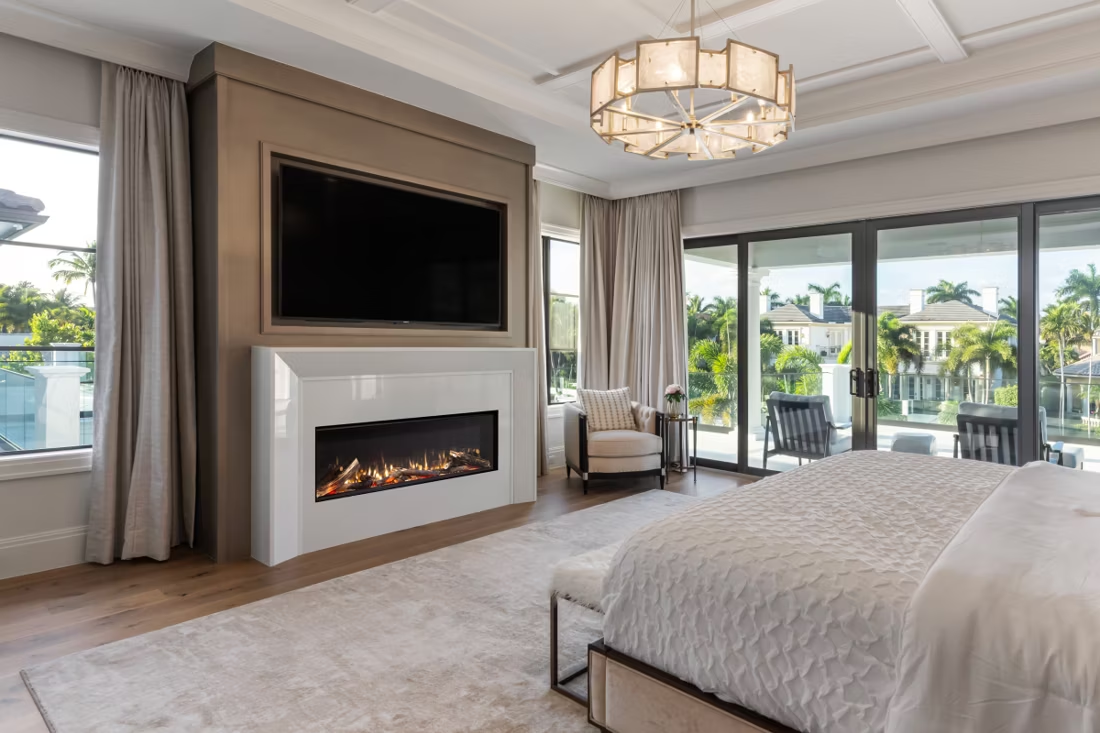
Yes—with an asterisk. Fireplaces are hot and TVs don't like heat. Either put a mantel between them to deflect rising warmth, or choose a fireplace with heat-management technology that creates a cool zone on the wall above—the wall stays around 125 degrees, barely warm, while the room still gets full heat. If you like clean lines and don't want a mantel, heat management is the answer.
Does an electric fireplace need a vent or chimney?
No—that's its superpower. An electric fireplace needs a wall and an outlet, period. No vent pipe, no gas line, no clearances to design around, which is why it works in bedrooms, offices, apartments, and walls where venting a gas or wood unit would be impractical or impossible. Installation is typically the simplest and least expensive of any fireplace type.
What is an in-home preview and do I need one?
It's a visit where a hearth professional measures your space, confirms the model you picked actually works in your home, and walks the specs—framing, gas line, venting, finish work—before anything is ordered. Some details you just can't know until you see the house. Never make a down payment without one; it's the single most-skipped step that burns buyers.
Does a fireplace add value to my home?
On average, a fireplace adds back to the home about the same amount you spent installing it. Add the monthly savings from heating the rooms you actually use instead of the whole house—often hundreds of dollars a year—and the value case is strong before you even count what a fire does for how your family uses the room.
Nearby Dealers
Hearth shops serving Brea and the surrounding area.
Electric Service in Brea
An electric fireplace's heater draws about 1,500 watts—pennies per hour at local rates.
Southern California Edison Co
Find your electric fireplace in Brea.
Tell us a bit about your home and we'll match you with a trusted local Brea dealer and send over a free Project Guide & Parts List—the exact unit, mounting or circuit needs, and installer recommendation for your space.
Find Your Fireplace →