
Real Flame Look, Zero Smoke, in Coto de Caza.
With winter lows averaging 49°F and almost no real heating load, Coto de Caza homes don't need a furnace substitute—they need ambiance that clears the HOA and skips the smoke entirely.
Every Project Starts From One of These Five Situations
The Mildest Heating Season in California Doesn't Need a Chimney.
Coto de Caza sits at 660 feet in a canyon pocket of southern Orange County, and its heating math is about as gentle as it gets: a very light winter heating load each year, against a much heavier load in a place like Duluth, MN. Winters here rarely test a home's heat source—they just call for a warm-looking focal point in the great room on the handful of nights that dip into the 40s. That reality shapes what actually gets installed in this community far more than climate charts do.
Coto de Caza is unincorporated Orange County, governed by OC Development Services for permits and by the community's HOA architectural review committee for anything visible from the street or altering an exterior wall. Because the South Coast Air Basin is a designated non-attainment area and this canyon backs up against Cleveland National Forest wildfire terrain, wood-burning fireplaces are essentially off the table here—most homes were built under rules that pushed builders toward gas or electric from day one, and pellet stoves never caught on in a climate this mild. Electric units sidestep all of it: no venting, no gas line, no combustion emissions on a Spare the Air or red flag day, and typically the easiest fireplace category to get past an HOA committee. The tradeoff is Southern California Edison's residential rate, which at $0.2825 per kWh is among the higher rates in the state—worth factoring in if you're planning to run a unit nightly rather than occasionally.
Three steps. No salesperson until you're ready.
Tell us about your project
Your zip code, your situation, and the fuel you're leaning toward—or let the answers point you to one.
See what's actually available
The brands dealers within 100 miles genuinely carry—real options, never a catalog mirage.
Get your dealer & Project Guide
A trusted local dealer, plus the free Project Guide & Parts List that names every component of the job.
Frequently Asked Questions
How much does an electric fireplace installation cost in Coto de Caza?
A plug-in freestanding or mantel-style electric fireplace needs no installation beyond a standard outlet and typically runs $300 to $1,500 for the unit itself. A recessed, wall-mounted, or built-in unit—the more common choice in Coto de Caza's newer stucco-and-tile homes—usually runs $1,500 to $4,500 installed, including an electrician running a dedicated 120V or 208/240V circuit where needed and any wall framing or surround work. Because most of these homes fall under HOA architectural review, budget a little lead time for approval before your local dealer schedules the install.
Will an electric fireplace actually heat my home, or is it just for looks?
Given Coto de Caza's very light winter heating load and average winter lows around 49°F, most homeowners here aren't asking an electric fireplace to replace central heat—they're using it for zone heat in a family room or primary suite on cooler evenings, plus year-round flame effect. A typical 1,500-watt unit puts out about 5,100 BTUs, enough to noticeably warm a single room, but it's not sized to carry a whole house through a cold snap the way it would need to in a harsher climate. If you want supplemental heat in more than one room, talk to a local dealer about a model with a higher-wattage heater core rather than assuming bigger is always better.
Do I need HOA approval to install an electric fireplace in Coto de Caza?
If the unit is a freestanding, plug-in model that doesn't alter the exterior or structure of the home, most Coto de Caza HOA architectural committees don't require a submission. Built-in or recessed installations that involve new framing, a wall cutout, or anything visible from outside typically do require architectural committee review before work starts—this is a gated, deed-restricted community with active enforcement. A local dealer who's worked in the community before can usually tell you upfront whether your specific plan needs a submission, and can supply the spec sheets the committee typically asks for.
What will it cost to run an electric fireplace given Southern California Edison's rates?
At SCE's residential rate of $0.2825 per kWh, a 1,500-watt electric fireplace running on its heat setting costs roughly $0.42 per hour to operate. Used for ambiance a few hours a few evenings a week, that's a modest add to your bill—often $10 to $20 a month. Running one nightly through the cooler months, or using the heater function as your primary evening warmth, can push that closer to $40 to $60 a month. Many owners in this climate run the flame effect without the heater engaged most of the year, which draws only a fraction of the wattage.
What happens to my electric fireplace during a power outage or Public Safety Power Shutoff?
It won't run. Electric fireplaces have no battery backup or standalone ignition source, so if Southern California Edison shuts power during a Public Safety Power Shutoff—a real possibility in this canyon terrain near Cleveland National Forest during red flag wind events—your unit goes dark along with everything else in the house. This is one of the honest tradeoffs against a battery-backed gas unit. If backup heat during outages matters to you, ask a local dealer about pairing your electric fireplace with a propane or natural gas appliance elsewhere in the home rather than relying on electric as your only heat source.
What's the difference between an electric fireplace, insert, and built-in?
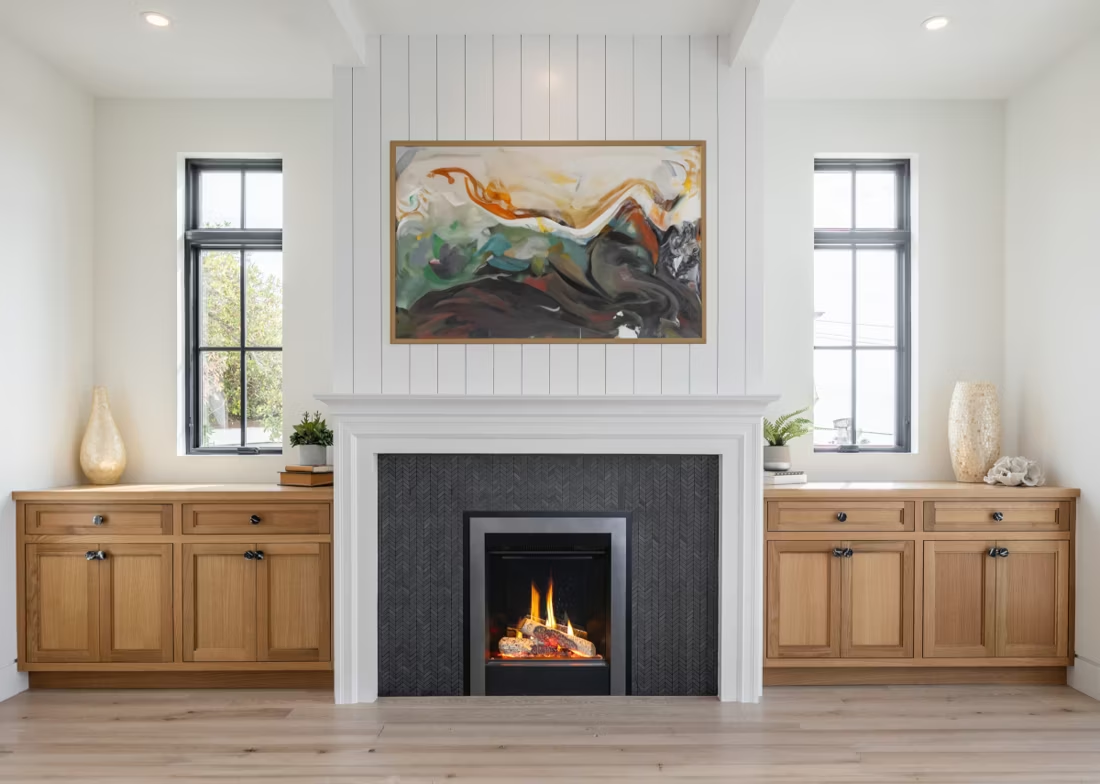
A freestanding electric fireplace is a self-contained cabinet unit you plug in and place anywhere—no modification to the room required. An electric insert is sized to slide into an existing masonry or factory-built firebox opening, which works well if a Coto de Caza home already has a fireplace shell it can no longer or doesn't want to burn wood in. A built-in or wall-mounted unit is recessed into new framing and finished flush with the wall, which is the look most homeowners in this community are after for a clean, modern great room. Inserts and built-ins both typically call for a dedicated circuit, which is where a licensed electrician comes in.
Should I get an electric fireplace or a gas fireplace instead?
Gas is the more common choice in Coto de Caza for a primary living-room fireplace with real heat output and flame—most homes here run on propane rather than piped natural gas given the semi-rural canyon setting, so a gas install often means coordinating a tank as well as the appliance. Electric skips the fuel line entirely, has no combustion byproducts to worry about on a Spare the Air day, and tends to move through HOA review faster since there's no venting to approve. If you want a strong, realistic heat source for a large room, gas is usually the better fit. If you want flame ambiance, flexible placement, and the simplest possible install, electric wins.
Why don't I see wood-burning fireplaces or pellet stoves in Coto de Caza?
Orange County falls within the South Coast Air Basin, a designated non-attainment area, and most homes in this community were built after wood-burning restrictions on new construction took hold—builders defaulted to gas or electric appliances from the start. Add wildfire exposure along the Cleveland National Forest boundary and periodic burn restrictions on poor air quality days, and wood heat simply never took root here the way it has in Northern California or the Sierra foothills. Pellet stoves are uncommon for the same reason plus the mild climate—there's rarely enough sustained cold to justify the fuel handling. A small number of Coto de Caza homeowners with a second property in the mountains or Sierra will still buy wood appliances for that home, but locally, gas and electric are the standard.
Do I need a permit to install an electric fireplace in Coto de Caza?
A simple plug-in unit needs no permit. A built-in or recessed unit that requires new electrical wiring or a dedicated circuit typically needs an electrical permit through OC Development Services, since Coto de Caza is unincorporated Orange County rather than its own city. Most licensed electricians and hearth dealers pull this permit as part of the installation, so it's rarely something you have to manage yourself—but it's worth confirming with your dealer before work begins, especially if the project also needs HOA architectural sign-off.
Does an electric fireplace need a vent or chimney?
No—that's its superpower. An electric fireplace needs a wall and an outlet, period. No vent pipe, no gas line, no clearances to design around, which is why it works in bedrooms, offices, apartments, and walls where venting a gas or wood unit would be impractical or impossible. Installation is typically the simplest and least expensive of any fireplace type.
Do electric fireplaces actually produce heat?
Yes—most put out around 4,800–5,000 BTUs from a standard outlet, which comfortably warms a bedroom, office, or den as a comfort-zone heater. What they won't do is carry a whole house the way wood, gas, or pellet can. Think of electric as ambiance-first with honest supplemental heat: flames on with no heat in July, flames plus warmth in January.
What is an in-home preview and do I need one?
It's a visit where a hearth professional measures your space, confirms the model you picked actually works in your home, and walks the specs—framing, gas line, venting, finish work—before anything is ordered. Some details you just can't know until you see the house. Never make a down payment without one; it's the single most-skipped step that burns buyers.
Can I install a fireplace myself?
If you're putting a fire in your house on purpose, it's best to work with an expert. Unless you're genuinely experienced in framing, gas line, vent pipe, and the national code on clearances to combustibles, have a professional do it—and ideally the same company that sells you the fireplace, so warranty, service, and liability all live under one roof.
Nearby Dealers
Hearth shops serving Coto de Caza and the surrounding area. Every listing shows whether it is a WhyFire partner, a dealer we have verified as authorized for the brands we recommend, or a local business carrying hearth products. No manufacturer pays for placement. How we verify dealers →
We’ve paused dealer listings for this connection today. Enter your zip or postal code above to find dealers near you, or come back tomorrow.
Popular Electric Brands
Where each brand came from, what's inside it today, and every current model. No brand pays to be here. Not every dealer carries every brand, so enter your zip code to see what's sold near Coto de Caza.
Fireplace Xtrordinair
Fireplace Xtrordinair, now often called FireplaceX, is the fireplace brand of Travis Industries, Inc., of Mukilteo, Washington.
5 electric models →DaVinci
DaVinci Custom Fireplaces is a brand of Travis Industries, Inc., of Mukilteo, Washington, the company behind Lopi and Fireplace Xtrordinair.
5 electric models →Kozy Heat
Kozy Heat was founded in 1976 by Dudley Hussong in Lakefield, Minnesota, and incorporated as Hussong Manufacturing Co., Inc. in 1978.
3 electric models →Forge & Flame
Forge & Flame is the stove brand Hearth & Home Technologies introduced in August 2023 to bring Vermont Castings, Harman, and Quadra-Fire under one name.
1 electric model →Electric Service in Coto de Caza
An electric fireplace's heater draws about 1,500 watts—pennies per hour at local rates.
Southern California Edison Co
Find your electric fireplace in Coto de Caza.
Tell us a bit about your home and HOA situation and we'll help you find the right electric fireplace or insert—plus a free Project Guide & Parts List and a trusted local dealer to install it.
Find Your Fireplace →