
Reliable pellet heat for Nevada County's long Sierra winters.
From the historic streets of Nevada City and Grass Valley to the high country near Truckee and Donner Summit, Nevada County sees a long, demanding heating season each year. A pellet stove or insert gives you steady, thermostatically controlled heat without the smoke output of a wood fire—and I'll match you with a trusted local dealer who can size and install it correctly.
Every Project Starts From One of These Five Situations
Consistent, cleaner heat from the foothills to Donner Summit.
Nevada County spans a dramatic elevation range—from the Gold Rush-era neighborhoods of Grass Valley and Nevada City at roughly 2,500 feet, up through Sierra communities near Donner Summit and Truckee above 6,000 feet. With an average winter low of 16°F and a long, demanding heating season each year, this is a county where the heating season runs long and hard, especially at elevation. Oak, madrone, and Douglas fir cover the foothills, and wood heat has deep roots here, but pellet stoves have become a common second choice—and sometimes the primary one—for homeowners who want dependable, thermostat-controlled warmth without tending a fire every few hours.
Part of the appeal is air quality. Nevada County deals with real wildfire smoke exposure most falls, and a pellet appliance burns far cleaner than an open wood fire, producing a fraction of the particulate matter. Pellets are also sold ready to burn—Bear Mountain, Lignetics, and Pacific Pellet are the regional brands you'll find at feed stores and hardware retailers throughout the county—so there's no cutting permit to pull through the BLM Nevada State Office, Tahoe National Forest, or Humboldt-Toiyabe National Forest, and no seasoning wait. That convenience matters in a county where PG&E Public Safety Power Shutoffs during high fire-danger periods are a real consideration—something worth planning around before you buy.
Three steps. No salesperson until you're ready.
Tell us about your project
Your zip code, your situation, and the fuel you're leaning toward—or let the answers point you to one.
See what's actually available
The brands dealers within 100 miles genuinely carry—real options, never a catalog mirage.
Get your dealer & Project Guide
A trusted local dealer, plus the free Project Guide & Parts List that names every component of the job.
Frequently Asked Questions
How much does a pellet stove or insert installation cost in Nevada County?
A typical pellet stove or insert installation in Nevada County runs $3,500 to $7,000, depending on the unit, whether it's a freestanding stove or an insert going into an existing masonry fireplace, and how much venting work is involved. Inserts using an existing chimney with a liner tend to land on the lower end; freestanding stoves in new locations that need fresh through-wall venting and a hearth pad run higher. Homes at higher elevation near Truckee or Soda Springs sometimes need a higher-capacity unit to keep up with colder overnight lows, which can push the cost up slightly. A local dealer will give you a firm number after seeing your space.
What size pellet stove do I need for my home?
Sizing in Nevada County depends heavily on where in the county you live. A home in Grass Valley or Penn Valley at around 2,500 feet and a winter low averaging 16°F needs less capacity than a home near Donner Summit or Soda Springs, where elevation adds a noticeably longer, colder heating season on top of the countywide norm of a long, demanding heating season each year. As a rough guide, a small pellet stove (up to 1,000 sq ft) suits a single room or cabin, a medium unit (1,000-2,000 sq ft) covers most main living areas, and a large stove (2,000+ sq ft) can serve as primary heat in a well-insulated home at valley elevation—but homes at higher elevation should generally size up one tier and look for a larger hopper capacity to reduce overnight refills. A local dealer will factor in your specific elevation and insulation during an in-home visit.
Do I need a permit to install a pellet stove in Nevada County?
Yes—a mechanical or building permit through the Nevada County Building Department is required for new pellet stove and insert installations, since the appliance needs proper venting and clearance verification. Most local dealers handle the permit application as part of the installation, so you generally don't need to do it yourself. Unlike wood cutting, which requires a permit from the BLM Nevada State Office, Tahoe National Forest, or Humboldt-Toiyabe National Forest depending on where you're gathering, buying bagged pellets doesn't require any permit at all—one of the reasons pellet appliances appeal to homeowners who want to skip the cutting-season logistics.
Pellet vs. wood—which makes more sense for a Nevada County home?
Wood is the traditional choice here—oak, madrone, and Douglas fir are abundant, and cutting permits through the Tahoe National Forest, Humboldt-Toiyabe National Forest, or BLM Nevada State Office run as little as $5 to $20 per cord during the spring-through-fall cutting season. Wood also keeps working without electricity, which matters during a PG&E outage. Pellet stoves trade that self-sufficiency for consistency and lower particulate output: you load a hopper, set a thermostat, and get steady heat with a fraction of the smoke of an open wood fire—a real advantage given how often wildfire smoke already affects regional air quality in late summer and fall. The tradeoff is that pellet units need electricity to run the auger and blower, so they won't help during a power outage unless you pair one with a battery backup or generator.
Will my pellet stove work during a power outage?
Not without backup power. Pellet stoves rely on an electric auger to feed the hopper and a blower to distribute heat and exhaust combustion air, so a standard unit shuts down the moment the power drops. This is worth taking seriously in Nevada County, where PG&E Public Safety Power Shutoffs during high fire-danger conditions can take out power for a day or more, on top of ordinary winter storm outages at higher elevations near Truckee and Donner Summit. Some pellet stove owners pair their unit with a small battery backup system or a portable generator sized to run the auger and blower load, which is modest compared to running a whole house. If reliable heat during outages is a priority, ask your local dealer about backup power options, or consider a wood stove as a secondary source.
Where can I buy pellets in Nevada County, and what do they cost?
Bear Mountain, Lignetics, and Pacific Pellet are the regional brands most commonly stocked at feed stores, hardware retailers, and hearth shops throughout the county. Prices typically run $280 to $380 per ton depending on the brand and whether you buy by the pallet (usually 50 forty-pound bags, or one ton) or in smaller quantities. Buying a season's supply early—before wildfire season and the fall rush drive up local demand—is common practice here, and dry, covered storage matters given the Sierra's wet winters and snow load at higher elevations.
What's the difference between a pellet stove and a pellet insert?
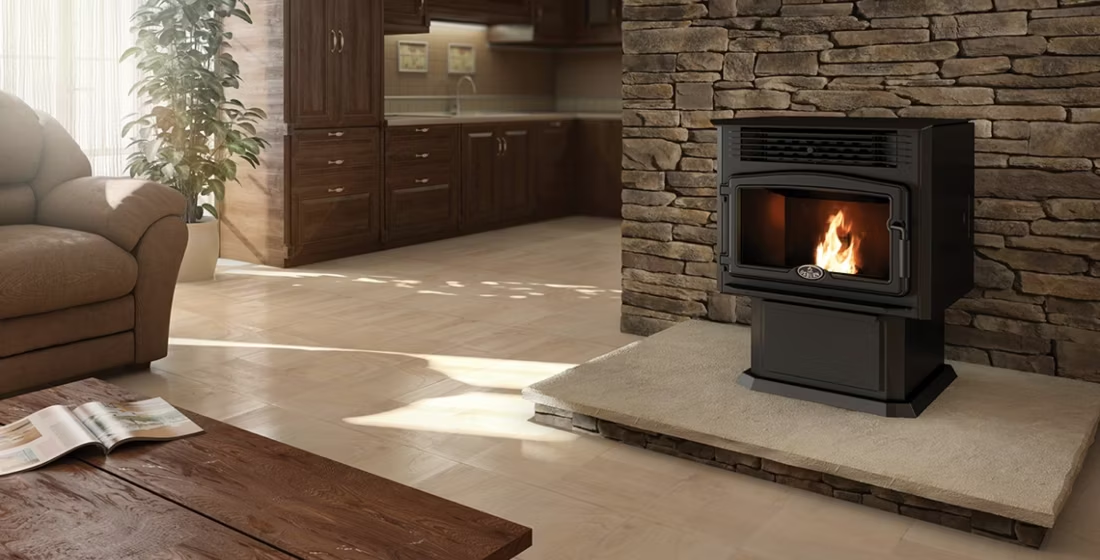
A pellet stove is a freestanding appliance that sits on a hearth pad and vents through a wall or existing chimney—it can go almost anywhere with the right clearances. A pellet insert is built to slide into an existing masonry fireplace opening, turning an old wood-burning fireplace into an efficient, thermostat-controlled heat source while using the existing chimney (with a liner) as the vent path. For Nevada County homes with an existing fireplace—common in the older neighborhoods of Grass Valley and Nevada City—an insert is often the more cost-effective upgrade. Homes without an existing fireplace typically go with a freestanding stove instead.
How often does a pellet stove need to be cleaned and serviced?
Plan on emptying and cleaning the ash pot weekly during regular use, and a full burn-pot and venting cleaning at least once during the season if you're running the stove daily through a long Nevada County winter. An annual professional service—checking the auger, blower motor, gaskets, and venting—is recommended before each heating season starts, similar to how you'd schedule an annual chimney sweep for a wood stove. Given how long and cold this county's winters run, especially at elevation, pellet stoves here tend to see heavier use than in milder parts of California, so staying ahead of maintenance keeps the unit running efficiently through the whole season.
Pellet vs. gas—which is the better fit?
Gas fireplaces offer instant on-off convenience and don't require any fuel handling, but they depend on a natural gas hookup or a propane tank, and much of rural Nevada County runs on propane rather than piped natural gas. Pellet stoves need you to load a hopper every day or two and empty ash periodically, but they burn a renewable, regionally available fuel—Bear Mountain and Pacific Pellet are both produced from West Coast timber byproducts—and they generally cost less to install than a full gas line and venting setup in a home that isn't already plumbed for gas. For homes already set up with propane or natural gas, gas is often simpler; for homes looking for lower fuel costs and less dependence on a delivered fuel tank, pellet is worth a serious look. A local dealer can walk you through both options for your specific home.
Why is my open fireplace making my house colder?
Open fireplaces suck—literally. As the fire burns, it consumes air your furnace already paid to heat and pulls it out through the chimney, so the house is actually colder after the fire goes out than before you lit it. An insert fixes this: it seals the chimney, puts fixed glass across the front, and turns that hole in your house into a real heat source.
Why is a fireplace insert so efficient?
An insert does two things: it seals the chimney completely, so you stop losing air you already paid to heat, and it radiates warmth into the room through the firebox and glass. Most add a heat-exchange fan that pulls cool room air underneath, wraps it around the hot firebox, and pushes it back out warm. Your home is more efficient before you've even lit the first fire.
What is an in-home preview and do I need one?
It's a visit where a hearth professional measures your space, confirms the model you picked actually works in your home, and walks the specs—framing, gas line, venting, finish work—before anything is ordered. Some details you just can't know until you see the house. Never make a down payment without one; it's the single most-skipped step that burns buyers.
Does a fireplace add value to my home?
On average, a fireplace adds back to the home about the same amount you spent installing it. Add the monthly savings from heating the rooms you actually use instead of the whole house—often hundreds of dollars a year—and the value case is strong before you even count what a fire does for how your family uses the room.
Stove and Fireplace Dealers in Nevada County
Pellet Brands Stocked Around Nevada County
Manufacturers will point you to the nearest stocking dealer.
Find your pellet stove in Nevada County.
Tell us about your home's elevation, square footage, and existing fireplace situation, and we'll match you with a trusted local dealer and send over a free Project Guide & Parts List—the exact stove or insert, vent kit, and installation plan for your Nevada County home.
Find Your Fireplace →