
Find the right fireplace for Nevada County's long Sierra winters.
Wood, gas, pellet, and electric fireplace resources for every community in Nevada County—from the oak-and-madrone foothills around Grass Valley to the snowbound I-80 corridor near Truckee. Find the right unit and connect with a trusted local hearth retailer.
Every Project Starts From One of These Five Situations
High-elevation heating from Grass Valley to Truckee.
Nevada County climbs from the oak-woodland foothills around Grass Valley and Nevada City at roughly 2,500 feet up to the high Sierra near Truckee and Donner Summit, where winter lows average 16°F and the county has a winter heating load in the same range as Burlington, Vermont. Snow loads at the upper elevations are heavy and the season runs long, often October through May along I-80. Oak, madrone, and Douglas fir are the wood species most local burners are splitting and stacking, and BLM Nevada State Office, Tahoe National Forest, and Humboldt-Toiyabe National Forest all issue personal-use firewood permits for residents who want to cut their own.
What you'll find on this hub: hearth retailers, service technicians, and fuel suppliers serving all of Nevada County's roughly 53,200 residents—from the historic gold-country towns of Grass Valley and Nevada City down to Penn Valley and up to Truckee's high-elevation neighborhoods. Pick your fuel below to drill into local dealers, installation costs, and recommended units for your specific elevation and situation. A cabin near Donner Summit and a farmhouse outside Penn Valley have very different heating needs, even though they're in the same county.
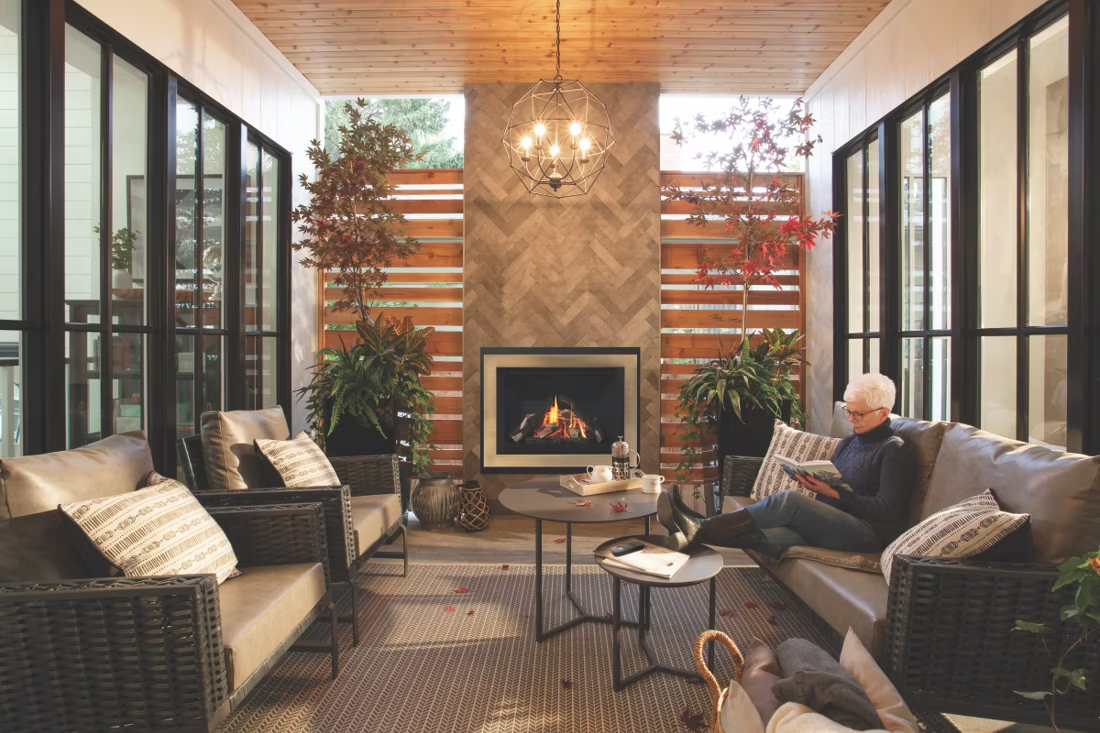
Four fuels. One honest answer for Nevada County.
Three steps. No salesperson until you're ready.
Tell us about your project
Your zip code, your situation, and the fuel you're leaning toward—or let the answers point you to one.
See what's actually available
The brands dealers within 100 miles genuinely carry—real options, never a catalog mirage.
Get your dealer & Project Guide
A trusted local dealer, plus the free Project Guide & Parts List that names every component of the job.
Frequently Asked Questions
Which fuel works best in Nevada County?
It depends heavily on where in the county you live. Up near Truckee and Donner Summit, wood remains a strong primary choice—oak and Douglas fir burn long and hot, and a wood stove keeps working through the power outages that come with heavy Sierra snow loads. In the Grass Valley and Nevada City foothills, gas fireplaces and inserts are popular for their convenience and clean startup on smoky wildfire-season days when you don't want to be splitting or hauling wood. Pellet stoves are a solid middle ground countywide—Bear Mountain and Pacific Pellet are both readily available regionally, and pellet appliances give you wood-like heat without the woodpile. Electric fireplaces work well as supplemental heat in bedrooms or additions but shouldn't be your only heat source given how cold it gets at elevation. Many Nevada County homes end up running two fuels—wood or pellet as the workhorse, gas or electric for shoulder-season convenience.
Do I need a permit to install a fireplace in Nevada County?
In most cases, yes. New wood stoves, wood inserts, gas fireplaces, gas inserts, gas stoves, and pellet stoves typically require a building permit through the Nevada County Building Department, and any wood-burning appliance sold or installed in California must be CARB- or EPA-certified. Gas installations generally need a separate gas line permit and licensed gas-fitter work for the connection. Electric fireplaces usually don't require a permit unless it's a built-in install involving new wiring or a dedicated circuit. Most local hearth retailers in Grass Valley and Truckee handle the permitting process as part of the installation quote, so you typically aren't filing paperwork yourself.
How does wildfire smoke affect wood burning in Nevada County?
Wildfire smoke is the primary air quality concern in Nevada County, not winter inversions. During active fire season, the Nevada County Air Quality Management District can issue smoke advisories that affect outdoor burning and debris burning, though these are separate from wood-stove operation. Where it matters most for your fireplace decision: EPA/CARB-certified stoves burn far cleaner than older uncertified units, which is worth factoring in if you're replacing an old stove—cleaner combustion means less particulate output on top of whatever smoke is already in the air during a bad fire season. If you're cutting your own firewood on BLM or national forest land, check current fire restrictions before heading out, since permit conditions can change quickly during dry, high-risk periods.
Can one local hearth retailer handle all four fuel types?
Several Nevada County dealers carry three or four fuel types, which is worth knowing if you're still deciding between options. Retailers based in Grass Valley tend to have the broadest floor displays—wood, gas, pellet, and electric side by side—since they're serving the larger foothill population. Truckee-area dealers often lean harder into wood and gas given the high-elevation, high-snow-load customer base, with pellet and electric as secondary lines. If you're not sure which fuel fits your home, a multi-fuel dealer can walk you through working displays and talk through the trade-offs for your specific elevation and setup before you commit.
How does service work for homes at different elevations in Nevada County?
Service technicians based in Grass Valley and Truckee both cover a wide radius, but access changes with the seasons. Foothill homes around Grass Valley, Nevada City, and Penn Valley are generally reachable year-round. Higher-elevation homes near Donner Summit or along Highway 20 can be harder to reach after major snow events, so scheduling annual service in the fall—before the first heavy storms—is worth doing rather than waiting for a mid-winter emergency call. If you're at elevation, it's also worth keeping basic backup supplies on hand (spare batteries for gas IPI ignition, a stocked woodshed) since a storm can delay a service visit by several days.
What's the typical cost range for fireplace installation across all fuel types in Nevada County?
Costs vary by fuel and by how much venting or chimney work is involved. Wood stove or insert installation: roughly $4,500–$9,500 for a typical retrofit, more if new chimney chase work is needed for a high-elevation home. Gas fireplace, insert, or stove: roughly $4,500–$11,000 depending on whether a new gas line has to be run; propane conversions in rural areas without natural gas service tend toward the higher end. Pellet stove or insert: roughly $4,500–$7,500 installed. Electric fireplace: $200–$3,000 for the unit itself, plus $400–$1,200 in labor for anything beyond a plug-and-play wall unit. See the county + fuel pages above for retailer-specific pricing detail.
How much should I budget for a fireplace?
For an average home—covering the fireplace, the vent pipe, and basic installation—a budget between $3,900 and $5,500 gives you a lot of options across wood, gas, and pellet. By the time you add finish work, gas line, and electrical, the average complete installation lands between $5,000 and $12,000 all-in. In a remodel or new build, a good rule is to put about 2.5% of the total project cost toward the fireplace.
What is an in-home preview and do I need one?
It's a visit where a hearth professional measures your space, confirms the model you picked actually works in your home, and walks the specs—framing, gas line, venting, finish work—before anything is ordered. Some details you just can't know until you see the house. Never make a down payment without one; it's the single most-skipped step that burns buyers.
Can I install a fireplace myself?
If you're putting a fire in your house on purpose, it's best to work with an expert. Unless you're genuinely experienced in framing, gas line, vent pipe, and the national code on clearances to combustibles, have a professional do it—and ideally the same company that sells you the fireplace, so warranty, service, and liability all live under one roof.
Can a fireplace actually lower my heating bill?
Yes—by creating a comfort zone. A furnace heats every square foot of the house just to warm the one room you're in; a gas fireplace on low burns roughly a sixth of the gas a typical furnace does. Set the furnace around 55–60 degrees as a baseline, then heat the rooms your family actually uses. Families who heat this way commonly save $20–$60 a month.
Stove and Fireplace Dealers in Nevada County
Listings include WhyFire partner dealers, dealers we have verified as authorized for the brands we recommend, and established local businesses that carry hearth products. Every listing shows which one it is. The ones marked Preferred run on WhyFire's software, so they can show you real pricing and book your appointment right here. No manufacturer pays for placement. How we verify dealers →
Gold Country Stoves
Find your fireplace match in Nevada County.
Pick your fuel below to see installation costs, recommended units, and get matched with a trusted local hearth retailer who can put together your free Project Guide & Parts List.
Find Your Fireplace →