
Ambiance that stays legal on a Spare the Air day.
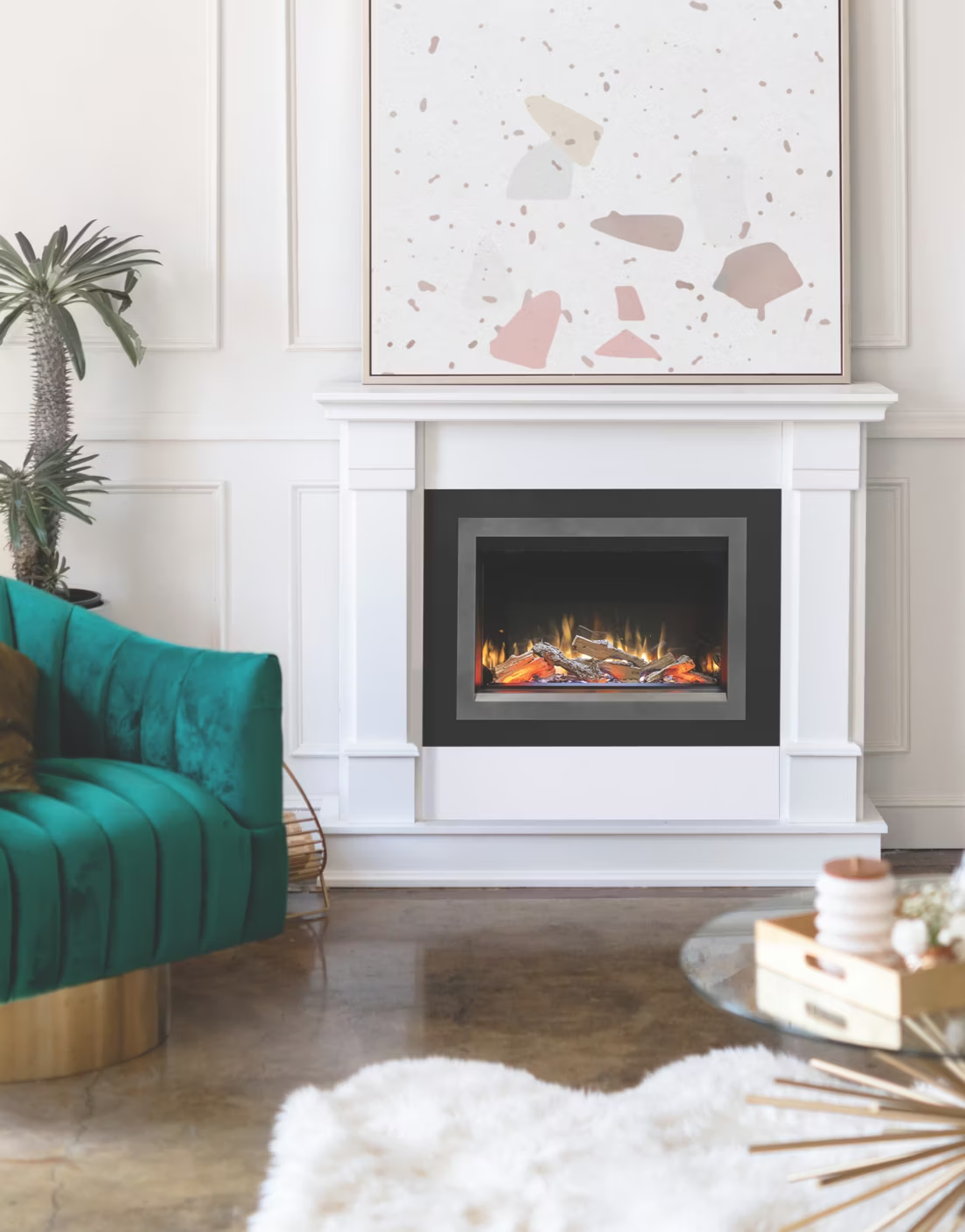
Marin's marine climate rarely calls for a furnace-grade fire, and the Bay Area's strict air rules make zero-emission heat an easy call. I'll match you with a trusted local dealer who can size the right electric unit for your room and handle the install cleanly.
Every Project Starts From One of These Five Situations
A marine climate that rarely needs real heat output.
Marin County sits inside California's mild coastal climate zone 3C, with an average winter low around 43°F and a winter heating season that's mild and short—a fraction of what inland or mountain counties see. Fog off the Pacific and San Francisco Bay keeps summers cool and winters mild from Sausalito and Tiburon through Mill Valley, Corte Madera, San Rafael, and Novato. Oak, madrone, and Douglas fir cover the ridgelines around Mount Tamalpais and West Marin, and wood heat has a real history here, but for most households the actual heating load is modest. That's exactly the situation where an electric fireplace or insert makes practical sense: instant ambiance and supplemental warmth, without sizing a system for a cold snap that rarely comes.
Marin also sits within the Bay Area Air Quality Management District's non-attainment zone, and BAAQMD calls Spare the Air alerts on days when wood smoke would push particulate levels too high—on those days, wood stoves and fireplaces (even certified ones, in many cases) can't legally burn. Electric units are exempt entirely, since there's no combustion and nothing going up a flue. That matters even more given the North Bay's wildfire smoke exposure in recent fire seasons; homeowners in wildland-urban interface communities like Woodacre, San Geronimo Valley, and Inverness have increasingly moved toward electric inserts precisely because they add zero particulate load on days when outdoor air quality is already compromised. The tradeoff worth knowing: electric units need grid power, so they go dark during a Public Safety Power Shutoff, which is a real consideration in a county that sees PSPS events during red flag wind conditions.
Three steps. No salesperson until you're ready.
Tell us about your project
Your zip code, your situation, and the fuel you're leaning toward—or let the answers point you to one.
See what's actually available
The brands dealers within 100 miles genuinely carry—real options, never a catalog mirage.
Get your dealer & Project Guide
A trusted local dealer, plus the free Project Guide & Parts List that names every component of the job.
Frequently Asked Questions
How much does an electric fireplace installation cost in Marin County?
Most electric fireplace or insert installs in Marin run roughly $300 to $2,500 depending on the unit and the work involved. A plug-in insert dropped into an existing masonry firebox in an older Mill Valley or San Anselmo home—no venting, no gas line, just an outlet—sits at the low end. A built-in wall unit for a remodel in San Rafael or Novato, especially one that needs a dedicated 240V circuit run by an electrician, lands higher. Because there's no chimney or vent kit involved, electric is consistently the least expensive fireplace fuel to install countywide, wood and gas included.
Can I run an electric fireplace during a Spare the Air alert?
Yes, without restriction. BAAQMD's Spare the Air program targets combustion—wood stoves, fireplaces, and even some gas appliances on the worst days—because it's aimed at particulate matter. An electric fireplace produces no smoke and no emissions, so it stays usable on exactly the winter days when a wood-burning neighbor down the street in Fairfax or Corte Madera has to let their stove sit cold. That's one of the biggest reasons Marin homeowners choose electric for a primary living-space fireplace rather than a backup unit.
Will my electric fireplace still work if the power goes out?
No, and this is worth planning around in Marin. Electric fireplaces draw from a standard outlet or dedicated circuit, so they shut off the moment power drops—including during a PG&E Public Safety Power Shutoff, which the North Bay sees during high wind and elevated fire-danger conditions in fall. If backup heat during an outage matters to you, some households pair an electric unit for daily, low-maintenance ambiance with a small battery backup, or keep a wood-burning option available elsewhere on the property using oak or Douglas fir cut under a BLM cutting permit. If outage resilience is the priority, say so up front—your local dealer can steer you toward the right combination rather than a single fuel.
Do I need a permit to install an electric fireplace in Marin County?
Often no, if you're installing a plug-in unit that runs off an existing 120V outlet—there's no gas line, no venting, and no structural opening involved. If you're adding a built-in electric fireplace that requires new wiring, a dedicated 240V circuit, or any framing changes, an electrical permit is typically required, and whether that goes through the Marin County Community Development Agency or a city building department depends on whether your property is in unincorporated Marin or inside a city like San Rafael, Novato, or Mill Valley. A local installer familiar with your jurisdiction will know which applies before work starts.
What size electric fireplace do I actually need?
In most of Marin, sizing comes down to the room, not the whole house, since the county's mild 43°F average winter low and short, gentle winter heating season mean electric units are almost always supplemental rather than a home's primary heat source. A compact insert or wall-mount unit rated for 400-1,000 square feet comfortably handles a living room or den in a fog-belt home in Sausalito or Tiburon. Larger open-concept spaces in newer Novato construction may call for a bigger unit or a model with a higher-wattage heater core, but even then you're sizing for supplemental comfort, not to cover a design heating load the way you would in a colder climate.
What should I look for in an electric fireplace or insert?
Flame realism and heater performance vary a lot between price points, so it's worth seeing units running in person rather than ordering off a photo online. Look for a model with a true heating element rated for the wattage your room needs, not just a decorative flame effect, if you want it to do real work on a damp, foggy evening. Brands like Dimplex, Napoleon, and Amantii show up frequently in Bay Area installs and offer options from simple plug-in inserts to fully built-in linear units. A local dealer who's actually installed these in Marin homes can tell you which models hold up well in a coastal, humid environment versus ones better suited to drier inland climates.
Electric vs. wood—which makes more sense for my Marin home?
Wood has genuine roots here—oak, madrone, and Douglas fir are all available under BLM California State Office cutting permits for about $10 per cord during the April-through-October season—but it comes with real constraints in Marin: non-attainment air quality status, wildfire smoke concerns, and the fact that wood appliances can't operate at all during a BAAQMD Spare the Air alert. Electric has none of those restrictions and costs a fraction to install, but it can't provide heat during a power outage and won't deliver the same total BTU output as a wood stove on a rare cold snap. For most Marin households prioritizing daily ambiance, low maintenance, and staying compliant with air rules, electric is the simpler choice; wood tends to appeal more to households in West Marin with existing chimneys and an interest in self-sufficient backup heat.
How much maintenance does an electric fireplace need?
Very little compared to wood or gas. There's no annual chimney sweep, no gas line inspection, and no ash to manage—just occasional dusting of the heating element and glass, and checking that the fan or blower runs quietly. Most electric fireplace components are rated for years of regular use with essentially no service calls. That low-maintenance profile is part of why electric shows up so often in Marin vacation and rental properties in towns like Bolinas and Stinson Beach, where owners want reliable ambiance without arranging seasonal upkeep.
Are there rebates or incentives for installing an electric fireplace in Marin County?
A standalone plug-in electric fireplace usually doesn't qualify for a dedicated rebate on its own, since it's a small load compared to whole-home electrification measures. But if you're bundling the fireplace into a larger project—swapping a gas appliance, upgrading panel capacity, or improving insulation—it's worth asking your local dealer or an electrician about current incentive programs through Marin Clean Energy (MCE) or BayREN, both of which run periodic rebates tied to electrification and efficiency upgrades in Marin and the wider Bay Area. Your PG&E electric rate plan can also affect the practical operating cost of running the unit daily.
Does an electric fireplace need a vent or chimney?
No—that's its superpower. An electric fireplace needs a wall and an outlet, period. No vent pipe, no gas line, no clearances to design around, which is why it works in bedrooms, offices, apartments, and walls where venting a gas or wood unit would be impractical or impossible. Installation is typically the simplest and least expensive of any fireplace type.
Do electric fireplaces actually produce heat?
Yes—most put out around 4,800–5,000 BTUs from a standard outlet, which comfortably warms a bedroom, office, or den as a comfort-zone heater. What they won't do is carry a whole house the way wood, gas, or pellet can. Think of electric as ambiance-first with honest supplemental heat: flames on with no heat in July, flames plus warmth in January.
Does a fireplace add value to my home?
On average, a fireplace adds back to the home about the same amount you spent installing it. Add the monthly savings from heating the rooms you actually use instead of the whole house—often hundreds of dollars a year—and the value case is strong before you even count what a fire does for how your family uses the room.
Can I install a fireplace myself?
If you're putting a fire in your house on purpose, it's best to work with an expert. Unless you're genuinely experienced in framing, gas line, vent pipe, and the national code on clearances to combustibles, have a professional do it—and ideally the same company that sells you the fireplace, so warranty, service, and liability all live under one roof.
Stove and Fireplace Dealers in Marin County
Get your free Project Guide & Parts List for an electric fireplace in Marin County.
Tell me about your home and how you plan to use the fireplace, and I'll match you with a trusted local Marin County dealer and send a free Project Guide & Parts List—the right unit, the electrical requirements, and a recommended installer, no big-box guesswork.
Find Your Fireplace →