
The right hearth for Marin County's mild coastal winters.
Wood, gas, pellet, and electric fireplace resources for every city and unincorporated community in Marin County—from San Rafael to Point Reyes Station. Find the right unit for your home and connect with a trusted local hearth retailer.
Every Project Starts From One of These Five Situations
Coastal Mediterranean heat, Bay Area air rules.
Marin County sits in California climate zone 3C, where the average winter low hovers around 43°F and the county has a light, mild heating season—a fraction of what a place like Duluth, Minnesota racks up in a single hard winter. Fog off the Pacific and San Francisco Bay shapes daily temperature swings more than snow ever does, and heating season here is about taking the chill off foggy mornings in Fairfax or San Anselmo, not surviving sub-zero nights. That said, wood heat still has cultural pull—oak, madrone, and Douglas fir from the Marin hills fuel plenty of ambiance-driven fireplaces—but the county's non-attainment air status and wildfire-smoke seasons put real constraints on how and when you can burn.
What you'll find on this hub: hearth retailers, service technicians, and fuel suppliers covering every corner of the county—San Rafael and Novato on the 101 corridor, the ridge-and-valley towns of Fairfax, San Anselmo, and Mill Valley, the bayside communities of Sausalito, Tiburon, and Corte Madera, and the harder-to-reach coastal towns of Point Reyes Station, Bolinas, Stinson Beach, and Inverness along Highway 1. Pick your fuel below to see local dealers, realistic installation costs, and the BAAQMD rules that shape what you can actually install.
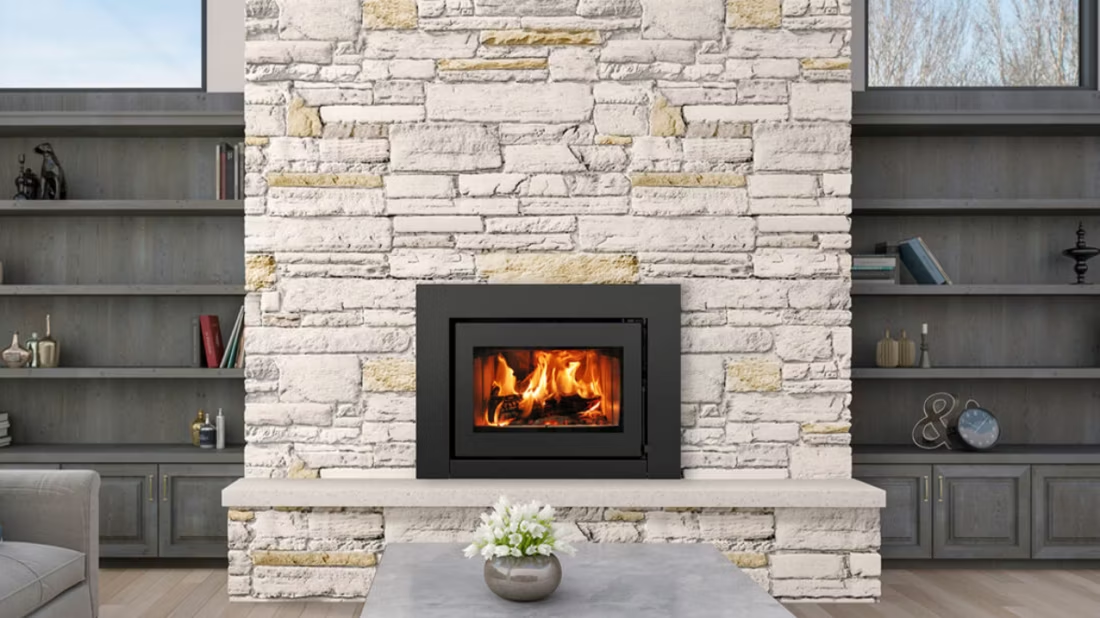
Four fuels. One honest answer for Marin County.
Three steps. No salesperson until you're ready.
Tell us about your project
Your zip code, your situation, and the fuel you're leaning toward—or let the answers point you to one.
See what's actually available
The brands dealers within 100 miles genuinely carry—real options, never a catalog mirage.
Get your dealer & Project Guide
A trusted local dealer, plus the free Project Guide & Parts List that names every component of the job.
Frequently Asked Questions
Which fuel works best in Marin County?
Given Marin's mild winters—average lows around 43°F and only a light, mild heating season—most fireplaces here are chosen for ambiance and occasional evening use more than survival heat, which changes the calculus versus a cold-climate county. Gas is the most common choice for county residents on piped natural gas or propane: instant on, no wood storage, and it clears BAAQMD's wood-smoke rules without any hassle. Wood is still popular for its character—oak, madrone, and Douglas fir all burn well locally—but Bay Area Air Quality Management District Regulation 6 blocks new wood-burning fireplace installations in new construction; wood only works as a certified insert or stove replacing an existing wood fireplace. Pellet stoves split the difference—EPA-certified, exempt from most burn-ban restrictions, and Bear Mountain and Pacific Pellet supply is solid in the North Bay. Electric is a strong fit for coastal fog towns like Bolinas and Stinson Beach where a little supplemental warmth on a damp evening is all most homes need.
Do I need a permit to install a fireplace in Marin County?
Yes, in almost every case. Within incorporated cities—San Rafael, Novato, Mill Valley, Sausalito, Tiburon, Larkspur, Corte Madera, Fairfax, San Anselmo—permits go through that city's building department. In unincorporated areas like Point Reyes Station, Bolinas, Woodacre, and Lagunitas, permits route through the Marin County Community Development Agency. On top of local building permits, any wood-burning device install has to satisfy Bay Area Air Quality Management District Regulation 6, Rule 3: new wood-burning fireplaces aren't allowed in new construction at all, and replacements must be EPA-certified inserts or stoves. Gas installs typically need a separate gas-line permit and licensed gas-fitter sign-off. Electric units usually skip permitting unless they involve new wiring or a hardwired built-in. Most established hearth retailers in the county handle the permit paperwork as part of the job.
Are there air quality restrictions on wood burning in Marin County?
Yes, and they're more restrictive than in most inland counties. Marin sits within a federal non-attainment area for fine particulate matter, and the Bay Area Air Quality Management District runs a Winter Spare the Air program roughly November through February—on declared no-burn days, wood burning is prohibited countywide unless your fireplace or stove is your home's sole source of heat. Hilly valley towns like Fairfax and San Anselmo can trap smoke on still, foggy nights, which is part of why the district takes wood smoke seriously here. Separately, wildfire smoke in September and October has become its own seasonal air quality issue, layering on top of any winter wood-burning smoke. If you're installing a new wood appliance, it has to be EPA-certified, and—per BAAQMD Regulation 6—you can't put a wood-burning fireplace into new construction at all, only a certified insert or stove replacing an existing one.
Can one local hearth retailer handle all four fuel types?
Many can, but not all with equal depth. Retailers clustered around San Rafael and Novato—the county's commercial hearth hubs—tend to carry gas, pellet, and electric with confidence, since those fuels move faster given Marin's mild climate and BAAQMD's wood restrictions. Wood coverage is more selective: because new wood-burning fireplace installs are banned under Regulation 6, dealers who do wood mostly stock EPA-certified inserts and freestanding stoves meant to replace an existing wood-burning fireplace, not new installs. If you're comparing fuels, ask specifically which BAAQMD-compliant wood options a dealer can install versus what's gas- or pellet-only—that distinction matters more here than in most counties.
How does service work in the more remote parts of Marin County?
West Marin—Point Reyes Station, Inverness, Bolinas, Stinson Beach—sits 30 to 50 minutes from the San Rafael/Novato hearth retailers that serve most of the county, connected mainly by Highway 1, which occasionally closes for mudslides or storm damage during the rainy season. Expect a modest travel fee for service calls out there, and it's worth scheduling annual chimney sweeps or gas inspections before the winter Spare the Air season starts, rather than waiting for a cold snap. Many west Marin homes aren't on piped natural gas, so propane, wood, or pellet cover primary heating needs—which makes having a backup fuel option (a wood stove alongside a propane furnace, for instance) more valuable out there than in the 101 corridor towns.
What's the typical cost range for fireplace installation across all fuel types in Marin County?
Bay Area labor rates push Marin's costs above the state average. Wood stove or insert installation: roughly $5,000–$10,000, factoring in EPA-certified unit pricing and the fact that most jobs are replacements of an existing wood-burning fireplace rather than new builds. Gas fireplace, insert, or stove: about $5,500–$12,000, with gas-line work and venting driving the higher end, especially in west Marin homes running on propane. Pellet stove or insert: typically $5,000–$8,000. Electric fireplace: $300–$3,500 for the unit itself, plus $400–$1,200 in labor for anything beyond a simple plug-in—which covers most wall-mount and built-in installs. County + fuel pages above break these down further with local retailer pricing.
Does a fireplace add value to my home?
On average, a fireplace adds back to the home about the same amount you spent installing it. Add the monthly savings from heating the rooms you actually use instead of the whole house—often hundreds of dollars a year—and the value case is strong before you even count what a fire does for how your family uses the room.
Can I install a fireplace myself?
If you're putting a fire in your house on purpose, it's best to work with an expert. Unless you're genuinely experienced in framing, gas line, vent pipe, and the national code on clearances to combustibles, have a professional do it—and ideally the same company that sells you the fireplace, so warranty, service, and liability all live under one roof.
Wood, gas, pellet, or electric—how do I choose?
Match the fuel to your life, not the other way around. Wood: lowest fuel cost and total power-outage independence, but you're hauling and stacking. Gas: press a button, set a thermostat, no maintenance to speak of. Pellet: wood economics with automatic feeding, in exchange for weekly cleaning and a need for electricity. Electric: plugs in anywhere with honest supplemental heat. Nobody regrets the fuel that fits how they actually live.
Should the dealer who sells my fireplace also install it?
Ideally, yes. A fireplace project involves vent pipe, gas line, electrical, and often tile or stone. Hire three or four separate trades and you own the liability and the game of telephone between them. One company selling and installing means one accountable party, start to finish—ask about factory training, on-time completion records, and what happens if an inspection fails.
Stove and Fireplace Dealers in Marin County
Listings include WhyFire partner dealers, dealers we have verified as authorized for the brands we recommend, and established local businesses that carry hearth products. Every listing shows which one it is. The ones marked Preferred run on WhyFire's software, so they can show you real pricing and book your appointment right here. No manufacturer pays for placement. How we verify dealers →
Terra Outdoor Living
Green Fireplace Solutions
Creative Energy
Terra Outdoor Living
O'Kell's Fireplace
Berkeley Heat, LLC
The Irish Sweep, Inc.
Villa Terrazza Patio & Home
Giorgi Bros
River City Stoves
Outdora Exceptional Outdoor Living
Gold Chimney
Kidd Fireplaces
Get matched with a Marin County hearth dealer.
Pick your fuel below and we'll match you with a trusted local dealer and send you a free Project Guide & Parts List—the exact parts, vent kit included, and the dealer who can install it in your Marin County home.
Find Your Fireplace →