
Keep Your Family Warm and Safe—No Matter What
Lincoln winters are mild, but PG&E outages and Sierra foothill cold snaps still make a wood stove worth having. Find the right unit and connect with a trusted local dealer.
Every Project Starts From One of These Five Situations
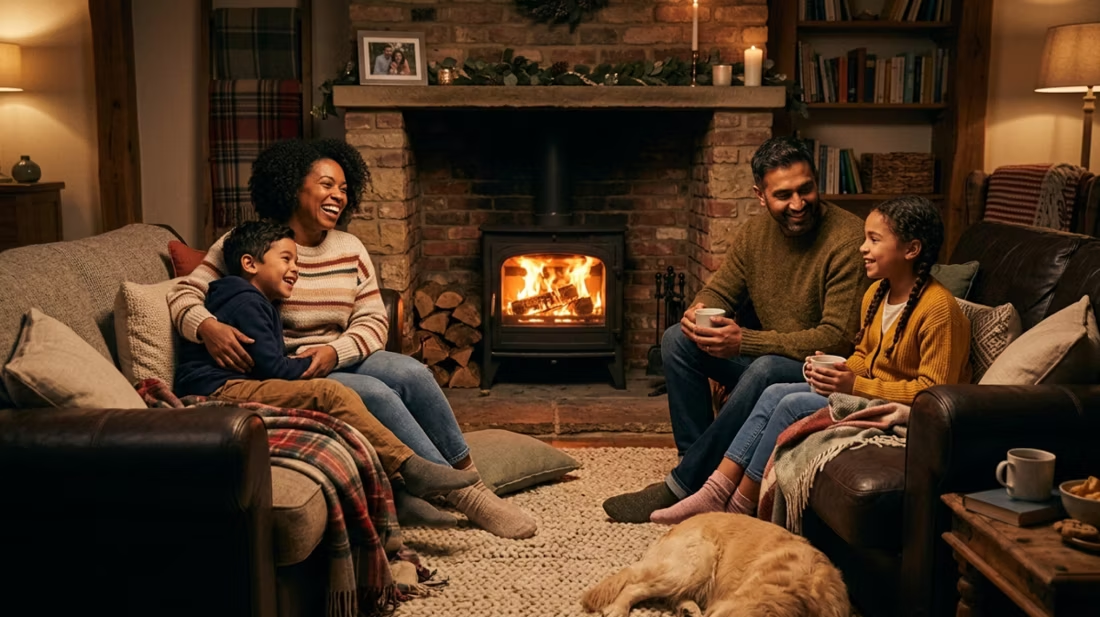
Ambiance today, backup heat when PG&E can't.
Lincoln sits at just 158 feet in elevation on the edge of the Sacramento Valley, with average winter lows around 38°F and roughly 2,812 heating degree days a year—a fraction of what a place like Duluth, MN sees in a single season. Nobody in Lincoln is heating their home with wood out of necessity the way a homeowner in the Sierra high country might be. But plenty of Placer County families run a wood stove or insert anyway, for the radiant heat on a cold, foggy Valley night and for the peace of mind that comes from having heat that doesn't depend on the grid.
That grid concern is real here. PG&E serves the area at a residential rate around $0.317/kWh—one of the higher rates in the country—and Public Safety Power Shutoffs during fall wildfire season have left Placer County homes without electricity for a day or more at a time. A wood stove keeps working through all of that. Local wood supply leans heavily on oak and madrone from the foothills, with Douglas fir as a common secondary species, and most Lincoln homeowners either buy split, seasoned cordwood locally or cut their own with a permit from Tahoe National Forest or Eldorado National Forest, both within a reasonable drive east of town. The one thing to plan around: Lincoln falls within the Sacramento region's non-attainment area for winter particulate matter, so burning is restricted on declared Spare the Air days, and older uncertified stoves face real limits on when they can operate.
Firewood Cutting Permits Near Lincoln
Three steps. No salesperson until you're ready.
Tell us about your project
Your zip code, your situation, and the fuel you're leaning toward—or let the answers point you to one.
See what's actually available
The brands dealers within 100 miles genuinely carry—real options, never a catalog mirage.
Get your dealer & Project Guide
A trusted local dealer, plus the free Project Guide & Parts List that names every component of the job.
Frequently Asked Questions
How much does a wood stove installation cost in Lincoln?
Most wood stove installations in Lincoln run somewhere between $4,000 and $8,500, depending on the stove itself, whether you're venting through an existing masonry chimney or need a new Class A chimney run, and any hearth pad work needed to meet clearance codes. Installing into a home with no existing chimney—common in Lincoln's newer subdivisions off Highway 65—tends to land on the higher end once through-roof venting is factored in. Local hearth dealers typically include permitting and code compliance as part of the installation quote, so ask for that up front.
What size wood stove do I need for a Lincoln home?
Lincoln's housing stock ranges from older ranch homes near downtown to larger newer-construction homes in developments like Twelve Bridges—insulation quality varies a lot between the two, which matters more than square footage alone. A small stove (up to 1,000 sq ft) suits a single great room or a supplemental setup; a medium stove (1,000–2,000 sq ft) covers most main living areas; larger stoves are rarely necessary here given how mild the winters run. Because most Lincoln buyers want the stove for supplemental and backup heat rather than whole-house primary heat, local dealers will usually steer toward a mid-size unit sized to your main living space rather than the whole footprint.
Where can I find certified wood stove installers near Lincoln?
Look for NFI (National Fireplace Institute) or CSIA (Chimney Safety Institute of America) certification—both signal real training in wood-burning clearances and venting, not just retail sales experience. Lincoln itself is a smaller market, so many homeowners work with certified hearth dealers based in Roseville, Rocklin, or Auburn who service Placer County. The retailers matched through this site all employ certified installers and will pull permits through the City of Lincoln or Placer County Building Services as part of the job.
Wood stove or wood insert—which fits my Lincoln home?
A wood insert slides into an existing masonry fireplace and uses the chimney you already have—the better fit for Lincoln's older homes near downtown that were built with a traditional open hearth. A freestanding wood stove goes almost anywhere with proper clearances and new venting, which makes it the more common choice in Lincoln's newer tract homes that were never built with a chimney at all. If you already own a fireplace that barely puts out heat, an insert will dramatically improve its performance without changing the room's layout.
Do I need a permit to install a wood stove in Lincoln?
Yes. New wood stove installations require a building permit through the City of Lincoln or Placer County Building Services (depending on your address), and the unit has to meet current EPA 2020 NSPS emissions standards. Most local installers handle the permit paperwork as part of the job. Once installed, be aware that Lincoln falls within the Sacramento region's winter non-attainment zone—on declared Spare the Air or 'Check Before You Burn' curtailment days, only EPA/DEQ-certified stoves are allowed to operate, and older uncertified units may be barred from burning entirely.
What's the best wood stove for Lincoln's climate?
Because Lincoln's winters are mild—average lows around 38°F, not the sub-zero nights that demand a 20-hour catalytic burn—most homeowners here do fine with a mid-size non-catalytic stove from a brand like Pacific Energy or Lopi, sized for a great room or main living area rather than the whole house. The bigger consideration locally is reliability during a PSPS outage: a simple, well-built stove that doesn't depend on electronic controls will still light and run when the grid is down. Oak and madrone, both common in the foothills, burn hot and long, so even a moderately sized firebox delivers solid heat.
How often should my chimney be inspected in Lincoln?
An annual inspection is the standard recommendation from the CSIA regardless of climate, and it holds for Lincoln even though usage here tends to be lighter than in colder regions—most Lincoln stoves see occasional and backup use rather than daily burning all winter. Late summer, before wildfire smoke season and the first Spare the Air alerts of the year, is the practical window to get it done. If you're burning several times a week through the cooler months, watch for creosote buildup a bit more closely, since infrequent light use can sometimes glaze creosote rather than clear it.
Where can I get firewood in or near Lincoln?
Local firewood suppliers in the Auburn and Newcastle area regularly deliver into Lincoln, with oak—the dominant local hardwood—running roughly $300–$400 per cord seasoned and split, and madrone or Douglas fir sometimes available for less. For self-cutting, Tahoe National Forest and Eldorado National Forest both issue personal-use cutting permits for around $10 per cord or $5–$20 per cord depending on the unit, with cutting seasons generally running April or May through October—plan on a drive of an hour or more up into the Sierra foothills to reach the cutting areas.
Wood stove vs. pellet stove—which makes more sense in Lincoln?
This is a real decision point locally because of PG&E's Public Safety Power Shutoffs. Pellet stoves need electricity to run the auger and blower, so a pellet stove goes cold the moment the power drops—not ideal if you're buying one specifically as an outage backup. A wood stove keeps burning with no power at all, which is why many Lincoln homeowners choose wood specifically for that resilience. Pellet stoves do burn cleaner and are easier to load and control day to day, and regional brands like Bear Mountain, Lignetics, and Pacific Pellet are widely available in the area if convenience matters more to you than outage independence.
Why is a fireplace insert so efficient?
An insert does two things: it seals the chimney completely, so you stop losing air you already paid to heat, and it radiates warmth into the room through the firebox and glass. Most add a heat-exchange fan that pulls cool room air underneath, wraps it around the hot firebox, and pushes it back out warm. Your home is more efficient before you've even lit the first fire.
Why won't my new wood stove get going like my old one?
New wood stoves are 70%+ efficient, so far less heat goes up the flue—which also means less draft to get a fire established. The rule: build a genuinely hot fire for about 45 minutes before you choke it down. Skip that and you get smoke in the room, creosote in the chimney, and a fire that never takes off. Most performance complaints trace straight back to this.
What is an in-home preview and do I need one?
It's a visit where a hearth professional measures your space, confirms the model you picked actually works in your home, and walks the specs—framing, gas line, venting, finish work—before anything is ordered. Some details you just can't know until you see the house. Never make a down payment without one; it's the single most-skipped step that burns buyers.
Can I install a fireplace myself?
If you're putting a fire in your house on purpose, it's best to work with an expert. Unless you're genuinely experienced in framing, gas line, vent pipe, and the national code on clearances to combustibles, have a professional do it—and ideally the same company that sells you the fireplace, so warranty, service, and liability all live under one roof.
Nearby Dealers
Hearth shops serving Lincoln and the surrounding area.
A To Z Chimney Service & Dryer Vent Cleaning (Parts Only)
Find your wood fireplace in Lincoln.
Tell us about your home and we'll match you with a trusted local hearth dealer and send over a free Project Guide & Parts List—the exact stove, vent kit, and install plan for your Lincoln project.
Find Your Fireplace →