
Reliable Gas Heat for Every Lincoln Winter, Burn Ban or Not.
Lincoln winters are mild, but Placer County's air rules mean wood isn't always an option. Find the right gas fireplace or insert and connect with a trusted local dealer.
Every Project Starts From One of These Five Situations
In the Sacramento Valley, air rules favor gas heat.
Lincoln sits on the valley floor at just 158 feet elevation in Placer County, with a mild Climate Zone 3B winter—average lows around 38°F and a light overall heating load for the year. That's a fraction of the heating demand a place like Bozeman, Montana sees with its long, harsh winters. Most Lincoln homes don't need a fireplace to survive winter, but they still want one, especially in the newer subdivisions around Sun City Lincoln Hills and Twelve Bridges where gas lines are already run to the house.
The bigger driver toward gas here is air quality. Lincoln sits in the Sacramento Valley air basin, a federal non-attainment area subject to winter inversions and wildfire smoke that can trap pollution close to the ground for days at a time. Placer County participates in the region's Check Before You Burn program, which triggers mandatory no-burn days for wood stoves and fireplaces on high-pollution days each winter—even for some EPA-certified units. Gas fireplaces aren't affected by those curtailments, which is a big part of why gas has become the default choice for homeowners who want reliable, on-demand heat without checking an air alert first.
Three steps. No salesperson until you're ready.
Tell us about your project
Your zip code, your situation, and the fuel you're leaning toward—or let the answers point you to one.
See what's actually available
The brands dealers within 100 miles genuinely carry—real options, never a catalog mirage.
Get your dealer & Project Guide
A trusted local dealer, plus the free Project Guide & Parts List that names every component of the job.
Frequently Asked Questions
How much does a gas fireplace installation cost in Lincoln?
Most gas fireplace and insert installations in Lincoln run between roughly $4,000 and $9,500, depending on the unit, the venting path, and whether a new gas line needs to be run. A direct-vent insert going into an existing masonry fireplace with gas already nearby tends to land on the lower end. New construction or a fireplace added to a room that has never had gas service costs more once you factor in trenching, a new gas line from the meter, and framing for a built-in unit. Local dealers will give you a firm number after walking the specific room.
Can I convert my existing wood-burning fireplace to gas?
Yes, and it's a common project in Lincoln's older neighborhoods where homes built in the 1980s and 1990s have a standard masonry fireplace with a full chimney. A gas insert typically slides into that existing opening and vents through a stainless liner run up the same chimney, which keeps the job to roughly $4,200-$8,500 in most cases. If PG&E gas service already reaches the house, the main added cost is usually just the branch line to the fireplace and the liner itself, not a full new gas hookup.
Does Lincoln have natural gas, or do I need propane?
Pacific Gas & Electric provides both electric and natural gas service to most of incorporated Lincoln, so if your home already has a gas water heater, range, or furnace, adding a gas fireplace is usually a straightforward tie-in to PG&E service. Some newer developments on the edges of the city and rural properties toward Sheridan and unincorporated Placer County aren't on the gas main and rely on propane instead. Most gas fireplace models can be set up for either fuel—your installer configures the orifice and regulator for whichever service you have.
Will my gas fireplace still work if the power goes out?
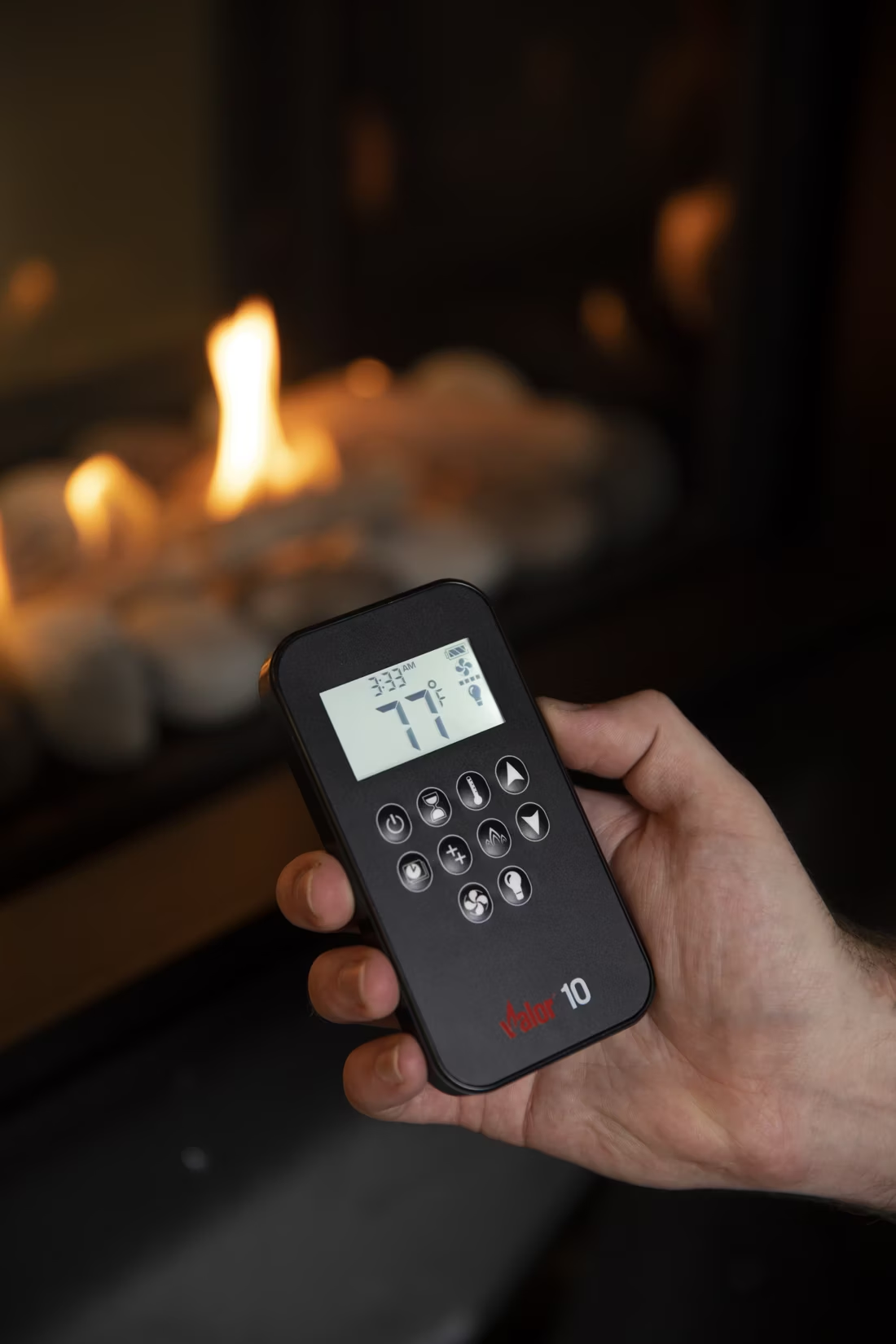
Most modern gas fireplaces will, which matters in Placer County given how often PG&E calls Public Safety Power Shutoffs during high fire-risk periods. Units with intermittent pilot ignition run on a small battery backup that lights the fireplace on demand even with the power off, as long as you keep fresh batteries in the unit. Valor fireplaces take a different approach and generate their own power from the pilot's thermocouple, so there's no battery to remember at all. If PSPS events are a real concern for your part of Lincoln, ask your local dealer about ignition type specifically—it's not a spec most people think to check.
What's the difference between a gas fireplace, a gas insert, and a gas stove?
A gas fireplace is a fully built-in unit framed into a wall, which is how most fireplaces get installed in new Lincoln construction. A gas insert is sized to slide into an existing masonry fireplace opening, using the chimney you already have as the vent path with a liner—the right call for older homes around downtown Lincoln with a traditional wood-burning fireplace already in place. A gas stove is freestanding, sits on a hearth pad like a wood stove, and works well in rooms without an existing fireplace or chimney at all. A local dealer can walk your specific room and tell you which category fits.
Do I need a permit for a gas fireplace installation in Lincoln?
Yes. New gas fireplace installations require a building permit through the City of Lincoln Building & Safety Division, or the Placer County Building Department if the property is in an unincorporated area. Because gas line work is involved, the job also needs a licensed gas-fitter, which is one of the reasons it's worth using a certified hearth dealer rather than a general handyman—they coordinate the gas line, venting, and inspection sign-off as one job instead of leaving you to manage separate trades.
Should I get a vented or a vent-free gas fireplace?
Vented, direct-vent gas fireplaces pull combustion air from outside and exhaust it back outside through sealed piping, which keeps combustion byproducts out of the house entirely. Vent-free units burn without any exterior venting and release some water vapor and trace combustion gases into the room, which makes them a harder sell in a house that's already sealed tight for California's Title 24 energy code—indoor air quality concerns compound with the same winter inversions that already trap wildfire smoke over the valley. Most dealers serving Lincoln steer homeowners toward direct-vent units for this reason, and it's the option we'd recommend asking about first.
How often does a gas fireplace need to be serviced?
Plan on an annual inspection, typically before the first cold snap in November. A technician checks the burner, pilot assembly, venting, and any electronic ignition components, and cleans the glass and firebox interior. It's a much smaller job than chimney sweeping for a wood stove, but skipping it is how pilot and ignition problems go unnoticed until the coldest night of the year. Most gas service providers in the Placer County area charge $150-$225 for a standard annual visit.
Should I go with gas or wood in Lincoln?
Wood is still available here—oak, madrone, and Douglas fir are the common local species, and cutting permits through the Tahoe and Eldorado National Forests run about $5-$20 per cord in season. But Lincoln's participation in the Sacramento region's Check Before You Burn program means wood-burning devices can be restricted on high-pollution winter days, sometimes for days in a row during a bad inversion. Gas fireplaces aren't subject to those curtailments, run on demand with no ash or storage, and fit the mild-winter, air-quality-conscious reality of the Sacramento Valley better for most primary living spaces. Some Lincoln homeowners keep a wood stove for backup heat or ambiance and use gas as the everyday unit—plenty of local dealers carry both.
Is my gas fireplace wasting gas?
If it was installed more than 15 years ago, probably. Older gas fireplaces keep a standing pilot light burning all the time, and that little flame can cost a couple hundred dollars a year. Newer models use pilot-on-demand ignition—the pilot lights only when you use the fireplace and goes out when you turn it off.
What's the difference between an insert and a zero-clearance fireplace?
An insert is a fireplace that slides into a pre-existing wood-burning fireplace—if you don't have one, there's nothing to insert it into. A zero-clearance fireplace is built into a framed wall, which makes it the answer for remodels and new construction. Simple test: existing masonry fireplace means insert; blank or framed wall means zero-clearance.
What is an in-home preview and do I need one?
It's a visit where a hearth professional measures your space, confirms the model you picked actually works in your home, and walks the specs—framing, gas line, venting, finish work—before anything is ordered. Some details you just can't know until you see the house. Never make a down payment without one; it's the single most-skipped step that burns buyers.
Can I install a fireplace myself?
If you're putting a fire in your house on purpose, it's best to work with an expert. Unless you're genuinely experienced in framing, gas line, vent pipe, and the national code on clearances to combustibles, have a professional do it—and ideally the same company that sells you the fireplace, so warranty, service, and liability all live under one roof.
Nearby Dealers
Hearth shops serving Lincoln and the surrounding area.
A To Z Chimney Service & Dryer Vent Cleaning (Parts Only)
Find your gas fireplace in Lincoln.
Tell us a bit about your home and we'll put together a free Project Guide & Parts List for your gas fireplace project—the right unit, the exact parts including the vent kit, and a match with a trusted local Lincoln-area dealer.
Find Your Fireplace →