
Steady, Clean Heat Through Lake County's Long Fire Seasons.
From the Clear Lake shoreline to the hillside communities around Mount Konocti and Cobb, pellet stoves give Lake County homeowners thermostat-controlled warmth that burns cleaner during wildfire smoke season. Find the right unit and connect with a trusted local dealer.
Every Project Starts From One of These Five Situations
Clean-burning heat for a county shaped by fire.
Lake County sits in climate zone 4B with a winter low average around 33 degrees and a winter heating season that's fairly mild—nothing like true cold-climate country such as Duluth, MN, where the heating season is nearly three times as demanding. Around Clear Lake, Lakeport, and Kelseyville, winters are more about steady shoulder-season warmth than survival heat. But the county's oak, madrone, and Douglas fir woodlands have burned repeatedly in recent years—the 2015 Valley Fire and the 2018 Mendocino Complex Fire both left lasting marks on communities like Middletown, Cobb, and Hidden Valley Lake—and wildfire smoke is now a near-annual air quality concern across the county.
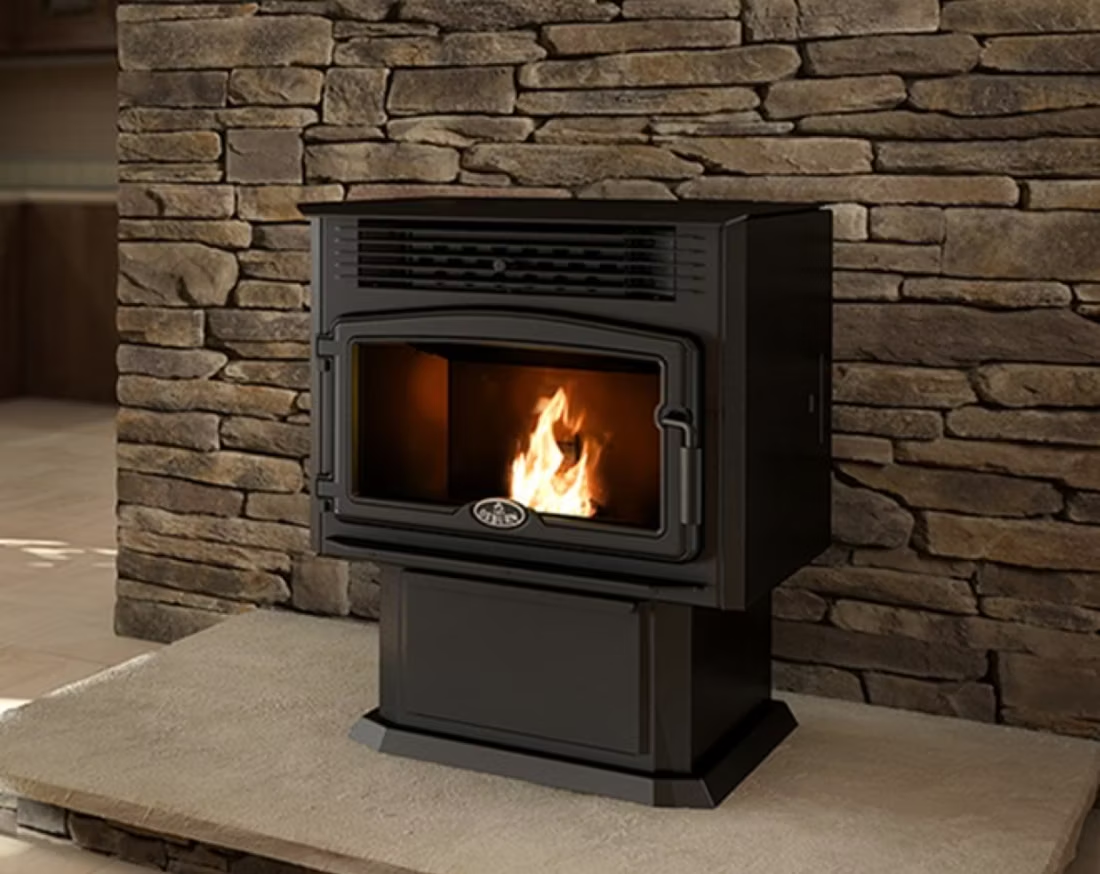
That combination is exactly where pellet appliances earn their place. A pellet stove burns compressed sawdust fuel from regional brands like Bear Mountain, Lignetics, and Pacific Pellet at a fraction of the particulate output of an open wood fire, which matters when the county is already dealing with wildfire smoke advisories some weeks of the year. Some Lake County residents still cut their own firewood under Mendocino National Forest or BLM California permits, but for many households—especially in post-fire rebuilds around Middletown and Cobb—a pellet stove's automated hopper feed and thermostat control is the simpler, cleaner path to consistent heat without splitting or stacking cordwood.
Three steps. No salesperson until you're ready.
Tell us about your project
Your zip code, your situation, and the fuel you're leaning toward—or let the answers point you to one.
See what's actually available
The brands dealers within 100 miles genuinely carry—real options, never a catalog mirage.
Get your dealer & Project Guide
A trusted local dealer, plus the free Project Guide & Parts List that names every component of the job.
Frequently Asked Questions
How much does a pellet stove installation cost in Lake County?
Most Lake County pellet installations run in the neighborhood of $3,500 to $6,500, depending on the stove, whether it's a freestanding unit or an insert into an existing fireplace, and how much wall or through-roof venting is needed. A straightforward insert into an existing masonry fireplace with a nearby outlet for the auger and blower tends to land on the lower end; a freestanding stove in a new location requiring fresh PL-venting and electrical work runs higher. Local dealers around Lakeport and Clearlake will give you a firm number after seeing your space, since travel and venting distance affect the quote more than the stove itself.
What size pellet stove do I need for my Lake County home?
Because Lake County's climate is relatively mild—winter lows average around 33 degrees on the valley floor near Clear Lake—many homes get by with a mid-size pellet stove used as primary or near-primary heat rather than needing the largest units on the market. Homes at higher elevation around Cobb or Hidden Valley Lake run cooler overnight and may want a step up in hopper capacity and BTU output compared to a similarly sized home down near the lake. A local dealer will factor in square footage, insulation, and elevation during an in-home visit rather than sizing off square footage alone.
Do I need a permit to install a pellet stove in Lake County?
Yes—new pellet stove installations require a building permit, issued through the Lake County Community Development Department for unincorporated areas or the relevant city building department if you're within Clearlake or Lakeport city limits. Permits typically cover the venting path and any electrical work for the unit's blower and auger circuit. Most hearth dealers who sell and install pellet stoves in the county handle the permit paperwork as part of the job, so you're not usually filing anything yourself.
Where can I buy pellets in Lake County, and what do they cost?
Bear Mountain, Lignetics, and Pacific Pellet are the regional brands most commonly stocked at hearth retailers and farm/feed stores serving Lakeport, Clearlake, and Kelseyville, with pricing typically falling in a similar range to the rest of Northern California—roughly $300 to $400 per ton depending on brand and season. Buying in bulk before fall, when demand and wildfire-season disruptions to delivery can both drive prices up, is the common local strategy. Ask your dealer which brands they stock consistently, since availability can shift year to year with mill supply.
Are pellet stoves affected by Lake County's wildfire smoke advisories?
Generally no—this is one of the main reasons pellet appliances have gained ground locally. During air quality advisories tied to wildfire smoke, which the county deals with most summers and into fall, wood-burning curtailment guidance typically targets open fireplaces and non-certified wood stoves. EPA-certified pellet stoves burn cleaner and are commonly exempt from curtailment restrictions that apply to conventional wood burning, similar to how pellet appliances are treated in other Northern California air districts. Confirm current rules with the Lake County Air Quality Management District if you're burning during an active smoke advisory.
Will my pellet stove work if the power goes out?
Not without backup power—this is worth planning for in Lake County specifically. Pellet stoves rely on an electric auger to feed fuel and a blower to distribute heat, so they shut down in a standard outage. PG&E serves most of Lake County and has implemented Public Safety Power Shutoffs during high fire-risk conditions in recent years, meaning outages here aren't limited to storm season the way they are in some regions. If backup heat during an outage matters to you, ask your dealer about pairing a pellet stove with a small battery backup or generator, or consider a wood stove as a secondary, power-independent heat source for your home.
How much maintenance does a pellet stove need?
Pellet stoves need more routine attention than a wood stove but less than people expect—daily or weekly ash pan emptying depending on use, a burn pot cleaning every few days during heavy use, and a full professional cleaning and inspection once a year, ideally before the fall burning season starts. Venting should also be checked annually, since pellet exhaust venting can accumulate fine ash over a season of regular use. Local hearth shops around Clear Lake typically offer seasonal service appointments, and booking early in late summer avoids the fall rush.
Pellet stove vs. wood stove—which makes more sense in Lake County?
Wood stoves work without electricity, which matters given PG&E's Public Safety Power Shutoffs during fire season, and pair with locally cut oak, madrone, and Douglas fir from Mendocino National Forest or BLM permits. Pellet stoves burn cleaner during the county's periodic wildfire smoke advisories, need less hands-on tending, and produce far less ash and creosote—but they go dark in a power outage unless you've got battery backup. Given Lake County's mild winters, many homeowners choose pellet for daily convenience and clean-burning performance, then keep a wood stove or fireplace as backup heat for outage-prone stretches of fire season.
What pellet stove brands are actually available through local Lake County dealers?
Availability is what matters more than any brand name on a spec sheet—a stove is only as good as the dealer who can service it and keep parts in stock. Local hearth retailers serving Lakeport, Clearlake, and Kelseyville generally carry a mix of established pellet stove manufacturers alongside regional fuel brands like Bear Mountain, Lignetics, and Pacific Pellet. Rather than shopping by brand first, a better approach is asking your matched local dealer which stoves they install and service most in Lake County, since that tells you who can actually keep your appliance running through a full winter.
Why is a fireplace insert so efficient?
An insert does two things: it seals the chimney completely, so you stop losing air you already paid to heat, and it radiates warmth into the room through the firebox and glass. Most add a heat-exchange fan that pulls cool room air underneath, wraps it around the hot firebox, and pushes it back out warm. Your home is more efficient before you've even lit the first fire.
Why is my open fireplace making my house colder?
Open fireplaces suck—literally. As the fire burns, it consumes air your furnace already paid to heat and pulls it out through the chimney, so the house is actually colder after the fire goes out than before you lit it. An insert fixes this: it seals the chimney, puts fixed glass across the front, and turns that hole in your house into a real heat source.
Does a fireplace add value to my home?
On average, a fireplace adds back to the home about the same amount you spent installing it. Add the monthly savings from heating the rooms you actually use instead of the whole house—often hundreds of dollars a year—and the value case is strong before you even count what a fire does for how your family uses the room.
How much should I budget for a fireplace?
For an average home—covering the fireplace, the vent pipe, and basic installation—a budget between $3,900 and $5,500 gives you a lot of options across wood, gas, and pellet. By the time you add finish work, gas line, and electrical, the average complete installation lands between $5,000 and $12,000 all-in. In a remodel or new build, a good rule is to put about 2.5% of the total project cost toward the fireplace.
Stove and Fireplace Dealers in Lake County
Pellet Brands Stocked Around Lake County
Manufacturers will point you to the nearest stocking dealer.
Find your pellet stove in Lake County.
Tell us a bit about your home and we'll match you with a trusted local dealer and send over a free Project Guide & Parts List—a clear plan for your pellet stove project in Lake County, right down to the venting.
Find Your Fireplace →