
Clean, smoke-free heat for Lake County's mild winters.
No chimney, no wood smoke, no combustion byproducts—just a switch-on flame and supplemental warmth for homes around Clear Lake, from Lakeport to Clearlake to Middletown. Find the right unit and connect with a trusted local dealer.
Every Project Starts From One of These Five Situations
Mild winters, wildfire smoke, and a fuel that asks nothing of you.
Lake County's winters are gentle by California standards—an average low near 33°F and a heating load about like Fresno's puts the county in climate zone 4B, closer to a mixed climate than a true cold-winter one. Around Clear Lake, at Lakeport, Kelseyville, and Clearlake, most homes need supplemental zone heat rather than a serious primary heat source, and that's exactly the job an electric fireplace or insert does well. There's no chimney to maintain, no combustion gases to vent, and no cord of oak or Douglas fir to split and stack.
Lake County has also lived through some of the state's worst wildfire seasons—the Valley Fire and the Mendocino Complex both burned through this county—and wildfire smoke is a recurring air quality concern in late summer and fall. On the smokiest days, an electric unit doesn't add anything to the air, indoors or out, which is part of why many local homeowners choose electric for a den, bedroom, or secondary living space instead of running a wood stove. The tradeoff worth knowing up front: PG&E serves electric customers here, and PG&E does call Public Safety Power Shutoffs during high fire-risk conditions—so an electric fireplace, unlike a wood stove, goes dark exactly when a shutoff hits. Most local homeowners treat electric as ambiance and daily comfort heat, not their only heat source during fire season.
Three steps. No salesperson until you're ready.
Tell us about your project
Your zip code, your situation, and the fuel you're leaning toward—or let the answers point you to one.
See what's actually available
The brands dealers within 100 miles genuinely carry—real options, never a catalog mirage.
Get your dealer & Project Guide
A trusted local dealer, plus the free Project Guide & Parts List that names every component of the job.
Frequently Asked Questions
How much does an electric fireplace installation cost in Lake County?
Electric fireplace projects in Lake County typically run $400 to $2,500 depending on the unit. A plug-in wall-mounted unit or freestanding electric stove needs no permit and no dedicated wiring—you're mostly paying for the unit and mounting hardware. A built-in linear electric fireplace or insert into an existing masonry fireplace opening runs higher once a dedicated 120V or 240V circuit is added, since that requires an electrician and, in most cases, a straightforward electrical permit through the county. Homes around Kelseyville and Middletown on older wiring sometimes need a panel evaluation first, which a local dealer or electrician can flag during the initial visit.
Will my electric fireplace work during a PG&E power shutoff?
No—and this is worth being direct about. Electric fireplaces run entirely on grid power, so during a PG&E Public Safety Power Shutoff (common in Lake County during high fire-risk, high-wind conditions in late summer and fall), the unit simply won't operate, battery backup or not. Homeowners who need heat that survives an outage typically pair an electric fireplace for daily use and ambiance with a wood stove, propane heater, or portable generator setup as backup. If backup heat during outages is your priority, ask a local dealer about wood or gas options alongside your electric project—many Lake County homes end up with more than one heat source for exactly this reason.
Do I need a permit to install an electric fireplace in Lake County?
It depends on the installation. A plug-in electric fireplace or stove that uses a standard household outlet doesn't require a permit. A built-in electric fireplace or insert wired into a dedicated circuit does typically require an electrical permit through the county's building division, since it involves new wiring and possibly a new circuit breaker. Most local dealers and electricians handle that paperwork as part of the install quote, so it's rarely something homeowners have to manage themselves.
How much heat does an electric fireplace actually provide?
Most electric fireplaces are rated around 4,600 to 5,000 BTUs and are built to comfortably heat a single room—roughly 400 to 1,000 square feet depending on insulation and ceiling height. That's well suited to Lake County's mild-winter reality, where most homes need supplemental zone heat for a living room, bedroom, or converted garage rather than whole-house heating. For a larger open floor plan, some homeowners install two smaller units in separate zones rather than one oversized unit, since electric heat output doesn't scale the way a wood stove's does. A local dealer can look at your square footage and layout and tell you honestly whether one unit will do the job.
What's the difference between an electric fireplace, insert, and wall-mounted unit?
A freestanding electric fireplace or stove sits on the floor and plugs into a standard outlet—the easiest option if you're not converting an existing fireplace. An electric insert is built to slide into an existing masonry fireplace opening, which is common in older Lake County homes around Lakeport and Lower Lake that have an unused wood-burning fireplace they want to modernize without chimney work. A wall-mounted or linear electric fireplace is a built-in look for new construction or a remodel, usually recessed into the wall with a dedicated circuit. Which one fits depends mostly on whether you're starting from an existing fireplace opening or a blank wall.
What does it cost to run an electric fireplace with PG&E rates?
PG&E's residential electricity rates are among the highest in the country, so running cost is worth factoring into the decision. A typical electric fireplace draws around 1,500 watts on its highest heat setting—running it a few hours an evening adds a modest but noticeable amount to a monthly PG&E bill, more if you're using it as a primary heat source rather than supplemental warmth. Most units let you run the flame effect with the heater off, which uses only a few watts and is popular in Lake County for year-round ambiance without any heating cost at all, especially through the mild spring and fall months.
Is electric or wood better for a Lake County home?
Wood offers real heat output, works with no electricity at all (a genuine advantage during PG&E's wildfire-season power shutoffs), and pairs with cordwood cut locally—oak, madrone, and Douglas fir are all common species here, with Forest Service permits available through Mendocino National Forest and BLM California State Office for around $5 to $20 per cord. Electric offers instant on-off convenience, zero smoke or ash, and no chimney to maintain—a real plus during wildfire smoke events when many Lake County residents would rather not add anything to the air. For most homes here, electric works well for daily comfort and secondary rooms, with wood or gas kept as backup for outages and colder stretches. A number of local homes run both.
Is electric or gas the better fit for my home?
Gas fireplaces put out real heat—several thousand BTUs—and some models can run during a power outage if equipped with a battery-backed ignition system, which matters given how often PG&E calls shutoffs in Lake County during fire season. Electric fireplaces put out modest supplemental heat, cost less to install since there's no gas line or venting involved, and produce zero combustion byproducts, indoors or out. If propane or natural gas is already run to your home and you want meaningful heat output, gas is usually the stronger pick. If you want a low-cost, low-maintenance ambiance and supplemental-heat option—particularly for a room that doesn't already have gas access—electric is the simpler project.
Where can I find a local dealer to install an electric fireplace near me?
Look for a hearth dealer or licensed electrician with experience in fireplace-specific wiring—insert conversions and built-in linear units both benefit from someone who's done the work before, rather than a general handyman. Coverage across Lake County varies; dealers serving the Lakeport and Kelseyville side of Clear Lake may charge a small travel fee for jobs out toward Middletown, Cobb, or the more remote parts of the county. Find My Fireplace matches you with a trusted local dealer who knows what's actually installable in your home and puts together a free Project Guide & Parts List—the specific unit, any wiring or circuit work needed, and a clear plan before you commit to anything.
Does an electric fireplace need a vent or chimney?
No—that's its superpower. An electric fireplace needs a wall and an outlet, period. No vent pipe, no gas line, no clearances to design around, which is why it works in bedrooms, offices, apartments, and walls where venting a gas or wood unit would be impractical or impossible. Installation is typically the simplest and least expensive of any fireplace type.
Can I put a TV above my fireplace?
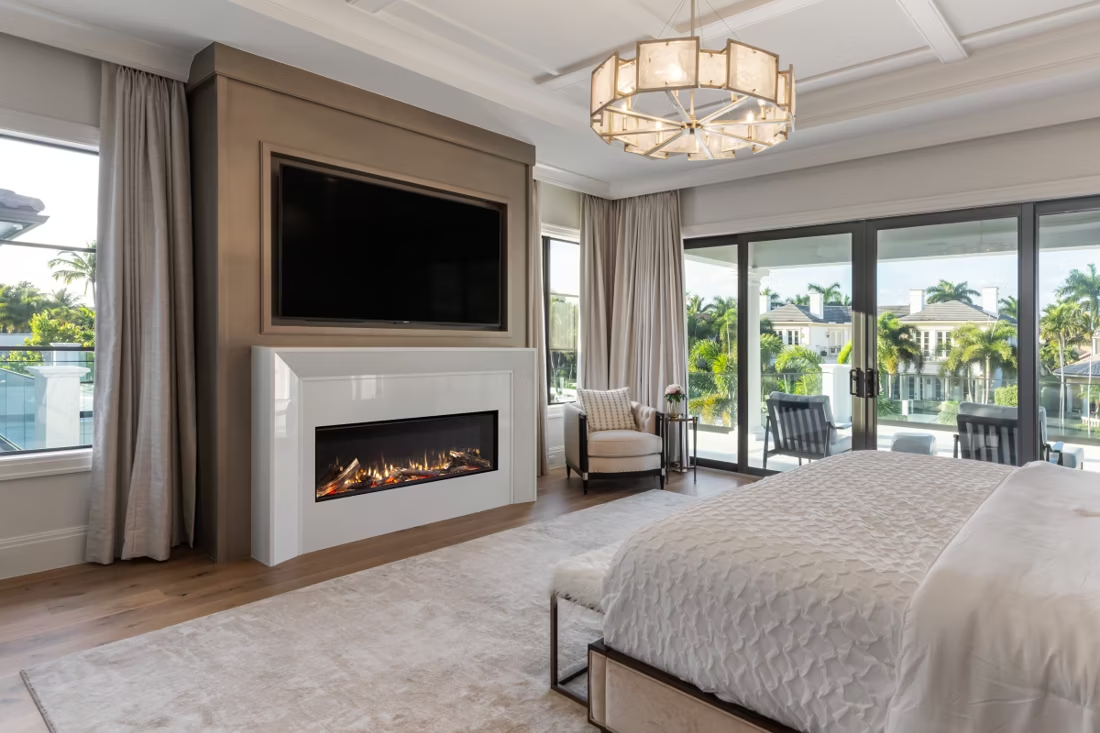
Yes—with an asterisk. Fireplaces are hot and TVs don't like heat. Either put a mantel between them to deflect rising warmth, or choose a fireplace with heat-management technology that creates a cool zone on the wall above—the wall stays around 125 degrees, barely warm, while the room still gets full heat. If you like clean lines and don't want a mantel, heat management is the answer.
Does a fireplace add value to my home?
On average, a fireplace adds back to the home about the same amount you spent installing it. Add the monthly savings from heating the rooms you actually use instead of the whole house—often hundreds of dollars a year—and the value case is strong before you even count what a fire does for how your family uses the room.
Can I install a fireplace myself?
If you're putting a fire in your house on purpose, it's best to work with an expert. Unless you're genuinely experienced in framing, gas line, vent pipe, and the national code on clearances to combustibles, have a professional do it—and ideally the same company that sells you the fireplace, so warranty, service, and liability all live under one roof.
Stove and Fireplace Dealers in Lake County
Find your electric fireplace in Lake County.
Tell us about your home and we'll match you with a trusted local dealer and put together a free Project Guide & Parts List—the right unit, the wiring plan, and what it'll take to get it installed.
Find Your Fireplace →