
Keep Your Family Warm and Safe—No Matter What
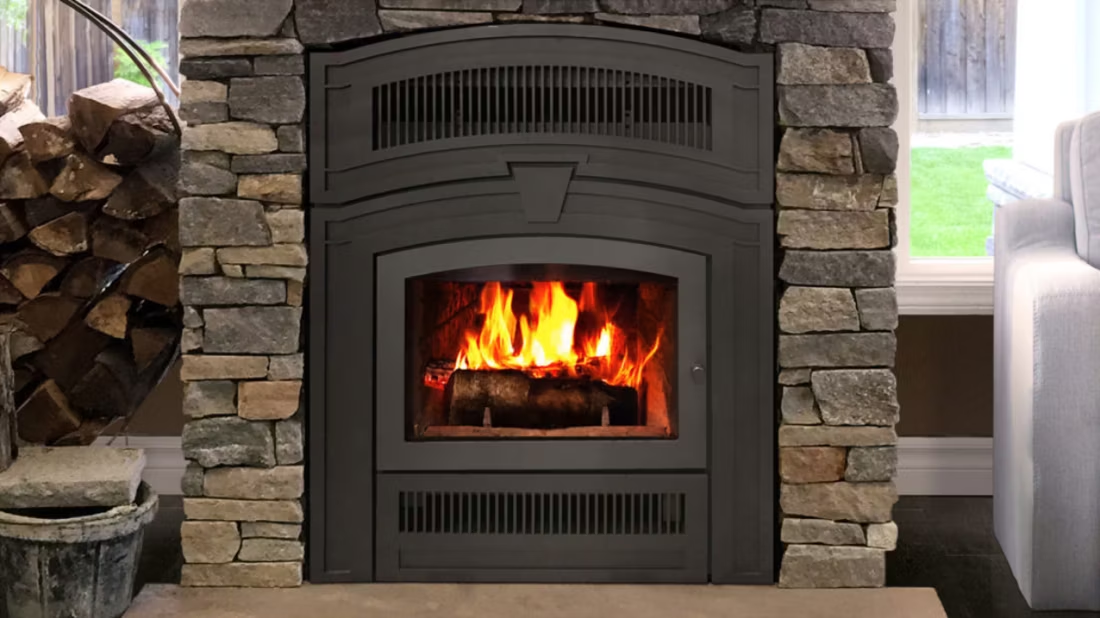
Wood-burning fireplaces are uncommon here—the climate doesn't demand them and South Coast AQMD rules limit new installs. If you still want one, we'll connect you with a dealer who knows the rules cold.
Every Project Starts From One of These Five Situations
Wood fire, not wood heat.
Laguna Hills sits in coastal Orange County at just under 300 feet of elevation, in climate zone 3B, where winter lows average a mild 44°F and the entire heating season is short and mild, needing only a light amount of heating over the year. That's a fraction of what a cold-climate town like Bozeman, Montana or Duluth, Minnesota sees in a single hard winter month. Most Laguna Hills homes lean on central HVAC for the handful of genuinely chilly nights each year, and wood was never a heating necessity in this part of Southern California the way it is farther north or at higher elevation.
That doesn't mean wood fireplaces don't exist here—some homeowners with an existing masonry fireplace, or a taste for the ritual of a real fire on a rare cold evening, still want one. But South Coast AQMD Rule 445 prohibits new wood-burning fireplace installations in new residential construction throughout Orange County, and replacement units in existing homes must be EPA-certified. Combine that with the region's non-attainment status for particulate matter and the recurring reality of wildfire smoke drifting in from the surrounding hills, and wood is treated here as the exception, not the default—which is exactly why finding a dealer who understands the local rules matters more than it would somewhere wood heat is routine.
Firewood Cutting Permits Near Laguna Hills
Three steps. No salesperson until you're ready.
Tell us about your project
Your zip code, your situation, and the fuel you're leaning toward—or let the answers point you to one.
See what's actually available
The brands dealers within 100 miles genuinely carry—real options, never a catalog mirage.
Get your dealer & Project Guide
A trusted local dealer, plus the free Project Guide & Parts List that names every component of the job.
Frequently Asked Questions
Can I actually install a wood-burning fireplace in Laguna Hills?
It depends on the situation. South Coast AQMD Rule 445 bans new wood-burning fireplace installations in new residential construction across Orange County—new homes are required to use gas, electric, or EPA-certified alternatives instead. If you have an existing masonry fireplace or wood stove, you can generally replace it with an EPA-certified wood-burning device, but you can't add a brand-new wood-burning unit to a home that doesn't already have one. A local dealer familiar with Rule 445 can tell you within minutes which category your project falls into, and the City of Laguna Hills or Orange County Building Division will need to sign off on the permit either way.
Why don't more homes in Laguna Hills use wood heat?
Mostly climate. With winter lows averaging 44°F and only a light amount of heating needed over the year, Laguna Hills simply doesn't have the sustained cold that makes wood heat a practical necessity the way it is in places like Fargo or Burlington. Central HVAC handles the occasional cool snap without issue. Where wood shows up locally, it's almost always for ambiance and the experience of a real fire on a rare cold night, not as a heating strategy—which shifts the conversation from BTU output toward things like Rule 445 compliance and glass door design.
What is South Coast AQMD Rule 445 and how does it affect my project?
Rule 445 is the South Coast Air Quality Management District's wood-burning device rule, adopted specifically because the region—including Orange County—is a federal non-attainment area for particulate matter. It bans new wood-burning fireplaces in new construction, requires any replacement unit in an existing home to be EPA Phase 2 (or newer NSPS 2020) certified, and it's the reason most Laguna Hills builders default to gas fireplaces in new homes. On top of the installation rules, SCAQMD's "Check Before You Burn" program can declare mandatory no-burn days during the winter months when air quality is poor, and those restrictions apply even to certified devices during the highest-pollution alerts.
If I already have a wood fireplace, can I still use it whenever I want?
Not unconditionally. Existing wood-burning fireplaces and stoves in Laguna Hills are subject to SCAQMD's "Check Before You Burn" curtailment program, which is active roughly November through February. On days when the district forecasts poor air quality, all wood burning can be restricted regardless of whether your device is certified—and on the worst days, mandatory no-burn orders apply even to EPA-certified units in some circumstances. It's worth checking SCAQMD's daily burn status before lighting a fire during winter months, especially since wildfire smoke already pushes regional air quality toward its limits some years.
What does a wood stove or fireplace installation cost in Laguna Hills?
There isn't a well-established local price range the way there is in wood-heavy markets, simply because so few installs happen here—most hearth dealers in this part of Orange County are set up primarily for gas and electric work. As a rough planning figure, an EPA-certified wood stove insert with venting typically runs somewhere in the $5,000–$11,000 range nationally, and Laguna Hills projects tend to land at the higher end because of the extra work involved in confirming Rule 445 compliance and finding a chimney contractor who still does wood venting regularly. Get a firm number from a dealer who explicitly handles wood—not every hearth shop in this area does.
What kind of firewood is available near Laguna Hills?
Oak, madrone, and Douglas fir are the species most commonly sold to Southern California customers, with oak being the most widely available and the best fit for slow, hot burns if you do end up with a wood-burning unit. Given how few households burn wood locally, firewood tends to come from regional suppliers who deliver rather than a dense network of local yards, so it's worth ordering ahead of a cold snap rather than expecting same-day delivery.
Can I cut my own firewood near Laguna Hills?
Yes, though you'll need to drive for it. The Cleveland National Forest—which includes the Trabuco Ranger District closest to Orange County—issues personal-use cutting permits during a May-through-October season, typically running $5 to $20 per cord. San Bernardino and Angeles National Forests offer similar permit programs but sit farther away and are more of a day-trip proposition. Given the mild local climate, most Laguna Hills residents who go this route are cutting for occasional fires rather than a winter's worth of heating supply.
Is wildfire smoke a bigger concern here than smoke from wood stoves?
For regional air quality, yes—wildfire smoke events tend to dwarf anything a residential wood stove contributes, and they're a real recurring issue in Orange County during fire season. But that broader air quality pressure is part of why SCAQMD regulates residential wood burning as tightly as it does through Rule 445 and the seasonal curtailment program: the district is trying to limit every controllable particulate source in a basin that already struggles to meet federal air quality standards. If you do install a wood-burning device, expect more scrutiny on certification and burn-day compliance here than in a region without wildfire and non-attainment pressures stacked together.
Should I actually choose wood, or is gas or electric a better fit for Laguna Hills?
For most Laguna Hills homes, gas or electric ends up being the more practical choice. Gas fireplaces are standard here, install cleanly in new construction without running into Rule 445's new-wood-construction ban, and deliver instant heat for the handful of genuinely cold evenings each winter. Electric fireplaces are also a solid fit, particularly for supplemental ambiance in a bedroom or family room, though at San Diego Gas & Electric's residential rate of roughly $0.32 per kWh, running one as a primary heat source isn't cost-effective. Wood still makes sense if you specifically want the smell, sound, and ritual of a real fire and you're prepared to work within EPA certification and SCAQMD burn-day rules—it's a lifestyle choice here, not a heating strategy.
Why is my open fireplace making my house colder?
Open fireplaces suck—literally. As the fire burns, it consumes air your furnace already paid to heat and pulls it out through the chimney, so the house is actually colder after the fire goes out than before you lit it. An insert fixes this: it seals the chimney, puts fixed glass across the front, and turns that hole in your house into a real heat source.
Why is a fireplace insert so efficient?
An insert does two things: it seals the chimney completely, so you stop losing air you already paid to heat, and it radiates warmth into the room through the firebox and glass. Most add a heat-exchange fan that pulls cool room air underneath, wraps it around the hot firebox, and pushes it back out warm. Your home is more efficient before you've even lit the first fire.
How much should I budget for a fireplace?
For an average home—covering the fireplace, the vent pipe, and basic installation—a budget between $3,900 and $5,500 gives you a lot of options across wood, gas, and pellet. By the time you add finish work, gas line, and electrical, the average complete installation lands between $5,000 and $12,000 all-in. In a remodel or new build, a good rule is to put about 2.5% of the total project cost toward the fireplace.
Can I install a fireplace myself?
If you're putting a fire in your house on purpose, it's best to work with an expert. Unless you're genuinely experienced in framing, gas line, vent pipe, and the national code on clearances to combustibles, have a professional do it—and ideally the same company that sells you the fireplace, so warranty, service, and liability all live under one roof.
Nearby Dealers
Hearth shops serving Laguna Hills and the surrounding area.
Find your wood fireplace in Laguna Hills.
Tell us about your home and your reasons for wanting a real wood fire, and we'll match you with a local dealer who understands Rule 445 and can hand you a free Project Guide & Parts List—including the exact vent kit—for your project.
Find Your Fireplace →