
Pellet Stoves Are Uncommon in Laguna Hills—Here's Why That's Okay.
With just 1,377 heating degree days a year, most Laguna Hills homes never need solid-fuel heat. But for the handful of homeowners who want one, we'll connect you with a local dealer who can get it right.
Every Project Starts From One of These Five Situations
Laguna Hills doesn't get cold enough to need it.
Laguna Hills sits in coastal Orange County at just 294 feet elevation, in climate zone 3B, where the average winter low hovers around 44°F and the coastal marine layer keeps temperature swings modest year-round. Annual heating degree days total 1,377—compare that to Fargo, ND, which racks up over 9,000 HDD most winters, and it's clear why whole-house solid-fuel heat simply isn't part of daily life here. Most homes rely on gas forced-air furnaces or heat pumps, and a fireplace of any kind is more often a design feature than a heating necessity.
That said, pellet stoves and inserts do show up occasionally—usually in older tract homes from the 1980s and 90s that still have a wood-burning masonry fireplace, in homes wanting a cleaner solid-fuel option during South Coast Air Quality Management District wood-burning restrictions, or for households that also own a cabin near Big Bear or Idyllwild and want the same appliance style at both properties. Because pellet stoves burn more completely than open wood fires, they're typically exempt from SCAQMD's Check Before You Burn curtailment days—a real advantage if ambiance matters to you but regulatory hassle doesn't.
Three steps. No salesperson until you're ready.
Tell us about your project
Your zip code, your situation, and the fuel you're leaning toward—or let the answers point you to one.
See what's actually available
The brands dealers within 100 miles genuinely carry—real options, never a catalog mirage.
Get your dealer & Project Guide
A trusted local dealer, plus the free Project Guide & Parts List that names every component of the job.
Frequently Asked Questions
Are pellet stoves common in Laguna Hills?
No—pellet stoves are uncommon here. With only 1,377 heating degree days a year and winter lows that rarely dip below the low 40s, the vast majority of Laguna Hills homes heat with a gas furnace or heat pump and never touch a solid-fuel appliance. When we do see pellet stove interest locally, it's almost always tied to an existing fireplace a homeowner wants to upgrade, a desire for backup heat, or a second property in the mountains where pellet heat makes more practical sense.
How much does a pellet stove installation cost in Laguna Hills?
Expect somewhere in the $3,500 to $6,500 range for a typical pellet stove or insert installation, including the appliance, venting kit, and labor. Because demand is low in this part of Orange County, fewer local dealers keep pellet units on the showroom floor compared to gas fireplaces—most will special-order the model you want and handle venting through an exterior wall, which is simpler than a full chimney installation. Get a firm quote from a local installer since venting distance and any electrical work for the auger and blower circuit will affect the final number.
Where do I buy pellet fuel in Laguna Hills?
Bear Mountain, Lignetics, and Pacific Pellet are the regional brands most commonly stocked at hardware stores and hearth retailers serving Southern California, though because pellet stoves are uncommon locally, not every store carries bags year-round—some will order a pallet on request. Pricing in this market typically runs in the $300 to $400 per ton range. If you're stocking up, buying a full pallet (usually 50 forty-pound bags) before the rare cold snap hits is the more reliable strategy than counting on shelf stock in December.
Why doesn't Laguna Hills need a pellet stove the way colder climates do?
Laguna Hills' Mediterranean coastal climate and the marine layer coming off the Pacific keep temperature swings narrow—the difference between a January night and a July night here is nothing like what a home in Duluth, MN or Bismarck, ND experiences. At 1,377 heating degree days, a well-insulated Laguna Hills home can go an entire winter on its existing gas furnace without ever running short. A pellet stove here functions more as a design or ambiance choice, or as backup heat, than as a heating necessity.
Do I need a permit to install a pellet stove in Laguna Hills?
Yes—the City of Laguna Hills Building Division requires a permit for any new solid-fuel appliance installation, including pellet stoves and inserts, covering the appliance itself and the exterior wall venting. Because pellet stoves run on standard household electricity rather than gas, you won't need a separate gas line permit unless you're also adding a gas fireplace elsewhere in the home. Most hearth dealers who install pellet appliances in this market will pull the permit for you as part of the job.
Is a pellet stove worth it if I already have gas heat?
For most Laguna Hills homes, no—gas heat through San Diego Gas & Electric's infrastructure is reliable and inexpensive to run compared to the region's residential electric rate of roughly 32 cents per kWh. One caveat worth knowing: pellet stoves need electricity to run the auger and combustion blower, so they won't function during a power outage unless paired with a battery backup—which matters here given that Southern California utilities occasionally implement Public Safety Power Shutoffs during high wildfire-risk conditions. If outage-proof backup heat is the goal, a battery-backed gas fireplace with intermittent pilot ignition is usually the better fit than a pellet stove.
What's the difference between a pellet stove and a pellet insert?
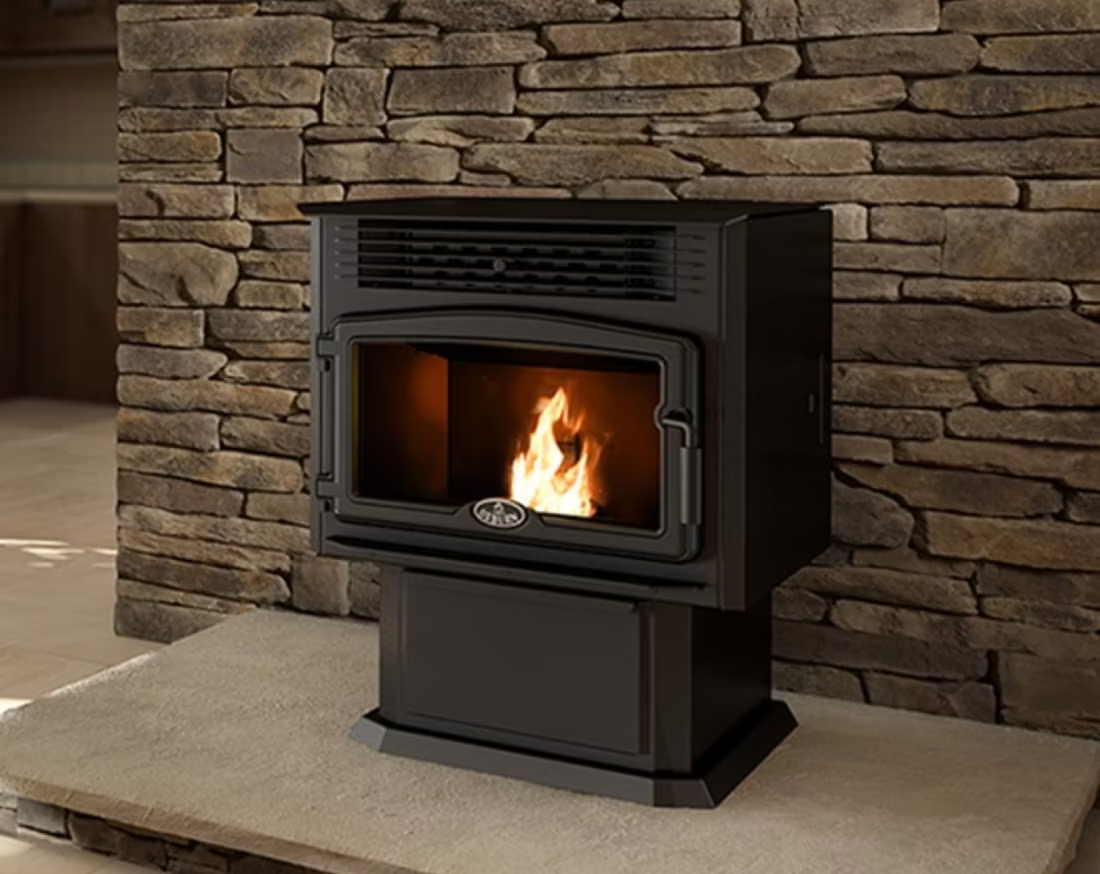
A pellet stove is a freestanding appliance that sits on its own hearth pad and vents through a wall or existing chimney chase—it can go almost anywhere in a room. A pellet insert is built to slide into an existing masonry or zero-clearance wood-burning fireplace, which is the more common scenario in Laguna Hills' 1980s and 90s-era tract homes that came standard with a wood fireplace. For those homes, an insert is usually the cleaner upgrade path since it reuses the existing firebox opening and often the existing chimney chase for venting.
Can I install a pellet stove in a home with an existing wood-burning fireplace?
Yes, and it's the most common pellet project we see in this area. A pellet insert fits into the existing wood-burning firebox, and a local installer will run a smaller vent liner through the existing chimney chase or, more often here, a new through-wall vent. This is also a popular move for homeowners concerned about South Coast AQMD's wood-smoke restrictions and regional wildfire-smoke air quality days, since pellet appliances burn far cleaner than an open wood fire and are generally exempt from no-burn curtailment days.
Pellet vs. gas—which is right for my Laguna Hills home?
Gas is the standard choice here, and for good reason: natural gas service is widely available, installation is straightforward, and the mild climate means you're mostly running the appliance for ambiance rather than serious heat load. Pellet makes sense in narrower cases—homeowners who want a solid-fuel look and feel without dealing with SCAQMD wood-smoke rules, or who split time between Laguna Hills and a mountain property where pellet heat is more practical. If you're simply upgrading an existing fireplace for everyday living, most local dealers will steer you toward gas; if you specifically want the pellet experience, they can source that too.
How often does a pellet stove need cleaning?
A clean pellet stove is a happy pellet stove. Plan on cleaning the burn pot about once a week when you're burning regularly—ash and clinkers gum up the air holes just like a pellet barbecue. Most pellet stove problems trace back to skipped cleaning that nobody explained up front. Some designs make it easy with a trapdoor burn pot: pull a lever and the gunk drops into the ash pan.
Why is my open fireplace making my house colder?
Open fireplaces suck—literally. As the fire burns, it consumes air your furnace already paid to heat and pulls it out through the chimney, so the house is actually colder after the fire goes out than before you lit it. An insert fixes this: it seals the chimney, puts fixed glass across the front, and turns that hole in your house into a real heat source.
Can I install a fireplace myself?
If you're putting a fire in your house on purpose, it's best to work with an expert. Unless you're genuinely experienced in framing, gas line, vent pipe, and the national code on clearances to combustibles, have a professional do it—and ideally the same company that sells you the fireplace, so warranty, service, and liability all live under one roof.
Does a fireplace add value to my home?
On average, a fireplace adds back to the home about the same amount you spent installing it. Add the monthly savings from heating the rooms you actually use instead of the whole house—often hundreds of dollars a year—and the value case is strong before you even count what a fire does for how your family uses the room.
Nearby Dealers
Hearth shops serving Laguna Hills and the surrounding area.
Pellet Brands Stocked Around Laguna Hills
Manufacturers will point you to the nearest stocking dealer.
Find your pellet stove in Laguna Hills.
Tell us about your home and your goals, and we'll match you with a trusted local dealer and put together a free Project Guide & Parts List—the exact appliance, venting kit, and installer recommendation for your Laguna Hills project.
Find Your Fireplace →