
Bring the look of fire to Jurupa Valley without the smoke.
Zero-emission ambiance and zone heat for the mild Inland Empire winters, matched with a trusted local dealer who knows what actually gets permitted here.
Every Project Starts From One of These Five Situations
The cleanest option in a non-attainment air basin.
Jurupa Valley sits at 756 feet in the Inland Empire, inside the South Coast Air Basin—one of the most persistently smog-burdened air basins in the country and a federal non-attainment area for ozone and fine particulate matter. Winters here are mild: average lows sit near 44°F and the city has a short, light heating season, just a fraction of the winter heating load a place like Bismarck, ND racks up in a single season. That combination of mild winters and strict regional air rules shapes which fireplace fuels actually make sense here.
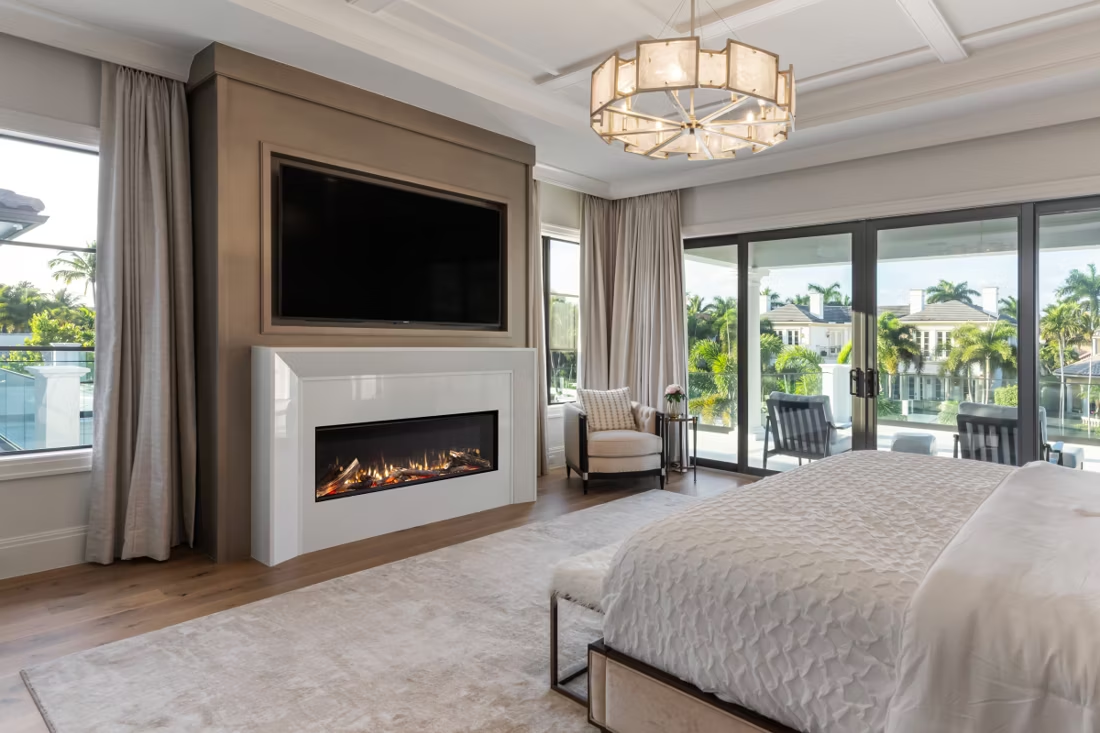
Wood-burning fireplaces and pellet stoves are rarely installed in Jurupa Valley—not for lack of interest, but because the South Coast Air Quality Management District tightly restricts new wood-burning appliances under Rule 445, and wildfire smoke drifting down from the San Bernardino and Angeles National Forest foothills already pushes local air quality into unhealthy ranges several times a year. Electric fireplaces sidestep both problems: no emissions, no SCAQMD permit friction, and the same glowing-log look homeowners want for evening ambiance and supplemental zone heat in a climate that rarely calls for whole-home heating.
Three steps. No salesperson until you're ready.
Tell us about your project
Your zip code, your situation, and the fuel you're leaning toward—or let the answers point you to one.
See what's actually available
The brands dealers within 100 miles genuinely carry—real options, never a catalog mirage.
Get your dealer & Project Guide
A trusted local dealer, plus the free Project Guide & Parts List that names every component of the job.
Frequently Asked Questions
How much does an electric fireplace installation cost in Jurupa Valley?
Plug-in freestanding units run $200 to $600 and need nothing beyond a standard household outlet. Built-in linear electric fireplaces or wall-mount units—set into new framing or a mantel surround—typically run $1,200 to $3,500 installed, depending on unit size, any carpentry work, and whether a dedicated 240V circuit is needed for a larger heater element. Converting an existing wood-burning fireplace to an electric insert usually lands at $800 to $2,000, since there's no venting or chimney work involved—one of the real cost advantages electric has over a gas conversion in this area.
Does an electric fireplace even make sense in a climate this mild?
Yes, but the use case here is ambiance and zone heat rather than whole-home warmth. With winter lows averaging 44°F and only a short, light heating season each year, most Jurupa Valley homes rely on a central heat pump or standard HVAC for the handful of genuinely cold nights and use an electric fireplace to warm a living room or bedroom in the evening, or simply for the visual effect with the heater switched off. That's actually where electric units perform best—most sizing complaints come from buyers expecting them to heat a whole house, which isn't what they're built for here.
What does an electric fireplace cost to run on my Southern California Edison bill?
Southern California Edison's residential rate runs around $0.2825 per kWh, higher than the national average, so a typical 1,500-watt heater element costs roughly $0.42 per hour at full output. Most owners don't run the heater constantly—they use the flame effect alone (a few watts) for ambiance most nights and switch on the heater only when sitting in the room. Run that way, a full winter season of use usually adds well under $10 to $15 a month to an SCE bill, far less than running a gas insert or supplemental space heater.
Do I need a permit to install an electric fireplace in Jurupa Valley?
A plug-in freestanding unit needs no permit—it's treated like any other appliance you plug in. A built-in electric fireplace or insert that requires new wiring, a dedicated circuit, or structural changes to a wall or mantel does require an electrical permit through the City of Jurupa Valley Building & Safety Division. Most local hearth dealers and licensed electricians handle that paperwork as part of the installation quote, so it's rarely something the homeowner has to manage directly.
Why aren't wood or pellet stoves more common in Jurupa Valley?
Two things work against them here. First, the South Coast Air Quality Management District's Rule 445 restricts new wood-burning fireplace installations across the region, effectively steering new construction and remodels toward gas or electric appliances. Second, Jurupa Valley sits in a federally designated non-attainment area for ozone and particulates, and wildfire smoke rolling down from the San Bernardino and Angeles National Forests already strains local air quality several times a year—adding wood smoke on top of that isn't something local regulators or most homeowners want. A handful of rural properties on the valley's edges still burn wood, usually with oak or douglas fir sourced through a San Bernardino National Forest cutting permit, but it's the exception rather than the norm.
What's the difference between an electric insert, a built-in unit, and a wall-mount fireplace?
An electric insert is sized to slide into an existing masonry or wood-burning firebox, letting you keep the original mantel and surround while swapping in flame effect and heat with no venting required. A built-in unit is framed into a wall during new construction or remodel, similar to how a gas fireplace would be installed, and gets its own custom surround. A wall-mount (or 'hang-on-the-wall') unit is the simplest option—it mounts flush to any wall like a flat-screen TV and plugs into a standard outlet, no framing or electrician needed in most cases. For Jurupa Valley homes converting an old wood-burning fireplace, an insert is usually the most cost-effective route.
Electric vs. gas—which fits my Jurupa Valley home better?
Gas fireplaces are common in Jurupa Valley too, typically run on natural gas service, and deliver real radiant heat with the look of an actual flame—a reasonable choice if you already have a gas line nearby. Electric skips the gas line, the venting, and the annual gas appliance service entirely, which matters for renters, condos, or homeowners who want a simple retrofit without touching the exterior wall. Given SCE's $0.2825/kWh rate, electric costs more per BTU of actual heat than gas, but since most Jurupa Valley households use these units for ambiance and light zone heat rather than serious winter heating, the monthly cost difference is usually modest either way.
What kind of electric fireplace works best for Jurupa Valley homes?
For most homes here, a slim linear wall-mount or built-in model with LED flame technology and a smaller 1,500-watt heater element covers the actual use case—evening ambiance in the living room or primary bedroom, with enough supplemental heat for the occasional cold snap. Homes that get genuinely chilly on winter mornings sometimes opt for a heat-pump-style electric insert, which moves warm air more efficiently than a straight resistive heater. A local dealer can walk through wattage, room size, and whether your electrical panel needs any upgrade before recommending a specific model.
How much maintenance does an electric fireplace need?
Far less than wood or gas. There's no chimney to sweep and no annual gas line inspection—maintenance is mostly wiping down the glass front and occasionally replacing the LED light strip or heater fan after several years of use. Most units carry a 2- to 5-year manufacturer warranty on electrical components. Local dealers can also service or replace the heater element if it wears out, which is typically the only part that sees real mechanical use over the unit's lifespan.
Do electric fireplaces actually produce heat?
Yes—most put out around 4,800–5,000 BTUs from a standard outlet, which comfortably warms a bedroom, office, or den as a comfort-zone heater. What they won't do is carry a whole house the way wood, gas, or pellet can. Think of electric as ambiance-first with honest supplemental heat: flames on with no heat in July, flames plus warmth in January.
Does an electric fireplace need a vent or chimney?
No—that's its superpower. An electric fireplace needs a wall and an outlet, period. No vent pipe, no gas line, no clearances to design around, which is why it works in bedrooms, offices, apartments, and walls where venting a gas or wood unit would be impractical or impossible. Installation is typically the simplest and least expensive of any fireplace type.
What is an in-home preview and do I need one?
It's a visit where a hearth professional measures your space, confirms the model you picked actually works in your home, and walks the specs—framing, gas line, venting, finish work—before anything is ordered. Some details you just can't know until you see the house. Never make a down payment without one; it's the single most-skipped step that burns buyers.
Does a fireplace add value to my home?
On average, a fireplace adds back to the home about the same amount you spent installing it. Add the monthly savings from heating the rooms you actually use instead of the whole house—often hundreds of dollars a year—and the value case is strong before you even count what a fire does for how your family uses the room.
Nearby Dealers
Hearth shops serving Jurupa Valley and the surrounding area.
Palm Springs True Value Hardware & Patio
Electric Service in Jurupa Valley
An electric fireplace's heater draws about 1,500 watts—pennies per hour at local rates.
Southern California Edison Co
Find your electric fireplace in Jurupa Valley.
Tell us a bit about your home and we'll match you with the right electric fireplace or insert, plus a free Project Guide & Parts List and a trusted local dealer to install it.
Find Your Fireplace →