
Warmth on Your Terms, Even on a No-Burn Day.
Foster City's bay-side winters are mild, but a clean-burning pellet stove keeps working on the days regional air rules shut open wood fires down. Find the right unit and connect with a trusted local dealer.
Every Project Starts From One of These Five Situations
Clean-burning heat for a city that watches its air quality.
Foster City sits at just 6 feet of elevation on reclaimed lagoon land along the San Francisco Bay, where the marine layer keeps winters mild—average lows hover around 40°F and the city's overall winter heating load is only a fraction of what a place like Duluth MN or Fargo ND sees in a single season. That means very few Foster City homes lean on a hearth appliance for whole-house heat. What pellet stoves are actually used for here is zone heating in a family room, backup warmth during the occasional cold, damp week, and ambiance that doesn't require tending a wood fire.
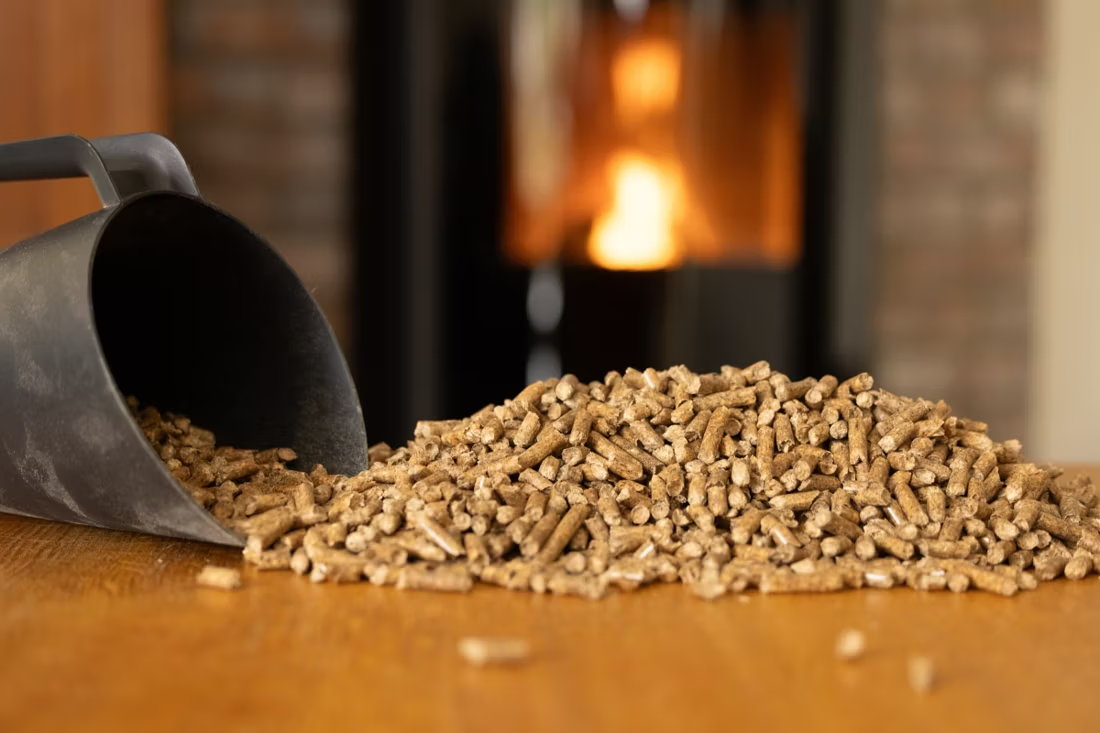
San Mateo County falls under the Bay Area Air Quality Management District, and Foster City is designated a non-attainment area with periodic wildfire-smoke impacts layered on top. During winter Spare the Air alerts, BAAQMD restricts open wood-burning fireplaces and older wood stoves—but EPA-certified pellet stoves are typically exempt from those mandatory no-burn days because they burn so much cleaner. That single fact drives a lot of pellet stove interest in this part of the Peninsula. Regional brands like Bear Mountain, Lignetics, and Pacific Pellet are stocked at Bay Area hearth retailers, so fuel isn't hard to find even though this isn't cordwood country.
Three steps. No salesperson until you're ready.
Tell us about your project
Your zip code, your situation, and the fuel you're leaning toward—or let the answers point you to one.
See what's actually available
The brands dealers within 100 miles genuinely carry—real options, never a catalog mirage.
Get your dealer & Project Guide
A trusted local dealer, plus the free Project Guide & Parts List that names every component of the job.
Frequently Asked Questions
How much does a pellet stove installation cost in Foster City?
Most Foster City pellet stove or insert installations run $3,500 to $7,000, which is on the higher side nationally because Bay Area labor and permitting costs run above average. A pellet insert going into an existing masonry fireplace, with a liner run up the existing chimney, tends to land toward the lower end. A freestanding stove requiring a new through-wall vent kit, hearth pad, and electrical outlet for the auger and blower runs higher. The City of Foster City Building Division requires a permit for the installation, and most local hearth dealers handle that paperwork as part of the job.
Does a pellet stove even make sense in a climate this mild?
It's a fair question—with winter lows averaging around 40°F and an overall winter heating load that's light for the region, Foster City isn't a place where a hearth appliance needs to carry the heating load the way it would in Bozeman MT or Helena MT. Most homeowners here already have central gas heat or a heat pump for whole-house comfort. What pushes people toward pellet specifically is supplemental heat for a family room, a source of warmth that keeps running during a PG&E outage, and—increasingly—a way to have a real fire on days when BAAQMD's Spare the Air rules bench everyone's open wood fireplace. It's a supplemental-heat and backup-heat decision here more than a primary-heat one, and that's a legitimate use case.
Will my pellet stove work during a PG&E power outage?
Not without a battery backup or generator. Unlike a wood stove, a pellet stove depends on electricity to run the auger that feeds pellets, the igniter, and the combustion blower—no power means no fire. Given how often Pacific Gas & Electric calls Public Safety Power Shutoffs during fall wildfire season in San Mateo County, this is worth planning for. Many Foster City homeowners pair their pellet stove with a small battery backup unit (some newer pellet stove models even ship with a DC battery option built in) or a portable generator sized to handle the stove's modest draw, typically under 500 watts on the running cycle.
What are Spare the Air rules, and does a pellet stove get around them?
The Bay Area Air Quality Management District calls a mandatory Winter Spare the Air Alert on days when particulate pollution is forecast to build up, and on those days open wood-burning fireplaces and uncertified wood stoves in San Mateo County are not allowed to operate. EPA-certified pellet stoves are generally exempt from that curtailment because they burn far cleaner and produce a fraction of the particulate matter. If you're shopping for a unit specifically to keep burning through Spare the Air season, confirm the EPA certification label on the specific model with your dealer—exemption status is tied to the appliance, not the fuel type in general.
Do I need a permit to install a pellet stove in Foster City?
Yes. New pellet stove and insert installations require a building permit through the City of Foster City Building Division, since the install typically involves a wall or roof penetration for the vent kit and often a new electrical outlet. Because pellet appliances vent through a simple horizontal wall termination rather than a full masonry chimney, the permit and inspection process tends to move faster than a wood-burning install. Most local hearth dealers pull the permit as part of the installation quote.
What size pellet stove do I need for a Foster City home?
Smaller than you might expect. With winter lows rarely dropping much below the 40s and no real deep-freeze stretches like a place such as Minneapolis MN or Caribou ME would see, a compact to mid-size pellet stove in the 40,000–50,000 BTU range comfortably heats an open living or family room. Very few Foster City homes need one of the larger 60,000+ BTU units built for whole-home heating in genuinely cold climates—oversizing here just means more cycling and wasted fuel. A local dealer can size it against your actual square footage in a few minutes.
What kind of pellets should I burn, and where do I get them?
Regional brands like Bear Mountain, Lignetics, and Pacific Pellet are widely stocked at Bay Area hearth and hardware retailers and are milled largely from Douglas fir and pine sawdust from Pacific Northwest and Northern California mills. Premium hardwood-blend bags burn a bit cleaner with less ash than economy softwood pellets, which matters if you're running the stove mainly on Spare the Air days and want minimal upkeep. Given the marine humidity here, store bags off the garage floor and away from damp exterior walls—pellets absorb moisture quickly and swell, which clogs the auger.
How much does it cost to run a pellet stove with PG&E's electric rates?
Pacific Gas & Electric's residential rate in Foster City runs about $0.317 per kWh, among the highest in the country, so it's a fair concern. The good news is a pellet stove's auger, igniter, and blower typically draw under 100–400 watts during normal operation—running one for a full evening usually adds well under a dollar to your electric bill. The bigger ongoing cost is the pellets themselves, not the electricity, even at PG&E's rates.
Pellet vs. gas vs. wood—what actually fits a Foster City home?
Natural gas is broadly available through PG&E across Foster City, and a direct-vent gas fireplace or insert is the most common choice for homeowners who want instant, thermostat-controlled heat without any fuel handling—and gas units aren't subject to Spare the Air wood-burning restrictions at all. Wood stoves are genuinely rare here: Foster City's dense residential lots, HOA rules in many neighborhoods, and BAAQMD's curtailment days on open wood burning make cordwood a poor fit outside a rare cabin-style property. Pellet sits in between—cleaner and exempt from most no-burn days like gas, but with more of the visual, radiant-fire character wood offers, and better positioned for outage backup than gas units without a battery-backed valve. For most Foster City homes weighing pellet against the alternatives, it comes down to wanting real flame and PSPS-resilient heat without giving up Spare the Air compliance.
What's the difference between an insert and a zero-clearance fireplace?
An insert is a fireplace that slides into a pre-existing wood-burning fireplace—if you don't have one, there's nothing to insert it into. A zero-clearance fireplace is built into a framed wall, which makes it the answer for remodels and new construction. Simple test: existing masonry fireplace means insert; blank or framed wall means zero-clearance.
Why is my open fireplace making my house colder?
Open fireplaces suck—literally. As the fire burns, it consumes air your furnace already paid to heat and pulls it out through the chimney, so the house is actually colder after the fire goes out than before you lit it. An insert fixes this: it seals the chimney, puts fixed glass across the front, and turns that hole in your house into a real heat source.
How much should I budget for a fireplace?
For an average home—covering the fireplace, the vent pipe, and basic installation—a budget between $3,900 and $5,500 gives you a lot of options across wood, gas, and pellet. By the time you add finish work, gas line, and electrical, the average complete installation lands between $5,000 and $12,000 all-in. In a remodel or new build, a good rule is to put about 2.5% of the total project cost toward the fireplace.
What is an in-home preview and do I need one?
It's a visit where a hearth professional measures your space, confirms the model you picked actually works in your home, and walks the specs—framing, gas line, venting, finish work—before anything is ordered. Some details you just can't know until you see the house. Never make a down payment without one; it's the single most-skipped step that burns buyers.
Nearby Dealers
Hearth shops serving Foster City and the surrounding area.
Pellet Brands Stocked Around Foster City
Manufacturers will point you to the nearest stocking dealer.
Find your pellet stove in Foster City.
Tell us about your home and I'll match you with a trusted local Bay Area dealer and send over a free Project Guide & Parts List—the exact stove, vent kit, and parts for your Foster City project, no big-box guesswork.
Find Your Fireplace →