
Electric fireplace heat built for Foster City's mild bay climate.
No chimney, no gas line, no Spare the Air restrictions—just ambiance and supplemental warmth that fits the lagoon-front condos and townhomes Foster City is built on.
Every Project Starts From One of These Five Situations
Mild winters, high electric rates, and no smoke to worry about.
Foster City sits at just 6 feet of elevation on reclaimed San Francisco Bay marshland, wrapped in a marine climate that rarely produces a hard freeze—winter lows average around 40°F and the city logs roughly 2,500 heating degree days a year. For comparison, Minneapolis racks up close to 7,600. That mild-fog climate means most Foster City homes don't need a fireplace to survive winter; they want one for ambiance, zone heat on a foggy evening, and the kind of instant-on warmth that fits a busy household without any wood to split or gas line to run.
San Mateo County sits inside the Bay Area Air Quality Management District's non-attainment area, and wildfire-smoke season regularly brings Spare the Air alerts that restrict wood-burning devices. Electric fireplaces are exempt from all of it—no permit-day burn bans, no particulate concerns, nothing to check before you light it. That matters even more in a city built largely around lagoon-front condos and townhomes, where many HOAs prohibit open-flame wood or gas fireplaces outright and electric is the only unit allowed. PG&E serves the city at a residential rate around $0.317/kWh—one of the higher rates in the country—but a typical electric fireplace draws about the same as a space heater, so even daily use stays modest.
Three steps. No salesperson until you're ready.
Tell us about your project
Your zip code, your situation, and the fuel you're leaning toward—or let the answers point you to one.
See what's actually available
The brands dealers within 100 miles genuinely carry—real options, never a catalog mirage.
Get your dealer & Project Guide
A trusted local dealer, plus the free Project Guide & Parts List that names every component of the job.
Frequently Asked Questions
How much does it cost to install an electric fireplace in Foster City?
Plug-in freestanding units and electric inserts that fit into an existing opening typically run $200 to $1,500 installed, since most operate on a standard 120V outlet and need no venting, gas line, or chimney work. Built-in linear electric fireplaces—the flush-mounted style common in Foster City's newer townhomes along the lagoons—usually run $1,500 to $4,000 once you factor in wall framing, finish work, and sometimes a dedicated 240V circuit. Either way, installation is far simpler than wood or gas because there's no combustion appliance to vent.
Do I need a permit to install an electric fireplace in Foster City?
Most plug-in electric fireplaces need no permit at all—they just need an outlet. If you're adding a built-in unit that requires a new dedicated circuit or panel work, that typically falls under an electrical permit through the City of Foster City's building department. Because there's no gas line, no venting, and no combustion byproducts, electric fireplace permitting is the lightest lift of any fuel type—a big part of why it's common in HOA-governed buildings around the lagoons where wood and gas installs face more restrictions.
How much will an electric fireplace add to my PG&E bill?
PG&E's residential rate in Foster City runs around $0.317 per kWh, which is high compared to national averages. A typical 1,500-watt electric fireplace costs roughly $0.47 per hour to run on heat mode. Used a few hours most evenings—a common pattern given the mild Bay Area climate—that's usually $20 to $60 a month. On ambiance-only mode (flame effect, no heat), the draw is a fraction of that, often just a few watts.
Is an electric fireplace practical in a climate this mild, or is it just decorative?
With only about 2,500 heating degree days a year and winter lows rarely dipping below the high 30s, Foster City doesn't need a fireplace to carry whole-home heating the way a place like Bozeman or Duluth would. That said, electric units are genuinely useful here as zone heat—taking the edge off a foggy 55°F evening in a single room without firing up central heat for the whole house. Most homeowners here run them for both the visual and the supplemental warmth, and that's a reasonable, practical use case rather than pure decoration.
What type of electric fireplace works best for Foster City's condos and townhomes?
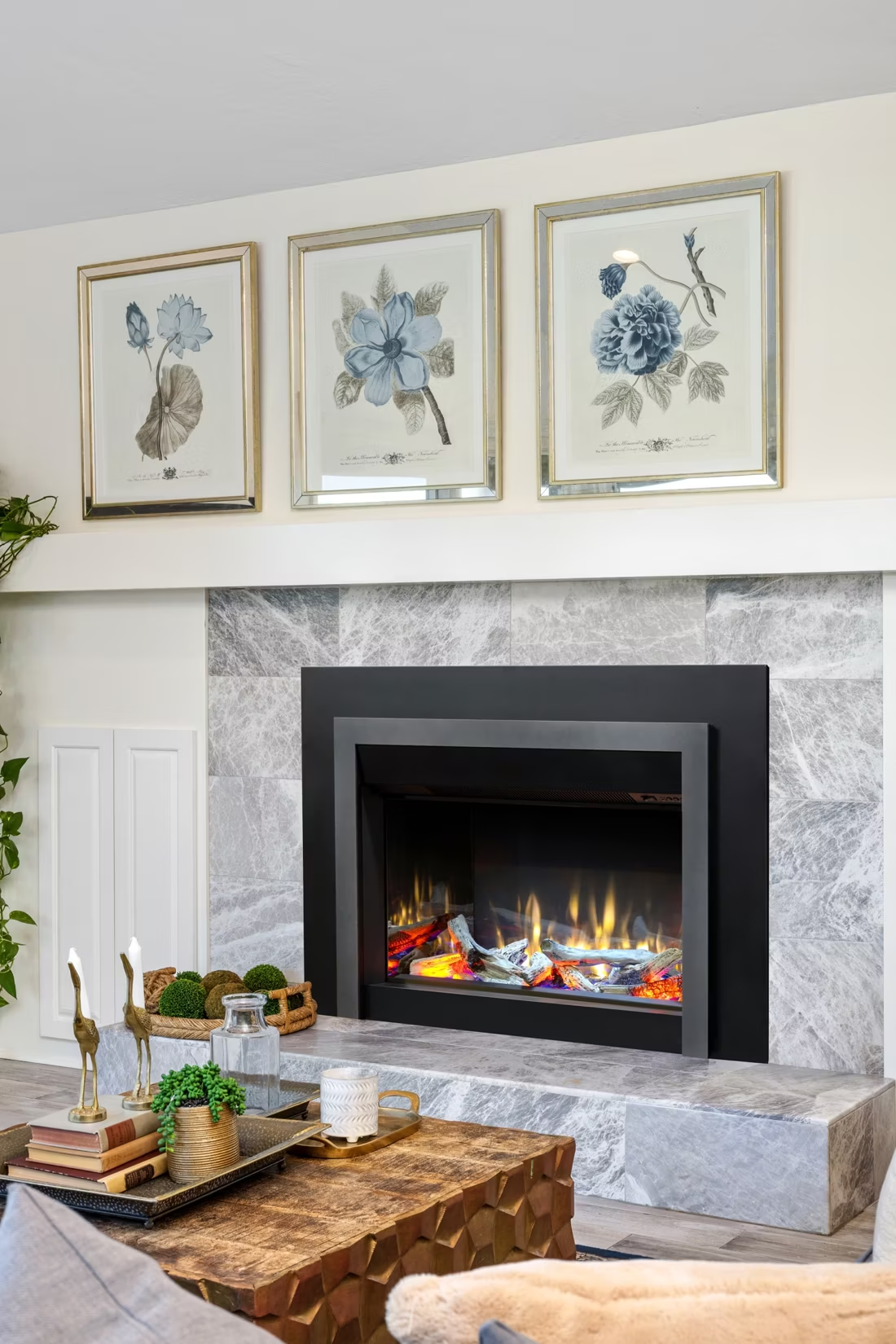
For the lagoon-front condos and attached townhomes that make up much of Foster City's housing stock, built-in linear electric fireplaces from brands like Dimplex and Napoleon are popular because they mount flush in a wall with no venting and satisfy HOA rules that often prohibit open-flame appliances. For homeowners with an existing but unused masonry wood fireplace, an electric insert can drop into that opening and eliminate smoke and creosote concerns entirely while keeping the original mantel and surround.
Will an electric fireplace work during a PG&E power outage?
No—electric fireplaces require power to run the heater, fan, and flame effect, so they go dark during any outage, including the Public Safety Power Shutoffs PG&E has used during high wildfire-risk periods in recent years. If backup heat during an outage is a priority for your household, that's worth discussing with a local dealer, since it's the one real tradeoff versus a wood-burning setup—though wood installs face their own restrictions here during Spare the Air advisories.
How does maintenance compare to a wood or gas fireplace?
Electric fireplaces are the lowest-maintenance option available. There's no chimney to sweep, no gas line or pilot to service, and no creosote or soot to manage—just occasional dusting of the unit and, eventually, an LED module replacement after years of use. Compare that to a wood-burning fireplace built for local species like oak, madrone, or Douglas fir, which needs an annual chimney inspection, or a gas insert, which needs yearly burner and venting service. For a lock-and-leave lifestyle or a rental property, that difference matters.
Can I convert my existing wood-burning fireplace to electric?
Yes, and it's a common project in Foster City's older stock of homes built with traditional masonry fireplaces. An electric insert slides into the existing firebox opening and plugs into a nearby outlet or a newly added circuit, instantly removing the smoke, ash, and Spare the Air compliance concerns that come with wood while keeping the original mantel and hearth look. It's typically the fastest and least invasive fireplace conversion available, usually completed in a single day.
Electric vs. gas—which makes more sense for a Foster City home?
Gas fireplaces produce more real heat output and a more traditional flame, but they require a gas line, venting, and a larger installation budget, plus they're combustion appliances that some Foster City HOAs restrict in condo and townhome buildings. Electric fireplaces install almost anywhere with minimal cost, produce zero emissions (relevant given San Mateo County's non-attainment status and periodic wildfire smoke), and are universally allowed in buildings where open-flame units aren't. For a primary living space in a single-family home, gas often wins on ambiance; for lagoon-front condos, rentals, or anyone prioritizing simplicity, electric usually wins.
Can I put a TV above my fireplace?
Yes—with an asterisk. Fireplaces are hot and TVs don't like heat. Either put a mantel between them to deflect rising warmth, or choose a fireplace with heat-management technology that creates a cool zone on the wall above—the wall stays around 125 degrees, barely warm, while the room still gets full heat. If you like clean lines and don't want a mantel, heat management is the answer.
Do electric fireplaces actually produce heat?
Yes—most put out around 4,800–5,000 BTUs from a standard outlet, which comfortably warms a bedroom, office, or den as a comfort-zone heater. What they won't do is carry a whole house the way wood, gas, or pellet can. Think of electric as ambiance-first with honest supplemental heat: flames on with no heat in July, flames plus warmth in January.
Does a fireplace add value to my home?
On average, a fireplace adds back to the home about the same amount you spent installing it. Add the monthly savings from heating the rooms you actually use instead of the whole house—often hundreds of dollars a year—and the value case is strong before you even count what a fire does for how your family uses the room.
Can a fireplace actually lower my heating bill?
Yes—by creating a comfort zone. A furnace heats every square foot of the house just to warm the one room you're in; a gas fireplace on low burns roughly a sixth of the gas a typical furnace does. Set the furnace around 55–60 degrees as a baseline, then heat the rooms your family actually uses. Families who heat this way commonly save $20–$60 a month.
Nearby Dealers
Hearth shops serving Foster City and the surrounding area.
Electric Service in Foster City
An electric fireplace's heater draws about 1,500 watts—pennies per hour at local rates.
Pacific Gas & Electric Co.
Find your electric fireplace in Foster City.
Tell us a bit about your home and we'll put together a free Project Guide & Parts List—the right electric unit, the exact parts, and a trusted local dealer who can install it.
Find Your Fireplace →