
Pellet stoves are the exception, not the rule, in Diamond Bar.
With winter lows averaging 43°F, most Diamond Bar homes don't need a dedicated pellet appliance—but if you're one of the exceptions, we'll connect you with a local dealer who actually carries and installs them.
Every Project Starts From One of These Five Situations
A mild climate leaves little need for pellet heat.
Diamond Bar sits at just under 1,000 feet in the San Gabriel Valley foothills, where winters average a mild 43°F low and the city has a light overall heating need through the year. Compare that to a place like Duluth, Minnesota, which faces a heating load nearly seven times as heavy—Diamond Bar simply doesn't experience the sustained cold that makes a dedicated solid-fuel heating appliance a practical necessity. Southern California Edison keeps homes warm through the handful of genuinely cold nights, and most households never think twice about supplemental heat.
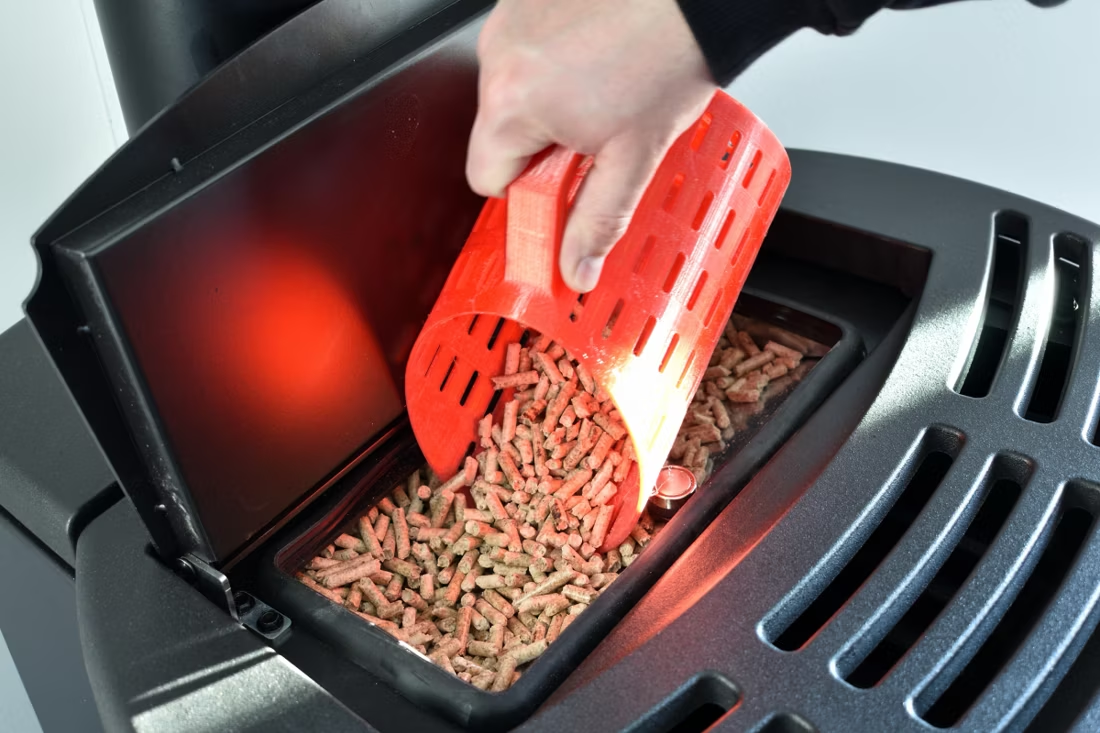
That said, a small number of Diamond Bar homeowners still install pellet stoves—often transplants from colder states who like the ritual of a real flame, owners of hillside homes near the Angeles National Forest who want a backup heat source, or people furnishing a den or bonus room where a stove serves as much as a design feature as a heater. Because the South Coast Air Quality Management District (SCAQMD) treats this as a non-attainment area with real wildfire smoke concerns, any unit installed here needs to be EPA-certified and permitted properly. Local hearth dealers in the LA basin do carry pellet units and regional pellet brands like Bear Mountain, Lignetics, and Pacific Pellet—they're just a smaller slice of what those dealers sell compared to gas fireplaces and electric units, which dominate demand in this climate.
Three steps. No salesperson until you're ready.
Tell us about your project
Your zip code, your situation, and the fuel you're leaning toward—or let the answers point you to one.
See what's actually available
The brands dealers within 100 miles genuinely carry—real options, never a catalog mirage.
Get your dealer & Project Guide
A trusted local dealer, plus the free Project Guide & Parts List that names every component of the job.
Frequently Asked Questions
Do people actually install pellet stoves in Diamond Bar?
Some do, but it's genuinely uncommon. With a 43°F average winter low and a light overall heating need through the year, Diamond Bar doesn't have the sustained cold that drives pellet stove adoption in places like the Sierra foothills or the Pacific Northwest. The homeowners who do install one are usually looking for ambiance, a heat source for a converted garage or bonus room, or backup warmth for hillside properties near the Angeles National Forest where extended power outages sometimes happen during Santa Ana wind events. If that's you, a local dealer can still get you set up properly—you'll just have fewer options to compare in person than you would in a colder market.
How much does a pellet stove installation cost in Diamond Bar?
Pellet stove installs typically run $3,500 to $6,500 nationally, including the unit, venting, and hearth pad, and that range holds reasonably well for Southern California too. What's different in Diamond Bar is dealer availability—because demand is low, fewer local hearth shops keep pellet units in showroom stock, so your installer may need to special-order the stove and venting components, which can add a few weeks to the timeline. Get quotes from a dealer who actually installs pellet units regularly rather than one who mostly sells gas fireplaces and treats pellet as an afterthought.
Are there air quality restrictions on pellet stoves in Diamond Bar?
Yes. Diamond Bar falls under the South Coast Air Quality Management District, which regulates residential solid-fuel appliances under Rule 445 due to the region's non-attainment status for particulate matter. Any pellet stove installed here needs to be EPA-certified—which nearly all pellet stoves sold today are, since they burn far cleaner than open wood fires. Wildfire smoke is also a recurring concern in the LA basin during fall, and SCAQMD periodically issues air quality advisories, though pellet stoves' clean-burning design means they're rarely singled out the way older wood stoves are.
Do I need a permit to install a pellet stove in Diamond Bar?
Yes—a building permit through the LA County Department of Public Works Building and Safety Division (or the City of Diamond Bar's building department, depending on your address) is required for the venting and any structural work involved. Most hearth dealers who install pellet stoves in this area handle the permitting themselves as part of the job, since the process is similar to what they already do for gas insert installs, which are far more common locally.
Where can I buy pellet fuel near Diamond Bar?
Regional pellet brands including Bear Mountain, Lignetics, and Pacific Pellet are distributed through hearth and hardware retailers across the LA basin, though you'll want to call ahead—because pellet stoves are a niche product locally, not every store keeps a deep pellet inventory year-round the way a dealer in a colder climate would. Bags typically run in the $6-$9 range at general retail, with better pricing available if you can buy by the ton or pallet directly from a hearth shop.
What do most Diamond Bar homeowners install instead of a pellet stove?
Gas fireplaces and inserts are by far the more common choice here, since natural gas service through SoCalGas is widely available and the installation ecosystem—dealers, technicians, parts—is built around gas, not pellet. Electric fireplaces are also popular, especially in condos and townhomes throughout Diamond Bar's newer developments, since they require no venting and no fuel storage. If your main goal is ambiance or supplemental warmth rather than a wood-burning ritual specifically, either option will likely be easier to install and service locally than a pellet stove.
Does a pellet stove work during a power outage in Diamond Bar?
Not without a backup power source—this is worth knowing up front. Pellet stoves rely on an electric auger to feed fuel and a blower to distribute heat, so if Southern California Edison cuts power during a Public Safety Power Shutoff (which does happen in the foothill areas near the Angeles National Forest during high fire-danger, high-wind conditions), a standard pellet stove goes dark along with everything else. Homeowners who want heat during outages typically pair a pellet stove with a small battery backup or generator, or choose a wood-burning unit instead—though wood stoves are even rarer here than pellet units given the same mild-climate logic.
What does it cost to run a pellet stove in Diamond Bar?
Between the pellet fuel itself and the electricity to run the auger and blower, operating costs are worth factoring in. Southern California Edison's residential rate runs around $0.2825 per kWh—on the higher end nationally—so while a pellet stove's electrical draw is modest (usually under 100 watts continuous), it's not free to run, and its efficiency advantage over gas narrows here compared to states with cheaper electricity. For most Diamond Bar households, the appeal of a pellet stove is the fire itself rather than cost savings over gas or electric heat.
Pellet stove vs. electric fireplace—which makes more sense in Diamond Bar?
For most homes here, an electric fireplace is the simpler answer: no venting, no fuel storage, no permit hassle, and it plugs into an existing outlet. A pellet stove makes more sense if you specifically want a real flame and the smell and feel of an actual fire, and you're willing to deal with fuel storage, occasional ash cleanup, and a smaller pool of local installers and parts suppliers. Given Diamond Bar's mild climate, neither is being asked to do much heavy heating—so the decision usually comes down to which experience you actually want in the room, not which one heats more efficiently.
Why is a fireplace insert so efficient?
An insert does two things: it seals the chimney completely, so you stop losing air you already paid to heat, and it radiates warmth into the room through the firebox and glass. Most add a heat-exchange fan that pulls cool room air underneath, wraps it around the hot firebox, and pushes it back out warm. Your home is more efficient before you've even lit the first fire.
Why is my open fireplace making my house colder?
Open fireplaces suck—literally. As the fire burns, it consumes air your furnace already paid to heat and pulls it out through the chimney, so the house is actually colder after the fire goes out than before you lit it. An insert fixes this: it seals the chimney, puts fixed glass across the front, and turns that hole in your house into a real heat source.
Can I install a fireplace myself?
If you're putting a fire in your house on purpose, it's best to work with an expert. Unless you're genuinely experienced in framing, gas line, vent pipe, and the national code on clearances to combustibles, have a professional do it—and ideally the same company that sells you the fireplace, so warranty, service, and liability all live under one roof.
Can a fireplace actually lower my heating bill?
Yes—by creating a comfort zone. A furnace heats every square foot of the house just to warm the one room you're in; a gas fireplace on low burns roughly a sixth of the gas a typical furnace does. Set the furnace around 55–60 degrees as a baseline, then heat the rooms your family actually uses. Families who heat this way commonly save $20–$60 a month.
Nearby Dealers
Hearth shops serving Diamond Bar and the surrounding area.
All Valley Distrib. Dba Marco Distrib
The Heat Source (Burrico) - Lancaster
Tropicana Outdoor Living
Pellet Brands Stocked Around Diamond Bar
Manufacturers will point you to the nearest stocking dealer.
Find your pellet stove in Diamond Bar.
Tell us about your home and we'll connect you with one of the few local dealers who genuinely stocks and installs pellet stoves in the Diamond Bar area, plus a free Project Guide & Parts List with the exact venting and components your install needs.
Find Your Fireplace →