
Gas fireplace heat, built for Diamond Bar's mild winters and strict air rules.
With winter lows averaging 43°F and one of the lightest heating seasons around, Diamond Bar doesn't need furnace-grade wood heat—it needs a clean, code-compliant gas fireplace that adds real ambiance without running afoul of South Coast Air Quality Management District rules.
Every Project Starts From One of These Five Situations
Mild winters, tight air rules, and gas fills the gap.
Diamond Bar sits at just under 950 feet in the eastern San Gabriel Valley, inside California Climate Zone 3B—one of the mildest heating climates in the country. Winter lows average 43°F and the city has a very light heating season overall, a fraction of what a cold-climate city like Duluth, Minnesota racks up in a single January. Nobody here is burning oak or madrone to survive the night.
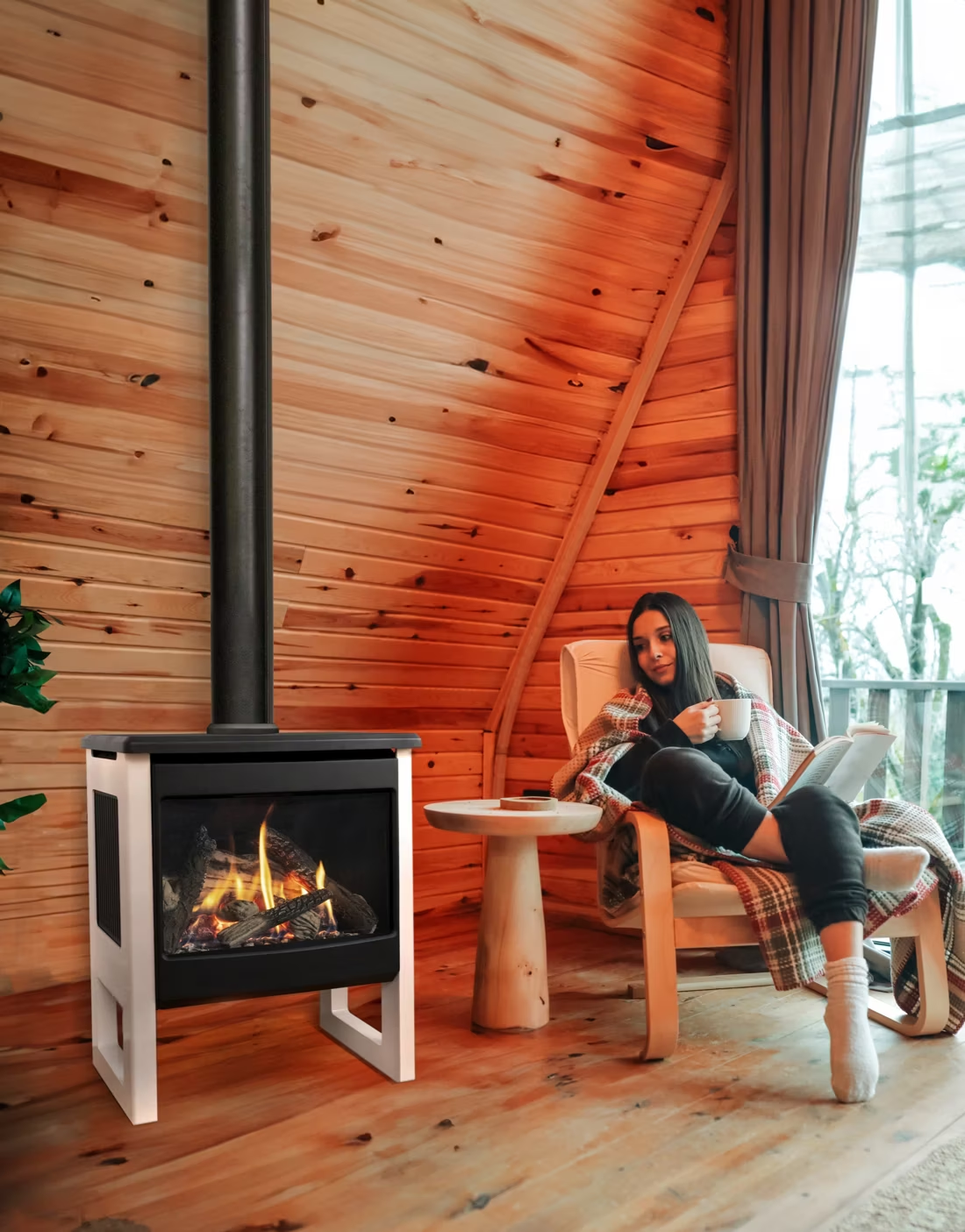
What Diamond Bar homeowners do want is real flame—the look and feel of a fireplace—without the complications. The city sits in the South Coast Air Basin, a federal non-attainment area with real wildfire smoke exposure most falls, and South Coast AQMD Rule 445 has effectively ended new wood-burning fireplace installations across Los Angeles County. Gas fills that gap: a sealed, direct-vent gas fireplace or insert delivers instant, controllable flame with none of the smoke, ash, or curtailment-day restrictions that come with wood.
Three steps. No salesperson until you're ready.
Tell us about your project
Your zip code, your situation, and the fuel you're leaning toward—or let the answers point you to one.
See what's actually available
The brands dealers within 100 miles genuinely carry—real options, never a catalog mirage.
Get your dealer & Project Guide
A trusted local dealer, plus the free Project Guide & Parts List that names every component of the job.
Frequently Asked Questions
How much does a gas fireplace installation cost in Diamond Bar?
Most gas fireplace and insert installations in the Diamond Bar area run roughly $4,000 to $10,000, depending on whether you're converting an existing masonry fireplace to a direct-vent gas insert or building out a new unit with fresh gas line and venting work. Homes that already have a gas line stubbed near the fireplace—common in Diamond Bar's 1970s- and 1980s-built tract homes—land toward the lower end. New construction or remodels that require running gas line and venting through exterior walls push toward the higher end. A local installer will give you a firm number after seeing the space.
Can I convert my existing wood-burning fireplace to gas?
Yes, and it's one of the most common projects local hearth dealers handle in Diamond Bar. South Coast AQMD Rule 445 restricts new wood-burning fireplace installations across Los Angeles County, and many homeowners with an older open masonry fireplace choose to convert to a sealed direct-vent gas insert rather than deal with wood-burning limits, smoke, and Check Before You Burn advisories during wildfire season. The conversion uses your existing chimney as a chase for the new venting, keeps the look of your fireplace, and typically takes a single day to install once the gas line is in place.
Do I need natural gas service, or is propane more common here?
Diamond Bar is served by Southern California Gas Company (SoCalGas), and the overwhelming majority of homes in the 91765 and 91789 zip codes already have natural gas service for cooking, water heating, or furnaces. That makes adding a gas fireplace straightforward for most homeowners—there's usually a line nearby that just needs to be extended. Propane is rare in this part of Los Angeles County and mostly shows up on rural parcels without gas infrastructure, which isn't typical for Diamond Bar's suburban tract.
Will my gas fireplace still work if the power goes out?
Most direct-vent gas fireplaces with intermittent pilot ignition (IPI) include a battery backup that keeps the unit operable during a Southern California Edison outage—common during Santa Ana wind events and public safety power shutoffs. Valor fireplaces go a step further: the pilot's thermocouple generates its own electricity, so there are no batteries to maintain at all. Given how often SCE cuts power preemptively during red flag warnings in the foothills near Diamond Bar, that's worth asking your installer about.
What's the difference between a gas fireplace, insert, and stove?
A gas fireplace is a fully built-in unit framed into a wall—the right choice for new construction or a room without an existing hearth. A gas insert drops into an existing masonry fireplace opening and uses the old chimney as a chase for new venting—this is the more common project in Diamond Bar's older tract neighborhoods. A gas stove is a freestanding cabinet-style unit that sits on the floor, useful in rooms with no fireplace at all. For most homeowners here with an existing wood-burning fireplace they no longer use, an insert is the simplest and least invasive upgrade.
Do I need a permit to install a gas fireplace in Diamond Bar?
Yes. The City of Diamond Bar Building and Safety Division requires a building permit and a mechanical/gas permit for any new gas fireplace or insert installation, and the gas line work has to be pulled by a licensed contractor. Most established hearth dealers handle the permitting and inspection scheduling as part of the installation price, so you're not coordinating separate trades or standing in line at City Hall yourself.
Can I install a vent-free (ventless) gas fireplace in Diamond Bar?
Practically speaking, no. California restricts vent-free gas fireplaces more heavily than most states, and in a non-attainment air basin like the one Diamond Bar sits in, direct-vent sealed units are what local dealers install almost exclusively. Direct-vent fireplaces draw combustion air from outside and exhaust it back outside through a sealed pipe, which keeps combustion byproducts out of the house—a real consideration given the wildfire smoke that already settles into the San Gabriel Valley most autumns.
How often does a gas fireplace need to be serviced?
Plan on an annual inspection, typically $150 to $250, where a technician checks the burner, pilot assembly, venting, and gas connections, and cleans the glass. It's a lighter lift than chimney sweeping for a wood stove, but skipping it is still the most common cause of pilot and ignition problems homeowners run into after a few years of use.
Gas vs. electric fireplace—which makes more sense in Diamond Bar?
Gas gives you real flame, higher heat output, and lower cost per BTU than running an electric unit at Southern California Edison's residential rate of roughly 28 cents per kWh—one of the higher electric rates in the country. Electric fireplaces cost far less to install (often under $1,000), require no gas line or venting, and can go anywhere with an outlet, which makes them a fit for apartments, rentals, or rooms where running gas line isn't practical. For a primary living-room hearth in an owned single-family home, most Diamond Bar homeowners choose gas; for a secondary room or a rental unit, electric is often the simpler answer.
Is my gas fireplace wasting gas?
If it was installed more than 15 years ago, probably. Older gas fireplaces keep a standing pilot light burning all the time, and that little flame can cost a couple hundred dollars a year. Newer models use pilot-on-demand ignition—the pilot lights only when you use the fireplace and goes out when you turn it off.
Can I put a TV above my fireplace?
Yes—with an asterisk. Fireplaces are hot and TVs don't like heat. Either put a mantel between them to deflect rising warmth, or choose a fireplace with heat-management technology that creates a cool zone on the wall above—the wall stays around 125 degrees, barely warm, while the room still gets full heat. If you like clean lines and don't want a mantel, heat management is the answer.
How much should I budget for a fireplace?
For an average home—covering the fireplace, the vent pipe, and basic installation—a budget between $3,900 and $5,500 gives you a lot of options across wood, gas, and pellet. By the time you add finish work, gas line, and electrical, the average complete installation lands between $5,000 and $12,000 all-in. In a remodel or new build, a good rule is to put about 2.5% of the total project cost toward the fireplace.
What is an in-home preview and do I need one?
It's a visit where a hearth professional measures your space, confirms the model you picked actually works in your home, and walks the specs—framing, gas line, venting, finish work—before anything is ordered. Some details you just can't know until you see the house. Never make a down payment without one; it's the single most-skipped step that burns buyers.
Nearby Dealers
Hearth shops serving Diamond Bar and the surrounding area.
All Valley Distrib. Dba Marco Distrib
The Heat Source (Burrico) - Lancaster
Tropicana Outdoor Living
Find your gas fireplace in Diamond Bar.
Tell us about your home and we'll match you with a trusted local dealer and send over a free Project Guide & Parts List—the exact parts, vent kit, and next steps for your Diamond Bar gas fireplace project.
Find Your Fireplace →