
Find the right pellet stove for Del Norte County's damp, mild winters.
Consistent, low-maintenance heat for the fog and rain of the far north coast—from Crescent City to Klamath and Smith River. We match you with a trusted local dealer who knows what actually vents and installs here.
Every Project Starts From One of These Five Situations
Mild winters, heavy moisture—pellet heat fits the climate.
Del Norte County sits on California's redwood coast, where climate zone 4C means mild, wet winters rather than the deep cold of the Sierra or the Cascades—winter lows average around 40°F and the winter heating load is moderate, closer to a mild coastal climate than an inland mountain one. That's a fraction of what a place like Duluth, MN or Burlington, VT sees in a season, but the persistent damp, fog, and coastal humidity mean homes still need steady, dry heat for months at a time, not just occasional warmth.
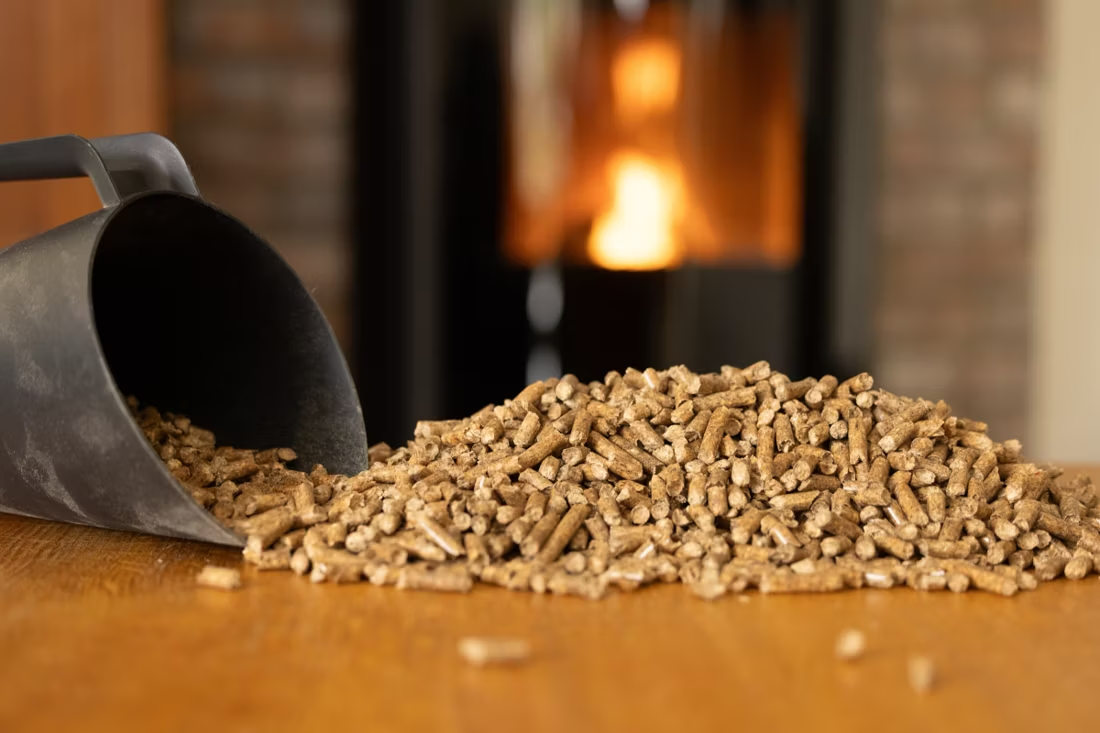
Pellet stoves work well here because they deliver consistent, thermostatically controlled heat without the moisture-content headaches of burning local oak, madrone, or Douglas fir that hasn't fully seasoned in a damp coastal climate. Bagged pellets from regional suppliers like Bear Mountain, Lignetics, and Pacific Pellet stay dry and burn predictably, which matters in a county where wildfire smoke already affects summer air quality and residents are mindful of what they're putting into the air the rest of the year. For homes in Crescent City, Klamath, or Smith River, a pellet stove offers real heat output with a lot less hassle than tending a wood fire in a damp climate.
Three steps. No salesperson until you're ready.
Tell us about your project
Your zip code, your situation, and the fuel you're leaning toward—or let the answers point you to one.
See what's actually available
The brands dealers within 100 miles genuinely carry—real options, never a catalog mirage.
Get your dealer & Project Guide
A trusted local dealer, plus the free Project Guide & Parts List that names every component of the job.
Frequently Asked Questions
How much does a pellet stove installation cost in Del Norte County?
Pellet stove and insert installations in Del Norte County typically run in line with regional averages once you account for venting, hearth pad requirements, and whether the unit is a freestanding stove or an insert going into an existing fireplace. Freestanding pellet stoves are generally the more affordable option since they use simpler through-wall PL venting rather than a full chimney liner. Costs can run somewhat higher for homes in more remote parts of the county, like Klamath or Smith River, where a dealer's travel time gets added to the install quote. A local retailer will give you a firm number after seeing your home and chimney or wall configuration.
Do pellet stoves work well in a mild, wet coastal climate like Del Norte County's?
Yes, and in some ways pellet stoves are a better fit here than in a harsher inland climate. Del Norte County's winters are mild in terms of overall heating need, but the near-constant fog and rain along the coast mean homes benefit from steady, dry background heat rather than intense blasts of warmth. Pellet stoves excel at exactly that kind of even, thermostatically regulated output, and because the fuel comes pre-dried and bagged from suppliers like Bear Mountain and Lignetics, you avoid the challenge of trying to season oak or Douglas fir in a climate where wood rarely dries out fully outdoors.
What size pellet stove do I need for my home?
Sizing depends on square footage, ceiling height, and how leaky or well-insulated your home is—older homes near the coast in Crescent City often have more air infiltration than newer construction inland. As a general guide, small pellet stoves suit a single room or up to about 1,000 square feet, medium units handle 1,000 to 2,000 square feet, and larger units can cover a well-insulated home above 2,000 square feet. Because Del Norte County's heating load is relatively moderate compared to inland mountain climates, most homes here don't need the largest units on the market, but a local dealer should still size your specific home rather than guessing from square footage alone.
What's the difference between a pellet stove and a pellet insert?
A pellet stove is a freestanding unit that sits on a hearth pad and vents through an exterior wall or existing chimney chase, which makes it a flexible option for homes without a masonry fireplace. A pellet insert is built to slide into an existing wood fireplace opening, converting an old open hearth into a sealed, efficient heat source while reusing the chimney space you already have. For older Crescent City homes with an existing masonry fireplace, an insert is often the more cost-effective route since it doesn't require new venting to be run through a wall.
Do I need a permit to install a pellet stove in Del Norte County?
In most cases, yes—new pellet stove and insert installations typically require a building permit through the local jurisdiction, whether that's the City of Crescent City or unincorporated Del Norte County. Most established hearth dealers handle the permitting process as part of the installation, so homeowners generally don't have to navigate it themselves. Because pellet stoves burn cleaner and more completely than wood stoves, they don't carry the same wildfire-smoke scrutiny that wood-burning permits sometimes face in this region, though local air district rules can still apply depending on the model.
What's the best pellet stove for Del Norte County's coastal climate?
For a mild, damp climate like Del Norte County's, look for a pellet stove with reliable auto-ignition and a thermostat mode, since you're more likely to be running it intermittently through a foggy, 45-degree week than holding a 20-hour overnight burn through a hard freeze. Mid-size units in the 2,000 to 2,500 square-foot rating range cover most local homes comfortably without oversizing. Bear Mountain, Lignetics, and Pacific Pellet are all regionally available fuel brands, so ask your local dealer which stove models are best matched to the pellet quality and BTU output you'll actually be able to source nearby.
How often does a pellet stove need to be cleaned or serviced?
Pellet stoves need more frequent light cleaning than wood stoves but far less than a full chimney sweep. Plan on emptying the ash pan every few days to weekly depending on use, cleaning the burn pot and heat exchanger tubes every couple of weeks during the season, and scheduling a full annual service—auger, exhaust fan, gaskets, and venting—before the fall burning season starts. In a damp coastal climate like Del Norte County's, it's also worth checking exterior vent terminations for salt-air corrosion or moisture intrusion, which is more of a factor here than it would be inland.
Where can I buy pellets in Del Norte County?
Regional pellet brands including Bear Mountain, Lignetics, and Pacific Pellet are commonly stocked at hearth and hardware retailers serving the North Coast, and most sell by the ton or by the 40-pound bag. Buying a full ton ahead of the wet season is the most economical approach and ensures you're not scrambling to find dry, in-stock bags during a cold snap. Your local dealer can typically tell you which brands perform best in the specific stove model you buy, since ash content and pellet density vary between suppliers.
Pellet stove vs. wood stove—which is right for Del Norte County?
Wood stoves burning local oak, madrone, or Douglas fir offer real ambiance, work without electricity during a power outage, and pair with low-cost cutting permits through Six Rivers National Forest ($5 to $20 per cord, May through October season). Pellet stoves trade that off-grid resilience for convenience and cleaner burning—no splitting or seasoning wood in a climate where it's genuinely hard to dry, less creosote buildup, and steadier heat output for the county's persistent damp weather. If backup heat during outages matters most to you, wood has the edge. If low-maintenance daily comfort matters more and you have reliable power, pellet is usually the better fit. A local dealer carries both and can walk you through the tradeoff for your specific home.
Why is a fireplace insert so efficient?
An insert does two things: it seals the chimney completely, so you stop losing air you already paid to heat, and it radiates warmth into the room through the firebox and glass. Most add a heat-exchange fan that pulls cool room air underneath, wraps it around the hot firebox, and pushes it back out warm. Your home is more efficient before you've even lit the first fire.
How often does a pellet stove need cleaning?
A clean pellet stove is a happy pellet stove. Plan on cleaning the burn pot about once a week when you're burning regularly—ash and clinkers gum up the air holes just like a pellet barbecue. Most pellet stove problems trace back to skipped cleaning that nobody explained up front. Some designs make it easy with a trapdoor burn pot: pull a lever and the gunk drops into the ash pan.
Can a fireplace actually lower my heating bill?
Yes—by creating a comfort zone. A furnace heats every square foot of the house just to warm the one room you're in; a gas fireplace on low burns roughly a sixth of the gas a typical furnace does. Set the furnace around 55–60 degrees as a baseline, then heat the rooms your family actually uses. Families who heat this way commonly save $20–$60 a month.
How much should I budget for a fireplace?
For an average home—covering the fireplace, the vent pipe, and basic installation—a budget between $3,900 and $5,500 gives you a lot of options across wood, gas, and pellet. By the time you add finish work, gas line, and electrical, the average complete installation lands between $5,000 and $12,000 all-in. In a remodel or new build, a good rule is to put about 2.5% of the total project cost toward the fireplace.
Stove and Fireplace Dealers in Del Norte County
Pellet Brands Stocked Around Del Norte County
Manufacturers will point you to the nearest stocking dealer.
Find your pellet stove in Del Norte County.
Tell us a bit about your home and we'll match you with a trusted local dealer and send over a free Project Guide & Parts List—the exact parts, vent kit, and recommended dealer for your pellet project in Del Norte County.
Find Your Fireplace →