
Find the right electric fireplace for Del Norte County's marine climate.
Fog, rain, and mild coastal winters along the redwood coast—from Crescent City to Klamath and Smith River. See what a real local pro can install with no chimney, no gas line, and no smoke.
Every Project Starts From One of These Five Situations
Mild winters, real reasons for electric heat.
Del Norte County sits in climate zone 4C, a marine climate where winter lows average around 40 degrees and the county has a moderate winter heating load—mild compared to inland California, but damp, gray, and persistent from November through March. Homes here don't need the 20-hour overnight burn of a Bozeman or Duluth winter. What they need is steady, low-maintenance warmth to cut the chill off fog-soaked mornings in Crescent City, Klamath, Gasquet, and Smith River, and electric units deliver that without a chimney, a gas line, or a wood supply.
Del Norte County also deals with wildfire smoke from Six Rivers National Forest and the broader region during dry-season fire events, which makes a zero-combustion option appealing for homeowners who want ambiance and supplemental heat without adding smoke to already smoky air. Electric fireplaces and inserts also suit the county's older Victorian and craftsman homes near the coast, plus the rental cabins and vacation properties scattered through Hiouchi and the redwood corridor, where simple plug-in or hardwired units mean no structural work and a much faster path through the Del Norte County Community Development Department's permit process.
Three steps. No salesperson until you're ready.
Tell us about your project
Your zip code, your situation, and the fuel you're leaning toward—or let the answers point you to one.
See what's actually available
The brands dealers within 100 miles genuinely carry—real options, never a catalog mirage.
Get your dealer & Project Guide
A trusted local dealer, plus the free Project Guide & Parts List that names every component of the job.
Frequently Asked Questions
How much does an electric fireplace installation cost in Del Norte County?
Most electric fireplace projects in Del Norte County run $400 to $1,800. A plug-in freestanding unit or a simple insert into an existing fireplace opening sits at the low end and often needs no electrical work beyond a standard outlet. Built-in wall units, linear electric fireplaces set into new framing, or any installation that needs a dedicated 20-amp circuit run by a licensed electrician push toward the higher end. Coastal homes in Crescent City or Klamath with older wiring sometimes need panel work first, which a local dealer will flag during an in-home look before quoting anything firm.
Will an electric fireplace actually heat my home in Del Norte County?
It depends on the goal. Del Norte County's 40-degree average winter low and a moderate winter heating load mean most homes need supplemental heat, not a furnace replacement, and a typical 1,500-watt electric insert or built-in unit puts out enough heat for a single living room or bedroom. For whole-home heating most local homeowners still lean on a heat pump, propane furnace, or wood stove, and use the electric fireplace as zone heat for the room they actually live in—which is exactly how most electric units are marketed and sized.
Do I need a permit to install an electric fireplace in Del Norte County?
Usually not for a plug-in unit or a simple insert swap into an existing firebox—those typically don't trigger a permit. Where the Del Norte County Community Development Department does get involved is new electrical circuit work, structural changes to a wall for a built-in unit, or any framing modification. Most local dealers handle that paperwork as part of the installation, so it's worth asking upfront rather than assuming a permit isn't needed.
What's the difference between an electric insert and a built-in electric fireplace?
An electric insert is sized to slide into an existing fireplace opening—masonry or a zero-clearance wood box—and typically plugs into a standard outlet or nearby circuit. A built-in electric fireplace is framed into a wall from scratch, which gives more flexibility on size and placement but requires carpentry and usually a dedicated circuit. For Del Norte County's older coastal homes with an existing but unused fireplace, an insert is the faster, cheaper route. For new construction or a remodel, a built-in unit lets you put the fireplace wherever it makes sense in the room.
Will my electric fireplace still work if the power goes out?
No—electric units are entirely dependent on grid power, and that matters in Del Norte County. Winter atmospheric river storms regularly knock down trees onto lines through the redwood corridor, and outages in Crescent City, Klamath, and outlying areas served by Pacific Power can stretch for hours or, in a bad storm, days. An electric fireplace is a great everyday convenience, but it shouldn't be your only heat plan. Many homeowners here pair it with a wood stove or propane appliance for backup, especially in more isolated areas like Gasquet or Hiouchi.
Is electric heat a good option during wildfire smoke events?
Yes. Electric fireplaces and inserts produce zero combustion byproducts—no smoke, no particulates, nothing added to indoor or outdoor air. During wildfire smoke events tied to fires on Six Rivers National Forest land or elsewhere in the region, that's a real advantage over wood heat, which can add to already poor air quality and irritate anyone with respiratory sensitivity. It's one of the more practical reasons Del Norte County homeowners choose electric for at least part of their heating setup, even in a county where wood burning is otherwise common.
What's the best electric fireplace for a damp coastal climate like Del Norte County's?
Look for units rated for the humidity and salt-air exposure common along the Del Norte coast, particularly for anything installed near an exterior wall in Crescent City or closer to the Klamath River mouth. Sealed electrical components and corrosion-resistant hardware matter more here than in a dry inland climate. A local dealer familiar with coastal installations can point you toward models that hold up, and can flag any unit with a history of moisture-related issues in this kind of climate before you buy.
Electric vs. wood—which makes more sense for my Del Norte County home?
Wood is deeply practical here—Six Rivers National Forest issues cutting permits from May through October at $5 to $20 per cord, and oak, madrone, and Douglas fir are all common locally, making self-cut firewood cheap and available. Wood also keeps working when the power goes out, which matters during storm season. Electric wins on convenience and cleanliness: no ash, no chimney maintenance, no smoke during fire season, and instant on-off operation. Many Del Norte County homes end up with both—wood for backup heat and cold nights, electric for everyday ambiance and quick warmth in a bedroom or living room.
Electric vs. propane—which fuel should I choose?
Most of Del Norte County has limited natural gas infrastructure, so the real comparison is usually electric versus propane rather than electric versus natural gas. Propane fireplaces put out more heat and can often run during a power outage with the right ignition system, which matters given the county's storm-related outages. Electric units are cheaper to install, need no fuel tank or delivery, and produce no combustion emissions—a plus during wildfire smoke season. For a primary heat source, propane generally has the edge; for supplemental warmth and ambiance with minimal hassle, electric is hard to beat.
Can I put a TV above my fireplace?
Yes—with an asterisk. Fireplaces are hot and TVs don't like heat. Either put a mantel between them to deflect rising warmth, or choose a fireplace with heat-management technology that creates a cool zone on the wall above—the wall stays around 125 degrees, barely warm, while the room still gets full heat. If you like clean lines and don't want a mantel, heat management is the answer.
Does an electric fireplace need a vent or chimney?
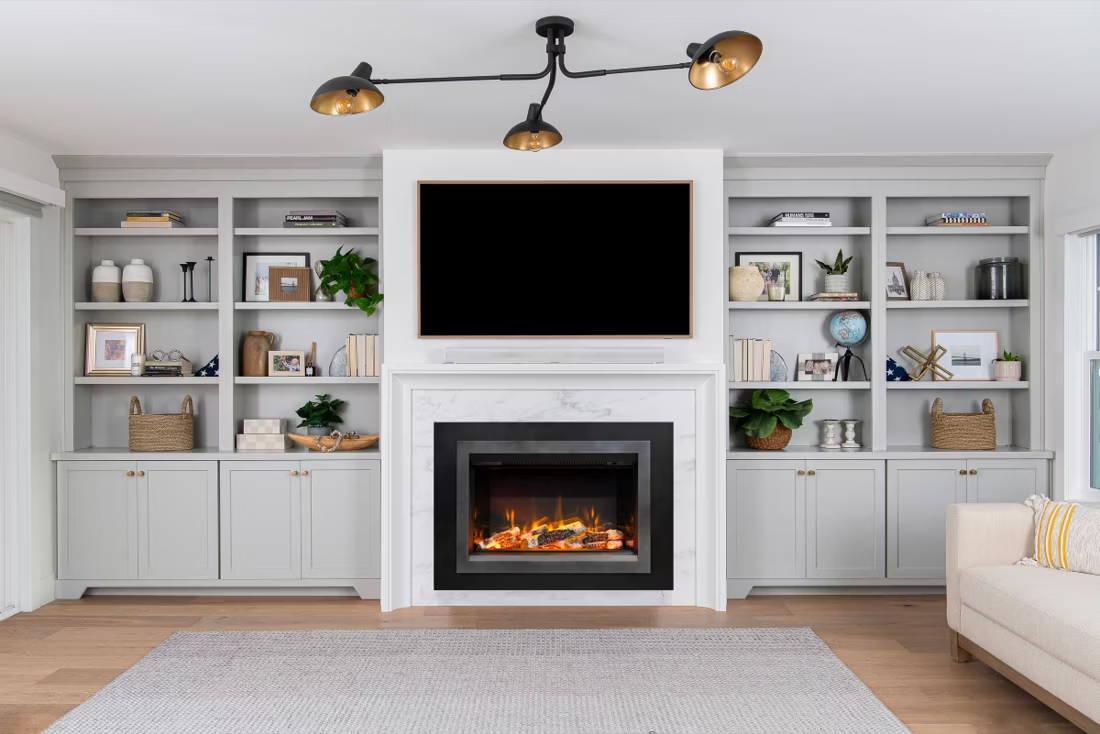
No—that's its superpower. An electric fireplace needs a wall and an outlet, period. No vent pipe, no gas line, no clearances to design around, which is why it works in bedrooms, offices, apartments, and walls where venting a gas or wood unit would be impractical or impossible. Installation is typically the simplest and least expensive of any fireplace type.
Can a fireplace actually lower my heating bill?
Yes—by creating a comfort zone. A furnace heats every square foot of the house just to warm the one room you're in; a gas fireplace on low burns roughly a sixth of the gas a typical furnace does. Set the furnace around 55–60 degrees as a baseline, then heat the rooms your family actually uses. Families who heat this way commonly save $20–$60 a month.
Can I install a fireplace myself?
If you're putting a fire in your house on purpose, it's best to work with an expert. Unless you're genuinely experienced in framing, gas line, vent pipe, and the national code on clearances to combustibles, have a professional do it—and ideally the same company that sells you the fireplace, so warranty, service, and liability all live under one roof.
Stove and Fireplace Dealers in Del Norte County
Find your electric fireplace in Del Norte County.
Tell us about your home and we'll match you with a trusted local dealer and send over a free Project Guide & Parts List—the exact parts, including any wiring needs, for your Del Norte County electric fireplace project.
Find Your Fireplace →