
Keep Your Family Warm and Safe—No Matter What
With winter lows averaging 44°F and a light overall heating load for the year, Dana Point doesn't need wood heat to survive winter. A small number of homeowners still install it for ambiance or backup—here's what that actually looks like.
Every Project Starts From One of These Five Situations
Dana Point's mild winters make wood heat more novelty than necessity.
Dana Point sits right on the Orange County coast at 278 feet of elevation, where the Pacific keeps winters mild—the average winter low is 44°F, and the city has a light overall heating load for the year. Compare that to a place like Duluth, MN, which has a heating load several times heavier in a typical winter, and it's clear why wood stoves never became a default heat source here. Most homes in Dana Point are built around central HVAC and gas, not cordwood.
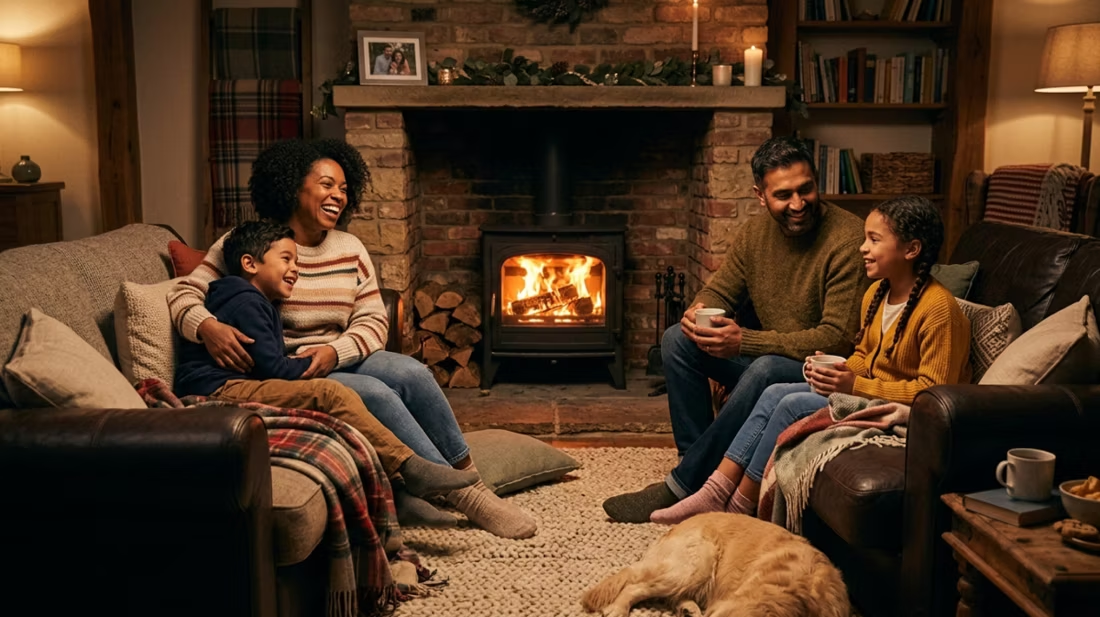
Where wood does show up, it's usually for ambiance rather than survival heat—a harbor-view home with an occasional evening fire, a vacation property, or a homeowner who grew up with wood heat elsewhere and wants the ritual of it. Orange County also falls inside the South Coast Air Quality Management District's non-attainment area, and SCAQMD Rule 445 has restricted new wood-burning fireplace installations in new residential construction since 2009—new builds are generally required to install EPA-certified wood stoves/inserts or switch to gas. Add in periodic wildfire smoke advisories along the coast, and wood burning here comes with more regulatory homework than in most parts of the country.
Firewood Cutting Permits Near Dana Point
Three steps. No salesperson until you're ready.
Tell us about your project
Your zip code, your situation, and the fuel you're leaning toward—or let the answers point you to one.
See what's actually available
The brands dealers within 100 miles genuinely carry—real options, never a catalog mirage.
Get your dealer & Project Guide
A trusted local dealer, plus the free Project Guide & Parts List that names every component of the job.
Frequently Asked Questions
Does it even make sense to install a wood stove in Dana Point?
For most Dana Point homes, no—not as a primary heat source. With such a light overall heating load and winter lows that rarely drop below the low 40s, the math that makes wood heat worthwhile in places like Bozeman, MT or Burlington, VT just doesn't apply here. Where it does make sense is ambiance: an occasional fire on a cool coastal evening, a backup heat source for power outages, or a wood-burning fireplace in a second home. If that's your goal, a trusted local dealer can tell you honestly whether it's worth the investment versus a gas or electric alternative.
What are the air quality rules for burning wood in Dana Point?
Orange County falls within the South Coast Air Quality Management District's jurisdiction, which is a federal non-attainment area for particulate matter. SCAQMD runs a Check Before You Burn program during the winter season (typically November through February) that restricts wood burning on high-pollution days—on those days, only EPA-certified wood-burning devices or gas fireplaces are allowed to operate, and older uncertified fireplaces must stay cold. Wildfire smoke events add another layer: during fire season, local air quality can already be compromised, and adding wood smoke on top of that isn't something most Dana Point homeowners want to deal with.
Can I install a new wood-burning fireplace in a new Dana Point home?
It's restricted. SCAQMD Rule 445 has banned new open-hearth, wood-burning fireplaces in new residential construction across the South Coast Air Basin—which includes Dana Point—since 2009. Builders and homeowners doing new construction typically have to choose a gas fireplace, an EPA Phase 2-certified wood stove or insert, or an EPA-certified pellet stove instead. If you're renovating a home with an existing wood-burning fireplace, you generally have more flexibility, but it's worth confirming with the local building department before you commit to a wood-burning appliance.
Where would I even get firewood in Dana Point?
There's no local commercial cutting near the coast—you'd be looking at the inland national forests. Cleveland National Forest is the closest, with San Bernardino National Forest and Angeles National Forest also within driving range, all issuing personal-use cutting permits from May through October at $5 to $20 per cord. Common species up there are oak, madrone, and Douglas fir. Realistically, most Dana Point homeowners who do burn wood buy delivered, seasoned cordwood from a supplier rather than cutting their own, since the forest units are a couple hours' drive inland.
What does a wood stove or insert installation cost in Dana Point?
Because wood installations are uncommon this close to the coast, you won't find many local dealers advertising fixed pricing the way you would in a cold-climate market. As a general range for coastal Southern California, expect somewhere between $4,000 and $8,500 for a stove or insert installation, depending on the unit, whether you're venting through an existing masonry chimney, and any code-driven upgrades. A trusted local dealer can give you a firm number once they've seen your home—and can also tell you whether a gas or electric unit would get you the same look for less trouble.
Why do most Dana Point homes use gas instead of wood?
Gas is the default here for a few practical reasons: it's instant, it doesn't require sourcing or storing cordwood, and it sidesteps the SCAQMD restrictions that apply to new wood-burning installations. Electric fireplaces are also common, especially for pure-ambiance use, even though San Diego Gas & Electric's residential rate (around $0.32/kWh) is on the higher side nationally—for occasional evening use, the actual operating cost stays low. Wood tends to show up only where someone specifically wants the smell, sound, and ritual of a real fire, or wants heat that works without electricity during an outage.
What wood species would I actually be burning?
If you source firewood locally, it's typically oak, madrone, or Douglas fir—the same species available through personal-use cutting permits in the Cleveland, San Bernardino, and Angeles National Forests. Oak in particular is a dense, long-burning hardwood that's well suited to the occasional-use pattern most Dana Point wood-stove owners actually have—it holds a coal bed well if you're lighting a fire once or twice a week rather than running a stove around the clock.
Should I worry about wildfire smoke if I install a wood stove?
It's a real consideration, though it cuts both ways. Dana Point already deals with wildfire smoke drifting in from inland Orange County and the surrounding mountains during fire season, which can trigger regional air quality advisories independent of anything you're doing at home. Adding your own wood smoke into that mix during an active smoke event isn't advisable, and SCAQMD's Check Before You Burn curtailments will sometimes overlap with wildfire smoke days. An EPA-certified stove burns dramatically cleaner than an old open fireplace, which helps, but most homeowners here simply don't burn during active fire-season smoke advisories.
Wood vs. electric fireplace—which makes more sense for ambiance in Dana Point?
For most Dana Point homeowners chasing the look and feel of a fire without the heating need, electric wins on convenience: no venting, no permits, no SCAQMD paperwork, and no wood to source or store. It runs on SDG&E power, and even at the utility's roughly $0.32/kWh residential rate, occasional evening use costs only a few cents an hour. Wood wins if you specifically want a real flame, real crackle, and heat that still works if the power goes out during a coastal storm. Neither is wrong—it comes down to whether you want authenticity or ease, since heating need alone doesn't tip the scale here.
Why won't my new wood stove get going like my old one?
New wood stoves are 70%+ efficient, so far less heat goes up the flue—which also means less draft to get a fire established. The rule: build a genuinely hot fire for about 45 minutes before you choke it down. Skip that and you get smoke in the room, creosote in the chimney, and a fire that never takes off. Most performance complaints trace straight back to this.
Why is a fireplace insert so efficient?
An insert does two things: it seals the chimney completely, so you stop losing air you already paid to heat, and it radiates warmth into the room through the firebox and glass. Most add a heat-exchange fan that pulls cool room air underneath, wraps it around the hot firebox, and pushes it back out warm. Your home is more efficient before you've even lit the first fire.
Does a fireplace add value to my home?
On average, a fireplace adds back to the home about the same amount you spent installing it. Add the monthly savings from heating the rooms you actually use instead of the whole house—often hundreds of dollars a year—and the value case is strong before you even count what a fire does for how your family uses the room.
How much should I budget for a fireplace?
For an average home—covering the fireplace, the vent pipe, and basic installation—a budget between $3,900 and $5,500 gives you a lot of options across wood, gas, and pellet. By the time you add finish work, gas line, and electrical, the average complete installation lands between $5,000 and $12,000 all-in. In a remodel or new build, a good rule is to put about 2.5% of the total project cost toward the fireplace.
Nearby Dealers
Hearth shops serving Dana Point and the surrounding area.
Find your wood fireplace option in Dana Point.
Wood heat is the exception in Dana Point, so getting it right means working with someone who knows the local SCAQMD rules and what's actually installable in your home. Tell us about your project and we'll match you with a trusted local dealer and send over a free Project Guide & Parts List—including the vent kit and exact parts—for your wood fireplace project.
Find Your Fireplace →