
Warm Evenings by the Harbor, On Demand.
Dana Point winters rarely bite, but ocean-cooled evenings still call for a fire. A gas fireplace gives you instant warmth without the smoke restrictions wood burning faces here, and we will connect you with a trusted local dealer.
Every Project Starts From One of These Five Situations
Clean heat that beats the burn bans.
Dana Point sits right on the coast at just 278 feet of elevation, with winter lows averaging a mild 44 degrees and a winter heating season that's short and light—a fraction of what a place like Bozeman, Montana sees in a single cold snap. Real heating need is low here, which is exactly why wood stoves and pellet stoves never really took hold locally; they're not something our data flags as a practical fit for this market. Gas is different. It's standard here, and for good reason.
Orange County falls under the South Coast Air Quality Management District, which restricts wood-burning fireplaces and stoves on high-pollution days through its Check Before You Burn program—a real consideration in a designated non-attainment area that also deals with periodic wildfire smoke. Gas fireplaces are exempt from those curtailment rules, which is a big part of why they're the default choice in Dana Point's harbor-view homes, Lantern District remodels, and coastal new builds. Southern California Gas Company serves natural gas throughout the city, and most local installers can also configure a unit for propane on the rare property that isn't on the gas main. The result is dependable, code-friendly warmth for patios, great rooms, and primary living spaces without a permit fight or a smoke advisory to check first.
Three steps. No salesperson until you're ready.
Tell us about your project
Your zip code, your situation, and the fuel you're leaning toward—or let the answers point you to one.
See what's actually available
The brands dealers within 100 miles genuinely carry—real options, never a catalog mirage.
Get your dealer & Project Guide
A trusted local dealer, plus the free Project Guide & Parts List that names every component of the job.
Frequently Asked Questions
How much does a gas fireplace installation cost in Dana Point?
Most gas fireplace installations in Dana Point run $5,000 to $12,000, with the spread driven by the unit itself, the venting path, and whether new gas line work is required. A direct-vent insert going into an existing masonry fireplace with gas already stubbed in sits toward the lower end. A linear or see-through gas fireplace built into new framing—common in Lantern District remodels and harbor-view great rooms—with fresh gas line runs and finish carpentry lands higher. The City of Dana Point Building and Safety Department requires a permit for the work, and local installers typically handle that paperwork as part of the job.
Can I convert my existing wood-burning fireplace to gas?
Yes, and it's one of the more common projects here, partly for convenience and partly because of local air rules. Dana Point falls under the South Coast Air Quality Management District's Check Before You Burn program, which can prohibit wood-burning fireplaces on poor air quality days each winter—gas inserts aren't subject to that restriction. A gas insert typically drops into your existing masonry firebox using the existing chimney as a liner path, and most conversions in this area run $4,500 to $9,000 depending on the insert and whether new gas line work is needed.
Is natural gas available throughout Dana Point, or do I need propane?
Southern California Gas Company provides natural gas service across nearly all of Dana Point, including the 92629 and 92624 zip codes, so most homeowners installing a gas fireplace already have a gas meter on the property. Propane is really only a consideration for a handful of properties on the edges of unincorporated Orange County canyon areas without a gas main nearby. Nearly every gas fireplace, insert, or stove sold by local dealers can be configured for either fuel, so the choice comes down to what's already running to your house.
Will my gas fireplace still work if the power goes out?
Most modern gas fireplaces will, which matters in this area given that SDG&E occasionally initiates Public Safety Power Shutoffs during high fire-danger wind events in the surrounding canyons and hillsides. Units with intermittent pilot ignition include a battery backup that keeps the fireplace lighting on demand even with the grid down. Valor's gas fireplaces go a step further—their pilot generates its own electricity through the thermocouple, so there's no battery to remember to replace. Ask your local dealer about the ignition system on any unit you're considering if outage resilience matters to you.
What's the difference between a gas fireplace, gas insert, and gas stove?
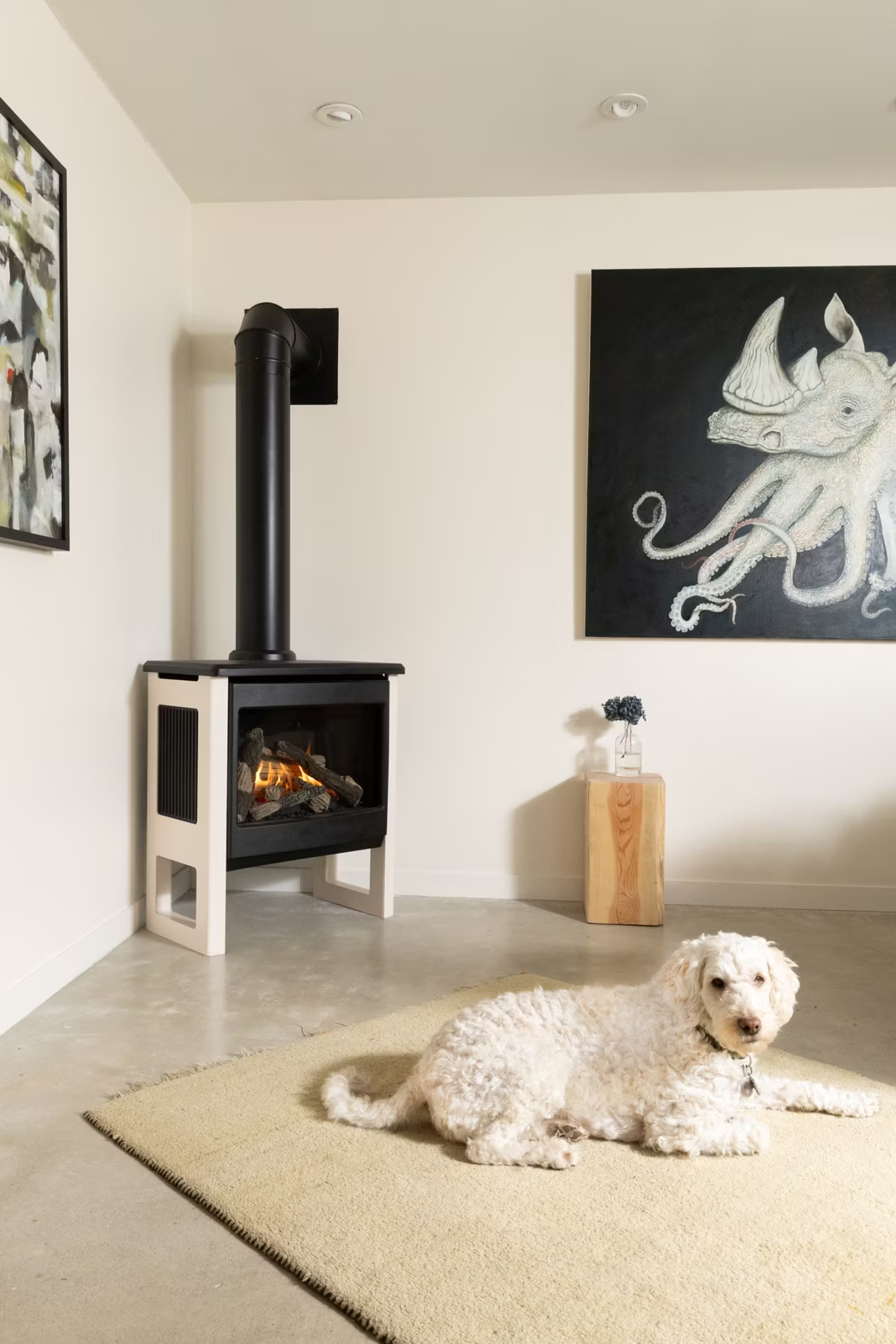
A gas fireplace is a fully built-in unit framed into a wall—the standard choice for new construction and the linear, view-forward fireboxes popular in Dana Point's coastal remodels. A gas insert slides into an existing masonry firebox, turning an old wood-burning fireplace into a sealed, efficient gas unit that vents through the existing chimney. A gas stove is a freestanding cabinet-style unit that sits on the floor, useful in smaller rooms or where there's no existing fireplace opening to work with. For the many Dana Point homes with an underused masonry fireplace, an insert is usually the simplest upgrade.
Do I need a permit to install a gas fireplace in Dana Point?
Yes. The City of Dana Point Building and Safety Department requires a building permit for new gas fireplace installations, and any new or modified gas line needs to be run by a licensed gas-fitter and inspected. Most hearth dealers in the area coordinate the permit, the gas line work, and the final inspection as part of the installation, so you're not left managing separate trades and separate city visits.
Can I install a vent-free gas fireplace in my Dana Point home?
California is one of the more restrictive states when it comes to vent-free (unvented) gas appliances, and most jurisdictions in Orange County, including Dana Point, either prohibit or tightly limit their use, particularly as a primary heat source. Direct-vent gas fireplaces, which draw combustion air from outside and exhaust it back outside through a sealed vent, are the standard and the recommended option locally. They're also the type most local dealers stock and install, so if a vent-free unit was on your list, plan on a direct-vent alternative and ask your installer to walk you through why.
How often does a gas fireplace need to be serviced?
Plan on an annual inspection, ideally in early fall before the fireplace sees regular use through the cooler, damp coastal evenings. A technician checks the burner, pilot assembly, venting, and gas connections, and cleans the glass and interior. Local gas appliance service providers typically charge $150 to $250 for this visit. It's a much smaller lift than wood chimney sweeping, but skipping it is still the main way small issues, like a failing thermocouple or a dirty pilot, turn into a fireplace that won't light.
Should I get a gas fireplace, an electric fireplace, or is wood worth considering in Dana Point?
Wood is genuinely rare here—our data flags it as not applicable to this market, and between the mild 44-degree average winter lows, the low heating demand, and SCAQMD's Check Before You Burn restrictions on wood-burning devices, it's just not a fit for most homes, though a very small number of owners still install a wood stove in a detached casita or vacation property for atmosphere. Electric fireplaces work well for pure ambiance and zone comfort, but San Diego Gas & Electric's residential rate runs over 32 cents per kWh, among the highest in the country, which makes electric resistance heat expensive to run for anything beyond occasional use. Gas splits the difference: instant, real flame, exempt from the seasonal burn restrictions, and inexpensive to operate through SoCalGas, which is why it's the standard choice across Dana Point's coastal homes.
Can I put a TV above my fireplace?
Yes—with an asterisk. Fireplaces are hot and TVs don't like heat. Either put a mantel between them to deflect rising warmth, or choose a fireplace with heat-management technology that creates a cool zone on the wall above—the wall stays around 125 degrees, barely warm, while the room still gets full heat. If you like clean lines and don't want a mantel, heat management is the answer.
Is my gas fireplace wasting gas?
If it was installed more than 15 years ago, probably. Older gas fireplaces keep a standing pilot light burning all the time, and that little flame can cost a couple hundred dollars a year. Newer models use pilot-on-demand ignition—the pilot lights only when you use the fireplace and goes out when you turn it off.
Can I install a fireplace myself?
If you're putting a fire in your house on purpose, it's best to work with an expert. Unless you're genuinely experienced in framing, gas line, vent pipe, and the national code on clearances to combustibles, have a professional do it—and ideally the same company that sells you the fireplace, so warranty, service, and liability all live under one roof.
Does a fireplace add value to my home?
On average, a fireplace adds back to the home about the same amount you spent installing it. Add the monthly savings from heating the rooms you actually use instead of the whole house—often hundreds of dollars a year—and the value case is strong before you even count what a fire does for how your family uses the room.
Nearby Dealers
Hearth shops serving Dana Point and the surrounding area.
Find your gas fireplace in Dana Point.
Tell us a bit about your home and we'll put together a free Project Guide and Parts List for your Dana Point gas fireplace project, including the vent kit you'll need, then match you with a trusted local dealer to install it.
Find Your Fireplace →