
A Clean-Burning Option for Culver City's Occasional Cold Snaps.
With winter lows averaging 48°F, pellet heat isn't a daily requirement in Culver City—it's a low-smoke way to add warmth on the coldest nights and during power-safety shutoffs. Find the right stove and get matched with a trusted local dealer.
Every Project Starts From One of These Five Situations
A specialty fit for a mild coastal climate.
Culver City sits at just 51 feet of elevation on LA's Westside, where the Pacific marine layer keeps summers cool and winters mild—average winter lows hover around 48°F and the city has a very short, light heating season overall. Compare that to a place like Duluth, Minnesota, which has a long, brutal winter heating season, and it's clear Culver City homes aren't fighting to keep pipes from freezing. Most houses here get by on a gas furnace or heat pump running a handful of nights a year, which is exactly why pellet stoves occupy a smaller, more specialized niche locally than they do in colder parts of the country.
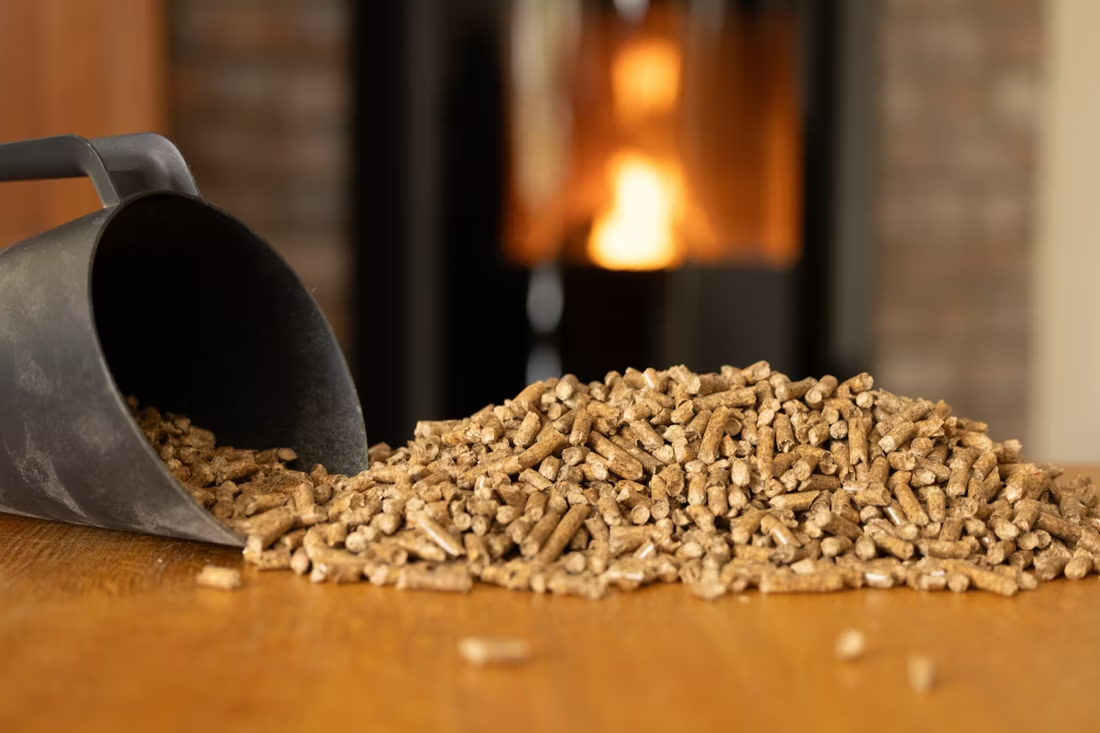
That niche is real, though. Culver City sits within the South Coast Air Basin, a federal non-attainment area where wildfire smoke and winter inversion already strain air quality, and the South Coast AQMD's Check Before You Burn program restricts open wood fires on high-pollution days. EPA-certified pellet stoves generally burn clean enough to be exempt from those curtailments, which makes them an appealing option for homeowners who want a real hearth without adding to the smoke problem. Regional brands like Bear Mountain, Lignetics, and Pacific Pellet supply bagged fuel through Southern California hearth dealers, so there's no cutting or hauling involved—just storage and a hopper. The tradeoff worth knowing: pellet stoves run on an electric auger and blower, and both Southern California Edison and LADWP serve pockets of Culver City with residential rates in the 24–28 cents per kWh range, so a stove that needs to run through a Public Safety Power Shutoff will need a battery backup or small generator to keep working.
Three steps. No salesperson until you're ready.
Tell us about your project
Your zip code, your situation, and the fuel you're leaning toward—or let the answers point you to one.
See what's actually available
The brands dealers within 100 miles genuinely carry—real options, never a catalog mirage.
Get your dealer & Project Guide
A trusted local dealer, plus the free Project Guide & Parts List that names every component of the job.
Frequently Asked Questions
How much does a pellet stove installation cost in Culver City?
Installed pellet stove and insert projects in the greater LA basin typically run $3,000 to $6,500, depending on the unit, whether it's a freestanding stove or an insert into an existing fireplace, and how much vent-pipe routing is required through an exterior wall or existing chimney. Because Culver City homes rarely have a masonry fireplace built for heavy wood use, many installs are freestanding units placed in a family room, sunroom, or converted garage space rather than insert conversions. A local hearth dealer can give you a firm number after seeing your space and venting path.
Does a pellet stove even make sense in a climate this mild?
For most Culver City homes, a pellet stove isn't primary heat—your gas furnace or heat pump already covers the handful of nights a year when it's genuinely cold. Where a pellet stove earns its keep here is supplemental and situational: taking the chill off a converted garage or ADU that isn't on the main HVAC zone, adding ambiance to a family room, or providing a heat source that isn't dependent on the central system. I'd be honest with you if you asked in person—if your only goal is lowering a gas bill, the math is harder to make work with such a short, light heating season than it would be somewhere colder.
Do I need a permit to install a pellet stove in Culver City?
Yes—new pellet stove installations require a building permit through the City of Culver City Building & Safety Division, covering the appliance placement, hearth clearances, and wall or roof venting penetration. Because pellet stoves vent through a small-diameter pipe rather than a full masonry chimney, the permit and inspection process is usually simpler and faster than a wood stove install. Most local dealers handle the permit application as part of the installation.
Are pellet stoves affected by Southern California's no-burn days?
Generally, no. Culver City sits inside the South Coast Air Basin's non-attainment zone, where the South Coast AQMD's Check Before You Burn program can restrict open wood-burning fireplaces and uncertified stoves on days with poor air quality. EPA-certified pellet stoves burn hot and clean enough that they're typically exempt from these curtailments, which is one of the practical reasons some Culver City homeowners choose pellet over wood: you can use it on a bad-air day when a wood-burning neighbor legally can't.
Will my pellet stove work during a power outage or PSPS event?
Not without a backup power source. Pellet stoves rely on an electric auger to feed fuel and a blower to circulate heat, so a Southern California Edison Public Safety Power Shutoff will take the stove offline along with everything else on the circuit. Some homeowners pair their stove with a small battery backup or portable generator specifically to keep it running through outages—worth asking your dealer about compatible battery-backup kits when you're choosing a model, since not all units support them equally well.
Where do I buy pellets in Culver City, and do I need a cutting permit like firewood?
No permit needed—that's one of the practical advantages over wood. Pellets are a manufactured, bagged fuel sold through hardware stores and hearth dealers across the LA area, with regional brands like Bear Mountain, Lignetics, and Pacific Pellet commonly stocked. That's different from firewood, where a self-cut permit through the Angeles National Forest or San Bernardino National Forest (roughly $5–$20 per cord, May through October) would apply. With pellets, you're simply buying and storing bags—figure on 40–60 bags per season for supplemental use, less if the stove only runs occasionally.
Pellet stove vs. gas fireplace—which fits my Culver City home better?
Most Culver City homes already have gas service and central heat, so a gas fireplace or insert is the more common upgrade for whole-room warmth with instant on-off convenience and no fuel to store. A pellet stove makes more sense if you want a heat source that's independent of your gas line, if you're drawn to the exempt status pellet units have on Check Before You Burn days, or if you're heating a detached space like a converted garage where running a gas line isn't practical. Neither is really built for daily heavy use here given the mild climate—it comes down to which fits the specific room and use case.
What size pellet stove do I need for a Culver City home?
Given the mild climate, most Culver City installs are on the smaller end—a stove rated for 800 to 1,500 square feet is plenty for supplemental heat in a family room, den, or ADU, and oversizing is a real risk here since you'll rarely need the unit running at full output. A dealer sizing your space will factor in ceiling height, window exposure, and whether the room is otherwise unconditioned (like a converted garage) versus already served by central HVAC.
Pellet vs. wood—which makes more sense given local air quality rules?
Wood is the more traditional choice and pairs with the oak, madrone, and Douglas fir available through Forest Service permits in the Angeles and San Bernardino National Forests, but it's also the fuel most exposed to South Coast AQMD's Check Before You Burn restrictions on high-pollution days—a real limitation in a non-attainment area that also deals with wildfire smoke most summers and falls. Pellet stoves are generally exempt from those curtailment days because they burn cleaner and more completely. For a Culver City home, that regulatory certainty is often the deciding factor, especially if you want a hearth appliance you can count on using regardless of the day's air quality index.
What's the difference between an insert and a zero-clearance fireplace?
An insert is a fireplace that slides into a pre-existing wood-burning fireplace—if you don't have one, there's nothing to insert it into. A zero-clearance fireplace is built into a framed wall, which makes it the answer for remodels and new construction. Simple test: existing masonry fireplace means insert; blank or framed wall means zero-clearance.
How often does a pellet stove need cleaning?
A clean pellet stove is a happy pellet stove. Plan on cleaning the burn pot about once a week when you're burning regularly—ash and clinkers gum up the air holes just like a pellet barbecue. Most pellet stove problems trace back to skipped cleaning that nobody explained up front. Some designs make it easy with a trapdoor burn pot: pull a lever and the gunk drops into the ash pan.
How much should I budget for a fireplace?
For an average home—covering the fireplace, the vent pipe, and basic installation—a budget between $3,900 and $5,500 gives you a lot of options across wood, gas, and pellet. By the time you add finish work, gas line, and electrical, the average complete installation lands between $5,000 and $12,000 all-in. In a remodel or new build, a good rule is to put about 2.5% of the total project cost toward the fireplace.
Can I install a fireplace myself?
If you're putting a fire in your house on purpose, it's best to work with an expert. Unless you're genuinely experienced in framing, gas line, vent pipe, and the national code on clearances to combustibles, have a professional do it—and ideally the same company that sells you the fireplace, so warranty, service, and liability all live under one roof.
Nearby Dealers
Hearth shops serving Culver City and the surrounding area.
All Valley Distrib. Dba Marco Distrib
The Heat Source (Burrico) - Lancaster
Tropicana Outdoor Living
Pellet Brands Stocked Around Culver City
Manufacturers will point you to the nearest stocking dealer.
Find your pellet stove in Culver City.
Tell us about your space and how you plan to use it, and we'll match you with a trusted local dealer and send over a free Project Guide & Parts List—the exact parts, including the vent kit, for your pellet stove project in Culver City.
Find Your Fireplace →