
Electric fireplaces built for Culver City's mild winters and strict air rules.
No chimney, no gas line, no wood smoke debate—just a fireplace that fits a coastal LA climate and a condo-heavy housing stock. Find the right unit and connect with a trusted local dealer.
Every Project Starts From One of These Five Situations
A climate where heat is a comfort, not a necessity.
Culver City sits at 51 feet elevation in the LA Basin, a few miles from the coast, with an average winter low around 48°F and one of the lightest heating loads you'll find anywhere. For comparison, a place like Minneapolis has a winter heating season roughly six times as demanding—Culver City's heating season barely registers by that measure. Most homes here run a fireplace for maybe two or three months of milder evenings, not to survive a winter. That changes the calculus entirely: you don't need a wood stove capable of holding a house at 68°F through a subzero night, you need something that takes the edge off a 50-degree evening and looks good doing it.
There's also a regulatory reality worth knowing. Los Angeles County is a federal non-attainment area for particulate matter, and the South Coast Air Quality Management District's Rule 445 restricts new wood-burning fireplaces and stoves in most new construction across the region, with wildfire smoke adding to the air-quality pressure most falls. Electric fireplaces sidestep all of that—no combustion, no emissions, no curtailment days. Between Southern California Edison and the LA Department of Water & Power (coverage depends on which side of Culver City you're on), residential electricity here runs roughly 23.8 to 28.3 cents per kWh, which is high enough that electric heat makes more sense as a zone-heating accent than a whole-home furnace replacement—which happens to be exactly the role most Culver City homeowners want it to play.
Three steps. No salesperson until you're ready.
Tell us about your project
Your zip code, your situation, and the fuel you're leaning toward—or let the answers point you to one.
See what's actually available
The brands dealers within 100 miles genuinely carry—real options, never a catalog mirage.
Get your dealer & Project Guide
A trusted local dealer, plus the free Project Guide & Parts List that names every component of the job.
Frequently Asked Questions
How much does an electric fireplace installation cost in Culver City?
A plug-in freestanding or wall-mounted electric fireplace typically runs $300 to $1,200 installed, since it just needs an existing standard outlet—no electrician required in most cases. A built-in or recessed electric fireplace that requires opening a wall, framing, and a dedicated 20-amp circuit usually runs $1,500 to $4,500 once electrical work is included. Because Culver City's mild climate means these units are almost always supplemental rather than a primary heat source, most local homeowners land on the lower end unless the fireplace is part of a larger remodel.
Do I need a permit to install an electric fireplace in Culver City?
It depends on the install. A plug-in unit that uses an existing outlet generally doesn't require anything from the City of Culver City Building & Safety Division. A built-in or recessed unit that needs a new dedicated circuit does require an electrical permit, and that wiring should be pulled by a licensed electrician regardless of permit requirements—undersized circuits are the most common issue with hardwired electric fireplaces. A local dealer handling the install can tell you which category your project falls into before work starts.
What's the best electric fireplace for Culver City's climate?
Since Culver City rarely needs serious heat output—winter lows average around 48°F—most homeowners do well with a mid-size unit that offers a heat-off ambiance mode for the rest of the year, when a flame effect is wanted but a heater is not. Wall-mounted linear units from Dimplex or Napoleon and freestanding models from Touchstone are common choices for this kind of supplemental, mostly-decorative use. If you're heating a home office or converted garage that gets genuinely cold overnight, look for a unit with a 1,500-watt heater rating rather than a decorative-only model.
Why electric instead of gas or wood in Culver City?
Two things push a lot of Culver City homeowners toward electric: air quality rules and low heating need. The South Coast Air Quality Management District's Rule 445 restricts new wood-burning fireplaces and stoves across most of LA County, and wildfire smoke is a recurring fall concern that makes wood burning less appealing even where it's allowed. Gas is an option and plenty of homes have it, but it still requires a gas line and venting work. Electric needs neither, produces zero local emissions, and since Culver City's heating season is short and mild, the lower BTU output of electric units is rarely a real limitation here the way it would be in a colder climate.
Which utility serves my Culver City home—SCE or LADWP?
Culver City is split between Southern California Edison and the Los Angeles Department of Water & Power depending on the specific block, a legacy of the city's boundary with LA. Check a recent electric bill to confirm which one serves your address—SCE's residential rate runs around 28.25 cents per kWh while LADWP runs closer to 23.84 cents, so the difference is worth knowing when you're estimating what a larger electric fireplace will cost to run regularly.
How much does it cost to run an electric fireplace in Culver City?
A typical 1,500-watt electric fireplace heater draws 1.5 kWh per hour of heat mode. On SCE's residential rate of about 28.25 cents per kWh, that's roughly 42 cents an hour; on LADWP's rate of about 23.84 cents, closer to 36 cents an hour. Running the flame effect alone without the heater draws only a few watts, so most homeowners here leave the ambiance mode on for hours at a stretch and reserve the heater setting for the occasional genuinely cold evening.
Can I install an electric fireplace in a Culver City condo or rental?
Yes, and it's one of the more common reasons homeowners in Culver City's 90232 and 90230 condo and apartment stock choose electric in the first place. There's no chimney, no venting, and no gas line to coordinate with an HOA or landlord—a freestanding or wall-mounted unit can go in with a standard outlet in an afternoon. Renters especially favor plug-in models since they can take the fireplace with them when they move.
What's the difference between an electric insert, built-in, and freestanding fireplace?
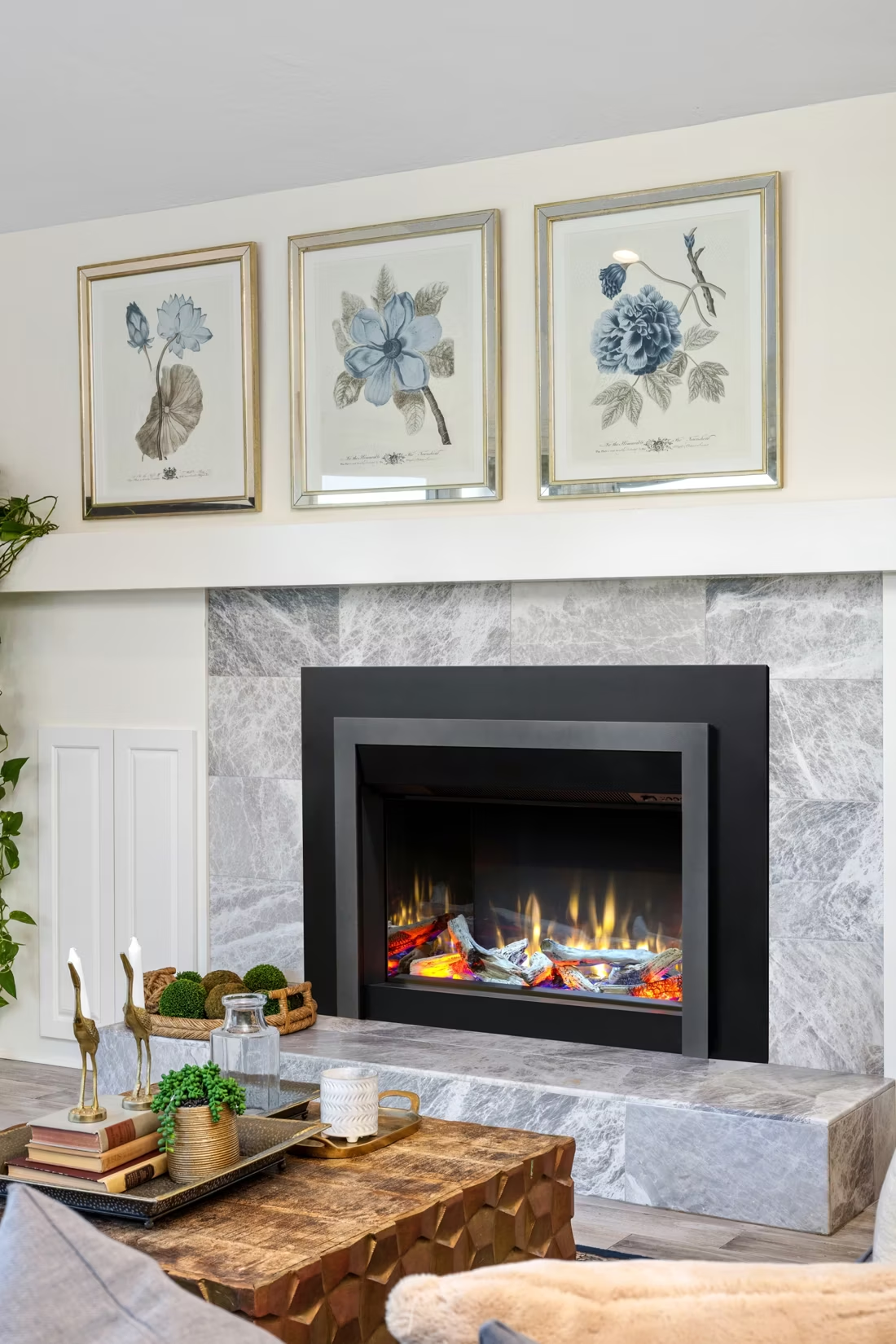
An electric insert is designed to slide into an existing masonry or gas fireplace opening, giving you flame effect and supplemental heat without touching the existing structure—a popular option for older Culver City homes with an unused wood-burning fireplace. A built-in electric fireplace is framed into a wall like new construction, usually wired on a dedicated circuit, and gives the cleanest, most permanent look. A freestanding or wall-mounted unit needs no construction at all—just a plug—and is the fastest, least expensive way to add one to a room. Which one fits depends mostly on whether you already have a fireplace opening to work with.
Can I still install a wood-burning stove in Culver City?
It's uncommon, and for good reason: the South Coast Air Quality Management District's Rule 445 restricts new wood-burning fireplaces and stoves across most of Los Angeles County, and Culver City's mild winters—average lows around 48°F—mean there's little practical heating need to justify one anyway. A small number of homeowners with existing legal wood-burning fireplaces keep them for occasional ambiance, and oak, madrone, and Douglas fir firewood can still be cut under permit from the Angeles or San Bernardino National Forests for $5 to $20 per cord during the May-through-October season. But for anyone starting from scratch in Culver City, electric or gas is almost always the more workable path.
Can I put a TV above my fireplace?
Yes—with an asterisk. Fireplaces are hot and TVs don't like heat. Either put a mantel between them to deflect rising warmth, or choose a fireplace with heat-management technology that creates a cool zone on the wall above—the wall stays around 125 degrees, barely warm, while the room still gets full heat. If you like clean lines and don't want a mantel, heat management is the answer.
Does an electric fireplace need a vent or chimney?
No—that's its superpower. An electric fireplace needs a wall and an outlet, period. No vent pipe, no gas line, no clearances to design around, which is why it works in bedrooms, offices, apartments, and walls where venting a gas or wood unit would be impractical or impossible. Installation is typically the simplest and least expensive of any fireplace type.
Can I install a fireplace myself?
If you're putting a fire in your house on purpose, it's best to work with an expert. Unless you're genuinely experienced in framing, gas line, vent pipe, and the national code on clearances to combustibles, have a professional do it—and ideally the same company that sells you the fireplace, so warranty, service, and liability all live under one roof.
Does a fireplace add value to my home?
On average, a fireplace adds back to the home about the same amount you spent installing it. Add the monthly savings from heating the rooms you actually use instead of the whole house—often hundreds of dollars a year—and the value case is strong before you even count what a fire does for how your family uses the room.
Nearby Dealers
Hearth shops serving Culver City and the surrounding area.
All Valley Distrib. Dba Marco Distrib
The Heat Source (Burrico) - Lancaster
Tropicana Outdoor Living
Electric Service in Culver City
An electric fireplace's heater draws about 1,500 watts—pennies per hour at local rates.
Southern California Edison Co
Los Angeles Department Of Water & Power
Find your electric fireplace in Culver City.
Tell us a bit about your home and we'll match you with the right electric fireplace or insert, plus a free Project Guide & Parts List and a trusted local dealer to install it.
Find Your Fireplace →