
Clean-burning heat for Colusa County's farmhouses and ag country homes.
From Colusa to Williams, Arbuckle, and Maxwell, pellet stoves give Sacramento Valley homes efficient, low-smoke heat without the ash and upkeep of a wood-burning setup. Find the right unit and connect with a trusted local dealer.
Every Project Starts From One of These Five Situations
A cleaner alternative for a valley that already deals with plenty of smoke.
Colusa County sits in the Sacramento Valley, a rice- and almond-farming county of about 17,500 people where winters are mild by national standards—average lows around 38°F and roughly 2,587 heating degree days, a fraction of what a place like Bismarck, ND or Duluth, MN sees in a single season. Climate zone 3B means most homes here need supplemental zone heat rather than a furnace running around the clock, and a lot of that heat comes from wood-burning appliances in older farmhouses scattered between Colusa, Williams, Arbuckle, and Maxwell. The complication is air quality: wildfire smoke has become the county's dominant seasonal concern, and open wood burning adds to particulate levels during a stretch of the year when the valley air is already compromised.
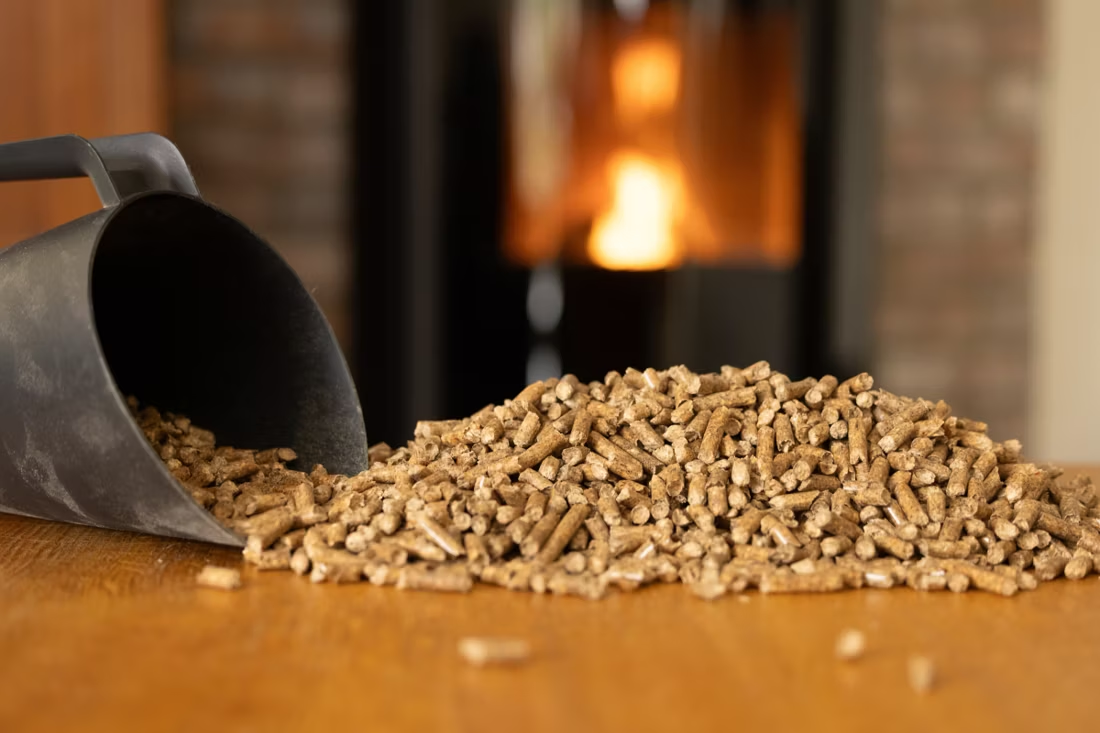
That's where pellet stoves earn their place. They burn far cleaner than cordwood, produce a fraction of the visible smoke, and don't require a mason to install or maintain a chimney—most units vent through an exterior wall, which makes them a practical retrofit for the county's older ag-country houses. Regional pellet supply from brands like Bear Mountain, Lignetics, and Pacific Pellet keeps fuel reasonably accessible without long hauls, and a hopper-fed stove gives farm households a set-it-and-forget-it heat source that doesn't compete for time during planting or harvest.
Three steps. No salesperson until you're ready.
Tell us about your project
Your zip code, your situation, and the fuel you're leaning toward—or let the answers point you to one.
See what's actually available
The brands dealers within 100 miles genuinely carry—real options, never a catalog mirage.
Get your dealer & Project Guide
A trusted local dealer, plus the free Project Guide & Parts List that names every component of the job.
Frequently Asked Questions
How much does a pellet stove installation cost in Colusa County?
Pellet stove and insert installations in Colusa County typically run $3,500 to $6,500, and they usually land toward the lower end of that range compared to wood or masonry gas installs because pellet units vent through a simple wall pass-through rather than a full chimney system. Cost variables include whether you're installing into an existing fireplace opening (a pellet insert) or placing a freestanding stove in a new location, and whether the installer needs to run a dedicated electrical circuit for the auger and blower. Rural properties outside Colusa, Williams, or Arbuckle may see a modest travel charge added to the quote.
Is pellet heat a good fit for Colusa County's climate, or is wood better?
Given Colusa County's mild winters—average lows near 38°F and roughly 2,587 heating degree days—most homes don't need the sustained, high-BTU output that a wood stove burning oak or douglas fir provides for genuinely cold climates. Pellet stoves are well suited to the county's lighter heating load and, just as importantly, they burn far cleaner during a season when wildfire smoke already strains local air quality. Wood is still viable here, and cutting permits through Mendocino National Forest ($5-$20 per cord) keep it affordable for households that want it, but pellet is the lower-hassle, lower-smoke option for most valley homes.
What size pellet stove do I need for my home in Colusa County?
Because winters here are mild compared to most of the country, Colusa County homes rarely need a maximum-output pellet stove. Small to medium units (rated for 500-1,500 sq ft) are usually enough for zone heating a living room or open-concept farmhouse layout, and few homes need the largest whole-house-rated models sold for places with 6,000+ heating degree days. The bigger sizing factor locally is usually ceiling height and how open the floor plan is, not raw cold. A local dealer will size the unit based on your actual square footage and layout during an in-home visit.
Where can I buy pellet fuel in Colusa County?
Bear Mountain, Lignetics, and Pacific Pellet are the regional brands most commonly stocked at hearth retailers and farm supply stores serving Colusa, Williams, and Arbuckle. Pellets are typically sold by the 40-pound bag or by the pallet (roughly 50 bags), and buying a full season's supply on pallet ahead of fall is the standard move for households that rely on their stove for regular heat. Ask your local dealer which brand's pellet blend is calibrated for your specific stove model—ash content and BTU output vary enough between brands that it's worth matching to the manufacturer's recommendation.
Do I need a permit to install a pellet stove in Colusa County?
Yes—new pellet stove and insert installations generally require a building permit through the Colusa County Building Department, covering the appliance placement, wall penetration for venting, and any new electrical circuit. Most hearth retailers who sell and install pellet stoves handle the permit paperwork as part of the job, so it typically doesn't fall on the homeowner to navigate. Unlike wood stoves, pellet units aren't usually subject to the same emissions-certification scrutiny at resale, since they already burn well below EPA particulate thresholds.
Can a pellet stove use my existing fireplace, or does it need new venting?
A pellet insert can be installed into an existing masonry fireplace opening, using a smaller-diameter vent pipe run through the existing chimney or, more commonly, straight out the back wall—pellet exhaust doesn't need the large flue a wood fireplace does. A freestanding pellet stove doesn't require an existing fireplace at all; it just needs a nearby exterior wall for the vent pipe and an outlet for power. This flexibility is one reason pellet works well in Colusa County's mix of older farmhouses with fireplaces and newer construction without one.
Will my pellet stove still work if the power goes out?
This is worth planning around in Colusa County specifically, since PG&E, the local utility, has used Public Safety Power Shutoffs during high fire-risk periods in recent years. Pellet stoves rely on electricity to run the auger that feeds fuel and the blower that circulates heat, so a standard unit goes dark in an outage. Some homeowners pair their pellet stove with a small battery backup or generator sized for the stove's low wattage draw (most run under 400 watts), which keeps it running through a shutoff. If backup heat during outages is a priority, a wood stove or a battery-backed direct-vent gas unit is worth discussing with a local dealer alongside pellet.
Are there burn restrictions that affect pellet stoves in Colusa County?
Wildfire smoke is the county's dominant seasonal air quality issue, and during periods of heavy regional smoke or winter inversion, local air quality guidance can discourage open wood burning. Pellet stoves are typically exempt from these curtailment periods because their particulate output is already far below wood-burning thresholds—the same exemption pattern used in most California counties with wood-burning restrictions. That's a practical advantage for anyone in Colusa County who wants reliable indoor heat without worrying about being told not to burn on a bad-air day.
What should I look for in a pellet stove for Colusa County's climate?
Since Colusa County's heating load is light compared to colder parts of the country, prioritize a stove with a wide turn-down range and reliable thermostat control over one built purely for maximum BTU output—you'll spend more time running it on low or medium than cranked to high. Look for automatic ignition (a hot-rod igniter) so you're not manually lighting the hopper each time, and confirm the model is compatible with the softwood or blended pellets commonly stocked locally by Bear Mountain, Lignetics, and Pacific Pellet. A local dealer can match a model to your home's layout and your preferred pellet brand.
What's the difference between an insert and a zero-clearance fireplace?
An insert is a fireplace that slides into a pre-existing wood-burning fireplace—if you don't have one, there's nothing to insert it into. A zero-clearance fireplace is built into a framed wall, which makes it the answer for remodels and new construction. Simple test: existing masonry fireplace means insert; blank or framed wall means zero-clearance.
Why is my open fireplace making my house colder?
Open fireplaces suck—literally. As the fire burns, it consumes air your furnace already paid to heat and pulls it out through the chimney, so the house is actually colder after the fire goes out than before you lit it. An insert fixes this: it seals the chimney, puts fixed glass across the front, and turns that hole in your house into a real heat source.
What is an in-home preview and do I need one?
It's a visit where a hearth professional measures your space, confirms the model you picked actually works in your home, and walks the specs—framing, gas line, venting, finish work—before anything is ordered. Some details you just can't know until you see the house. Never make a down payment without one; it's the single most-skipped step that burns buyers.
Can a fireplace actually lower my heating bill?
Yes—by creating a comfort zone. A furnace heats every square foot of the house just to warm the one room you're in; a gas fireplace on low burns roughly a sixth of the gas a typical furnace does. Set the furnace around 55–60 degrees as a baseline, then heat the rooms your family actually uses. Families who heat this way commonly save $20–$60 a month.
Pellet Brands Stocked Around Colusa County
Manufacturers will point you to the nearest stocking dealer.
Find your pellet stove in Colusa County.
Tell us a bit about your home and we'll put together a free Project Guide & Parts List for your pellet stove or insert—the exact parts, including the vent kit, and a trusted local dealer to install it.
Find Your Fireplace →