
Warmth and Ambiance Without the Smoke, Right Here in Castro Valley.
No chimney, no gas line, no Spare the Air restrictions—just plug-in or hardwired warmth built for Castro Valley's mild winters. Find the right unit and connect with a trusted local dealer.
Every Project Starts From One of These Five Situations
A no-permit, no-venting way to add warmth to Castro Valley homes.
Castro Valley sits at just 371 feet in Alameda County's inland valley, in California Climate Zone 3C—one of the mildest heating climates in the country. Winter lows average 43°F and the area sees a short, mild heating season. For scale, Duluth, MN faces a winter heating load nearly four times as heavy in a typical winter. Most Castro Valley homes don't need a whole-house heat source; what they want is a fireplace that looks and feels real, warms the room you're actually sitting in, and doesn't require a chimney retrofit.
Alameda County falls under Bay Area Air Quality Management District nonattainment status for fine particulates, and wildfire smoke from East Bay hill fires already strains local air quality most falls. BAAQMD's Spare the Air program restricts wood-burning device use on high-pollution days, and new wood stove installs face real limits—which is a big part of why electric has become the mainstream, hassle-free choice here. There's a tradeoff worth knowing up front: PG&E's residential rate runs about $0.317 per kWh, among the highest in the nation, so an electric fireplace makes more financial sense as targeted zone heat for one room than as a substitute for your furnace.
Three steps. No salesperson until you're ready.
Tell us about your project
Your zip code, your situation, and the fuel you're leaning toward—or let the answers point you to one.
See what's actually available
The brands dealers within 100 miles genuinely carry—real options, never a catalog mirage.
Get your dealer & Project Guide
A trusted local dealer, plus the free Project Guide & Parts List that names every component of the job.
Frequently Asked Questions
How much does an electric fireplace installation cost in Castro Valley?
A plug-in electric insert or freestanding stove that runs off a standard 120V outlet typically costs $300 to $1,500 installed, since no electrician or permit is needed. A built-in linear electric fireplace or mantel package—the kind that gets framed into a wall during a remodel—usually runs $1,500 to $4,000 once you factor in a dedicated circuit, an electrician's labor, and any surround or wall finishing. Because there's no venting, chimney liner, or gas line involved, electric is consistently the least expensive hearth upgrade available in Castro Valley.
Do I need a permit for an electric fireplace in Castro Valley?
A cord-and-plug unit that draws from an existing outlet needs no permit at all. If you're adding a built-in electric fireplace that requires a new dedicated circuit, a licensed electrician will pull an electrical permit through the Alameda County Building Department, since Castro Valley is unincorporated and permits route through the county rather than a city building office. If the unit is recessed into wall framing as part of a remodel, a building permit may apply as well—your installer or electrician will typically handle that paperwork.
Will an electric fireplace actually heat my Castro Valley home?
It will heat the room it's in, not the whole house. Most electric fireplaces use a 1,500-watt heater rated for 400 to 1,000 square feet, which fits how most Castro Valley homes use a fireplace: supplemental warmth on a cool evening rather than a primary heat source. Given the area's mild winter average of 43°F and low heating demand compared to genuinely cold climates, that's usually plenty—homeowners here are typically more focused on flame realism and ambiance than raw BTU output.
What does it cost to run an electric fireplace with PG&E rates?
PG&E's residential rate of roughly $0.317 per kWh is well above the national average, so running the heater on a typical electric fireplace at full output (around 1,500 watts) costs about $0.48 an hour. Running the unit for flame effect only, with the heater switched off, draws a fraction of that—usually just a few cents an hour. If you're on a time-of-use plan, it's worth avoiding heavy heater use during PG&E's peak pricing window, typically 4 to 9 p.m., and saving the heat setting for off-peak evenings when you can.
Are electric fireplaces exempt from Spare the Air and wildfire smoke restrictions?
Yes. Electric fireplaces produce no combustion byproducts, so they're not subject to BAAQMD's Spare the Air burn restrictions that limit wood-burning device use on high-pollution days, and they're unaffected by regional wildfire smoke advisories that periodically blanket the East Bay hills. For homeowners in fire-prone areas around Castro Valley where new wood stove permits are difficult to get approved, electric is often the simplest way to add a hearth feature without navigating air district rules at all.
What's the difference between an electric insert, a built-in unit, and a freestanding electric stove?
An electric insert is built to slide into an existing masonry fireplace opening—a common retrofit for Castro Valley's older ranch-style homes that already have a wood-burning firebox but no interest in maintaining a chimney. A built-in or linear electric fireplace is framed directly into a wall, which is the more common choice in new construction or full remodels. A freestanding electric stove sits on the floor, plugs into a standard outlet, and can be relocated—a good fit for renters or anyone who doesn't want to touch existing wall framing.
Will my electric fireplace work during a PG&E power outage?
No—electric fireplaces need power to run, full stop, unlike a wood stove that keeps working when the grid doesn't. That matters in parts of Castro Valley, particularly hillside areas like Five Canyons and along Palomares Canyon, where PG&E occasionally calls Public Safety Power Shutoffs during high-wind fire-risk conditions in fall. If backup heat during outages is a real priority for your household, it's worth discussing a gas option with your local dealer alongside electric, since gas relevance is also standard in this area.
What are good electric fireplace brands for a Castro Valley home?
Dimplex, Napoleon, and Touchstone's Sideline series are widely available through Bay Area hearth dealers and are known for realistic multi-color flame technology with independent heat controls—useful here since many Castro Valley households run the flame effect year-round but only switch on the heater a few months a year. A local dealer can walk you through flame realism, frame depth requirements for a built-in, and remote or smart-home control options.
Electric vs. gas—which is right for my Castro Valley home?
Gas delivers a real flame and meaningfully more heat output, but it requires venting and, in most cases, a gas line—both realistic options here since natural gas service reaches most of inland Alameda County through PG&E. Electric skips all of that: no venting, no gas line, lower installed cost, and the flexibility to mount it almost anywhere there's an outlet or a simple circuit run. Given Castro Valley's mild climate, where ambiance often matters more than raw heat, electric is frequently the more practical choice, though homeowners with an existing masonry fireplace who want authentic flicker sometimes lean toward a gas insert instead. A local dealer can walk you through both side by side.
Do electric fireplaces actually produce heat?
Yes—most put out around 4,800–5,000 BTUs from a standard outlet, which comfortably warms a bedroom, office, or den as a comfort-zone heater. What they won't do is carry a whole house the way wood, gas, or pellet can. Think of electric as ambiance-first with honest supplemental heat: flames on with no heat in July, flames plus warmth in January.
Can I put a TV above my fireplace?
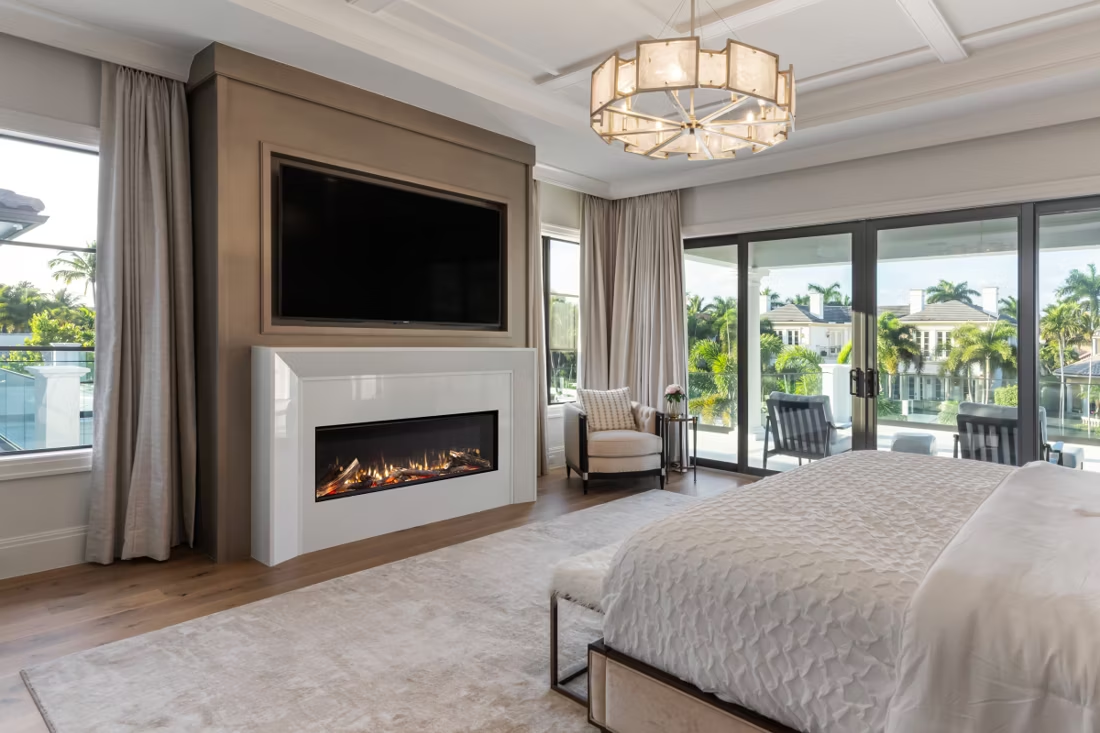
Yes—with an asterisk. Fireplaces are hot and TVs don't like heat. Either put a mantel between them to deflect rising warmth, or choose a fireplace with heat-management technology that creates a cool zone on the wall above—the wall stays around 125 degrees, barely warm, while the room still gets full heat. If you like clean lines and don't want a mantel, heat management is the answer.
What is an in-home preview and do I need one?
It's a visit where a hearth professional measures your space, confirms the model you picked actually works in your home, and walks the specs—framing, gas line, venting, finish work—before anything is ordered. Some details you just can't know until you see the house. Never make a down payment without one; it's the single most-skipped step that burns buyers.
Can a fireplace actually lower my heating bill?
Yes—by creating a comfort zone. A furnace heats every square foot of the house just to warm the one room you're in; a gas fireplace on low burns roughly a sixth of the gas a typical furnace does. Set the furnace around 55–60 degrees as a baseline, then heat the rooms your family actually uses. Families who heat this way commonly save $20–$60 a month.
Nearby Dealers
Hearth shops serving Castro Valley and the surrounding area.
Electric Service in Castro Valley
An electric fireplace's heater draws about 1,500 watts—pennies per hour at local rates.
Pacific Gas & Electric Co.
Find your electric fireplace in Castro Valley.
Tell us a bit about your home and we'll put together a free Project Guide & Parts List—the exact unit, any electrical work needed, and your recommended local dealer in Castro Valley.wait_fix
Find Your Fireplace →