
Steady, low-smoke heat for Apple Valley's High Desert winters.
Automated, clean-burning heat built for a non-attainment air basin and a High Desert climate of warm days and cold nights. Find the right pellet stove and connect with a trusted local dealer.
Every Project Starts From One of These Five Situations
Pellet heat fits the High Desert's air quality reality.
Apple Valley sits at roughly 2,900 feet in the Victor Valley, on the western edge of the Mojave. The numbers look mild on paper—a fairly light overall heating season and an average winter low near 33°F, nothing like the deep-freeze totals you'd see in Bozeman, MT or Fargo, ND. But High Desert winters run on wide daily swings: a 65°F afternoon can drop to the low 20s by dawn, and that swing, combined with wind, is what actually drives heating demand in most Apple Valley homes.
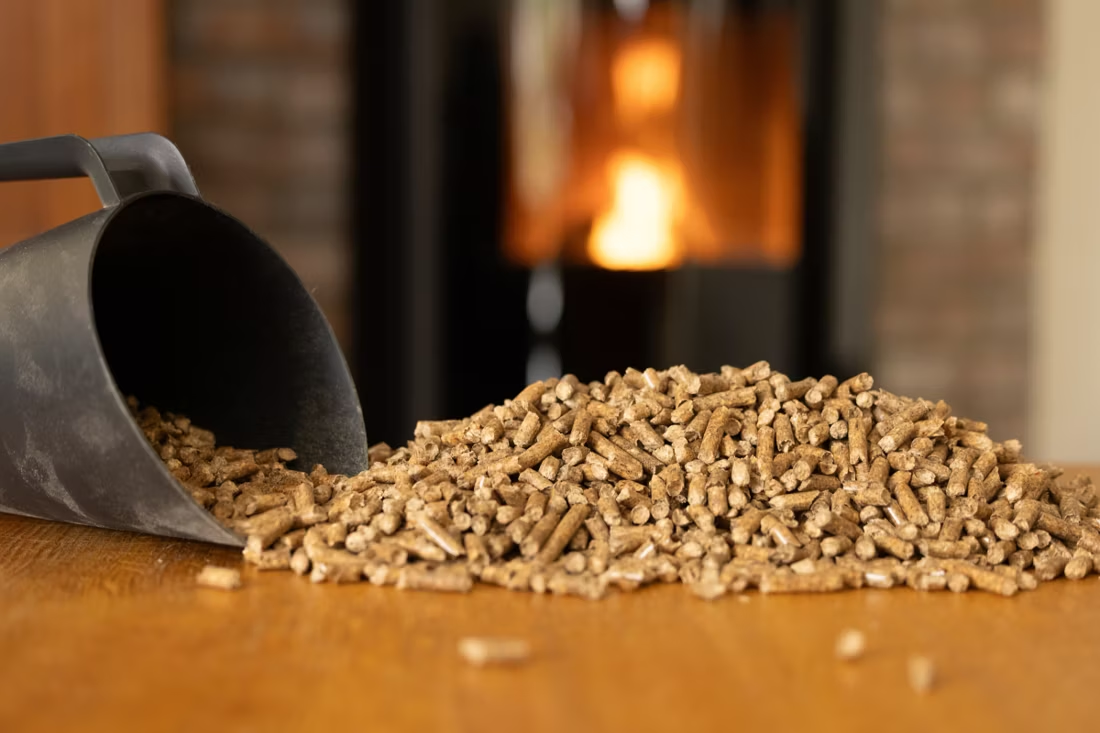
Apple Valley also sits in a designated non-attainment area, and wildfire smoke from Southern California's fire seasons regularly compounds the particulate load in the valley. Pellet appliances burn dramatically cleaner than open cordwood fires, which makes them an easier fit under regional air rules and during smoke-advisory days. Regional pellet supply—Bear Mountain, Lignetics, and Pacific Pellet all distribute through Southern California retailers—keeps fuel reasonably accessible without the long hauls some desert markets face.
Three steps. No salesperson until you're ready.
Tell us about your project
Your zip code, your situation, and the fuel you're leaning toward—or let the answers point you to one.
See what's actually available
The brands dealers within 100 miles genuinely carry—real options, never a catalog mirage.
Get your dealer & Project Guide
A trusted local dealer, plus the free Project Guide & Parts List that names every component of the job.
Frequently Asked Questions
How much does a pellet stove installation cost in Apple Valley?
Most pellet stove and insert installations in the Apple Valley area run in the range of $3,000 to $7,000, depending on the unit, whether you're venting through an existing masonry fireplace or need a new through-wall pellet vent kit, and any electrical work required for the outlet the appliance needs. A pellet insert going into an existing fireplace with a chimney already in place tends to land on the lower end; a freestanding stove requiring new wall penetration and electrical runs sits higher. A local dealer can give you a firm number after seeing your install site.
Do I need a big pellet stove for a High Desert home like mine?
Probably not as big as you'd think. With Apple Valley's relatively light overall heating season, most homes here use a pellet stove as zone heat for a great room or main living area rather than as the sole source of whole-house heat—even though pellet units are fully capable of the latter in colder climates. A mid-size unit is usually plenty for a typical Victor Valley ranch-style home, while larger or more open floor plans may call for a bigger hopper and higher BTU output. A dealer walk-through of your square footage and insulation is the fastest way to land on the right size.
Pellet stove vs. wood stove—which makes more sense here?
Wood is still an option in Apple Valley—cutting permits are available through the San Bernardino and Angeles National Forests for $5 to $20 per cord during the May-to-October season, and oak, madrone, and Douglas fir are common species from those forests. But between the non-attainment air designation and the wildfire smoke that regularly settles into the valley in late summer and fall, pellet stoves are the cleaner-burning choice for a lot of local homeowners, and they're generally treated more favorably during smoke or burn advisories than open cordwood fires. If you want the lowest fuel cost and don't mind hauling and stacking wood, wood still has a place. If you want set-it-and-forget-it heat with a smaller emissions footprint, pellet is the more common local pick.
How much does it cost to run a pellet stove with SCE electric rates?
Pellet stoves need electricity to run the auger, igniter, and blower fan—typically a modest draw, similar to running a box fan continuously. Southern California Edison serves most of Apple Valley at a residential rate around $0.28 per kWh, which is on the higher side nationally, so it's worth factoring that into your operating cost alongside pellet fuel itself. Most homeowners still find total heating cost favorable compared to running electric resistance heat or a whole-house HVAC system continuously, but it's a fair question to run past your dealer alongside expected pellet consumption for your square footage.
What happens to my pellet stove during a power outage?
Pellet stoves are electric-dependent—no power means no auger feed and no blower, so the unit stops running. High Desert wind events occasionally knock out power in Apple Valley for hours at a time, so some homeowners pair a pellet stove with a small battery backup or generator specifically to keep it running through an outage, or keep a wood-burning option as backup heat. If reliable off-grid operation during outages is a priority for your household, it's worth discussing directly with a local dealer before you commit to pellet as your only heat source.
Do I need a permit to install a pellet stove in Apple Valley?
Yes—new pellet stove and insert installations typically require a building permit, either through the Town of Apple Valley's Building and Safety Division for properties within town limits or San Bernardino County for unincorporated areas nearby. Most established hearth dealers handle the permit application and inspection scheduling as part of the installation, so you generally don't have to navigate it yourself. The permit process mainly confirms proper venting termination clearances and any electrical work tied to the unit.
Where can I buy pellets in Apple Valley, and what do they cost?
Regional brands like Bear Mountain, Lignetics, and Pacific Pellet are distributed through hearth retailers and larger home improvement stores across the High Desert and Inland Empire, and many local dealers carry pellets by the bag or ton as an ongoing service to customers who bought a stove from them. Pricing fluctuates with wood-product supply and demand, so ask your dealer for current per-ton pricing and whether they offer season-ahead ordering—buying in bulk before winter demand spikes is usually the better move in this market.
How often does a pellet stove need cleaning and service?
Pellet stoves need more frequent attention than gas units but less than wood stoves: expect to empty the ash pan every few days to weekly depending on use, clean the burn pot and glass regularly, and have the venting and exhaust fan professionally serviced at least once a year—typically before burn season starts in fall. Skipping the annual service is the most common cause of ignition and feed problems mid-winter, so it's worth scheduling with your dealer or a qualified hearth technician rather than waiting until something stops working.
Is pellet heat actually common in a place like Apple Valley, or is it a niche choice?
It's a genuinely popular choice locally, not a niche one—the combination of the Mojave Desert Air Quality Management District's non-attainment status, wildfire smoke advisories, and cold desert nights makes pellet appliances a practical middle ground between low-maintenance gas heat and traditional wood burning. You'll find pellet stoves and inserts in everything from older ranch homes converting an existing fireplace to newer construction adding zone heat for a family room. It's not the only option in the High Desert, but it's a well-established one.
What's the difference between an insert and a zero-clearance fireplace?
An insert is a fireplace that slides into a pre-existing wood-burning fireplace—if you don't have one, there's nothing to insert it into. A zero-clearance fireplace is built into a framed wall, which makes it the answer for remodels and new construction. Simple test: existing masonry fireplace means insert; blank or framed wall means zero-clearance.
How often does a pellet stove need cleaning?
A clean pellet stove is a happy pellet stove. Plan on cleaning the burn pot about once a week when you're burning regularly—ash and clinkers gum up the air holes just like a pellet barbecue. Most pellet stove problems trace back to skipped cleaning that nobody explained up front. Some designs make it easy with a trapdoor burn pot: pull a lever and the gunk drops into the ash pan.
What is an in-home preview and do I need one?
It's a visit where a hearth professional measures your space, confirms the model you picked actually works in your home, and walks the specs—framing, gas line, venting, finish work—before anything is ordered. Some details you just can't know until you see the house. Never make a down payment without one; it's the single most-skipped step that burns buyers.
Can a fireplace actually lower my heating bill?
Yes—by creating a comfort zone. A furnace heats every square foot of the house just to warm the one room you're in; a gas fireplace on low burns roughly a sixth of the gas a typical furnace does. Set the furnace around 55–60 degrees as a baseline, then heat the rooms your family actually uses. Families who heat this way commonly save $20–$60 a month.
Nearby Dealers
Hearth shops serving Apple Valley and the surrounding area.
Pellet Brands Stocked Around Apple Valley
Manufacturers will point you to the nearest stocking dealer.
Find your pellet stove in Apple Valley.
Tell us a bit about your home and we'll match you with a trusted local dealer and a free Project Guide & Parts List—the exact pellet stove or insert, vent kit, and install plan sized for your Apple Valley home.
Find Your Fireplace →