
Find the right pellet stove for Amador County's foothill winters.
Mild Sierra foothill winters, dry autumns thick with wildfire smoke, and a growing number of households switching to clean-burning pellet heat. We match you with a trusted local dealer who knows what actually works here.
Every Project Starts From One of These Five Situations
A steady, low-smoke heat source for the foothills.
Amador County sits in the Sierra foothills between roughly 500 and 4,000 feet, in climate zone 4B with an average winter low around 39°F and a winter heating season that's just a fraction of what a place like Bozeman, MT sees in a season. Winters here are mild by cold-climate standards, but nights in Jackson, Sutter Creek, and Pine Grove still drop into the 30s regularly, and wood-burning restrictions during winter inversion days push more households toward pellet appliances that keep running when a wood stove would be barred from burning.
Fall in Amador County also means wildfire smoke season, and that shapes how people think about home heating here as much as the mild winters do. A pellet stove burns compressed sawdust from regional suppliers like Bear Mountain, Lignetics, and Pacific Pellet—all of which distribute through hearth shops within a short drive of the county—and produces a fraction of the particulate output of an open wood fire. For homeowners who already deal with smoke-heavy air several weeks a year, a clean-burning, thermostatically controlled pellet insert is often the more livable choice, without giving up the look and feel of a real fire in the living room.
Three steps. No salesperson until you're ready.
Tell us about your project
Your zip code, your situation, and the fuel you're leaning toward—or let the answers point you to one.
See what's actually available
The brands dealers within 100 miles genuinely carry—real options, never a catalog mirage.
Get your dealer & Project Guide
A trusted local dealer, plus the free Project Guide & Parts List that names every component of the job.
Frequently Asked Questions
How much does a pellet stove installation cost in Amador County?
Most pellet stove and insert installations in Amador County run in the $4,500 to $7,500 range, depending on whether you're installing a freestanding stove, converting an existing wood fireplace to a pellet insert, or running new venting through an exterior wall. Homes in the older parts of Jackson and Sutter Creek with existing masonry fireplaces are often on the lower end since the chimney chase already exists. New construction or homes without an existing flue run a bit higher once wall penetration and venting are factored in. A local dealer will size the job accurately during an in-home visit.
Is pellet heat a good fit for Amador County's mild winters?
Yes, and often for a different reason than in colder climates. With only a modest winter heating season each year, Amador County doesn't need the 20-hour overnight burn times that homeowners in places like Duluth, MN chase. Instead, the appeal here is convenience and clean combustion—a pellet stove holds a steady, thermostat-controlled heat for a chilly foothill evening without the smoke output of an open wood fire, which matters given how many days a year regional air quality is already compromised by wildfire smoke.
Where can I buy pellets in Amador County?
Regional brands including Bear Mountain, Lignetics, and Pacific Pellet supply hearth retailers and feed stores throughout the Sierra foothills, and most local dealers either stock pellets directly or can point you to a nearby supplier. Buying a full winter's supply—typically 1 to 3 tons for an average foothill home—in late summer or early fall, before wildfire season peaks and before cold snaps drive up demand, is the most reliable way to avoid running short mid-winter.
Do I need a permit to install a pellet stove in Amador County?
Yes—a building permit is required for a new pellet stove or insert installation in Amador County, whether the project is in Jackson, Sutter Creek, Ione, or unincorporated county land. Most local hearth dealers handle the permit application and inspection scheduling as part of the installation, so homeowners typically don't have to navigate it themselves. Because pellet stoves are exempt from most wood-burning curtailment restrictions during inversion days, they're also one of the more flexible options for homeowners in areas prone to winter air quality advisories.
What's the difference between a pellet stove and a pellet insert?
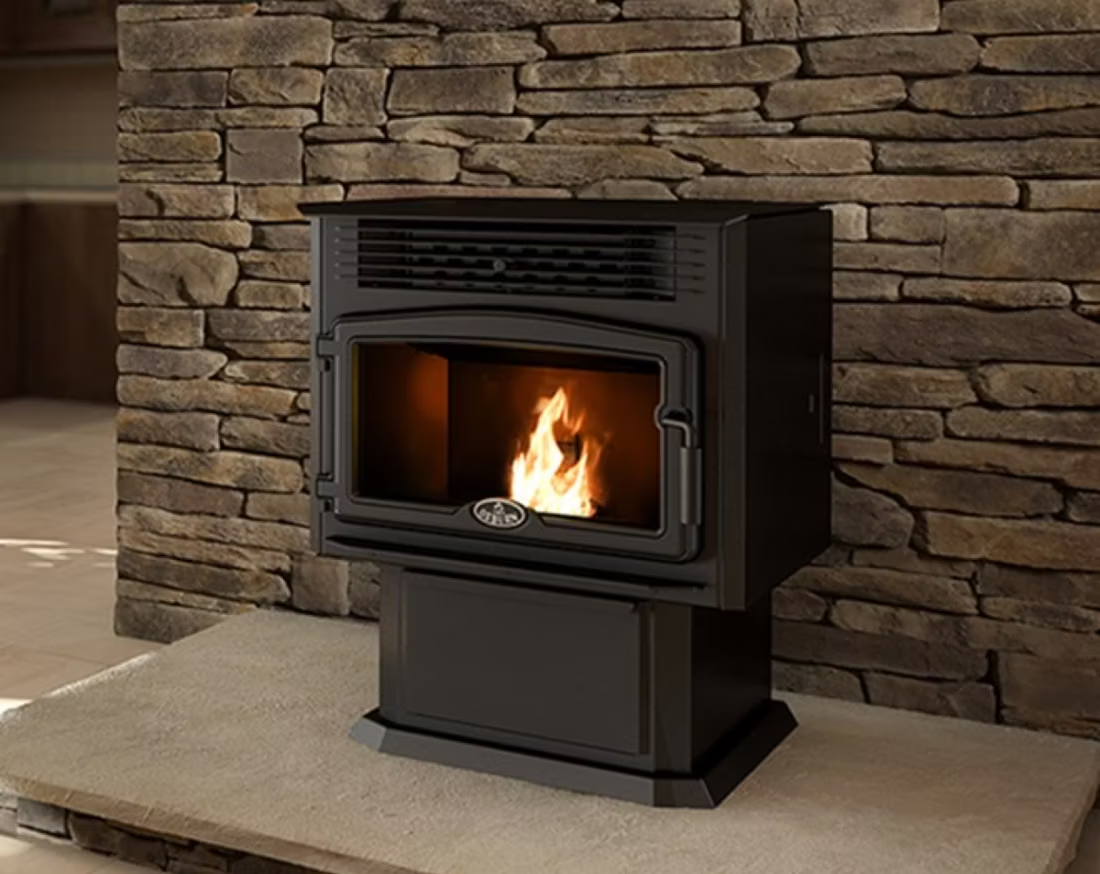
A pellet stove is a freestanding unit that sits on its own hearth pad and vents through a wall or existing chimney chase—it can go almost anywhere with the right clearances. A pellet insert is built to slide into an existing masonry fireplace opening, which is common in older homes around Sutter Creek and Jackson, converting a drafty open hearth into a sealed, efficient heat source. For a home with an existing fireplace, an insert usually makes more sense; for a home without one, a freestanding stove is typically the simpler install.
How does pellet heat compare to wood heat in Amador County?
Wood is abundant locally—oak, madrone, and Douglas fir are all common species available through cutting permits with the Eldorado National Forest and Stanislaus National Forest, generally $5 to $20 per cord depending on the district and season. Wood offers lower fuel costs if you're willing to cut and haul your own, and it works without electricity during an outage. Pellet stoves need power to run the auger and igniter, so they're not a backup option during a blackout, but they burn far cleaner, need less daily tending, and aren't subject to the same wood-smoke curtailment restrictions during Amador County's periodic winter air quality advisories. Many foothill homeowners end up choosing based on which tradeoff—convenience and cleaner air, or self-sufficiency and lower fuel cost—matters more to their household.
Do pellet stoves work during a power outage?
Not without a backup power source. Pellet stoves rely on an electric auger to feed fuel and a blower to circulate heat and combustion air, so they shut down when the power goes out. Some Amador County homeowners pair a pellet stove with a small battery backup or generator specifically for this reason, especially in rural areas outside Jackson and Sutter Creek where outages can run longer. If uninterrupted heat during outages is the priority, a wood stove is the more resilient choice; if daily convenience and lower smoke output matter more, pellet remains the better everyday fit.
How often does a pellet stove need to be cleaned and serviced?
Pellet stoves need more frequent attention than a set-it-and-forget-it appliance, but far less than sweeping a wood chimney. Plan on emptying the ash pot every few days during regular use, a deeper cleaning of the burn pot and heat exchanger tubes every few weeks, and a full annual service—including venting inspection—before the start of burning season each fall. Local hearth dealers in the county typically offer this service, and it's worth scheduling before wildfire season winds down and cooler weather sets in.
Pellet vs. gas—which is right for my Amador County home?
Gas fireplaces offer instant on-off operation and no fuel storage or ash cleanup, which appeals to homeowners who want zero-maintenance heat. Pellet stoves require loading a hopper and periodic ash removal, but burn a renewable, regionally sourced fuel and give you a real visible flame with the ambiance of a wood fire. For homes without natural gas service—common in the more rural parts of the county—the choice often comes down to propane gas versus pellet, and pellet frequently wins on ongoing fuel cost and on not needing a propane tank installed. A local dealer can walk through both options for your specific home.
What's the difference between an insert and a zero-clearance fireplace?
An insert is a fireplace that slides into a pre-existing wood-burning fireplace—if you don't have one, there's nothing to insert it into. A zero-clearance fireplace is built into a framed wall, which makes it the answer for remodels and new construction. Simple test: existing masonry fireplace means insert; blank or framed wall means zero-clearance.
Can a pellet stove heat a whole house?
It genuinely can. I burned a pellet stove as my only heat source for years after a furnace died, and it kept the entire house warm. Pellets feed automatically from a hopper, so you get wood-heat economics with thermostat-style control. Two honest caveats: it needs weekly cleaning during the season, and most models need electricity to run—ask about battery backup if outages are a concern.
Can I install a fireplace myself?
If you're putting a fire in your house on purpose, it's best to work with an expert. Unless you're genuinely experienced in framing, gas line, vent pipe, and the national code on clearances to combustibles, have a professional do it—and ideally the same company that sells you the fireplace, so warranty, service, and liability all live under one roof.
How much should I budget for a fireplace?
For an average home—covering the fireplace, the vent pipe, and basic installation—a budget between $3,900 and $5,500 gives you a lot of options across wood, gas, and pellet. By the time you add finish work, gas line, and electrical, the average complete installation lands between $5,000 and $12,000 all-in. In a remodel or new build, a good rule is to put about 2.5% of the total project cost toward the fireplace.
Stove and Fireplace Dealers in Amador County
Pellet Brands Stocked Around Amador County
Manufacturers will point you to the nearest stocking dealer.
Get matched with a pellet stove dealer in Amador County.
Tell us about your home and we'll put together a free Project Guide & Parts List—the exact parts, including the vent kit, and our recommended local dealer for your pellet project in Amador County.
Find Your Fireplace →