
Find gas heat built for Amador County's foothill swings.
From the valley floor around Ione to the Sierra foothills near Pioneer and Pine Grove, Amador County's winters are mild on paper but uneven in practice. Find the right gas fireplace or insert, and connect with a trusted local dealer who can install it correctly.
Every Project Starts From One of These Five Situations
Clean heat for a county that runs from valley oak to Sierra pine.
Amador County stretches from roughly 250 feet in elevation near Ione to well over 3,000 feet around Pioneer and Pine Grove, with Highway 49 stringing together the old Gold Country towns of Jackson, Sutter Creek, Amador City, and Plymouth in between. At about 2,857 heating degree days and a Climate Zone 4B designation, Amador's winters are genuinely mild compared to a place like Bozeman, Montana—winter lows average around 39°F county-wide. But that average hides real variation: valley-floor homes rarely see hard freezes, while the higher hill communities get cold snaps and the occasional snow event that a gas fireplace handles without anyone splitting a log at 6 a.m.
Amador's biggest air quality concern isn't winter inversion, it's wildfire smoke—the Eldorado and Stanislaus National Forests that ring the county are both a source of recreational firewood and, in bad summers, a source of smoke that lingers into the shoulder seasons. Gas fireplaces don't add to that particulate load and aren't affected by Spare the Air-style burn restrictions, which is one reason they've become common in newer builds and vineyard-country second homes around Plymouth and Sutter Creek. Natural gas service through PG&E reaches the valley towns; propane is the standard fuel up in Pine Grove, Pioneer, and Volcano, where gas lines don't run.
Three steps. No salesperson until you're ready.
Tell us about your project
Your zip code, your situation, and the fuel you're leaning toward—or let the answers point you to one.
See what's actually available
The brands dealers within 100 miles genuinely carry—real options, never a catalog mirage.
Get your dealer & Project Guide
A trusted local dealer, plus the free Project Guide & Parts List that names every component of the job.
Frequently Asked Questions
How much does a gas fireplace installation cost in Amador County?
Most gas fireplace and insert installations in Amador County run somewhere between $4,500 and $10,000, depending on the unit, the venting path, and whether a gas line or propane tank already exists. A direct-vent insert going into an existing masonry fireplace with gas already run to the hearth sits at the lower end. New construction or a fireplace built into a wall without existing gas service—common in newer builds around Plymouth or Sutter Creek—runs higher once you add gas line work and framing. Homes up in Pioneer, Pine Grove, or Volcano may see a modest travel charge added to the estimate given the distance from most hearth retailers along the Highway 49 corridor. A local installer will give you a firm number after seeing the space in person.
Can I convert my existing wood fireplace to gas?
Yes, and it's a common project among the older homes in Jackson, Sutter Creek, and Amador City that still have their original masonry fireboxes. A gas insert typically slides into the existing firebox, using the chimney with a stainless liner as the vent path. Expect somewhere in the $4,000 to $8,500 range depending on whether you're on PG&E natural gas or need to work with propane, and whether new gas line work is required. Homes already plumbed for gas—more common on the valley floor near Ione—tend to land on the lower end of that range.
Do I need natural gas, or does propane work for a gas fireplace?
Either works, and which one you use mostly comes down to where in the county you live. PG&E natural gas service covers the valley towns and Amador's more built-up areas near Ione, Jackson, and parts of Plymouth. Up in the hill communities—Pine Grove, Pioneer, Volcano, and the more rural stretches around Highway 88—propane is the standard, usually from a tank on the property. Most gas fireplace models can run on either fuel; your installer sets the correct orifice and regulator for whichever you have. If you're building new in an area without natural gas, plan on either an existing propane tank or a new tank installation from a local supplier.
Will my gas fireplace still work if the power goes out?
For most models, yes. Amador County sits in PG&E's wildfire-risk territory, and Public Safety Power Shutoffs during fire season are a real consideration for anyone up in the foothill communities. Gas fireplaces with IPI (intermittent pilot ignition) run on a battery backup—typically AA batteries inside the unit—that keeps the fireplace operating on demand even with the grid down. Valor fireplaces take a different approach: the pilot's thermocouple generates the small amount of electricity the unit needs, so there are no batteries to remember at all. For a home in Pioneer or Pine Grove that might see multi-day PSPS events during red flag warnings, that distinction is worth asking your local retailer about directly.
What's the difference between a gas fireplace, gas insert, and gas stove?
A gas fireplace is a fully built-in unit framed into a wall—the right call for new construction or a remodel without an existing fireplace. A gas insert is sized to slide into an existing masonry firebox, which describes a lot of the older housing stock in Jackson and Sutter Creek's historic districts. A gas stove is a freestanding unit that sits on the floor like a wood stove but runs on gas or propane, and works well in a cabin or shop that doesn't have a chimney at all. Most Amador homeowners with an existing fireplace go with an insert; new builds and additions usually go built-in.
Do I need a permit to install a gas fireplace in Amador County?
Yes. New gas fireplace installations require a building permit through the Amador County Building Department, and any new gas line or propane line work requires a licensed gas-fitter as part of that permit. Most hearth retailers in the area handle the permitting and coordinate the gas work directly, so you're not left managing separate trades. If you're converting an existing wood fireplace to gas, the permit process is generally simpler since you're not altering the structure—but it still needs to be filed.
What's the difference between vented and vent-free gas fireplaces?
Vented (direct-vent) gas fireplaces pull combustion air from outside and exhaust the byproducts back outside through a sealed vent—they're the standard choice and the one nearly every installer in Amador County will recommend. Vent-free units burn directly into the room without any outside venting; California places tight restrictions on where and how vent-free units can be installed, including room-size minimums and oxygen depletion sensors, and many local retailers simply don't stock them because of those limits. For Amador homes, a direct-vent unit is almost always the practical answer—real heat output, no indoor air quality tradeoffs, and no restrictions to navigate.
How often should my gas fireplace be serviced?
Plan on an annual inspection, ideally before the first cold snap in the hill communities up around Pioneer and Pine Grove. A technician checks the burner, pilot assembly, venting, and gas connections, and cleans the glass and interior—a lighter job than chimney sweeping but still important for safety and for keeping the unit running efficiently. Most local gas appliance service providers charge in the $150 to $250 range for a standard annual visit.
Gas vs. wood—which makes more sense in Amador County?
Wood has deep roots here—oak, madrone, and Douglas fir are all common locally, and cutting permits through the Eldorado and Stanislaus National Forests (typically $5 to $20 per cord) make self-cut firewood an affordable option for rural properties. Wood also keeps working when the power's out, which matters given PG&E's Public Safety Power Shutoffs during fire season. Gas offers instant, no-mess heat and doesn't add to particulate levels during the wildfire smoke season that hits Amador most summers and occasionally into fall. Many local homeowners end up with both: gas for daily convenience in the main living space, wood or a backup stove for extended outages. If you're deciding between the two, tell us about your home and priorities and we'll help you sort it out.
What's the difference between an insert and a zero-clearance fireplace?
An insert is a fireplace that slides into a pre-existing wood-burning fireplace—if you don't have one, there's nothing to insert it into. A zero-clearance fireplace is built into a framed wall, which makes it the answer for remodels and new construction. Simple test: existing masonry fireplace means insert; blank or framed wall means zero-clearance.
Can I put a TV above my fireplace?
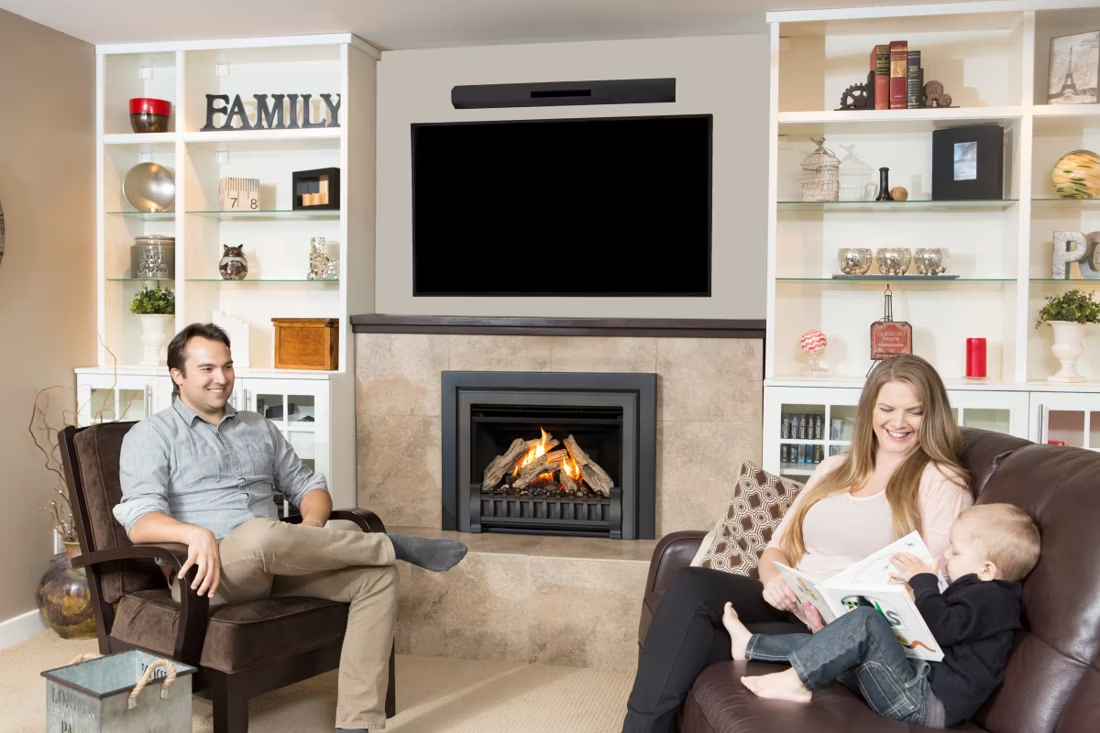
Yes—with an asterisk. Fireplaces are hot and TVs don't like heat. Either put a mantel between them to deflect rising warmth, or choose a fireplace with heat-management technology that creates a cool zone on the wall above—the wall stays around 125 degrees, barely warm, while the room still gets full heat. If you like clean lines and don't want a mantel, heat management is the answer.
Does a fireplace add value to my home?
On average, a fireplace adds back to the home about the same amount you spent installing it. Add the monthly savings from heating the rooms you actually use instead of the whole house—often hundreds of dollars a year—and the value case is strong before you even count what a fire does for how your family uses the room.
Can I install a fireplace myself?
If you're putting a fire in your house on purpose, it's best to work with an expert. Unless you're genuinely experienced in framing, gas line, vent pipe, and the national code on clearances to combustibles, have a professional do it—and ideally the same company that sells you the fireplace, so warranty, service, and liability all live under one roof.
Stove and Fireplace Dealers in Amador County
Find your gas fireplace in Amador County.
Tell us about your home and where you sit in the county—valley floor or up in the hills—and we'll match you with a trusted local dealer and a free Project Guide & Parts List for your gas fireplace project, including the vent kit and exact parts needed.
Find Your Fireplace →