
Steady, clean heat for Kootenay-Boundary's smoky winter valleys.
From Trail and Rossland to Grand Forks and Christina Lake, valley inversions can trap wood smoke for days at a time, and this region runs active wood-stove exchange programs to clean up the airshed. Pellet stoves burn cleaner without giving up real heat output. I match you with a trusted local dealer who knows the CSA-certified models, the WETT and building-permit steps, and the exact vent kit your home needs, then send you a free planning packet.
Every Project Starts From One of These Five Situations
Clean-burning heat for a region that takes air quality seriously.
The Regional District of Kootenay-Boundary is home to roughly 22,682 people spread through the Columbia and Kettle River valleys, from Trail and Rossland through Fruitvale and Montrose to Grand Forks, Christina Lake, Greenwood, and Midway. Winters here sit in climate zone 5B, with average winter lows near -4°C, but the valley bottoms behave differently than the ridgelines above them: cold air and smoke pool for days during inversions, similar to what happens in interior valley cities like Prince George. Douglas fir, paper birch, lodgepole pine, and western larch grow throughout the surrounding forest, and residents can cut firewood at no cost on a FrontCounter BC / BC Ministry of Forests permit nearly year-round, with restrictions only during summer fire season.
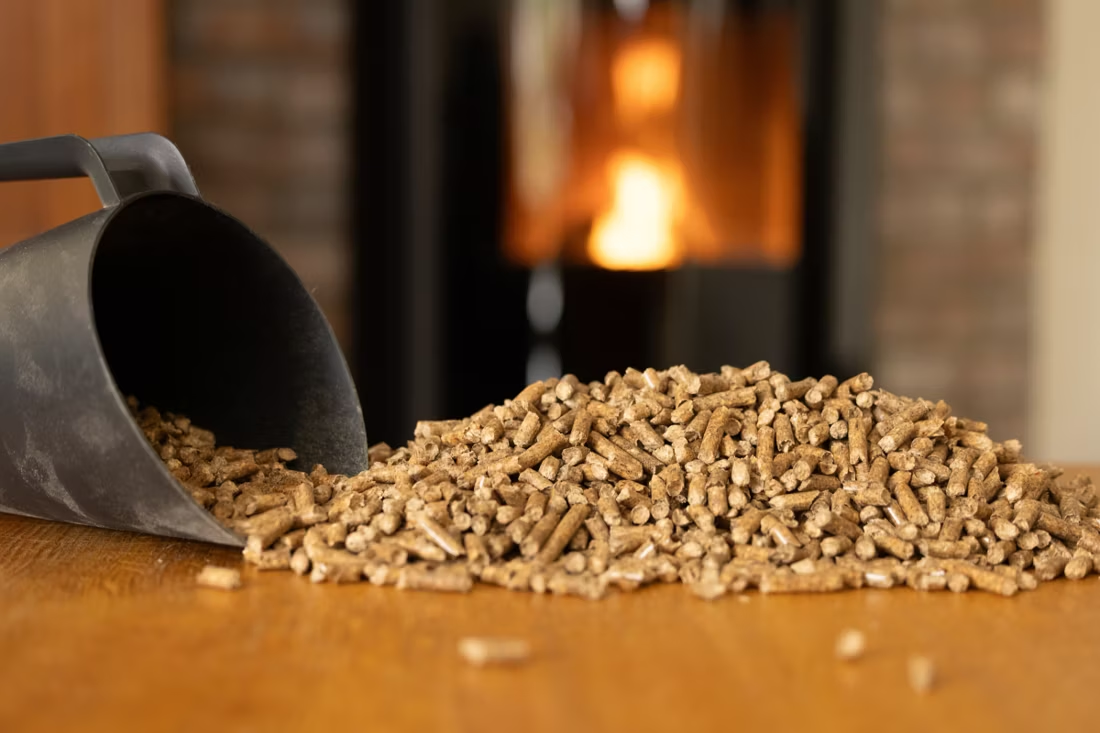
That local wood supply is part of why the region has invested in wood-stove exchange programs and requires CSA/EPA-certified appliances only. Pellet stoves fit that push well: fed from a hopper of manufactured pellets rather than open cordwood, they burn with far less visible smoke and are the appliance exchange programs typically favour over another wood-burning replacement. Pinnacle Premium and Princeton Fuel Pellets both supply the region and typically run $400-$575 per tonne locally. A pellet install still has to meet the CSA B365 installation code, and for insurance purposes most Kootenay-Boundary homeowners get a WETT inspection even though pellet venting is simpler than a masonry wood chimney.
Three steps. No salesperson until you're ready.
Tell us about your project
Your postal code, your situation, and the fuel you're leaning toward—or let the answers point you to one.
See what's actually available
The brands dealers within 100 miles genuinely carry—real options, never a catalog mirage.
Get your dealer & Project Guide
A trusted local dealer, plus the free Project Guide & Parts List that names every component of the job.
Frequently Asked Questions
How much does a pellet stove installation cost in Kootenay-Boundary?
Most pellet projects across the region run $6,000 to $10,000 CAD, including the stove, vent kit, and hearth pad. Homes in Trail or Grand Forks with an existing chimney chase or an easy exterior wall for direct venting tend to land toward the lower end. Rural properties out toward Beaverdell or up the Christina Lake bench, where a longer vent run or extra framing is needed, sit closer to the top of that range. Your local dealer will confirm a firm number after seeing the install location.
Do I need a permit for a pellet stove in Kootenay-Boundary?
Yes. Your municipal building department—whether that's Trail, Rossland, Grand Forks, or the regional district office for unincorporated areas—issues the building permit, and the installation itself has to follow the CSA B365 code. Most homeowners also get a WETT inspection afterward, since many insurers ask for one on any solid-fuel appliance, pellet included, before they'll write or renew a policy. A dealer experienced with pellet appliances in this region coordinates both steps as part of your project.
Pellet stove or wood stove—which makes more sense here?
Wood is close to free if you're cutting your own under a FrontCounter BC / BC Ministry of Forests permit—Douglas fir, lodgepole pine, and western larch are all available on public land at no cost outside summer fire restrictions. But wood smoke is exactly what triggers the inversion-season air quality advisories that hit valley towns like Trail and Grand Forks hardest. Pellet stoves burn cleaner, hold a steady output without constant tending, and are the appliance most exchange programs favour when swapping out an old smoke-heavy stove. If you already have a woodlot and don't mind the work, wood still has a place; if convenience and cleaner air matter more, pellet is usually the better fit.
Will my pellet stove work during a power outage?
Not without backup power. Pellet stoves rely on an electric auger to feed fuel and a blower to move heat into the room, so a grid outage stops the appliance even with a full hopper. That's a real consideration in Kootenay-Boundary's more rural stretches—around Beaverdell, Midway, or the upper Christina Lake area—where winter storms can knock out power for a stretch. A small battery backup or generator sized for the stove's low draw solves this; ask your dealer to size one when you plan the project.
What pellets are available locally, and what should I budget?
Pinnacle Premium and Princeton Fuel Pellets both supply the BC interior and are the two brands most Kootenay-Boundary dealers stock or can order in bulk. Expect to pay roughly $400 to $575 per tonne, depending on bag versus bulk-tote purchasing and how far a supplier has to truck pellets into towns like Grand Forks or Christina Lake. A typical home burns somewhere between two and four tonnes over a full heating season, so it's worth asking your dealer about fall bulk-order pricing before the coldest months settle in.
How do winter smoke advisories affect pellet stove use?
Kootenay-Boundary's valley towns are prone to winter inversions that trap smoke close to the ground, which is why several communities here run wood-stove exchange programs and restrict older, uncertified appliances. Pellet stoves are generally treated far more favourably during these advisories than open wood stoves because they burn hotter and more completely, producing much less visible smoke. That's part of why so many households in Trail and Rossland have swapped an old wood stove for a pellet unit through an exchange program rather than replacing it with another wood-burning appliance.
What size pellet stove do I need for my home?
Most pellet stoves sold for Kootenay-Boundary homes fall in the 40,000 to 60,000 BTU range, which comfortably heats an open-concept main floor of 1,200 to 2,000 square feet through a climate zone 5B winter. Homes higher up the bench above Rossland or out toward Beaverdell, where wind exposure and elevation push heat loss higher, often do better sized to the upper end of that range or with a second, smaller unit for a detached space. A dealer will size the stove to your actual floor plan and insulation rather than square footage alone.
Is natural gas a better option than pellet in this region?
FortisBC serves natural gas along the Highway 3 corridor through Trail, Rossland, and parts of Grand Forks, so gas is a real alternative where that line reaches. Outside that service area—Christina Lake, Greenwood, Midway, and much of the rural Boundary side—there's no gas main, and pellet becomes the more practical clean-burning choice without a propane tank to manage. Even inside the gas footprint, some homeowners choose pellet anyway for the visible flame and a fuel sourced closer to home rather than piped in.
How often does a pellet stove need cleaning and service?
Plan on cleaning the burn pot and ash pan every one to two weeks during regular heating-season use, and a full professional service—hopper, auger, exhaust fan, venting—once a year, ideally in late summer before the first cold nights settle into the valleys. Households burning through a full Kootenay-Boundary winter on pellet as primary heat go through that maintenance more consistently than occasional users, since steady daily burning builds ash faster. Your dealer can walk you through the schedule when they help you pick a model.
Why do fireplace quotes vary so much?
Because a fireplace is an iceberg—there's more behind the wall than in front of it. A low quote often covers only the unit; the full scope includes vent pipe, gas line or electrical, framing, and the tile or stone that has to come off and go back on. Make every bidder price the whole job. If a dealer can't speak to the full scope with confidence, that's your signal to keep looking.
Is it worth replacing an old fireplace that still sort of works?
Ask three questions: Is it ugly? Is it drafty? Does it actually work? Most old fireplaces fail at least two. Beyond looks, an old unit leaks air around the damper year-round and—if it's gas with a standing pilot—quietly burns a couple hundred dollars a year. A modern replacement seals the wall, heats the room, and changes how the whole space gets used.
Why is my open fireplace making my house colder?
Open fireplaces suck—literally. As the fire burns, it consumes air your furnace already paid to heat and pulls it out through the chimney, so the house is actually colder after the fire goes out than before you lit it. An insert fixes this: it seals the chimney, puts fixed glass across the front, and turns that hole in your house into a real heat source.
What's the difference between an insert and a zero-clearance fireplace?
An insert is a fireplace that slides into a pre-existing wood-burning fireplace—if you don't have one, there's nothing to insert it into. A zero-clearance fireplace is built into a framed wall, which makes it the answer for remodels and new construction. Simple test: existing masonry fireplace means insert; blank or framed wall means zero-clearance.
Stove and Fireplace Dealers in Regional District of Kootenay-Boundary
Listings include WhyFire partner dealers, dealers we have verified as authorized for the brands we recommend, and established local businesses that carry hearth products. Every listing shows which one it is. The ones marked Preferred run on WhyFire's software, so they can show you real pricing and book your appointment right here. No manufacturer pays for placement. How we verify dealers →
Oak And Clay Interiors
Flush Away Plumbing
Wd Sheet Metal
Pellet Brands Stocked Around Regional District of Kootenay-Boundary
Typical price runs $400-$575 per ton—buy early-season for the best rates. Manufacturers will point you to the nearest stocking dealer.
Pinnacle Premium
Princeton Fuel Pellets
Get your free Kootenay-Boundary pellet stove Project Guide & Parts List.
Tell me about your home and how you plan to use the stove, and I'll match you with a trusted local dealer in the region and send a free Project Guide & Parts List—the exact parts, including the vent kit, for your pellet heat project.
Find Your Fireplace →