
Clean-burning heat for a valley that holds its smoke.
Warfield sits in the narrow Columbia River valley at 605 metres, where winter lows average around -4°C and temperature inversions can trap smoke for days. I'll match you with a trusted local dealer who can size a pellet system that burns clean and fits your home.
Every Project Starts From One of These Five Situations
A steady burn without adding to the valley's smoke advisories.
Warfield is tucked into the same narrow stretch of the Columbia River valley as neighbouring Trail, and that geography matters more than the thermometer does. Winter lows here average a relatively mild -4°C, but the valley walls hold cold air and smoke in place through winter inversions, and the Regional District of Kootenay-Boundary sees smoke advisories often enough that several local jurisdictions run wood-stove exchange programs and require CSA or EPA-certified appliances. Douglas fir, paper birch, lodgepole pine, and western larch are the woods people around here know well, but plenty of Warfield households are choosing pellet appliances specifically because they burn cleaner during the exact stretches when an inversion has settled over the valley.
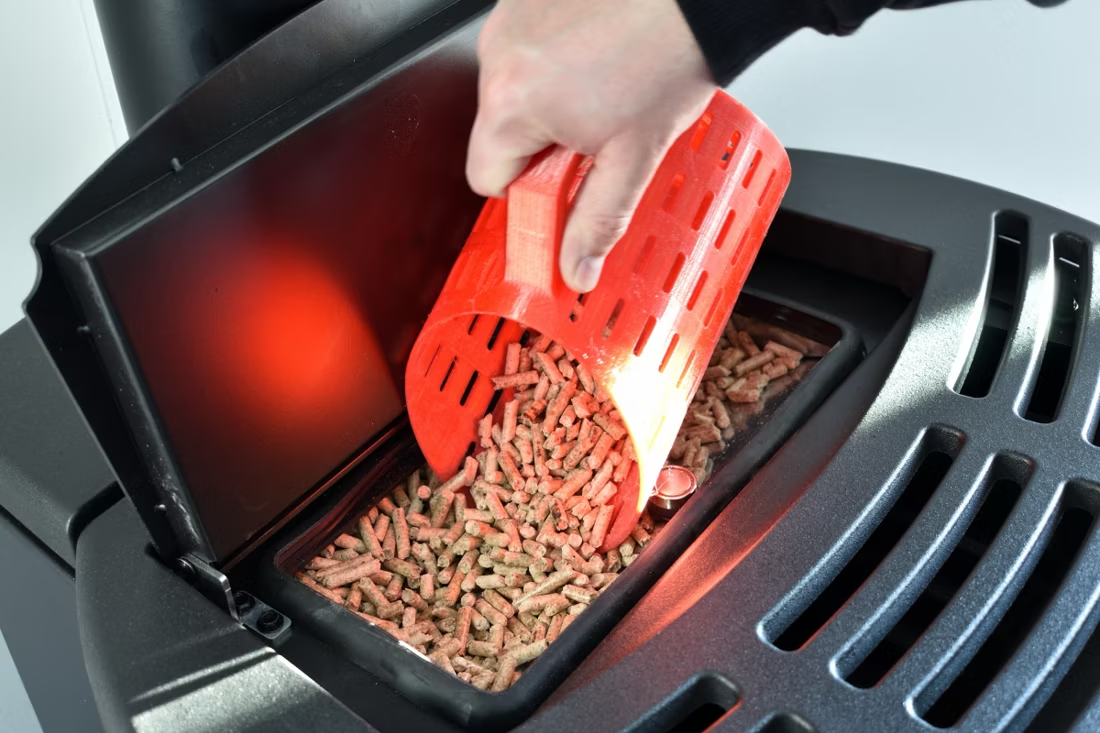
Pellet stoves also sidestep the two biggest headaches of an open valley: no chimney to build if you don't have one, since most units direct-vent straight through an exterior wall, and no cutting or splitting even though free permits are available year-round through FrontCounter BC and the BC Ministry of Forests (summer fire restrictions aside). Regional brands like Pinnacle Premium and Princeton Fuel Pellets are common on local dealer shelves at roughly $400-$575 a tonne. FortisBC's gas network also reaches Warfield, so pellet isn't the only clean option in town, but it's the one that keeps working through a BC Hydro outage as long as you've got a way to run the auger and blower, whether that's a small backup battery or a generator.
Three steps. No salesperson until you're ready.
Tell us about your project
Your postal code, your situation, and the fuel you're leaning toward—or let the answers point you to one.
See what's actually available
The brands dealers within 100 miles genuinely carry—real options, never a catalog mirage.
Get your dealer & Project Guide
A trusted local dealer, plus the free Project Guide & Parts List that names every component of the job.
Frequently Asked Questions
How much does a pellet stove or insert cost to install in Warfield?
Most pellet installs here run $6,000 to $10,000, with the low end covering a straightforward freestanding stove that direct-vents through an exterior wall and the top end covering a full insert into an existing masonry firebox with a liner and finishing work. Homes in older parts of Warfield built around the Trail smelter workforce era sometimes have a fireplace already in place, which can pull the job toward the lower half of that range once your dealer accounts for venting and any hearth pad upgrades. Either way you'll need a permit through the municipal building department before work starts.
Is pellet heat a good fit given Warfield's winter inversions?
It's one of the better fits, honestly. When a temperature inversion settles over the valley and the Regional District of Kootenay-Boundary issues a smoke advisory, pellet appliances keep running without adding much particulate to the air the way an older uncertified wood stove would. That's part of why several regional wood-stove exchange programs specifically encourage a switch to pellet or a CSA/EPA-certified wood unit. If you're burning wood now and dealing with inversion-related restrictions, a pellet stove removes that worry entirely.
Where do I buy pellets near Warfield?
Pinnacle Premium and Princeton Fuel Pellets are the two brands most local dealers stock, typically running $400 to $575 CAD a tonne depending on the season and how early you order. Buying in late summer before the first cold snap usually gets you the better end of that range and beats the scramble that happens once smoke advisories start and everyone's topping off their supply at once. A season's heat for an average Warfield home usually takes two to three tonnes, so plan storage—a dry garage or shed bay—accordingly.
Do I need a permit to install a pellet stove in Warfield?
Yes. The municipal building department requires a permit for any new solid-fuel appliance, and installations need to meet the CSA B365 installation code. Most local dealers pull the permit as part of the job. It's also worth arranging a WETT inspection once the unit's in—insurers around the Kootenay-Boundary region commonly ask for one on any solid-fuel appliance, pellet included, before they'll finalize or renew a homeowner's policy.
What happens to my pellet stove if the power goes out?
It stops, at least without a backup plan. Pellet stoves rely on an electric auger to feed fuel and a blower to distribute heat, so a BC Hydro outage—not uncommon in the West Kootenay during a heavy winter storm—takes the appliance offline unless you've got it wired to a small battery backup or a generator. That's the one real tradeoff against a wood stove, which keeps burning with no power at all. A lot of Warfield households running pellet as their main heat keep a battery backup on hand specifically for this.
What size pellet stove does a Warfield home need?
With winter lows averaging around -4°C and a heating season that's real but not brutal by BC interior standards, most Warfield homes do fine with a small to mid-size pellet stove rated for 1,000 to 1,800 square feet as a primary or supplemental source. Older, less-insulated homes near the original townsite sometimes want to size up for overnight burns, but this isn't Fort McMurray or Prince George territory—you're not fighting the kind of deep cold that demands the largest unit on the floor. A local dealer will still size against your actual layout and insulation rather than square footage alone.
Pellet vs. natural gas—which makes more sense in Warfield?
FortisBC's gas network reaches Warfield, so both are genuinely on the table, unlike a lot of BC interior towns where gas isn't an option at all. Gas wins on sheer convenience—a wall switch, no fuel deliveries, no ash to empty. Pellet wins if you like the visual of a real flame with logs (some pellet inserts mimic this well) and want a fuel source that isn't tied to a utility line, since you can always keep a few bags of Pinnacle Premium or Princeton Fuel Pellets in the garage as backup heat. Several Warfield households run gas as primary and keep a pellet stove in a secondary room for exactly that reason.
Does a pellet stove need a traditional chimney?
No, and that's one of the appeal points for a lot of Warfield homes that were never built with a masonry fireplace. Most pellet stoves and inserts direct-vent through a small-diameter pipe run straight out an exterior wall, which is far simpler and cheaper than building a full Class A chimney. If you do have an existing masonry firebox from an older wood-burning setup, a pellet insert can usually reuse that opening with a liner running up through the flue.
How much maintenance does a pellet stove need through a Kootenay winter?
Plan on emptying the ash pan every few days during steady daily use and a deeper burn-pot and heat-exchanger cleaning every few weeks, plus a full professional service once a year—late summer is the easiest time to book, before the valley's first smoke advisory has everyone calling around at once. Compared to a wood stove and chimney sweep, it's a lighter lift, but skipping the annual service is still the most common reason a pellet stove starts smoking back into the room partway through a Warfield winter.
Why do fireplace quotes vary so much?
Because a fireplace is an iceberg—there's more behind the wall than in front of it. A low quote often covers only the unit; the full scope includes vent pipe, gas line or electrical, framing, and the tile or stone that has to come off and go back on. Make every bidder price the whole job. If a dealer can't speak to the full scope with confidence, that's your signal to keep looking.
Is it worth replacing an old fireplace that still sort of works?
Ask three questions: Is it ugly? Is it drafty? Does it actually work? Most old fireplaces fail at least two. Beyond looks, an old unit leaks air around the damper year-round and—if it's gas with a standing pilot—quietly burns a couple hundred dollars a year. A modern replacement seals the wall, heats the room, and changes how the whole space gets used.
Why is my open fireplace making my house colder?
Open fireplaces suck—literally. As the fire burns, it consumes air your furnace already paid to heat and pulls it out through the chimney, so the house is actually colder after the fire goes out than before you lit it. An insert fixes this: it seals the chimney, puts fixed glass across the front, and turns that hole in your house into a real heat source.
What's the difference between an insert and a zero-clearance fireplace?
An insert is a fireplace that slides into a pre-existing wood-burning fireplace—if you don't have one, there's nothing to insert it into. A zero-clearance fireplace is built into a framed wall, which makes it the answer for remodels and new construction. Simple test: existing masonry fireplace means insert; blank or framed wall means zero-clearance.
Nearby Dealers
Hearth shops serving Warfield and the surrounding area. Every listing shows whether it is a WhyFire partner, a dealer we have verified as authorized for the brands we recommend, or a local business carrying hearth products. No manufacturer pays for placement. How we verify dealers →
Oak And Clay Interiors
Flush Away Plumbing
Wd Sheet Metal
Pellet Brands Stocked Around Warfield
Typical price runs $400-$575 per ton—buy early-season for the best rates. Manufacturers will point you to the nearest stocking dealer.
Pinnacle Premium
Princeton Fuel Pellets
Get your free Project Guide & Parts List for a Warfield pellet project.
Tell me about your home and whether you're leaning toward a freestanding stove or an insert, and I'll match you with a trusted local dealer and send a free Project Guide & Parts List with the exact vent kit and parts your project needs.
Find Your Fireplace →