
Steady heat for Kootenay-Boundary's valley winters.
FortisBC serves natural gas to Trail, Rossland, Warfield, Fruitvale, and Grand Forks, and a direct-vent gas fireplace runs clean through the valley's winter inversions instead of adding to them. I'll match you with a trusted local dealer who knows which venting path actually fits your home, and there's no obligation to find out.
Every Project Starts From One of These Five Situations
Interior valleys, heritage homes, and a growing FortisBC gas network.
The Regional District of Kootenay-Boundary sits along the Columbia and Kettle River valleys in BC's southern Interior, taking in Trail, Rossland, Grand Forks, Christina Lake, Fruitvale, Warfield, Midway, Greenwood, and Beaverdell. Climate zone 5B means real winters, but average lows here run a mild -4°C, nowhere near the deep cold that settles over Prince George or the northern Interior. The catch is geography: these are narrow river valleys ringed by mountains, and on calm winter nights cold air pools at the valley floor along with wood smoke—the same pattern that's led several regional districts here to run wood-stove exchange programs and require CSA or EPA-certified appliances. Gas fireplaces sidestep that problem entirely—no smoke, no ash, just a thermostatically controlled flame that runs whether or not an inversion advisory is in effect.
FortisBC supplies natural gas to the built-up parts of the region—Trail, Rossland, Warfield, Fruitvale, and Grand Forks are all served—which makes a direct-vent gas fireplace or insert a straightforward retrofit for the area's older mining-era homes. Head out toward Christina Lake's outer edges, Midway, Greenwood, or Beaverdell and you're more likely relying on propane, which still works with the same fireplace, just with a tank and delivery contract instead of a utility meter. Either way, installation runs $6,000-$15,000 CAD depending on venting complexity and whether a gas line already reaches the room, and every job has to meet CSA B365 through the municipal building department before it's signed off.
Three steps. No salesperson until you're ready.
Tell us about your project
Your postal code, your situation, and the fuel you're leaning toward—or let the answers point you to one.
See what's actually available
The brands dealers within 100 miles genuinely carry—real options, never a catalog mirage.
Get your dealer & Project Guide
A trusted local dealer, plus the free Project Guide & Parts List that names every component of the job.
Frequently Asked Questions
How much does a gas fireplace installation cost in the Kootenay-Boundary region?
Most installations run $6,000 to $15,000 CAD. A direct-vent insert going into an existing masonry fireplace in one of Trail's or Rossland's older heritage homes, with a gas line already nearby, lands toward the low end. A new direct-vent unit for a Grand Forks remodel or new build, requiring fresh gas line work and roof or wall penetration, sits higher. Homes on propane out past Christina Lake, Midway, or Beaverdell sometimes add the cost of a new tank set on top of the fireplace itself. A local dealer will walk the space and give you a firm number.
Can I convert my existing wood fireplace to gas?
Yes, and it's a common project in the region's older housing stock—plenty of Trail and Rossland homes still have the original masonry firebox from the smelter-era construction boom. A gas insert drops into that opening and vents through a liner run up the existing chimney, so you keep the mantel and surround while gaining a fireplace that lights with a switch. Unlike a wood-burning swap, a gas insert doesn't trigger the WETT inspection insurers usually ask for on wood appliances—it falls under CSA B365 and a standard municipal building permit instead.
Do I need a permit to install a gas fireplace here?
Yes. Whether you're in Trail, Rossland, Grand Forks, or one of the smaller communities, the municipal building department requires a permit, and the installation has to meet CSA B365. The gas line itself needs a licensed gasfitter, which is one reason it's worth going through a full-service dealer rather than piecing the job together yourself—they coordinate the gas work, the venting, and the inspection sign-off together.
Will a gas fireplace still work if the power goes out?
Most will. Units with intermittent pilot ignition run on battery backup that kicks in automatically when the power drops, so the fireplace still lights on demand. Valor units go further, generating their own current off the pilot's thermocouple so there's no battery to maintain at all. That matters in valley communities like Christina Lake or Beaverdell, where winter storms can take the grid down for longer than they typically do in Trail or Grand Forks proper.
Should I get a vented or vent-free gas fireplace?
In this region, direct-vent is almost always the better call. Vent-free units are technically legal in BC but burn directly into the room, and given how often these valleys sit under a winter inversion with smoke advisories already in effect, most local dealers steer homeowners toward direct-vent units that pull combustion air from outside and exhaust it back out—nothing added to indoor air on days when outdoor air quality is already a concern.
What's the difference between a gas fireplace, insert, and stove?
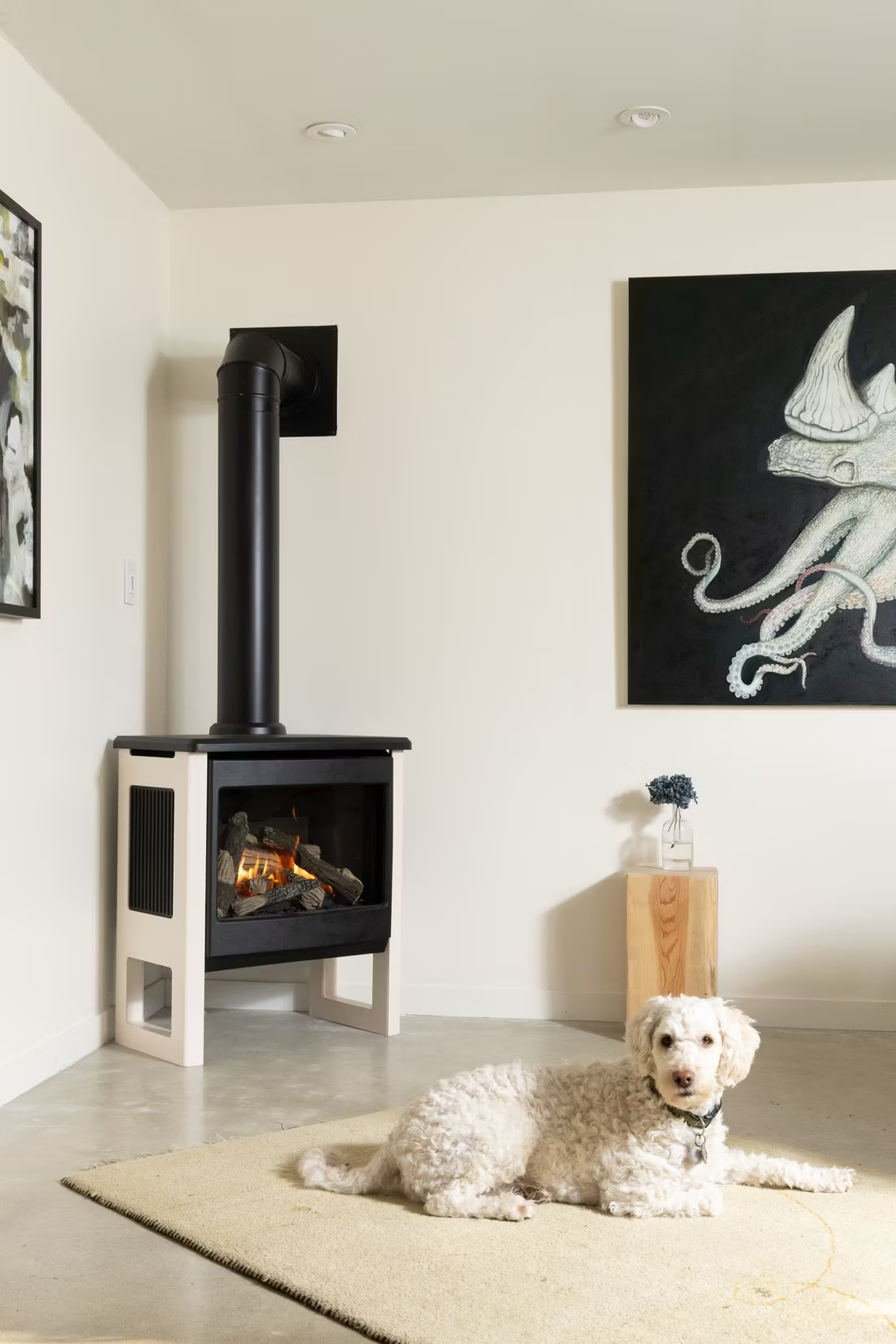
A gas fireplace is a built-in unit framed into new construction or a remodel. A gas insert fits into an existing masonry firebox—the common route for Rossland and Trail's older homes—and uses the existing chimney chase as its vent path. A gas stove is a freestanding cabinet unit that sits on the floor, useful in a room with no chimney at all, including some of the region's manufactured homes out toward Beaverdell. A local dealer can tell you which one actually fits your opening and your vent path.
How often does a gas fireplace need servicing?
Plan on an annual inspection, ideally before the heating season starts in the fall. A technician checks the burner, pilot assembly, gas connections, and venting, and cleans the glass—a much shorter visit than a wood chimney sweep. Expect to pay roughly $150-$250 for a standard service call from a local gas technician, whether you're on FortisBC's system in Trail or running propane out near Midway.
Gas or wood—which makes more sense for a home in Kootenay-Boundary?
Wood—typically Douglas fir, paper birch, lodgepole pine, or western larch cut under a free FrontCounter BC permit—still makes sense for households that want heat with no reliance on gas supply, and cutting is allowed year-round outside summer fire restrictions. But wood appliances need a WETT inspection for insurance and have to be CSA or EPA-certified given how local air quality advisories work during winter inversions. Gas skips both of those requirements, runs on a thermostat, and adds nothing to the valley's smoke load on the coldest, stillest nights. Plenty of homes here run both: gas for daily convenience in the main living space, wood as backup or for the cabin.
Is natural gas available everywhere in the region, or do I need propane?
It depends where you are. FortisBC's natural gas network reaches Trail, Rossland, Warfield, Fruitvale, and Grand Forks, so homes there can tie a fireplace into an existing gas meter. Outside those service areas—Christina Lake's outer edges, Midway, Greenwood, and Beaverdell—there's no gas main, and propane from a local bulk supplier is the standard fuel instead. The fireplace itself works identically either way; only the fuel source and tank setup change, so it's worth confirming which utility serves your specific address before you start planning the project.
Can a gas fireplace run on a thermostat?
Most modern gas fireplaces can—turn it on and off from the couch with a remote, or set a room temperature and let the fireplace hold the comfort zone for you. If low maintenance matters to your family, this is the feature set that makes gas the convenience pick over wood and pellet.
Why do fireplace quotes vary so much?
Because a fireplace is an iceberg—there's more behind the wall than in front of it. A low quote often covers only the unit; the full scope includes vent pipe, gas line or electrical, framing, and the tile or stone that has to come off and go back on. Make every bidder price the whole job. If a dealer can't speak to the full scope with confidence, that's your signal to keep looking.
What's the difference between radiant and convective fireplace heat?
Most fireplaces are a thin metal box—they heat fine, but you rely on the fan to move the warmth into the room. Radiant models use a thick cast-ceramic firebox, about an inch and a quarter thick, that soaks up the fire's heat and radiates roughly 25–30% more warmth into the room with no fan running. If you watch TV in the same room or want heat in a power outage, radiant is worth asking about.
What does it take to replace an existing fireplace?
Fireplaces are like icebergs—bigger behind the wall than in front of it. Replacement means removing the surrounding tile or stone (the finish material laps onto the fireplace face), pulling the old unit, setting the new one in the same enclosure, and re-finishing the wall. A hearth professional can determine what's behind your wall without demolition during an in-home preview.
Stove and Fireplace Dealers in Regional District of Kootenay-Boundary
Listings include WhyFire partner dealers, dealers we have verified as authorized for the brands we recommend, and established local businesses that carry hearth products. Every listing shows which one it is. The ones marked Preferred run on WhyFire's software, so they can show you real pricing and book your appointment right here. No manufacturer pays for placement. How we verify dealers →
Oak And Clay Interiors
Flush Away Plumbing
Wd Sheet Metal
Natural Gas Service in Regional District of Kootenay-Boundary
Confirm service at your address before planning a gas fireplace—a quick call settles it.
FortisBC (Gas)
Pacific Northern Gas
Get your free Project Guide & Parts List for a gas fireplace in Kootenay-Boundary.
Tell us about your home, whether you're on FortisBC gas or propane, and how you plan to use the fireplace, and we'll match you with a trusted local dealer and send a free Project Guide & Parts List—the exact parts, including the vent kit, and the dealer best suited to your project.
Find Your Fireplace →