
Clean, automated heat for a lake valley that watches its air.
At 463 metres in the Kootenay-Boundary region, Christina Lake sees winter lows averaging -6.7°C and the kind of valley inversions that put smoke advisories in the forecast. A pellet stove burns clean enough to stay off the naughty list on those days. I'll match you with a trusted local dealer who can size the unit and sort the venting.
Every Project Starts From One of These Five Situations
A convenient burn for a valley that minds its smoke.
Christina Lake is a small lakeside community tucked into the Kootenay-Boundary region, and its winters, while not as brutal as what Prince George or Thunder Bay see further north, still bring routine sub-zero nights and a real heating season built around wood-fired appliances. The bigger local factor is air quality: this is interior valley terrain, and Kootenay-Boundary winters regularly trap smoke under temperature inversions, which is why several regional districts here run wood-stove exchange programs and require CSA or EPA-certified appliances for anything burning solid fuel.
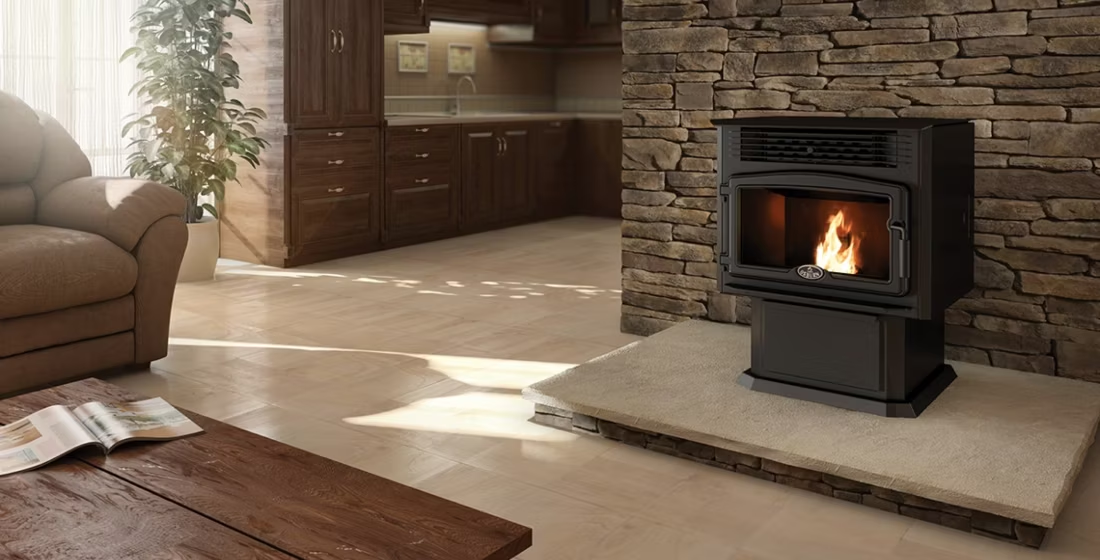
That's the opening for pellet heat. An auger-fed pellet stove burns Pinnacle Premium or Princeton Fuel Pellets at a steady, efficient rate with far less particulate than an open wood fire, which matters on the days a smoke advisory is posted for the valley. Pellets run $400-$575 a ton locally, comparable to what it costs to buy split Douglas fir or western larch by the cord once you account for the time spent seasoning and stacking it. FortisBC brings natural gas to parts of Christina Lake too, so gas is a real option for some addresses, but for homeowners who want a visible flame and a solid-fuel feel without a woodpile or a chainsaw, pellet is the practical middle path.
Three steps. No salesperson until you're ready.
Tell us about your project
Your postal code, your situation, and the fuel you're leaning toward—or let the answers point you to one.
See what's actually available
The brands dealers within 100 miles genuinely carry—real options, never a catalog mirage.
Get your dealer & Project Guide
A trusted local dealer, plus the free Project Guide & Parts List that names every component of the job.
Frequently Asked Questions
How much does a pellet stove installation cost in Christina Lake?
Most pellet stove installs here run $6,000 to $10,000 CAD. The lower end covers a straightforward freestanding stove venting through an exterior wall with a short horizontal run, which is common in the smaller lakeside cabins and cottages around Christina Lake. The higher end applies to homes needing a longer vent run, a new hearth pad, or an insert conversion into an existing masonry firebox. Your local dealer will also account for hopper size and whether you want a model with a larger capacity for less-frequent refilling through a long cold stretch.
Is a pellet stove or a wood stove the better call for Christina Lake's inversions?
Pellet stoves burn measurably cleaner than open wood combustion, which matters directly here since Kootenay-Boundary valleys are prone to winter inversions that trap smoke and trigger advisories. A CSA/EPA-certified wood stove burning well-seasoned Douglas fir or lodgepole pine is still a legitimate choice and plenty of local homes run one, but if you're building new or replacing an old smoky unit, a pellet stove gives you the visual and heat output of solid-fuel burning with a much smaller smoke footprint on inversion days. Either appliance typically needs a WETT inspection for insurance purposes once installed.
Where do I buy pellets near Christina Lake, and how much fuel do I need?
Pinnacle Premium and Princeton Fuel Pellets are the two regional brands most commonly stocked by dealers serving the Boundary area, typically running $400 to $575 a ton depending on season and supply. A household using a pellet stove as a primary heat source through a full Christina Lake winter usually goes through two to three tons; as a supplemental unit for evenings and cold snaps, expect closer to one to one and a half tons. Buying early in fall before demand peaks is the usual local strategy, and most dealers can advise on dry, mouse-proof storage for a garage or shed.
Do I need a permit to install a pellet stove in Christina Lake?
Yes. Installation falls under the municipal building department, and the work needs to meet CSA B365 installation code, which governs clearances, venting, and hearth requirements for solid-fuel appliances. Most insurers also want a WETT inspection on file before they'll cover a pellet appliance, even though pellet stoves burn cleaner than cordwood units. A dealer who regularly installs in the Kootenay-Boundary region will already have both the permit process and the WETT paperwork built into their quote.
What size pellet stove do I need for a Christina Lake home?
With winter lows averaging -6.7°C and occasional colder snaps rolling down the valley, most year-round homes in Christina Lake do well with a stove rated for 1,200 to 2,000 square feet as a primary or near-primary heat source. Smaller lakefront cottages used mainly on weekends or as three-season properties can often get by with a unit sized for under 1,000 square feet, especially if it's supplementing electric baseboard or a gas furnace rather than carrying the whole load. Ceiling height, insulation age, and how open the floor plan is all shift that number, which is why a local dealer sizes against your actual house rather than square footage alone.
Will a pellet stove still work if the power goes out?
Not without help. Pellet stoves rely on an electric auger to feed fuel and a blower to circulate heat, so a BC Hydro outage will shut most units down unless you have a battery backup or small generator wired in. That's worth weighing seriously in a rural, forested area like Christina Lake where outages happen during winter storms. If outage resilience is a top priority, some homeowners here pair a pellet stove for daily convenience with a wood stove or fireplace elsewhere in the house that needs no power at all.
What features matter most when choosing a pellet stove for this area?
Look for a larger hopper capacity if you want to go a full overnight or a full day without refilling, since that convenience is a big part of the appeal over wood. Automatic ignition is standard on most current models and worth having rather than a manual-light unit. Given the valley's inversion-prone air, confirm the model is certified to current emissions standards; your dealer, working with brands stocked for the Kootenay-Boundary region, can point you to units that pair a small hopper footprint with the burn efficiency this area's air quality rules are pushing toward.
How much maintenance does a pellet stove need in Christina Lake?
Plan on emptying the ash pan every few days during heavy winter use and a full internal cleaning, including the burn pot and exhaust passages, every one to two months depending on how many bags you're burning through. An annual professional service before the season starts, ideally in September or early October ahead of the first cold snap, checks the auger motor, gaskets, and venting. Pellet stoves need far less chimney attention than a wood-burning setup, but skipping the annual service is still the most common reason a unit acts up on the coldest night of the year.
Pellet vs. gas—which makes more sense for a Christina Lake home?
FortisBC serves natural gas to parts of Christina Lake, and where it's available, a gas fireplace or insert offers instant on-demand heat with no fuel handling and, with the right ignition system, some resilience during a power outage. Pellet stoves need electricity to run but give you a real, visible solid-fuel flame and a lower ongoing fuel cost in many years compared to gas, plus a cleaner burn than cordwood on the days a smoke advisory is posted for the valley. Homes without gas service, or homeowners who specifically want that solid-fuel feel without a woodpile, tend to land on pellet.
Why do fireplace quotes vary so much?
Because a fireplace is an iceberg—there's more behind the wall than in front of it. A low quote often covers only the unit; the full scope includes vent pipe, gas line or electrical, framing, and the tile or stone that has to come off and go back on. Make every bidder price the whole job. If a dealer can't speak to the full scope with confidence, that's your signal to keep looking.
Is it worth replacing an old fireplace that still sort of works?
Ask three questions: Is it ugly? Is it drafty? Does it actually work? Most old fireplaces fail at least two. Beyond looks, an old unit leaks air around the damper year-round and—if it's gas with a standing pilot—quietly burns a couple hundred dollars a year. A modern replacement seals the wall, heats the room, and changes how the whole space gets used.
Why is a fireplace insert so efficient?
An insert does two things: it seals the chimney completely, so you stop losing air you already paid to heat, and it radiates warmth into the room through the firebox and glass. Most add a heat-exchange fan that pulls cool room air underneath, wraps it around the hot firebox, and pushes it back out warm. Your home is more efficient before you've even lit the first fire.
What should I look for in pellet stove design?
Three things separate the field: how easy the burn pot is to clean (trapdoor designs let the ash drop straight into the pan), how the auger moves pellets (top-mounted augers that pull instead of push jam less and wear slower), and diagnostics (self-diagnosing control boards tell you exactly which part needs attention instead of leaving you guessing). Heat output is table stakes—livability is in these details.
Nearby Dealers
Hearth shops serving Christina Lake and the surrounding area. Every listing shows whether it is a WhyFire partner, a dealer we have verified as authorized for the brands we recommend, or a local business carrying hearth products. No manufacturer pays for placement. How we verify dealers →
Wd Sheet Metal
Oak And Clay Interiors
Pellet Brands Stocked Around Christina Lake
Typical price runs $400-$575 per ton—buy early-season for the best rates. Manufacturers will point you to the nearest stocking dealer.
Pinnacle Premium
Princeton Fuel Pellets
Get your free Project Guide & Parts List for a Christina Lake pellet stove.
Tell me about your home and whether you're inside FortisBC's gas service area, and I'll match you with a trusted local dealer and send a free Project Guide & Parts List sized for the valley's winters, with the vent kit and parts specified.
Find Your Fireplace →