
Set it, forget it—steady heat for Yell County winters.
Thermostat-controlled warmth for the Arkansas River Valley—from Danville and Dardanelle to Ola and Belleville. Find the right pellet stove or insert, and connect with a trusted local dealer.
Every Project Starts From One of These Five Situations
Convenient heat for the Arkansas River Valley.
Yell County sits in the Arkansas River Valley, wedged between the Ozark-St. Francis National Forests to the north and the Ouachita National Forest to the south—a landscape of oak and hickory ridges, river bottoms, and small towns like Danville, Dardanelle, Ola, and Belleville. Winters here are mild by national standards: an average winter low around 29°F and roughly 3,188 heating degree days for the season, less than a third of what a place like Duluth, Minnesota logs in a typical year. But mild doesn't mean absent—Arkansas River Valley cold fronts and the occasional ice storm can drop temperatures into the teens or single digits for a few days at a stretch, and most Yell County homes still run heat from November through February.
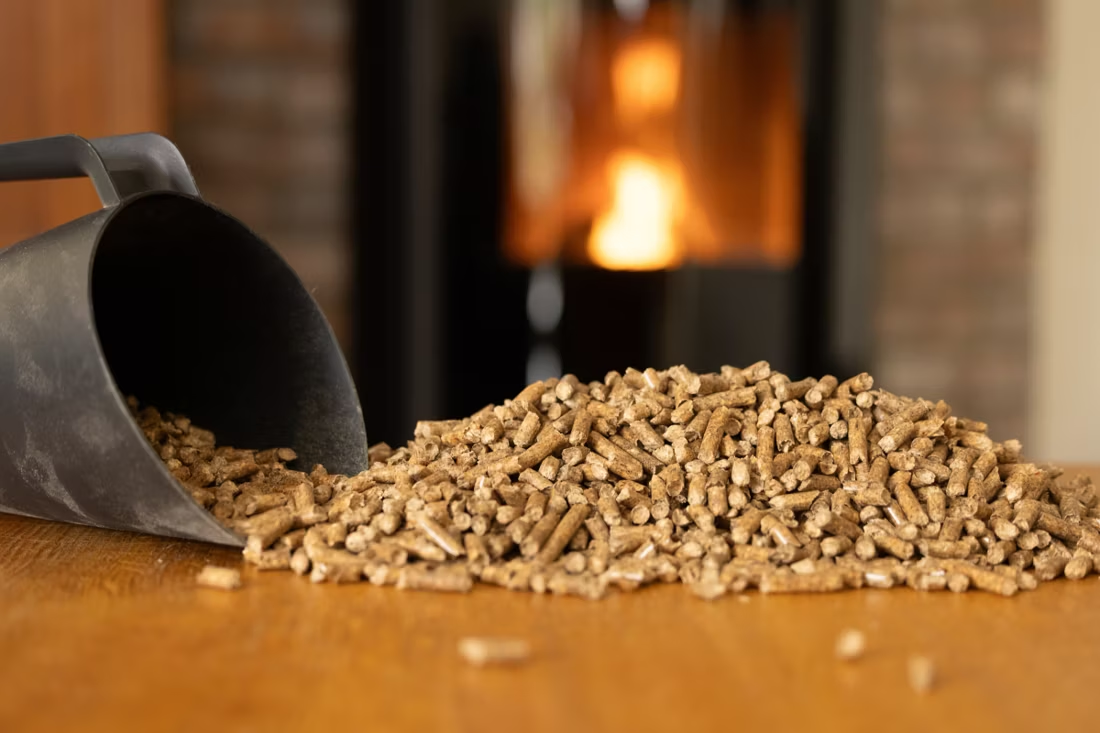
For a lot of homeowners here, wood heat is the default—oak, hickory, and pine are all abundant locally, and cutting permits through the Ozark-St. Francis and Ouachita National Forests run $10 to $20 per cord during the May-to-October season. But pellet stoves have carved out a real place in Yell County too, especially for homeowners who want consistent, thermostat-set heat without cutting, splitting, or stacking wood. Regional suppliers like Lignetics and Indeck Energy Services keep pellets stocked at farm and hardware stores throughout the county, and with no local air quality restrictions on solid-fuel burning, pellet stoves here are chosen for convenience rather than compliance.
Three steps. No salesperson until you're ready.
Tell us about your project
Your zip code, your situation, and the fuel you're leaning toward—or let the answers point you to one.
See what's actually available
The brands dealers within 100 miles genuinely carry—real options, never a catalog mirage.
Get your dealer & Project Guide
A trusted local dealer, plus the free Project Guide & Parts List that names every component of the job.
Frequently Asked Questions
How much does a pellet stove installation cost in Yell County?
Most pellet stove installations run in the $3,000 to $6,000 range, depending on the unit, whether you're venting through an existing chimney or need a new through-wall vent kit, and whether you need a dedicated electrical outlet run for the hopper and auger motor (pellet stoves require power to operate, unlike a standard wood stove). A pellet insert going into an existing masonry fireplace tends to land toward the higher end of that range once a liner and venting adapter are factored in. Local dealers serving Danville, Dardanelle, and the surrounding county will size the job and give you a firm quote after an in-home look.
What size pellet stove do I need for my home?
Because Yell County's winters are relatively mild—average lows around 29°F and roughly 3,188 heating degree days—most homes here don't need the largest pellet stove on the showroom floor. A small to mid-size unit (rated for 1,000 to 1,800 square feet) handles most Arkansas River Valley homes as primary or supplemental heat, even older farmhouses around Ola and Belleville with less insulation. Homes using a pellet stove purely for zone heating in one room or an open living area can often go smaller. A local dealer will factor in ceiling height, insulation, and whether you want whole-home or single-room heat before recommending a model.
Where can I find certified pellet stove installers near me?
Look for installers with NFI (National Fireplace Institute) certification, which covers proper venting, clearance, and electrical setup for pellet appliances. The local dealers serving Yell County—including those covering Danville, Dardanelle, and outlying communities—employ certified installers and typically handle both the sale and installation together, which keeps warranty coverage and manufacturer requirements intact. Because pellet stoves need a dedicated outlet and a properly sized vent kit, it's worth avoiding a DIY or general-handyman install even though the units look simple to run.
What's the difference between a pellet stove and a pellet insert?
A pellet stove is a freestanding unit that sits on a hearth pad and vents through a wall or existing chimney—it can go almost anywhere in the house with the right clearances. A pellet insert is built to slide into an existing masonry fireplace opening, turning a rarely used wood fireplace into an efficient, thermostat-controlled heat source. For Yell County homes with an existing fireplace—common in older houses around Dardanelle and Danville—an insert is often the simpler upgrade since it reuses the existing chimney chase. Homes without an existing fireplace usually do better with a freestanding stove.
Do I need a permit to install a pellet stove in Yell County?
It depends on where you are. Inside city limits—Danville or Dardanelle—you'll likely need to check with the city for a building or mechanical permit before installation. In unincorporated parts of Yell County, permit enforcement is minimal, but that doesn't remove the need to follow manufacturer clearance specs and electrical code for the hopper circuit—both matter for insurance and warranty purposes even where no inspector shows up. Most local dealers can tell you exactly what, if anything, applies to your address before they schedule the install.
What's the best pellet stove for Yell County's climate?
Because winters here are mild compared to the northern half of the country, most Yell County homes do well with a standard mid-size pellet stove rather than a high-output unit built for sub-zero climates. Englander pellet stoves—made by England's Stove Works, headquartered right here in Arkansas—are a popular, budget-friendly option that local dealers carry and service. For homes that want a longer hopper burn time between refills, look at models with a larger hopper capacity (60+ lbs) so you're not reloading daily during the coldest stretches in December and January. A local dealer will match hopper size and BTU output to your square footage.
How often does a pellet stove need to be cleaned and serviced?
Pellet stoves need more frequent attention than a wood stove but far less than you'd think—the burn pot and ash pan should be cleaned every few days to weekly during regular use, and the exhaust venting and auger components should get a full professional service once a year, ideally before burning season starts in the fall. Skipping the annual service is the most common cause of ignition failures and reduced heat output. Local dealers who sell pellet stoves in Yell County typically offer this service directly.
Where can I buy pellets in Yell County?
Wood pellets are sold at farm supply and hardware stores throughout the county, often stocked seasonally in the fall. Regional suppliers like Lignetics and Indeck Energy Services distribute to stores across Arkansas, and pricing generally runs in the same range you'll find across the region—expect to pay by the 40-lb bag, with better per-ton pricing if you buy a full pallet ahead of the season. Buying early in the fall, before the first cold snap hits the Arkansas River Valley, usually means better selection and avoids the scramble that happens once temperatures drop.
Pellet stove vs. wood stove—which is right for my home?
Wood stoves burn cordwood—plentiful in Yell County thanks to abundant local oak, hickory, and pine, plus inexpensive cutting permits through the Ozark-St. Francis and Ouachita National Forests—and they work without electricity, which matters during ice-storm power outages that hit the Arkansas River Valley every few winters. Pellet stoves trade that off-grid capability for convenience: load the hopper, set the thermostat, and walk away, with less mess and no cutting or splitting. For most Yell County homeowners without a strong wood-cutting habit already in place, pellet is the lower-effort choice. For those who already have access to a woodlot or enjoy the process, wood remains the traditional standard.
Why is my open fireplace making my house colder?
Open fireplaces suck—literally. As the fire burns, it consumes air your furnace already paid to heat and pulls it out through the chimney, so the house is actually colder after the fire goes out than before you lit it. An insert fixes this: it seals the chimney, puts fixed glass across the front, and turns that hole in your house into a real heat source.
How often does a pellet stove need cleaning?
A clean pellet stove is a happy pellet stove. Plan on cleaning the burn pot about once a week when you're burning regularly—ash and clinkers gum up the air holes just like a pellet barbecue. Most pellet stove problems trace back to skipped cleaning that nobody explained up front. Some designs make it easy with a trapdoor burn pot: pull a lever and the gunk drops into the ash pan.
What is an in-home preview and do I need one?
It's a visit where a hearth professional measures your space, confirms the model you picked actually works in your home, and walks the specs—framing, gas line, venting, finish work—before anything is ordered. Some details you just can't know until you see the house. Never make a down payment without one; it's the single most-skipped step that burns buyers.
How much should I budget for a fireplace?
For an average home—covering the fireplace, the vent pipe, and basic installation—a budget between $3,900 and $5,500 gives you a lot of options across wood, gas, and pellet. By the time you add finish work, gas line, and electrical, the average complete installation lands between $5,000 and $12,000 all-in. In a remodel or new build, a good rule is to put about 2.5% of the total project cost toward the fireplace.
Pellet Brands Stocked Around Yell County
Manufacturers will point you to the nearest stocking dealer.
Find your pellet stove in Yell County.
Tell us a bit about your home and we'll match you with the right pellet stove or insert, plus a free Project Guide & Parts List—including the vent kit—from a trusted local dealer serving Yell County.
Find Your Fireplace →