
Add fireplace warmth to any room in Yell County without a chimney.
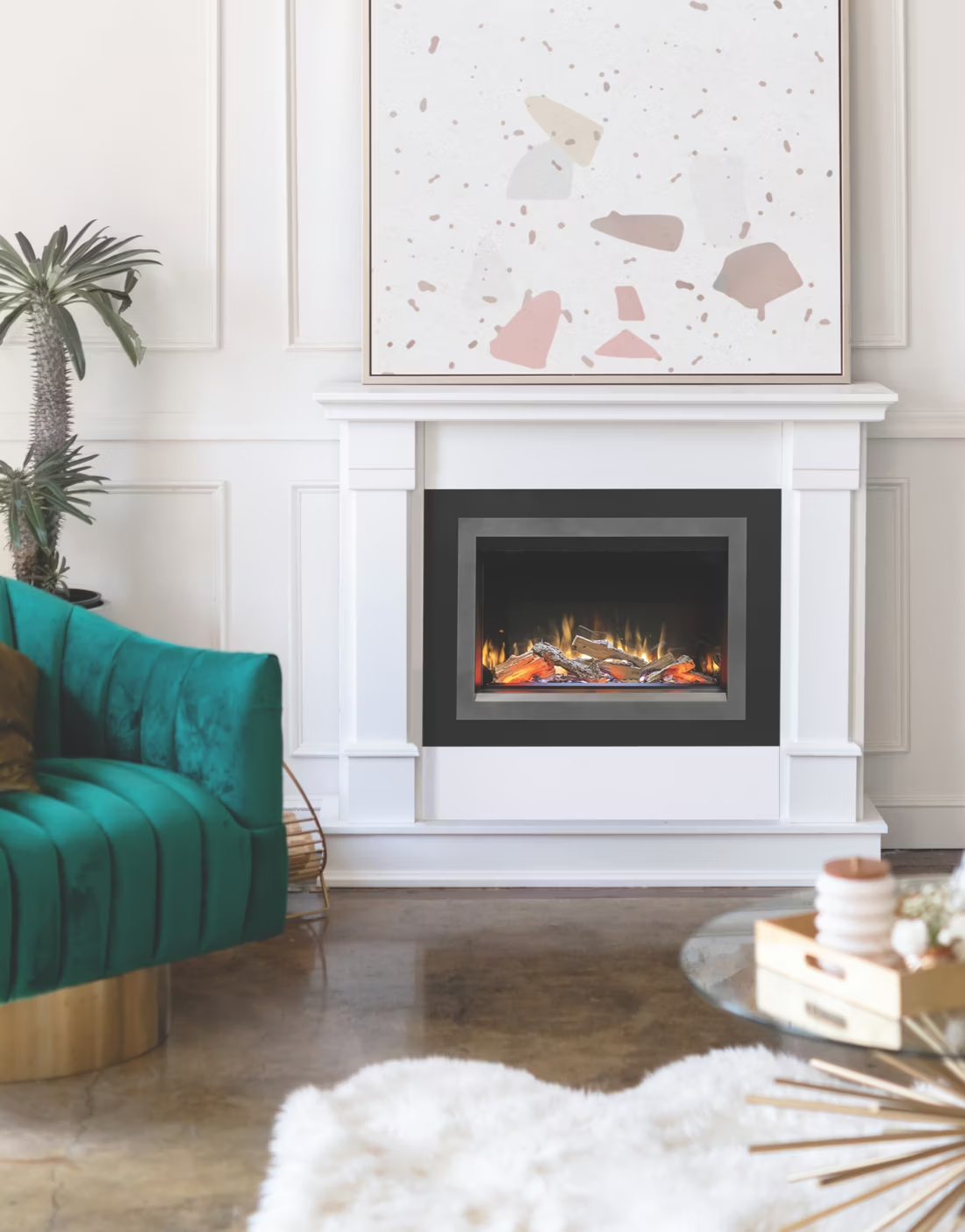
From Danville to Dardanelle to the foot of Mount Nebo, electric fireplaces give Yell County homes real supplemental warmth and a live-flame look with no gas line, no masonry, and no venting. Find the right unit and get matched with a trusted local dealer.
Every Project Starts From One of These Five Situations
Simple, safe heat for a mild climate.
Yell County sits in climate zone 3A, bordered by the Ozark-St. Francis and Ouachita National Forests, with the county seat in Danville and river towns like Dardanelle anchoring the population of roughly 9,500. Winters here are mild by national standards—average lows sit around 29°F and the county logs about 3,188 heating degree days a year, a fraction of what a place like Duluth or Fargo sees each winter. That means most Yell County homes don't need a wood-burning primary heat source to get through the season, and it's exactly the kind of climate where an electric fireplace can do real, useful work as supplemental heat rather than just serving as a decoration.
Most of Yell County is served by Petit Jean Electric Cooperative, headquartered right in Danville, which makes electric heat a familiar, well-supported option rather than a novelty. Unlike a wood stove or gas insert, an electric fireplace doesn't need a chimney, a gas line, or a hearth pad—it plugs in or ties into an existing circuit, which makes it a practical fit for additions, mobile homes, rental properties, and older farmhouses around Danville and Dardanelle that were never plumbed for gas. Plenty of local households still burn oak, hickory, and pine cut under Forest Service permits for the look and feel of a real fire—electric is the option for the room where that's not practical, or the backup heat that turns on the instant you flip a switch.
Three steps. No salesperson until you're ready.
Tell us about your project
Your zip code, your situation, and the fuel you're leaning toward—or let the answers point you to one.
See what's actually available
The brands dealers within 100 miles genuinely carry—real options, never a catalog mirage.
Get your dealer & Project Guide
A trusted local dealer, plus the free Project Guide & Parts List that names every component of the job.
Frequently Asked Questions
How much does an electric fireplace installation cost in Yell County?
A plug-in electric insert or freestanding stove typically runs $200 to $1,000 installed, since most units just need an existing standard outlet—no electrician required. A built-in wall unit or mantel-style electric fireplace that needs a dedicated 120V or 240V circuit runs higher, generally $600 to $2,500, once you factor in the electrician's time to run new wiring. Costs in Yell County track close to national averages for electric units since there's no venting, gas line, or chimney work involved—the labor is almost entirely electrical.
Do I need a permit to install an electric fireplace in Yell County?
A simple plug-in electric fireplace or insert generally doesn't require a permit since it's treated like any other appliance on an existing circuit. If you're installing a built-in unit that needs a new dedicated circuit or panel work, that electrical work typically does require a permit and should be pulled by a licensed electrician—check with the county before starting. Local dealers who install electric fireplaces regularly in and around Danville and Dardanelle can usually tell you on the spot whether your specific unit and home setup will trigger a permit requirement.
What's the difference between an electric insert, a built-in fireplace, and a freestanding stove?
An electric insert is sized to slide into an existing masonry fireplace opening or a mantel surround, giving an old wood-burning fireplace a working flame effect without touching the chimney. A built-in electric fireplace is designed to be framed into a wall during construction or a remodel, similar to how you'd frame in a gas unit. A freestanding electric stove sits on the floor and can be placed almost anywhere there's an outlet—no fireplace opening needed. For Yell County homes with an existing fireplace that's gone unused, an insert is usually the simplest upgrade; for additions or rooms with no fireplace at all, a built-in or freestanding unit is the better fit.
Will an electric fireplace actually heat my room, or is it just for looks?
Most electric fireplaces include a built-in heater rated around 4,600 to 5,000 BTUs, enough to noticeably warm a single room of 300 to 400 square feet—comparable to a good space heater, but with a realistic flame display. They won't heat an entire Yell County farmhouse the way a wood stove or gas insert can, but for a den, bonus room, or an addition off the back of a Dardanelle home, that output is plenty. Many models let you run the flame effect with the heater switched off, which is common for mild months when the visual is welcome but the extra warmth isn't needed.
Will my electric fireplace work during a power outage?
No—unlike a wood stove, an electric fireplace has no function without power, since both the flame effect and the heater rely entirely on electricity. Petit Jean Electric Cooperative, which serves most of Yell County, generally keeps outages short and infrequent given the county's mild climate zone 3A weather, but ice storms can still knock out power for stretches in winter. If backup heat during outages matters to your household, a wood stove burning local oak or hickory, or a battery-backed gas unit, is a better complement to an electric fireplace rather than a replacement for one.
What does it cost to run an electric fireplace day to day?
Running the heater on a typical electric fireplace draws around 1,500 watts, which costs roughly 15 to 20 cents per hour at standard Arkansas electric rates—a few dollars for an evening of use. Running just the flame effect without heat draws far less, often under 50 watts, so leaving the ambiance on costs pennies. That makes electric fireplaces cheap to operate for the supplemental heat and evening ambiance most Yell County households actually use them for, compared to running central heat harder to warm one room.
Is electric heat enough for a whole Yell County home, or just one room?
For most of the county, electric fireplaces are used as supplemental or zone heat rather than a whole-home solution—Yell County's winters, with lows averaging around 29°F and roughly 3,188 heating degree days a year, are mild enough that many homes already run electric heat pumps or central HVAC as primary heat. An electric fireplace in the main living area or a bonus room lets you turn down the thermostat and heat the room you're actually using, which is a common and cost-effective setup here rather than trying to replace whole-house heating with a single unit.
Where can I install an electric fireplace in my home?
Almost anywhere, which is the main advantage over wood or gas. Since there's no venting, no clearance-to-combustible chimney requirement, and no gas line, electric units work in bedrooms, home offices, additions, mobile homes, and rental properties throughout Yell County—situations where a wood stove or gas fireplace either isn't allowed or isn't practical. The only real constraint is having (or adding) the right electrical circuit for the unit you choose, which a local dealer can assess during a quick home visit.
Electric vs. wood—which makes more sense for my Yell County home?
Wood remains the traditional choice in this part of Arkansas—oak, hickory, and pine are all cut locally, and permits through the Ozark-St. Francis and Ouachita National Forests run $10 to $20 per cord during the May-to-October season, which keeps fuel costs low for households willing to do the work. Electric offers no cutting, hauling, ash cleanup, or chimney maintenance, plus the flexibility to install in rooms a wood stove never could. For a primary heat source with resilience during outages, wood still has the edge. For clean, low-maintenance supplemental heat in a den, addition, or rental unit, electric is usually the more practical choice—and a good number of Yell County households end up with both.
Can I put a TV above my fireplace?
Yes—with an asterisk. Fireplaces are hot and TVs don't like heat. Either put a mantel between them to deflect rising warmth, or choose a fireplace with heat-management technology that creates a cool zone on the wall above—the wall stays around 125 degrees, barely warm, while the room still gets full heat. If you like clean lines and don't want a mantel, heat management is the answer.
Do electric fireplaces actually produce heat?
Yes—most put out around 4,800–5,000 BTUs from a standard outlet, which comfortably warms a bedroom, office, or den as a comfort-zone heater. What they won't do is carry a whole house the way wood, gas, or pellet can. Think of electric as ambiance-first with honest supplemental heat: flames on with no heat in July, flames plus warmth in January.
Can a fireplace actually lower my heating bill?
Yes—by creating a comfort zone. A furnace heats every square foot of the house just to warm the one room you're in; a gas fireplace on low burns roughly a sixth of the gas a typical furnace does. Set the furnace around 55–60 degrees as a baseline, then heat the rooms your family actually uses. Families who heat this way commonly save $20–$60 a month.
Does a fireplace add value to my home?
On average, a fireplace adds back to the home about the same amount you spent installing it. Add the monthly savings from heating the rooms you actually use instead of the whole house—often hundreds of dollars a year—and the value case is strong before you even count what a fire does for how your family uses the room.
Find your electric fireplace in Yell County.
Tell us a bit about your home and we'll put together a free Project Guide & Parts List for your electric fireplace project—the right unit, the exact parts, and a trusted local dealer near Danville or Dardanelle to handle the install.
Find Your Fireplace →