
Keep Your Family Warm and Safe—No Matter What
Wood isn't the default heat source here, but on wooded acreage or as backup during an ice storm, the right stove still makes sense. Find out if it's right for your home and get matched with a trusted local dealer.
Every Project Starts From One of These Five Situations
Wood heat isn't the default here—but it isn't pointless either.
Wrightsville sits in Pulaski County's Gulf Coastal Plain, just south of Little Rock, at only 247 feet elevation with an average winter low around 31°F. With a mild, short winter heating season, the area sees roughly a third of the heating demand of a place like Minneapolis or Fargo—most winters bring a handful of frosty nights, not months of hard freeze. That's a big part of why wood stoves have never caught on here the way they have in colder climates: natural gas and electric heat pumps handle the mild season efficiently, and there's no strong economic case for cutting and stacking cordwood as a primary heat source.
That said, wood heat hasn't disappeared. Homeowners on wooded lots outside town—where oak, hickory, and pine grow thick—sometimes install a stove for backup heat, since Entergy Arkansas lines can go down for days during an ice storm, and a wood stove keeps working with no power at all. Others want a stove for a workshop, a hunting camp, or the simple pleasure of a real fire on a rare cold snap. If that's you, a correctly sized, EPA-certified stove installed by someone who knows local venting and clearance code still makes sense—it's just a smaller, more deliberate decision here than it would be farther north.
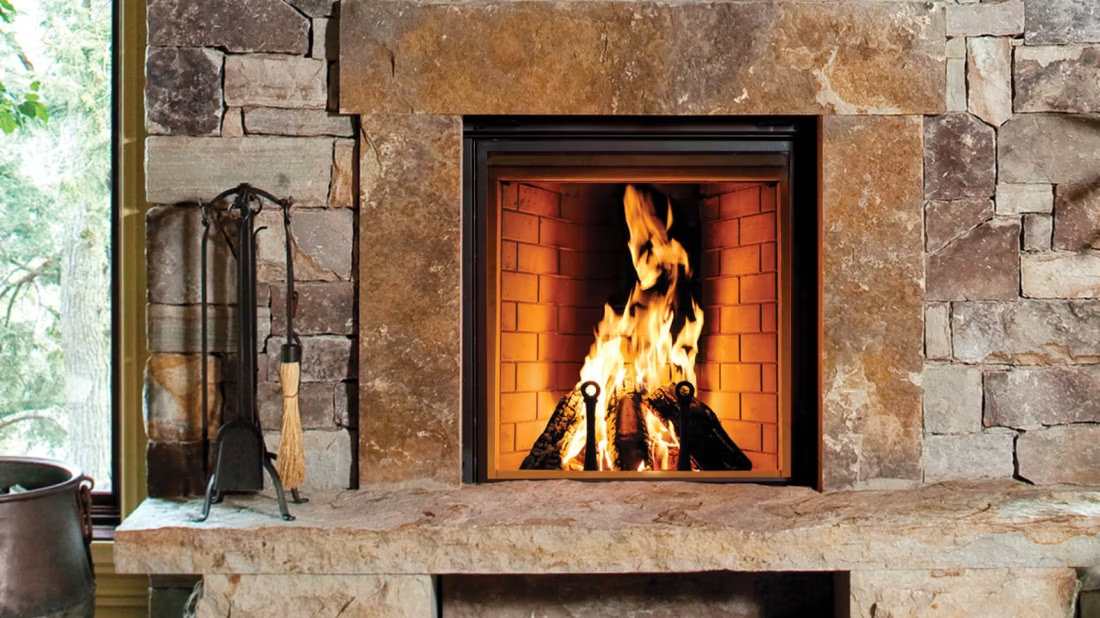
Firewood Cutting Permits Near Wrightsville
Three steps. No salesperson until you're ready.
Tell us about your project
Your zip code, your situation, and the fuel you're leaning toward—or let the answers point you to one.
See what's actually available
The brands dealers within 100 miles genuinely carry—real options, never a catalog mirage.
Get your dealer & Project Guide
A trusted local dealer, plus the free Project Guide & Parts List that names every component of the job.
Frequently Asked Questions
Does a wood stove make sense for a home in Wrightsville?
For most Wrightsville homes, no—mild winters and available natural gas or electric service make wood a poor fit as primary heat, and the local wood-burning market here is thin. But it's not a non-starter. Homes on wooded acreage with a ready supply of oak or hickory, or households that want backup heat for the ice storms that periodically knock out Entergy Arkansas power for days, are the two situations where a wood stove genuinely pays for itself. If neither applies to you, gas or electric will likely serve you better and cost less to install.
How much does a wood stove installation cost near Wrightsville?
Because wood heat is uncommon here, there isn't a large pool of local installers competing on price the way there might be in a wood-heavy market, so expect to budget on the higher end of typical: roughly $3,500 to $7,000 for a freestanding stove into an existing hearth or through a factory-built chimney chase, and up to $8,500–$9,500 if you're adding a full Class A chimney system to a home that's never had one. Get a firm quote from whichever dealer you're matched with rather than relying on a national average—the honest answer depends heavily on whether your home already has a place for the stove to vent.
Why isn't wood heat more common in Wrightsville?
The math doesn't favor it. With an average winter low of 31°F and a heating season that's short and mild, Wrightsville's heating season is short and mild compared to colder parts of the country—Entergy Arkansas electric rates run about 13 cents per kWh, and natural gas is widely available in the area, so most homeowners get comfortable, low-maintenance heat without hauling and stacking cordwood. Humidity here also makes seasoning firewood properly a bigger chore than it is in drier climates. Wood heat still shows up on rural properties and as storm backup, just not as the everyday choice.
What wood species are available for burning near Wrightsville?
Oak and hickory are the two workhorse hardwoods in this part of Pulaski County—both are dense, split cleanly once seasoned, and burn long and hot, which matters if you're using a stove for real backup heat during an outage. Pine is also common locally and burns hotter and faster with more resin, so it's better suited to kindling or shoulder-season fires than an all-night burn. Whatever you're cutting or buying, plan on seasoning oak and hickory a full 12 months given the region's humidity—burning it green produces excess creosote.
Do I need a permit to cut my own firewood near Wrightsville?
If you're cutting on national forest land rather than private property, yes. The Ouachita National Forest and the Ozark-St. Francis National Forests both issue personal-use firewood permits, typically running $10 to $20 per cord, with cutting allowed May through October. Neither forest is right on top of Wrightsville, so factor in drive time, but permits are inexpensive and straightforward to obtain through the district office. If you own wooded acreage yourself, no permit is needed—just your own oak or hickory.
Is a wood stove useful during a power outage or ice storm in Wrightsville?
Yes, and this is genuinely the strongest case for wood heat in this area. Central Arkansas ice storms have knocked out Entergy Arkansas service for days at a time in past winters, and a wood stove is one of the few heating appliances that keeps working with zero electricity—no igniter, no blower, no thermostat required. If backup heat during outages is your main reason for considering a stove, look for a simple, non-electronic model rather than one with a built-in blower you'd lose in a blackout, or make sure any blower has a manual bypass.
What size wood stove do I need?
Given Wrightsville's mild heating season, most installs here are sized as supplemental or backup heat rather than whole-home primary heat—a small to mid-size stove (rated for 1,000 to 1,500 square feet) is plenty for a single living area or a hunting cabin. Oversizing is the more common mistake in mild climates like this one: a stove sized for northern winters will run too hot too often here, forcing you to choke the air down and build up creosote. A local dealer can size it correctly based on your actual square footage and insulation.
Wood vs. gas vs. electric—what's the right call for Wrightsville?
For nearly all Wrightsville homes, gas or electric is the more practical everyday choice—both are widely available, inexpensive to run given the area's short heating season, and require no fuel storage or hauling. Wood only makes sense in specific situations: a rural property with its own timber, a desire for heat that works without power during an ice storm, or a workshop or camp where running gas or electric service isn't practical. If none of those apply, start with a gas or electric fireplace page instead—you'll likely find better selection and lower installed cost.
Where can I find a dealer who installs wood stoves near Wrightsville?
Because wood heat is a niche product in this market, dealers who stock and install wood stoves are more concentrated toward Little Rock and North Little Rock than in Wrightsville itself. That's exactly the gap Find My Fireplace exists to close—rather than guessing which big-box store might special-order a stove, tell us about your property and we'll match you with a trusted dealer who actually installs wood-burning appliances in Pulaski County, handles the permitting, and sizes the venting correctly for your home.
Why won't my new wood stove get going like my old one?
New wood stoves are 70%+ efficient, so far less heat goes up the flue—which also means less draft to get a fire established. The rule: build a genuinely hot fire for about 45 minutes before you choke it down. Skip that and you get smoke in the room, creosote in the chimney, and a fire that never takes off. Most performance complaints trace straight back to this.
What's the difference between an insert and a zero-clearance fireplace?
An insert is a fireplace that slides into a pre-existing wood-burning fireplace—if you don't have one, there's nothing to insert it into. A zero-clearance fireplace is built into a framed wall, which makes it the answer for remodels and new construction. Simple test: existing masonry fireplace means insert; blank or framed wall means zero-clearance.
Does a fireplace add value to my home?
On average, a fireplace adds back to the home about the same amount you spent installing it. Add the monthly savings from heating the rooms you actually use instead of the whole house—often hundreds of dollars a year—and the value case is strong before you even count what a fire does for how your family uses the room.
Can I install a fireplace myself?
If you're putting a fire in your house on purpose, it's best to work with an expert. Unless you're genuinely experienced in framing, gas line, vent pipe, and the national code on clearances to combustibles, have a professional do it—and ideally the same company that sells you the fireplace, so warranty, service, and liability all live under one roof.
Nearby Dealers
Hearth shops serving Wrightsville and the surrounding area. Every listing shows whether it is a WhyFire partner, a dealer we have verified as authorized for the brands we recommend, or a local business carrying hearth products. No manufacturer pays for placement. How we verify dealers →
Abc Block And Brick
G&S Insulating And Fireplace
Royal Overhead Door Co Inc
Acme Brick Company
Congo Stove Works
Find your wood stove option near Wrightsville.
Tell us about your property and how you'd use a wood stove—backup heat, a wooded lot, or a camp—and we'll send your free Project Guide & Parts List with the exact parts, including the vent kit, and a trusted local dealer who can install it.
Find Your Fireplace →