
Find the Right Fireplace for Pulaski County's Mild Winters.
Fireplace resources for Little Rock, North Little Rock, Jacksonville, Sherwood, Maumelle, and every community in Pulaski County. Units exist here too—just know they're the exception, not the rule—and we'll point you to the fuel that actually fits your home before connecting you with a trusted local dealer.
Every Project Starts From One of These Five Situations
Mixed-humid heating in the heart of Arkansas.
Pulaski County sits in Arkansas's mixed-humid climate zone (IECC 3A), where winters are short and mild by national standards—the average winter low hovers around 31°F, and the county's overall winter heating load is less than half of what a place like Minneapolis logs in a typical winter. Little Rock, the state capital and county seat, anchors a metro of more than 619,000 people spread across North Little Rock, Jacksonville, Sherwood, Maumelle, and the rural edges toward Alexander and Wrightsville. The nearby Ouachita National Forest and Ozark-St. Francis National Forests issue firewood-cutting permits, and oak, hickory, and pine are the species most homeowners burn—but with heating loads this light, wood and pellet stoves are genuinely rare as primary heat sources in this county. Gas and electric fireplaces do the real work in most Pulaski County homes.
What you'll find on this hub: hearth retailers, service technicians, and fuel suppliers serving every community in the county—from downtown Little Rock across the river to North Little Rock, south to Jacksonville and Sherwood, west to Maumelle, and out to smaller unincorporated communities like Wrightsville and Alexander. Because gas and electric are the fuels that actually make sense for this climate, most of what's below leans that direction—but if you're one of the homeowners after a wood-burning or pellet unit for ambiance, a fire pit setup, or a cabin elsewhere in the Ouachitas, we'll be straight with you about what's realistically available locally.
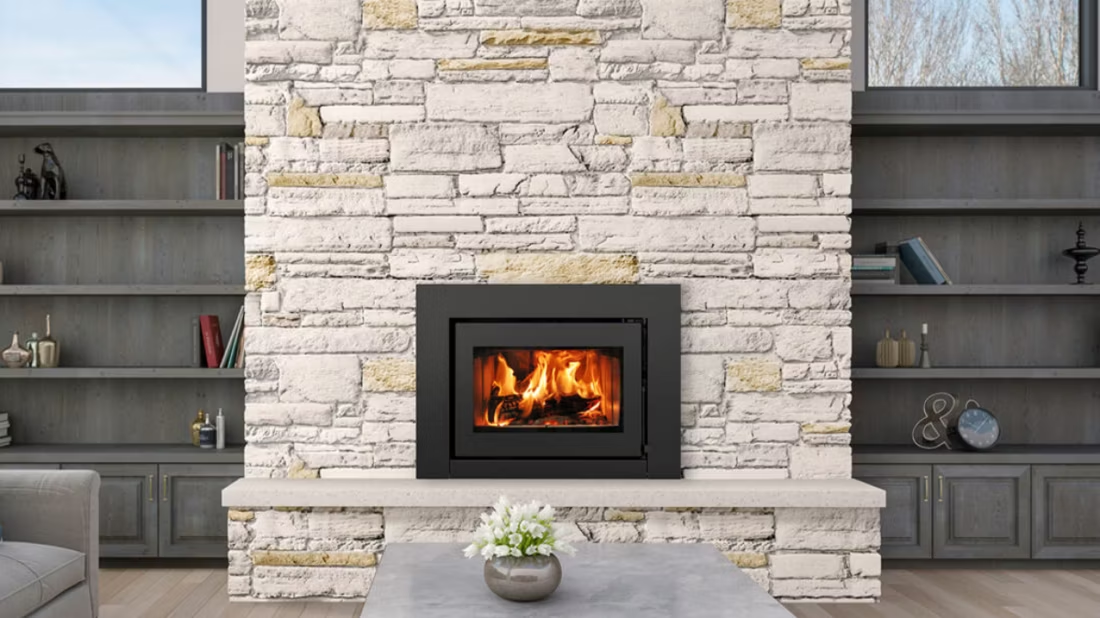
Four fuels. One honest answer for Pulaski County.
Three steps. No salesperson until you're ready.
Tell us about your project
Your zip code, your situation, and the fuel you're leaning toward—or let the answers point you to one.
See what's actually available
The brands dealers within 100 miles genuinely carry—real options, never a catalog mirage.
Get your dealer & Project Guide
A trusted local dealer, plus the free Project Guide & Parts List that names every component of the job.
Frequently Asked Questions
Which fuel works best in Pulaski County?
For most Pulaski County homes, it's gas or electric. With winter lows averaging around 31°F and an overall winter heating load less than half that of a place like Minneapolis, this county doesn't put the heating demand on a home that would justify a wood stove or pellet stove as a primary heat source—the kind of appliance that earns its keep in a place like Fargo or Duluth just doesn't pencil out the same way here. Gas fireplaces and inserts (natural gas or propane) are the popular choice for real heat output with push-button convenience. Electric fireplaces are widely used for supplemental warmth, ambiance in bedrooms and dens, and installations where venting isn't practical. Wood-burning units still exist—mostly for people who want the look and feel of a live fire, or who have a cabin elsewhere in the Ouachitas—but they're the exception here, not the rule.
Do I need a permit to install a fireplace in Pulaski County?
Yes, in most cases. Gas fireplace, insert, and stove installations require a building permit and, for the gas line itself, a licensed gas-fitter plus a separate gas permit—issued through whichever city you're in (Little Rock, North Little Rock, Jacksonville, Sherwood, Maumelle) or through the county for unincorporated areas like Wrightsville or Alexander. Electric fireplaces usually skip the permit process unless you're hardwiring a built-in unit into a new circuit, which then needs an electrical permit. If you're one of the few homeowners installing a wood stove or insert, expect the same building-permit process plus a chimney or venting inspection. Most local retailers handle the paperwork as part of the installation.
Are there air quality restrictions on burning in Pulaski County?
No—Pulaski County isn't a non-attainment area and doesn't have wood-smoke curtailment days or seasonal burn bans the way some western counties do. That's part of why wood heat never became a dominant fuel here in the first place: without trapped-inversion smoke problems like you'd see in a mountain basin, there was never the same regulatory pressure—but there was also never the cold-weather demand to drive wood adoption at scale. If you do run a wood-burning fireplace or insert, standard good practice still applies: burn seasoned oak or hickory rather than green wood, and keep the flue swept.
Can I find a local retailer that handles wood or pellet units too?
A few can, but don't expect the same selection you'd see in a colder state. Most Pulaski County hearth retailers are built around gas and electric lines—that's where the local demand and factory support are. If you specifically want a wood-burning insert or a pellet stove, plan on a shorter list of dealers, likely special-order lead times, and possibly a wider service radius for annual sweeping or cleaning. It's worth calling ahead before you visit a showroom expecting a wall of wood stoves—most Little Rock and North Little Rock retailers keep gas and electric units on the floor and quote wood or pellet appliances by request.
How does service work outside the Little Rock metro core?
Pulaski County is mostly urban and suburban, but it does stretch into rural territory—Wrightsville, Alexander, and the unincorporated county south and west of Little Rock. Most gas service technicians and electricians are based in Little Rock or North Little Rock and cover the whole county without much of a travel surcharge, since nothing in Pulaski County sits more than about 30 minutes from the metro core. If you're near the county line toward the Ouachita foothills, it's still worth confirming service radius before you book, but travel fees here are rare compared to counties with wider rural spread.
What's the typical cost range for fireplace installation across fuel types in Pulaski County?
Gas fireplace, insert, or stove: roughly $3,500–$9,000 depending on whether you're running new gas line or converting an existing wood-burning fireplace to gas logs or a gas insert. Electric fireplace: $200–$2,500 for the unit itself, plus $300–$1,000 in labor for anything beyond a plug-and-play wall unit—built-ins with new circuits run toward the higher end. Wood stove or insert: $4,000–$8,000 when you can find a dealer to install one, though pricing runs less standardized here given how few installers specialize in it. Pellet stove or insert: similarly uncommon, typically $4,000–$7,000 when available. For exact numbers tied to your project, the county + fuel pages above break down retailer pricing in more detail.
Does a fireplace add value to my home?
On average, a fireplace adds back to the home about the same amount you spent installing it. Add the monthly savings from heating the rooms you actually use instead of the whole house—often hundreds of dollars a year—and the value case is strong before you even count what a fire does for how your family uses the room.
What is an in-home preview and do I need one?
It's a visit where a hearth professional measures your space, confirms the model you picked actually works in your home, and walks the specs—framing, gas line, venting, finish work—before anything is ordered. Some details you just can't know until you see the house. Never make a down payment without one; it's the single most-skipped step that burns buyers.
How much should I budget for a fireplace?
For an average home—covering the fireplace, the vent pipe, and basic installation—a budget between $3,900 and $5,500 gives you a lot of options across wood, gas, and pellet. By the time you add finish work, gas line, and electrical, the average complete installation lands between $5,000 and $12,000 all-in. In a remodel or new build, a good rule is to put about 2.5% of the total project cost toward the fireplace.
What are the biggest mistakes people make buying a fireplace?
Five come up constantly: budgeting for the unit but not the full job (vent, gas line, electrical, finish work); drowning in options instead of starting from style and fuel; buying without an in-home preview; handing installation to a handyman instead of a pro; and giving up out of sheer indecision. Every one is avoidable with a clear plan—step one, step two, step three.
Stove and Fireplace Dealers in Pulaski County
Listings include WhyFire partner dealers, dealers we have verified as authorized for the brands we recommend, and established local businesses that carry hearth products. Every listing shows which one it is. The ones marked Preferred run on WhyFire's software, so they can show you real pricing and book your appointment right here. No manufacturer pays for placement. How we verify dealers →
Acme Brick Company
G&s Insulating And Fireplace
Abc Block And Brick
Royal Overhead Door Co Inc
Congo Stove Works
Find your fireplace in Pulaski County.
Tell us about your home and we'll match you with a trusted local Pulaski County dealer and send your free Project Guide & Parts List—the exact parts, venting, and recommended installer for your project, at no cost.
Find Your Fireplace →