
Keep Your Family Warm and Safe—No Matter What
With a mild, short heating season and winter lows that average around freezing, most Piney homes use wood as supplemental warmth and ambiance rather than round-the-clock heat. Find the right stove or insert and connect with a trusted local dealer.
Every Project Starts From One of These Five Situations
Supplemental heat, done right, for a mild climate.
Piney sits in Garland County at about 512 feet elevation, just outside Hot Springs, in a climate zone (3A) that's a world away from the deep-freeze winters of places like Duluth, MN. Winter lows here average around 32°F, and the area logs a comparatively short, mild heating season—a fraction of what northern wood-burning regions see. That changes how most Piney homeowners think about wood heat: less a survival necessity, more a way to cut propane or electric bills on cold snaps, add zone heat to a den or shop, and enjoy the kind of real fire that central HVAC can't replicate.
Garland County borders the Ouachita National Forest, with the Ozark-St. Francis National Forests also within reach, and both offices sell personal-use cutting permits for $10 to $20 per cord during the May-through-October season. Local woodlots run heavy to oak and hickory—dense, high-BTU hardwoods that season well and burn long—with pine common as a faster-burning supplement or kindling. There are no air quality non-attainment concerns or winter inversion advisories in this part of Arkansas, so burning restrictions that limit wood heat in some Western cities simply aren't a factor here.
Firewood Cutting Permits Near Piney
Three steps. No salesperson until you're ready.
Tell us about your project
Your zip code, your situation, and the fuel you're leaning toward—or let the answers point you to one.
See what's actually available
The brands dealers within 100 miles genuinely carry—real options, never a catalog mirage.
Get your dealer & Project Guide
A trusted local dealer, plus the free Project Guide & Parts List that names every component of the job.
Frequently Asked Questions
How much does a wood stove installation cost in Piney?
For a mild climate like Piney's, most wood stove installations run $3,500 to $7,500, depending on the unit and whether you're venting through an existing masonry chimney or running new Class A pipe. Installing an insert into a fireplace you already have sits on the lower end; a freestanding stove in a room with no existing flue—which needs a full chimney chase built—pushes toward the higher end. Because this is supplemental heat for most homes here rather than a primary furnace replacement, homeowners often choose a smaller, less expensive unit than you'd see in a colder climate.
What size wood stove do I need for a home in Piney?
Because Piney rarely sees sustained hard freezes, most homeowners here are heating a single room, a den, or a workshop rather than trying to carry a whole house through winter—very different sizing math than a place like Fargo, ND, where a stove has to run 24/7 for months. A small stove (rated for 800-1,200 sq ft) is plenty for supplemental heat in most local homes. If you're aiming to offset a propane or electric bill across a larger open floor plan, a medium stove makes more sense. A local dealer will size it based on your actual layout and insulation rather than a generic chart.
Where can I find a certified wood stove installer near Piney?
Look for NFI (National Fireplace Institute) certification or CSIA (Chimney Safety Institute of America) credentials—these indicate real training in clearances, venting, and code compliance for solid-fuel appliances. In the Hot Springs/Garland County area, most hearth retailers that sell stoves also employ their own certified installers, which keeps warranty coverage and inspection sign-off under one roof. Skip general handyman installs for a wood-burning unit; improper clearances and flue sizing are the most common cause of chimney fires nationally.
Should I get a wood stove or a wood insert for my Piney home?
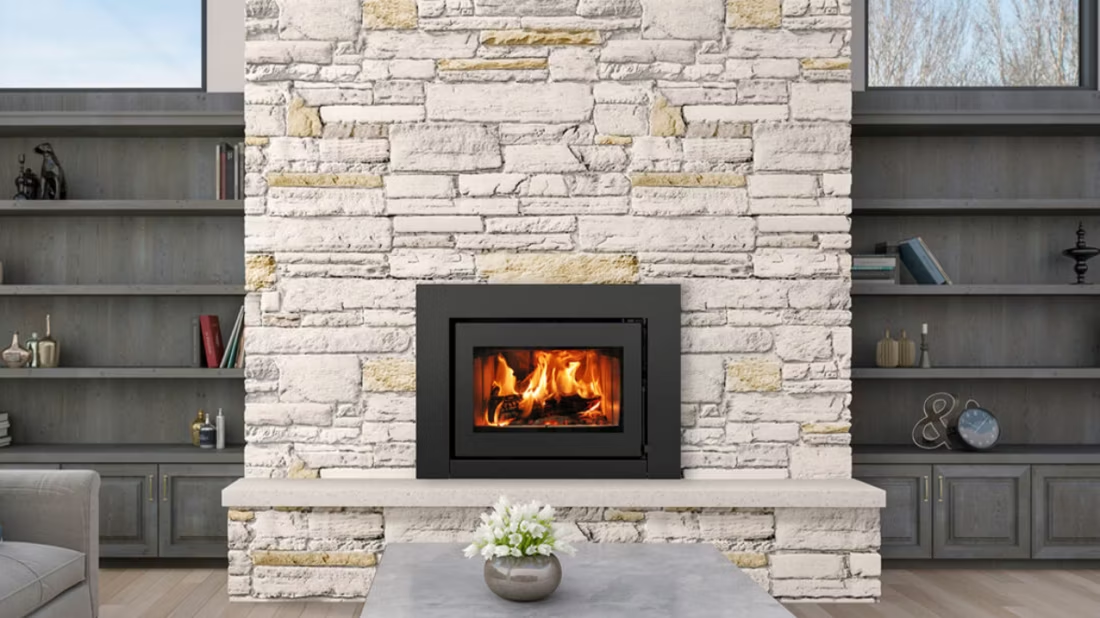
A freestanding wood stove sits on a hearth pad and can go almost anywhere with the right clearances—a good fit for a den, sunroom, or garage that has no existing fireplace. A wood insert slides into an existing masonry fireplace and uses your current chimney (relined with stainless steel), turning an open, inefficient hearth into real heat output. Given how many older homes around Garland County already have a wood-burning fireplace, an insert is often the simpler and less expensive path for a supplemental-heat upgrade.
Do I need a permit to install a wood stove in Piney?
Yes—a building permit is standard for new solid-fuel appliance installations in Garland County, and any new stove sold today must meet the EPA's 2020 NSPS emissions standard regardless of state. Most local dealers handle the permit application as part of the installation, so you're not filing paperwork yourself. Unlike some Western states, Arkansas doesn't impose winter burn curtailment periods here, since Garland County has no air quality non-attainment designation.
What's the best wood stove for a mild climate like Piney's?
You don't need a 20-plus-hour catalytic Blaze King built for sub-zero Montana nights here—a mid-size non-catalytic stove from a brand like Pacific Energy or Lopi is usually the right fit for supplemental heat in a Piney home. These stoves are easier to operate, reach temperature quickly for occasional evening use, and burn oak and hickory cleanly without needing to be run at a low, smoldering setting for hours at a time, which matters since Piney's winters rarely demand an all-night burn.
How often should my chimney be inspected in Piney?
The CSIA recommends an annual inspection for any wood-burning appliance, and that holds even for lighter, supplemental-use stoves common in Piney. Because most local stoves aren't run daily all winter the way they would be farther north, creosote buildup is often slower here—but an annual check before burning season (typically October, ahead of the first cold snap) still catches cracked liners, animal nests, or clearance issues before they become a hazard.
Where can I get firewood in the Piney area?
Local supply runs heavy to oak and hickory, with pine as a common secondary species—a good mix for both fast-starting kindling and long, hot coal beds. Several regional sellers around Garland County deliver seasoned cords, typically running $180 to $275 depending on species mix and how well-seasoned the wood is. For self-cutting, the Ouachita National Forest and Ozark-St. Francis National Forests both sell personal-use permits for $10 to $20 per cord during the May-to-October cutting season—plan ahead, since wood cut in summer needs several months to season before it's ready to burn well.
Wood stove vs. pellet stove—which makes more sense in Piney?
Wood stoves burn cordwood you can source locally or cut yourself under an Ouachita National Forest permit, and they keep working during a power outage—useful during the ice storms that occasionally hit central Arkansas and knock out Entergy Arkansas service for days. Pellet stoves, using bagged fuel from regional brands like Lignetics, are more convenient to load and produce less mess, but the auger and blower need electricity, so they go dark in an outage. For a home that mainly wants backup heat and already has access to oak or hickory, wood tends to be the more practical fit; for a home prioritizing hands-off convenience with reliable grid power, pellet is worth a look.
Why is a fireplace insert so efficient?
An insert does two things: it seals the chimney completely, so you stop losing air you already paid to heat, and it radiates warmth into the room through the firebox and glass. Most add a heat-exchange fan that pulls cool room air underneath, wraps it around the hot firebox, and pushes it back out warm. Your home is more efficient before you've even lit the first fire.
What does it take to replace an existing fireplace?
Fireplaces are like icebergs—bigger behind the wall than in front of it. Replacement means removing the surrounding tile or stone (the finish material laps onto the fireplace face), pulling the old unit, setting the new one in the same enclosure, and re-finishing the wall. A hearth professional can determine what's behind your wall without demolition during an in-home preview.
Does a fireplace add value to my home?
On average, a fireplace adds back to the home about the same amount you spent installing it. Add the monthly savings from heating the rooms you actually use instead of the whole house—often hundreds of dollars a year—and the value case is strong before you even count what a fire does for how your family uses the room.
Can a fireplace actually lower my heating bill?
Yes—by creating a comfort zone. A furnace heats every square foot of the house just to warm the one room you're in; a gas fireplace on low burns roughly a sixth of the gas a typical furnace does. Set the furnace around 55–60 degrees as a baseline, then heat the rooms your family actually uses. Families who heat this way commonly save $20–$60 a month.
Nearby Dealers
Hearth shops serving Piney and the surrounding area. Every listing shows whether it is a WhyFire partner, a dealer we have verified as authorized for the brands we recommend, or a local business carrying hearth products. No manufacturer pays for placement. How we verify dealers →
Kerry Blue Holdings
Abc Block And Brick
Reliable Propane Services
Cleansweep Chimney Service
Find your wood fireplace in Piney.
Tell us about your home and heating goals, and we'll match you with a trusted local dealer and send over a free Project Guide & Parts List—the exact stove or insert, venting, and hearth components sized for your Piney home.
Find Your Fireplace →