
Add Real Warmth to Any Room in Piney—No Venting Required.
With winters this mild around Garland County, an electric fireplace can heat a room in minutes—no chimney, no gas line, no permit hassle. Find the right unit and a trusted local installer.
Every Project Starts From One of These Five Situations
Mild winters make electric an easy fit.
Piney sits in climate zone 3A at just 512 feet elevation, with an average winter low around 32°F and an overall winter heating need that's mild and short—just a fraction of what a place like Duluth, MN or Bozeman, MT racks up in a single hard winter. That short, mild heating season is exactly where electric fireplaces make the most sense: you don't need a stove holding a coal bed overnight or a furnace running around the clock, you need a fast, controllable heat source for the handful of genuinely cold nights and the many chilly-but-not-freezing evenings in between.
Entergy Arkansas serves the area at a residential rate of about 12.97 cents per kWh, which keeps day-to-day operating costs reasonable for zone heating a den, sunroom, or bonus room without touching the central thermostat. Because electric units plug into a standard outlet or a simple dedicated circuit, there's no masonry work, no Garland County gas-line inspection, and no annual chimney sweep—which is part of why they've become popular in rental properties, lake houses, and Hot Springs Village-area homes where a clean, low-maintenance install matters more than raw BTU output.
Three steps. No salesperson until you're ready.
Tell us about your project
Your zip code, your situation, and the fuel you're leaning toward—or let the answers point you to one.
See what's actually available
The brands dealers within 100 miles genuinely carry—real options, never a catalog mirage.
Get your dealer & Project Guide
A trusted local dealer, plus the free Project Guide & Parts List that names every component of the job.
Frequently Asked Questions
How much does it cost to install an electric fireplace in Piney?
Most electric fireplaces in this price range run $300 to $1,800 for the unit itself, and a freestanding or recessed model that plugs into an existing 120V outlet needs no additional installation cost at all. If you want a built-in look—framed into a wall or set into cabinetry—expect $800 to $2,500 for carpentry and finish work. Larger 240V wall units draw enough power that they typically need a dedicated circuit, which runs $150 to $400 for a licensed electrician. Compare that to a wood or gas install in this area, which routinely runs $4,000 or more once venting and framing are involved.
Do I need a permit to install an electric fireplace in Garland County?
For a plug-in unit that uses a standard outlet, no permit is needed—it's treated like any other appliance. If you're adding a dedicated 240V circuit for a larger wall-mounted or built-in unit, that electrical work should go through a licensed electrician, and depending on the scope of the job Garland County may require an electrical permit for the circuit itself. There's no building permit, chimney inspection, or gas-line sign-off to worry about, which is one of the main reasons homeowners in Piney choose electric for a quick room addition or converted garage.
Should I get an electric fireplace or just burn wood?
Plenty of homes around Piney still burn wood—oak, hickory, and pine are all common locally, and cutting permits through the Ouachita National Forest run just $10 to $20 per cord during the May-to-October season. Wood also keeps working when the power doesn't, which matters if you've been through an ice storm outage. Electric fireplaces can't do that; they're entirely dependent on Entergy's grid staying up. What electric wins on is convenience and mild-climate fit—instant on/off heat with none of the wood handling, ash cleanup, or chimney maintenance. Many households here end up with both: a wood stove or insert for backup and ambiance, electric for the spare bedroom or den where daily convenience matters most.
How much does it cost to actually run an electric fireplace here?
Most electric fireplaces draw about 1,500 watts on their highest heat setting. At Entergy Arkansas's residential rate of roughly 12.97 cents per kWh, that works out to about 19 cents an hour of full-heat operation—closer to a few cents an hour on ambiance-only flame mode with the heater off. For zone-heating a single room through Piney's relatively short, mild heating season, that's typically cheaper month to month than running a window unit's heat strip or propane space heater for the same room.
Can an electric fireplace actually heat a room in Piney, or is it just for looks?
A quality 1,500-watt unit will genuinely heat a small-to-medium room—roughly 200 to 400 square feet—even on Piney's coldest nights, since winter lows here average around 32°F rather than the sub-zero temperatures that push wood and gas stoves to work harder. Electric fireplaces aren't designed to replace whole-home HVAC, but as supplemental heat for a specific room, or as the primary heat source for a converted sunroom or garage, they're well matched to this climate. For anything larger than one room, talk to a local dealer about a properly sized central heat pump instead.
What's the difference between an electric insert, a wall-mount unit, and a freestanding stove?
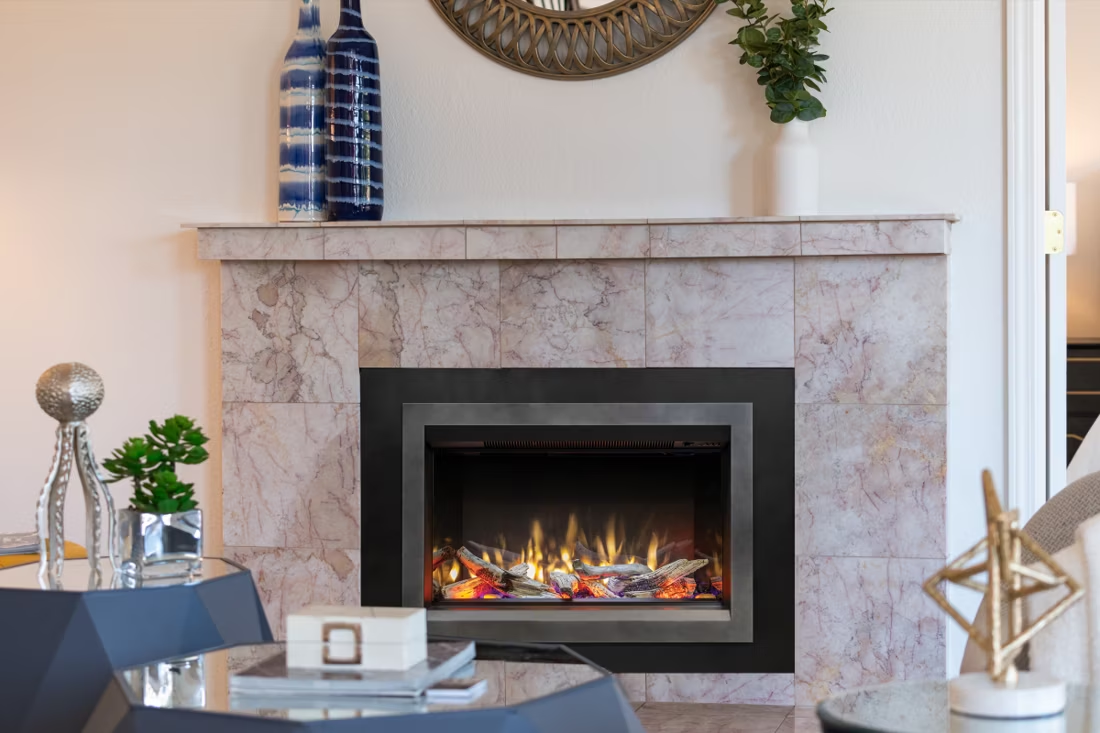
An electric insert is built to slide into an existing masonry fireplace opening, giving you flame effect and heat from a fireplace you already have without touching the chimney. A wall-mount unit hangs flat against the wall like a piece of art or a TV—popular in newer builds or rooms without an existing fireplace. A freestanding electric stove sits on the floor and mimics the look of a wood stove, which some Piney homeowners choose specifically to match a farmhouse or cabin aesthetic. All three plug in or wire into a standard circuit; the choice comes down to the room and the look you want.
Can I put an electric insert into my existing wood-burning fireplace?
Yes, and it's one of the most common electric conversions in this area. An electric log insert or panel insert slides into the existing firebox opening—no chimney liner, no gas line, and in most cases no permit. It's a popular option for older Garland County homes with a masonry fireplace that's rarely used for a real wood fire anymore, or for homeowners who want the look of a fireplace without dealing with ash, creosote, or an annual chimney sweep.
Are electric fireplaces safe for kids, pets, or a Hot Springs Village rental property?
Generally yes—electric units use an LED flame effect rather than a real fire, so the glass front stays cool to the touch on most models, there's no open flame, no glowing embers, and no carbon monoxide to worry about since nothing is being combusted. That makes them a common choice for rental homes and HOA-restricted communities in the area where a real wood or gas appliance either isn't allowed or isn't practical. Look for units listed as cool-touch if child or pet safety is a priority—not every model includes that feature.
Electric vs. gas—which makes more sense for my Piney home?
Gas fireplaces put out more real heat and can run during a power outage with the right ignition system, but they require either a natural gas line or a propane tank, plus venting work that typically runs $4,000 or more installed. Electric skips all of that—no fuel line, no venting, no gas permit—for a fraction of the install cost, but it depends entirely on grid power and puts out less heat overall. In a mild climate like Piney's, where the goal is often ambiance plus light supplemental warmth rather than serious whole-room heating on brutal cold nights, electric is frequently the more practical and far less expensive choice.
Can I put a TV above my fireplace?
Yes—with an asterisk. Fireplaces are hot and TVs don't like heat. Either put a mantel between them to deflect rising warmth, or choose a fireplace with heat-management technology that creates a cool zone on the wall above—the wall stays around 125 degrees, barely warm, while the room still gets full heat. If you like clean lines and don't want a mantel, heat management is the answer.
Does an electric fireplace need a vent or chimney?
No—that's its superpower. An electric fireplace needs a wall and an outlet, period. No vent pipe, no gas line, no clearances to design around, which is why it works in bedrooms, offices, apartments, and walls where venting a gas or wood unit would be impractical or impossible. Installation is typically the simplest and least expensive of any fireplace type.
What is an in-home preview and do I need one?
It's a visit where a hearth professional measures your space, confirms the model you picked actually works in your home, and walks the specs—framing, gas line, venting, finish work—before anything is ordered. Some details you just can't know until you see the house. Never make a down payment without one; it's the single most-skipped step that burns buyers.
Can I install a fireplace myself?
If you're putting a fire in your house on purpose, it's best to work with an expert. Unless you're genuinely experienced in framing, gas line, vent pipe, and the national code on clearances to combustibles, have a professional do it—and ideally the same company that sells you the fireplace, so warranty, service, and liability all live under one roof.
Nearby Dealers
Hearth shops serving Piney and the surrounding area. Every listing shows whether it is a WhyFire partner, a dealer we have verified as authorized for the brands we recommend, or a local business carrying hearth products. No manufacturer pays for placement. How we verify dealers →
Kerry Blue Holdings
Abc Block And Brick
Reliable Propane Services
Cleansweep Chimney Service
Electric Service in Piney
An electric fireplace's heater draws about 1,500 watts—pennies per hour at local rates.
Entergy Arkansas LLC
Find your electric fireplace in Piney.
Tell us a bit about your room and how you want to use it, and we'll match you with the right electric fireplace, insert, or wall unit—plus a trusted local dealer to install it.
Find Your Fireplace →