
Steady heat for Ozark winters, without the wood pile.
A hopper of pellets and a thermostat setting instead of splitting oak and hickory by hand. Find the right pellet stove or insert for your Madison County home and get matched with a trusted local dealer.
Every Project Starts From One of These Five Situations
Convenience heat for a rural Ozark county.
Madison County sits in the Arkansas Ozarks around Huntsville, bordered by the Ozark-St. Francis National Forests and covered in oak, hickory, and pine timber. Winters here are milder than the northern cold-climate counties—average lows around 30°F and a moderate heating season puts the county in climate zone 4A, nowhere near the brutal stretches you'd see in a place like Duluth MN or Bismarck ND, but still cold enough for four or five solid months of heating need. A lot of local households already burn wood because the timber is right outside the door, but that means felling, splitting, hauling, and stacking—work that gets old fast for anyone without the time or the back for it.
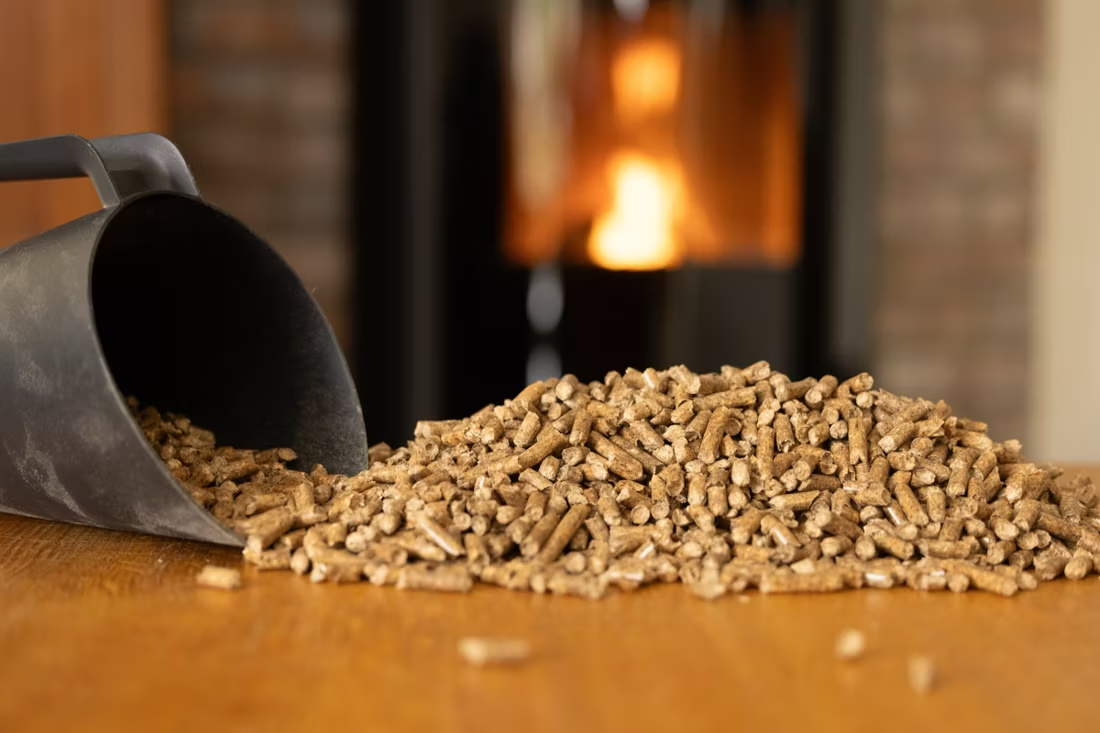
Pellet stoves solve that trade-off: real wood-derived heat, a burn that runs for 12-24 hours on a hopper load, and none of the chainsaw work. Regional producers including Lignetics and Indeck Energy Services keep the Ozark region reasonably well supplied with bagged pellets, so you're not paying to have fuel trucked in from across the country. Madison County also carries no air quality non-attainment designations or winter burn-ban restrictions, so there's no seasonal curtailment to plan around like homeowners face in some western basins. The one thing worth planning for: pellet stoves need electricity to run the auger and blower, and rural Madison County sees its share of ice-storm outages—so a battery backup or a small generator is worth budgeting alongside the stove itself.
Three steps. No salesperson until you're ready.
Tell us about your project
Your zip code, your situation, and the fuel you're leaning toward—or let the answers point you to one.
See what's actually available
The brands dealers within 100 miles genuinely carry—real options, never a catalog mirage.
Get your dealer & Project Guide
A trusted local dealer, plus the free Project Guide & Parts List that names every component of the job.
Frequently Asked Questions
How much does a pellet stove installation cost in Madison County?
Most pellet stove installations in this part of the Ozarks run in the $3,000 to $6,000 range, depending on the unit, whether it's a freestanding stove or an insert going into an existing fireplace opening, and how much venting work is involved. Pellet venting is simpler than a masonry wood chimney—most units vent through an exterior wall with a small-diameter pipe—which keeps costs down compared to a full wood-stove chimney install. A local dealer will give you a firm number after seeing your fireplace opening or the wall you're venting through.
What size pellet stove do I need for my home?
For most Madison County homes—with winter lows averaging around 30°F and a moderate heating season—a mid-size pellet stove rated for 1,200 to 2,000 square feet handles a main living area comfortably, with a smaller unit sufficient for a supplemental role in a den or bonus room. Older farmhouses and homes with high ceilings or less insulation, common in the county's older rural housing stock, may need to size up even at the same square footage. A dealer will factor in your home's layout and insulation before recommending a hopper size and BTU rating.
Where can I find a certified pellet stove installer near Huntsville?
Look for installers with NFI (National Fireplace Institute) certification, which covers pellet-burning appliances specifically. Given Madison County's small population, dealer options are limited locally, and it's common for homeowners here to work with a certified installer based out of nearby Washington or Benton County who covers the wider northwest Arkansas region and travels for installs. Ask any installer whether they'll pull the required permit and handle the wall venting themselves rather than subcontracting that piece out.
What's the difference between a pellet stove and a pellet insert?
A pellet stove is a freestanding unit that sits on a hearth pad and vents through a nearby wall or existing chimney—it works in homes with no fireplace at all. A pellet insert is built to slide into an existing masonry fireplace opening, using a vent liner run up through the old chimney. For Madison County homes with an existing wood fireplace that doesn't get used much, an insert is often the simpler retrofit since it reuses the opening you already have. Homes without a fireplace, or a room where you want heat but there's no existing masonry, are better suited to a freestanding stove.
Do I need a permit to install a pellet stove in Madison County?
Most jurisdictions require a building permit for a new venting penetration through a wall or roof, and Madison County is no exception—check with the county building office before work starts. In practice, most local and regional dealers handle the permit application as part of the installation quote, so you generally don't have to chase it down yourself. Because there are no air quality non-attainment concerns in Madison County, there's no burn-curtailment paperwork or seasonal restriction to worry about beyond the standard building permit.
What's the best pellet stove for a Madison County home?
For a climate zone 4A county with moderate winters, you don't need the largest catalytic-style hopper stoves built for sub-zero northern climates—a mid-range unit from a mainstream manufacturer with a 40-60 lb hopper capacity is usually plenty, giving you 12-24 hours of burn time between refills. Pair it with pellets from a regional supplier like Lignetics, which are widely distributed through Ozark-area dealers and tend to be more consistently available than pellets shipped in from farther afield. Ask your dealer which brands they've had the fewest service calls on—that's often more useful than spec sheets alone.
How often does a pellet stove need to be cleaned and serviced?
Pellet stoves need more frequent attention than wood stoves, but it's lighter work: the ash pan should be emptied every few days of use, the burn pot scraped weekly during heavy use, and the glass wiped down as needed. A full annual service—cleaning the exhaust fan, checking the auger motor, and inspecting the venting—is recommended before each heating season starts, typically in late summer or early fall ahead of the first cold snap. Skipping the annual service is the most common reason pellet stoves start jamming or losing heat output mid-winter.
Where can I buy pellets in or near Madison County?
Regional producers including Lignetics and Indeck Energy Services supply much of the pellet fuel sold through dealers in the wider Ozark region, and many hearth dealers who sell stoves also stock or special-order bags by the pallet. Because Madison County is thickly forested with oak, hickory, and pine, pellets made from regional hardwood blends are often more readily available here than in areas that have to import fuel long-distance. Buying a season's supply in late summer, before demand picks up, is the usual strategy for avoiding shortages during a hard winter.
Pellet stove vs. wood stove—which makes more sense in Madison County?
Wood is essentially free if you're willing to cut it yourself—Forest Service permits through the Ozark-St. Francis National Forests run $10 to $20 per cord during the May-to-October cutting season, and oak and hickory both burn hot and long. The tradeoff is the labor: felling, splitting, stacking, and feeding a wood stove by hand. Pellet stoves trade that labor for a bagged fuel that's cleaner to store and load, at a somewhat higher cost per BTU, but they require electricity to run the auger and blower, so they're not a fallback during a power outage the way a wood stove is. Many households here end up with a wood stove for storm backup and a pellet stove for day-to-day convenience heat.
What's the difference between an insert and a zero-clearance fireplace?
An insert is a fireplace that slides into a pre-existing wood-burning fireplace—if you don't have one, there's nothing to insert it into. A zero-clearance fireplace is built into a framed wall, which makes it the answer for remodels and new construction. Simple test: existing masonry fireplace means insert; blank or framed wall means zero-clearance.
How often does a pellet stove need cleaning?
A clean pellet stove is a happy pellet stove. Plan on cleaning the burn pot about once a week when you're burning regularly—ash and clinkers gum up the air holes just like a pellet barbecue. Most pellet stove problems trace back to skipped cleaning that nobody explained up front. Some designs make it easy with a trapdoor burn pot: pull a lever and the gunk drops into the ash pan.
What is an in-home preview and do I need one?
It's a visit where a hearth professional measures your space, confirms the model you picked actually works in your home, and walks the specs—framing, gas line, venting, finish work—before anything is ordered. Some details you just can't know until you see the house. Never make a down payment without one; it's the single most-skipped step that burns buyers.
How much should I budget for a fireplace?
For an average home—covering the fireplace, the vent pipe, and basic installation—a budget between $3,900 and $5,500 gives you a lot of options across wood, gas, and pellet. By the time you add finish work, gas line, and electrical, the average complete installation lands between $5,000 and $12,000 all-in. In a remodel or new build, a good rule is to put about 2.5% of the total project cost toward the fireplace.
Pellet Brands Stocked Around Madison County
Manufacturers will point you to the nearest stocking dealer.
Find your pellet stove in Madison County.
Tell us a bit about your home and we'll put together a free Project Guide & Parts List—the right pellet stove or insert, the vent kit it needs, and a recommended local dealer to install it.
Find Your Fireplace →