
Simple, safe heat for your Madison County home.
No chimney, no gas line, no wood to split—just plug in or wire in and go. Find the right electric fireplace for your Ozark hill-country home and connect with a trusted local dealer.
Every Project Starts From One of These Five Situations
Electric heat that fits the Ozark lifestyle.
Madison County sits deep in the Ozark hills of northwest Arkansas, with the county seat of Huntsville and small communities like St. Paul, Kingston, and Hindsville spread across rolling, wooded terrain. With a moderate heating season and winter lows averaging around 30°F, this isn't a brutal-cold climate the way Fargo, ND or Duluth, MN are—most homes here need supplemental heat on the coldest nights rather than a primary furnace replacement. That's exactly the role electric fireplaces play well: zone heat for a living room or bedroom, installed in an afternoon, with none of the venting or gas-line work other fuels require.
Carroll Electric Cooperative Corporation serves much of Madison County's rural service territory, and reliable co-op power makes electric fireplaces a practical everyday choice—especially in the manufactured and modular homes common throughout the county, where cutting into a chimney or running new gas line isn't realistic. Wood heat still runs deep here, with oak, hickory, and pine cut locally under Ozark-St. Francis National Forest permits, but plenty of Madison County households pair that wood stove with an electric unit elsewhere in the house for convenience, ambiance, or a bedroom that just needs to take the chill off.
Three steps. No salesperson until you're ready.
Tell us about your project
Your zip code, your situation, and the fuel you're leaning toward—or let the answers point you to one.
See what's actually available
The brands dealers within 100 miles genuinely carry—real options, never a catalog mirage.
Get your dealer & Project Guide
A trusted local dealer, plus the free Project Guide & Parts List that names every component of the job.
Frequently Asked Questions
How much does an electric fireplace installation cost in Madison County?
Most electric fireplace projects in Madison County run $300 to $1,800. A plug-in insert or freestanding unit that uses an existing 120V outlet is on the low end and often requires no electrician at all. A built-in wall unit or mantel-style fireplace that needs a new dedicated circuit—common in older Huntsville and St. Paul homes wired decades ago—runs higher once a licensed electrician is involved. Because Madison County is largely rural, expect a modest trip charge from electricians and installers based out of Huntsville or Fayetteville if you're farther out toward Kingston or Hindsville.
Do I need a permit to install an electric fireplace in Madison County?
In most cases, no. A plug-in electric fireplace or insert that runs off an existing outlet typically doesn't trigger a permit anywhere in Madison County, since much of the county outside Huntsville city limits doesn't enforce a local building code for interior fixtures like this. If your project requires a new dedicated circuit or panel work, that portion of the job should still be done by a licensed electrician and follow the National Electrical Code—even where no local permit is pulled, code compliance matters for insurance and safety.
What's the difference between an electric fireplace, insert, and stove?
An electric fireplace is usually a built-in or wall-mounted unit designed to look like a traditional fireplace, often set into a mantel surround. An electric insert is sized to slide into an existing masonry fireplace opening—a common option for older Madison County farmhouses with a fireplace that's no longer burning wood. An electric stove is a freestanding cabinet-style unit that sits on the floor like a wood stove, which works well in a manufactured home or a room without a fireplace opening at all. All three plug into standard household power or a dedicated circuit and produce the same electric-resistance or infrared heat—the choice comes down to what opening or space you're working with.
Will my electric fireplace still work during a power outage?
No—and this is worth being direct about. Electric fireplaces require household power to run their heating element, fan, and flame effect, so they go dark the moment the power does. In rural Madison County, where ice storms and downed lines can knock out Carroll Electric Cooperative service for hours or longer, an electric fireplace shouldn't be your only heat plan. Many households here pair an electric unit for everyday convenience with a wood stove or fireplace insert for genuine backup heat when the power's out—wood doesn't care whether the grid is up.
How much space can an electric fireplace actually heat?
Most electric fireplaces are built for supplemental zone heating, not whole-home heat—typically enough to comfortably warm a 400 to 1,000 square foot room depending on the unit's wattage and your home's insulation. Given Madison County's relatively moderate 30°F average winter low, that's usually plenty to take the edge off a living room or bedroom without leaning on the central system. If you're hoping to heat a larger open floor plan or a drafty older farmhouse, talk to a local dealer about placement and wattage—undersizing is the most common mistake homeowners make.
Are electric fireplaces safe for manufactured or mobile homes?
Yes, and it's one of the more common reasons homeowners in Madison County choose electric over wood or gas. Manufactured and modular homes—common throughout the county's rural areas—often have limited structural options for cutting a chimney or running new gas line, and insurance or HUD code can complicate wood-burning installs. Electric units avoid all of that: no venting, no combustion, no clearance-to-combustible chimney requirements. A licensed electrician confirming your panel has capacity for a dedicated circuit is usually the only technical step involved.
How do electric fireplaces compare to wood heat in Madison County?
Wood remains a genuine primary or backup heat source here—oak, hickory, and pine are cut locally, cutting permits through the Ozark-St. Francis National Forest run $10 to $20 per cord during the May-through-October season, and a wood stove keeps a house warm even when the power's out. Electric fireplaces can't match that independence, but they win on convenience: no ash, no chimney sweep, no wood stacked on the porch, and installation that takes an afternoon rather than a full day of venting work. Many Madison County homes run both—wood as the workhorse, electric for the room that just needs a little extra warmth without lighting a fire.
How much does it cost to run an electric fireplace?
Running costs depend on your Carroll Electric Cooperative rate and how often you use it, but a typical 1,500-watt electric fireplace run for several hours a night in the shoulder season adds a modest amount to a monthly bill—generally far less than running central heat to cover the same room. Because Madison County's winters are moderate compared to northern climates, most households use electric fireplaces for a few hours in the evening rather than around the clock, which keeps operating costs manageable.
Who installs electric fireplaces near me in Madison County?
For plug-in units, many homeowners handle the setup themselves once the unit is delivered and positioned. For built-in or mantel-style units requiring new wiring, look for a licensed electrician familiar with dedicated-circuit work—local hearth dealers serving Huntsville and the surrounding county typically coordinate that electrical work as part of the installation rather than leaving you to find your own contractor. That coordination matters most for older homes around St. Paul or Kingston where panel capacity and wiring age can complicate an otherwise simple project.
Can I put a TV above my fireplace?
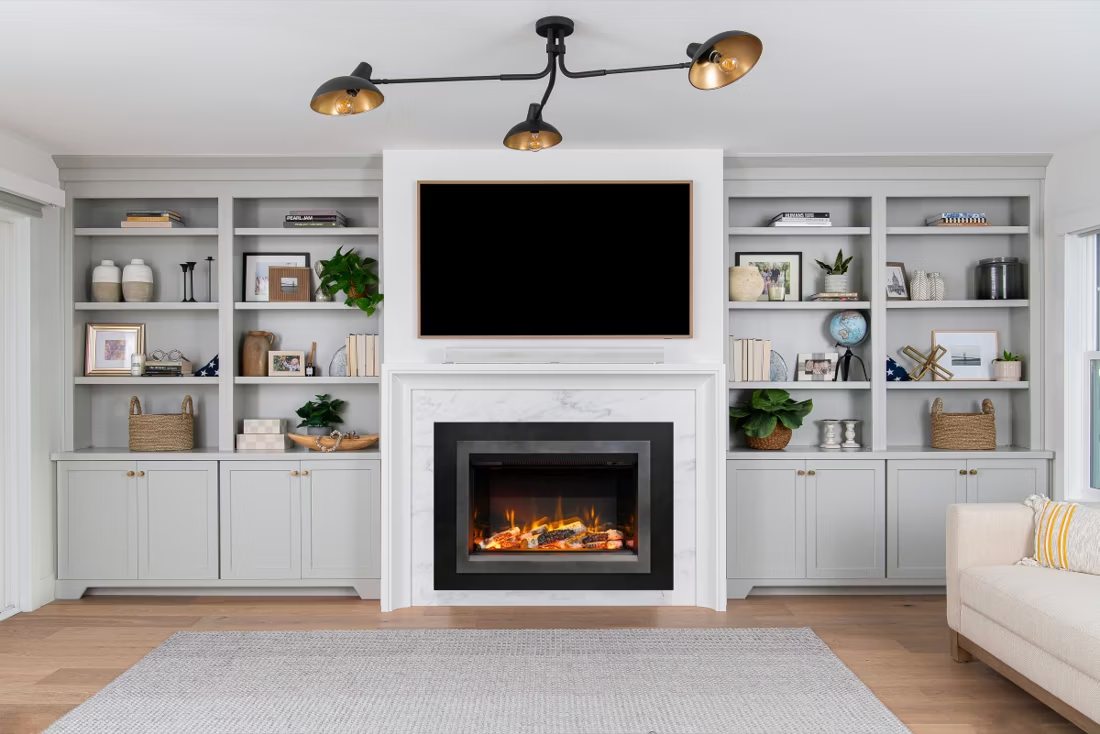
Yes—with an asterisk. Fireplaces are hot and TVs don't like heat. Either put a mantel between them to deflect rising warmth, or choose a fireplace with heat-management technology that creates a cool zone on the wall above—the wall stays around 125 degrees, barely warm, while the room still gets full heat. If you like clean lines and don't want a mantel, heat management is the answer.
Does an electric fireplace need a vent or chimney?
No—that's its superpower. An electric fireplace needs a wall and an outlet, period. No vent pipe, no gas line, no clearances to design around, which is why it works in bedrooms, offices, apartments, and walls where venting a gas or wood unit would be impractical or impossible. Installation is typically the simplest and least expensive of any fireplace type.
Can a fireplace actually lower my heating bill?
Yes—by creating a comfort zone. A furnace heats every square foot of the house just to warm the one room you're in; a gas fireplace on low burns roughly a sixth of the gas a typical furnace does. Set the furnace around 55–60 degrees as a baseline, then heat the rooms your family actually uses. Families who heat this way commonly save $20–$60 a month.
What is an in-home preview and do I need one?
It's a visit where a hearth professional measures your space, confirms the model you picked actually works in your home, and walks the specs—framing, gas line, venting, finish work—before anything is ordered. Some details you just can't know until you see the house. Never make a down payment without one; it's the single most-skipped step that burns buyers.
Find your electric fireplace in Madison County.
Tell us a bit about your home and we'll match you with the right electric fireplace, insert, or stove—plus a free Project Guide & Parts List and a trusted local dealer to install it.
Find Your Fireplace →