
Consistent heat for Johnson County, without the woodpile.
Set-it-and-forget-it warmth for the mild winters of the Arkansas River Valley—from Clarksville to Coal Hill, Lamar, and the hollows below the Ozark-St. Francis National Forests. Find the right pellet stove or insert, and connect with a trusted local dealer.
Every Project Starts From One of These Five Situations
Clean, thermostat-controlled heat for a mild-winter county.
Johnson County sits in the Arkansas River Valley at the southern edge of the Ozark-St. Francis National Forests, in climate zone 3A—a mixed-humid zone with an average winter low around 29°F and a moderate winter heating season overall. That's a fraction of what a place like Duluth, MN sees, but the county still gets real cold snaps, ice storms, and stretches of damp, gray weather where a supplemental heat source earns its keep fast. Oak, hickory, and pine have long been the go-to firewood species here, and plenty of homes around Clarksville and Coal Hill still burn cordwood. Pellet stoves have carved out a place alongside that tradition for homeowners who want steady, controllable heat without splitting, stacking, or hauling wood every winter.
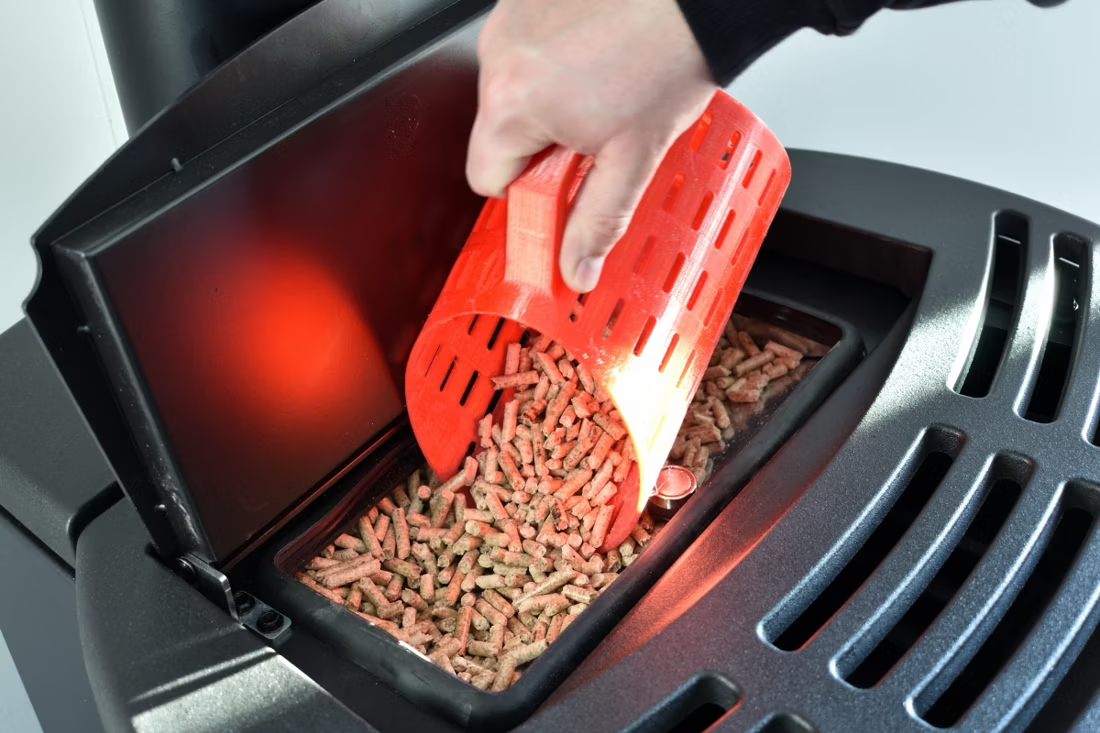
There are no air quality non-attainment issues or burn restrictions in Johnson County, so the appeal of pellet heat here isn't regulatory—it's practical. A hopper-fed stove holds a consistent burn for 24 hours or more, runs on a thermostat, and produces a fraction of the ash of a wood stove. Regional pellet brands like Lignetics and Indeck Energy Services supply farm and feed stores throughout the Arkansas River Valley, so bagged fuel is generally easy to source without driving to Fort Smith or Little Rock. For homes near University of the Ozarks in Clarksville or out along the rural county roads toward Hartman, a pellet stove offers a middle ground between the low fuel cost of wood and the low-maintenance convenience of gas.
Three steps. No salesperson until you're ready.
Tell us about your project
Your zip code, your situation, and the fuel you're leaning toward—or let the answers point you to one.
See what's actually available
The brands dealers within 100 miles genuinely carry—real options, never a catalog mirage.
Get your dealer & Project Guide
A trusted local dealer, plus the free Project Guide & Parts List that names every component of the job.
Frequently Asked Questions
How much does a pellet stove installation cost in Johnson County?
Pellet stove and insert installations in Johnson County typically run in the $3,000 to $6,500 range, depending on the unit, whether it's a freestanding stove or an insert into an existing masonry fireplace, and how much venting work is needed. A pellet insert into an existing fireplace with a straightforward through-wall vent kit tends to land on the lower end. New installations in homes without an existing chimney or hearth—more common in the county's newer construction around Clarksville—run higher once electrical work for the hopper motor and blower is factored in. A local dealer will give you a firm number after seeing your home.
What size pellet stove do I need for my home?
Most Johnson County homes are single-story and moderately insulated, and given the county's mild 3A climate and generally light winter heating needs, a mid-size pellet stove rated for 1,200 to 2,000 square feet covers a typical living area or open-concept main floor without needing a top-tier BTU output. Smaller units work fine for a single room or as supplemental heat alongside a central HVAC system, which is common in the area. Older farmhouses out toward Coal Hill or Lamar with less insulation and higher ceilings may need to size up. A local dealer can size the unit correctly during an in-home visit—oversizing wastes fuel and undersizing leaves you cold on the county's occasional hard freezes.
Where can I find certified pellet stove installers near me?
Look for installers with NFI (National Fireplace Institute) pellet-appliance certification, which confirms training on venting, clearances, and electrical hookup specific to pellet units. Dealers serving Johnson County generally cover Clarksville and the surrounding towns along Highway 64 and Highway 21, with a modest travel charge for more remote addresses out toward Hartman or the county line near the Ozark-St. Francis National Forests boundary. Buying and installing through the same certified dealer keeps warranty coverage intact and avoids the mismatched venting mistakes that come with a general handyman install.
Do I need a permit to install a pellet stove in Johnson County?
If your home is within Clarksville city limits, check with the Clarksville building department before installing—most jurisdictions in Arkansas require a permit for new solid-fuel appliance installations, including pellet units, to confirm venting and clearances meet code. In unincorporated Johnson County, formal building permits for pellet stove installs are less consistently enforced, but a certified installer will still follow NFPA 211 clearance and venting standards regardless—that matters for insurance purposes even where no inspector shows up. A reputable local dealer will tell you plainly whether your address requires a permit.
Pellet stove vs. wood stove—which is right for my Johnson County home?
Wood stoves burn oak, hickory, and pine that are abundant and cheap locally—cutting permits through the Ozark-St. Francis National Forests run $10 to $20 per cord during the May-to-October season—and they work without electricity, which matters during ice-storm power outages. Pellet stoves trade that off-grid capability for convenience: load the hopper, set the thermostat, and walk away for a day or more, with far less ash and no splitting or stacking. For a Johnson County homeowner who wants heat without the physical work of processing wood, or who's supplementing a central system rather than relying on wood as primary heat, pellet is usually the better fit. For rural properties where storm-driven outages are a real concern, many owners keep a wood stove as backup even if pellet is their daily-use unit.
Will my pellet stove work during a power outage?
No—pellet stoves need electricity to run the auger that feeds fuel and the blower that distributes heat, so a standard unit shuts down the moment power drops. This is worth weighing carefully in Johnson County, where ice storms in the Arkansas River Valley can knock out power for a day or more in a bad winter. Some homeowners pair a pellet stove with a small backup generator or battery inverter sized to run the auger motor and control board, which draws relatively little power. If uninterrupted heat during outages is a priority and you don't want to manage a generator, a wood stove is the more reliable backup option—ask a local dealer about combining the two.
Where can I buy pellet fuel in Johnson County?
Bagged pellets from regional suppliers like Lignetics and Indeck Energy Services are typically available at farm and feed stores around Clarksville and along the Highway 64 corridor, sold by the 40-pound bag or by the ton. Buying by the ton ahead of the winter heating season generally saves money over picking up individual bags as needed, and most dealers or feed stores can arrange seasonal delivery. It's worth confirming with your local dealer which pellet brands are in steady local stock—availability in a smaller rural county can be less consistent than in a larger metro market, so some owners stock up early in fall before demand picks up.
What's the best pellet stove for Johnson County's climate?
Given the county's mild 3A climate and average winter low around 29°F, most Johnson County homes don't need the highest-output pellet stove on the market—a mid-range unit from a mainstream brand carried by local dealers will comfortably handle supplemental or zone heating. Where a pellet stove is doing more of the heavy lifting, such as an older farmhouse with less insulation, look for a model with a wide BTU range and a large hopper capacity so it can run longer between refills during the county's occasional multi-day cold snaps. A local dealer can match hopper size and BTU output to your specific square footage and insulation level.
How often does a pellet stove need cleaning and maintenance?
Pellet stoves need more frequent attention than gas but far less than wood—plan on cleaning the burn pot and ash pan every few days to weekly during regular winter use, and a full professional cleaning and inspection of the venting, hopper, and auger system once a year, ideally before the heating season starts in fall. Skipping the annual service is the most common cause of auger jams and uneven burns. Local dealers who sell pellet stoves in Johnson County typically offer this service directly, which also keeps the manufacturer's warranty valid.
Why is my open fireplace making my house colder?
Open fireplaces suck—literally. As the fire burns, it consumes air your furnace already paid to heat and pulls it out through the chimney, so the house is actually colder after the fire goes out than before you lit it. An insert fixes this: it seals the chimney, puts fixed glass across the front, and turns that hole in your house into a real heat source.
What's the difference between an insert and a zero-clearance fireplace?
An insert is a fireplace that slides into a pre-existing wood-burning fireplace—if you don't have one, there's nothing to insert it into. A zero-clearance fireplace is built into a framed wall, which makes it the answer for remodels and new construction. Simple test: existing masonry fireplace means insert; blank or framed wall means zero-clearance.
What is an in-home preview and do I need one?
It's a visit where a hearth professional measures your space, confirms the model you picked actually works in your home, and walks the specs—framing, gas line, venting, finish work—before anything is ordered. Some details you just can't know until you see the house. Never make a down payment without one; it's the single most-skipped step that burns buyers.
Can I install a fireplace myself?
If you're putting a fire in your house on purpose, it's best to work with an expert. Unless you're genuinely experienced in framing, gas line, vent pipe, and the national code on clearances to combustibles, have a professional do it—and ideally the same company that sells you the fireplace, so warranty, service, and liability all live under one roof.
Pellet Brands Stocked Around Johnson County
Manufacturers will point you to the nearest stocking dealer.
Find your pellet stove in Johnson County.
Tell us a bit about your home and we'll match you with the right pellet stove or insert, plus a free Project Guide & Parts List, and connect you with a trusted local dealer serving Johnson County.eyebrow_placeholder
Find Your Fireplace →