
Electric warmth for Johnson County's mild Ozark winters.
No chimney, no venting, no wood to haul—just clean, controllable heat for the Arkansas River Valley's short heating season. Find the right unit and get matched with a trusted local dealer near Clarksville.
Every Project Starts From One of These Five Situations
A short heating season built for supplemental heat.
Johnson County sits in the Arkansas River Valley, wedged between the Boston Mountains to the north and the Ouachitas to the south, with Clarksville as the county seat and about 13,400 residents spread across the county. This is climate zone 3A—mixed-humid—with an average winter low around 29°F and a fairly light overall winter heating load. That's a fraction of what a home in Fargo, North Dakota racks up in a single winter. Cold snaps happen here, sometimes hard ones tied to ice storms rolling off the Gulf, but they're typically short, often followed by a run of 50-degree afternoons within the week.
That kind of climate is exactly where electric fireplaces earn their keep. Most Johnson County homes already have central heat—a furnace, heat pump, or ductless system—and don't need a second combustion appliance running full-time. An electric insert or wall-mount unit adds instant, zone-specific warmth to a living room, sunroom, or the kind of older home near the University of the Ozarks where retrofitting a masonry chimney isn't practical. There's no venting, no gas line, and—depending on the model—no more than a standard 120V outlet or a dedicated 240V circuit for larger built-ins. The honest tradeoff: when an ice storm knocks out power along the First Electric Cooperative or Clarksville Light & Water lines, an electric fireplace goes dark with everything else. Plenty of county households pair one with a wood stove burning local oak or hickory for exactly that reason.
Three steps. No salesperson until you're ready.
Tell us about your project
Your zip code, your situation, and the fuel you're leaning toward—or let the answers point you to one.
See what's actually available
The brands dealers within 100 miles genuinely carry—real options, never a catalog mirage.
Get your dealer & Project Guide
A trusted local dealer, plus the free Project Guide & Parts List that names every component of the job.
Frequently Asked Questions
How much does an electric fireplace installation cost in Johnson County?
Plug-in electric fireplaces—freestanding stoves, mantel packages, or small wall-mount units—typically run $300 to $1,200 installed, since they only need an existing outlet and a few minutes of mounting work. Built-in electric inserts or larger linear wall units that require a dedicated 240V circuit run higher, usually $1,000 to $2,500, once an electrician runs new wiring. Homes converting an old masonry fireplace into an electric insert usually land in the lower half of that range, since there's no gas line or venting to add. A local dealer can give you a firm number after seeing the space and the electrical panel.
Will an electric fireplace actually heat my Johnson County home?
Most electric fireplaces are rated for zone heating—warming a single room of roughly 400 to 1,000 square feet—rather than replacing your central system. Given Johnson County's mild winter average (lows around 29°F and a fairly light overall winter heating load), that's usually plenty. A 1,500-watt insert can comfortably take the edge off a living room on a cold morning without running the furnace, and most units include a thermostat so you're not just burning electricity for ambiance. If you're trying to heat a whole floor or an uninsulated addition, talk to a local dealer about BTU output before you buy—electric heat output is capped by the outlet or circuit it's on.
Do I need a permit to install an electric fireplace in Johnson County?
Plug-in units that use an existing outlet generally don't require a permit. If you're adding a built-in electric fireplace or insert that needs a new dedicated circuit, that electrical work typically does require a permit through Johnson County, and it should be pulled by the licensed electrician doing the wiring—not skipped. Because there's no combustion, no chimney, and no gas line involved, electric installs move through the permitting process faster than wood or gas projects in the county.
Electric vs. wood—which makes more sense for my Johnson County home?
Wood remains a strong option in this part of Arkansas—the Ozark-St. Francis and Ouachita National Forests both issue cutting permits for $10 to $20 per cord during the May-to-October season, and local oak and hickory burn hot and long. Wood also keeps working when an ice storm takes the power out, which happens periodically in the river valley. Electric can't do that—it's entirely dependent on the grid. But electric wins on convenience: no ash, no chimney sweep, no wood stacked in the yard, and instant on-off heat for a room you use daily. Many Johnson County households run electric for everyday ambiance and convenience while keeping a wood stove as backup heat for outages.
Will my electric fireplace work during a power outage?
No—electric fireplaces require grid power (or a generator) to run, full stop. This matters in Johnson County because ice storms moving through the Arkansas River Valley have knocked out power for days at a time in past winters, whether you're on First Electric Cooperative lines in the rural parts of the county or Clarksville Light & Water in town. If backup heat during outages is a priority, an electric fireplace shouldn't be your only heat source—pair it with a wood stove, a propane heater, or a generator plan.
What type of electric fireplace works best in Johnson County's climate?
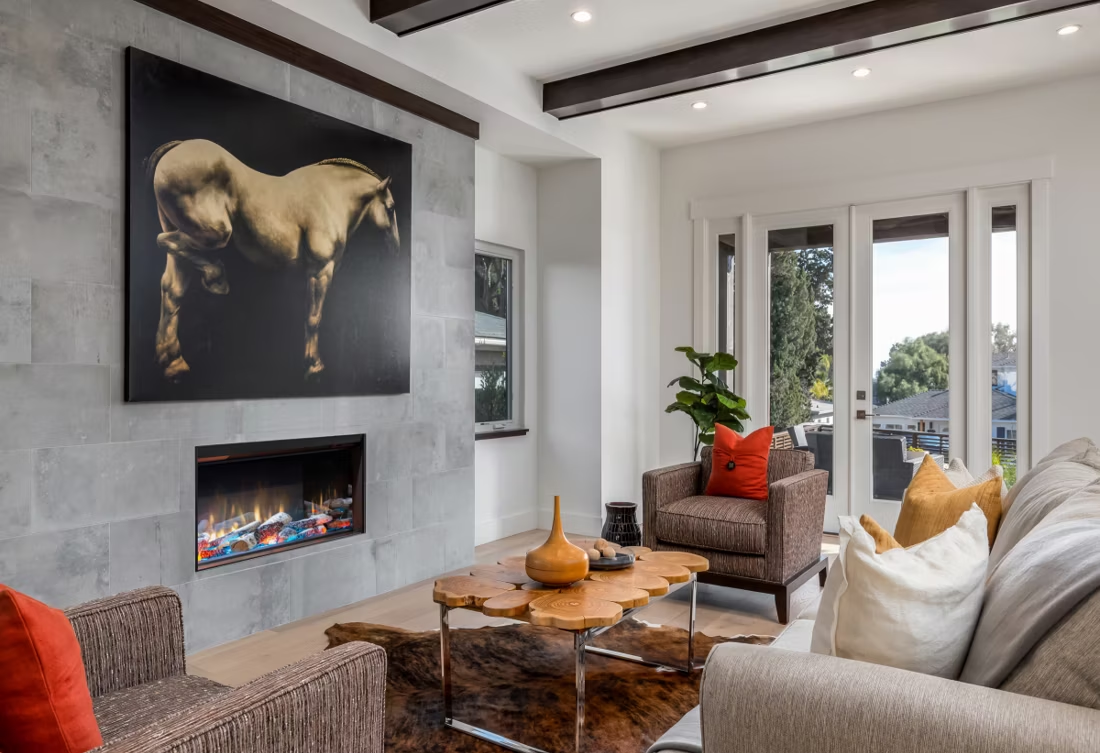
Because this is a mixed-humid climate with a short, mild heating season, there's no need to size aggressively the way you would in a colder region—most Johnson County homes do well with a mid-size insert or wall-mount unit rather than a whole-home electric furnace insert. Linear wall-mount units are popular for newer construction and open-concept living rooms, while inserts that slide into an existing masonry fireplace are the common choice for older homes around Clarksville. Look for a model with a real flame-effect LED and a separate heater switch, so you can run the visual effect on a warm day in April without the heat kicking on.
What's the difference between an electric insert, a wall-mount, and a mantel package?
An electric insert is built to slide into an existing fireplace opening, using the surround you already have—the most common retrofit for older Johnson County homes with an unused masonry fireplace. A wall-mount (or linear) unit hangs directly on the wall like a flat-screen TV and works well in newer construction without an existing hearth. A mantel package pairs a smaller electric firebox with a manufactured mantel surround, giving you a finished fireplace look in a room that never had one. All three plug into a standard outlet unless you choose a larger model requiring a dedicated circuit.
How much does it cost to run an electric fireplace in Johnson County?
Most electric fireplaces draw around 1,500 watts on the heat setting, which costs roughly 15 to 25 cents an hour to run depending on current rates from First Electric Cooperative or Clarksville Light & Water. Running one for a few hours a night through a mild Johnson County winter typically adds $10 to $25 a month to a power bill—far less than running a furnace continuously, since you're only heating the room you're in. The LED flame effect alone, without heat, draws only a few watts and costs pennies to run.
Where can I find a local dealer to install an electric fireplace in Johnson County?
Look for a hearth dealer or licensed electrician with experience specifically in fireplace inserts and built-ins, rather than a general contractor—proper clearances, circuit sizing, and surround fit all matter for a clean install. Big-box stores will sell you a unit, but they won't size your room, check your panel capacity, or handle the permit if a new circuit is needed. A trusted local dealer serving Johnson County will walk your space, recommend the right insert or wall-mount for the room, and coordinate any electrical work needed.
Can I put a TV above my fireplace?
Yes—with an asterisk. Fireplaces are hot and TVs don't like heat. Either put a mantel between them to deflect rising warmth, or choose a fireplace with heat-management technology that creates a cool zone on the wall above—the wall stays around 125 degrees, barely warm, while the room still gets full heat. If you like clean lines and don't want a mantel, heat management is the answer.
Does an electric fireplace need a vent or chimney?
No—that's its superpower. An electric fireplace needs a wall and an outlet, period. No vent pipe, no gas line, no clearances to design around, which is why it works in bedrooms, offices, apartments, and walls where venting a gas or wood unit would be impractical or impossible. Installation is typically the simplest and least expensive of any fireplace type.
How much should I budget for a fireplace?
For an average home—covering the fireplace, the vent pipe, and basic installation—a budget between $3,900 and $5,500 gives you a lot of options across wood, gas, and pellet. By the time you add finish work, gas line, and electrical, the average complete installation lands between $5,000 and $12,000 all-in. In a remodel or new build, a good rule is to put about 2.5% of the total project cost toward the fireplace.
Does a fireplace add value to my home?
On average, a fireplace adds back to the home about the same amount you spent installing it. Add the monthly savings from heating the rooms you actually use instead of the whole house—often hundreds of dollars a year—and the value case is strong before you even count what a fire does for how your family uses the room.
Find your electric fireplace in Johnson County.
Tell us a bit about your home and we'll match you with a trusted local dealer, plus a free Project Guide & Parts List—the exact parts, wiring notes, and recommended installer for your Johnson County electric fireplace project.“,
Find Your Fireplace →