
Consistent, low-maintenance heat for Grant County homes.
From Sheridan out to the timber country along the Ouachita National Forest boundary, pellet stoves give Grant County homeowners thermostat-like heat without a wood pile to manage. Find the right unit and get matched with a trusted local dealer.
Every Project Starts From One of These Five Situations
Steady, thermostat-like warmth without the wood pile.
Grant County sits in south-central Arkansas around Sheridan, in climate zone 3A with an average winter low near 29°F and roughly 3,255 heating degree days a year—well under half the heating load of a place like Duluth, MN or Burlington, VT. That milder profile means pellet heat here usually plays a supporting role: zone heat for a den or shop, backup warmth during the ice storms that periodically knock out rural power lines, or a cleaner alternative to a smoky open fireplace, rather than the sole line of defense against a brutal winter.
Plenty of Grant County households already burn oak, hickory, and pine cut under permit from the Ouachita National Forest, so the shift to pellets is often about convenience rather than unfamiliarity with biomass heat—no splitting, no seasoning, no creosote buildup to manage. Lignetics and Indeck Energy Services pellets are both sold through dealers serving the county, and with no local wildfire-smoke or non-attainment restrictions to navigate, burning here is straightforward. I match Grant County homeowners with a trusted local dealer and send over a free Project Guide & Parts List so you're working from a real plan, not a big-box guess.
Three steps. No salesperson until you're ready.
Tell us about your project
Your zip code, your situation, and the fuel you're leaning toward—or let the answers point you to one.
See what's actually available
The brands dealers within 100 miles genuinely carry—real options, never a catalog mirage.
Get your dealer & Project Guide
A trusted local dealer, plus the free Project Guide & Parts List that names every component of the job.
Frequently Asked Questions
How much does a pellet stove installation cost in Grant County?
Most pellet stove installs in Grant County run in the $3,000 to $6,000 range, with the spread driven mainly by venting—a simple through-wall vent kit sits at the low end, while a Class A chimney chase or a run through an exterior wall of a brick home costs more in labor and materials. Because pellet stoves need a standard 110V outlet nearby for the auger and blower motor, homes without existing wiring near the intended stove location may need a small electrical add-on. A local dealer will give you a firm number after seeing the room and the wall or chimney you're venting through.
What size pellet stove do I need for my Grant County home?
Because Grant County's winters are mild relative to the northern part of the pellet-stove map—3,255 heating degree days is closer to a Gulf South number than a Great Lakes one—most homes here don't need a maxed-out hopper or top-tier BTU output. A small to mid-size unit (rated for 1,000-1,800 sq ft) handles supplemental heat for a living area or den in most Grant County houses, and it's rare to need the largest whole-home models sold for places with harsher, longer winters. A local dealer will still walk your space and factor in ceiling height and insulation before recommending a specific unit.
Where can I find a certified pellet stove installer near me?
Look for NFI (National Fireplace Institute) certified technicians—that credential covers proper venting, clearance-to-combustible spacing, and electrical hookup for the auger and blower. Because Grant County is a smaller, rural county, the dealer network is thinner than in a metro area, so expect installers to also cover neighboring counties; a short travel charge for installs outside Sheridan proper is common. Sticking with a dealer who both sells and installs the stove keeps warranty coverage intact and avoids the code issues that come with a handyman-style install.
What's the difference between a pellet stove and a pellet insert?
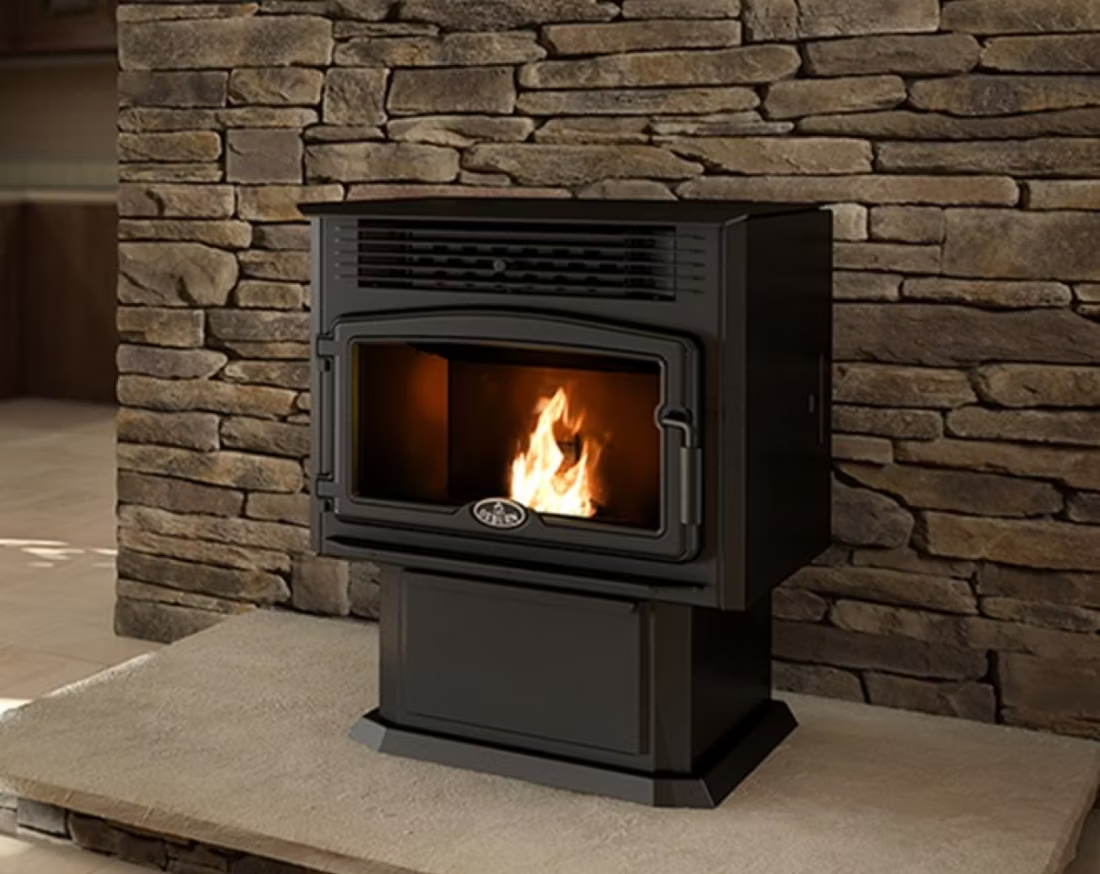
A pellet stove is a freestanding unit that sits on a hearth pad and vents through a wall or existing chimney—it can go almost anywhere in a room with the right clearances. A pellet insert is built to slide into an existing masonry fireplace opening, turning a fireplace you already have into an efficient, thermostat-controlled heat source. For Grant County homes with an older wood-burning fireplace that's rarely used, an insert is often the more practical upgrade since it reuses the existing chimney; homes without a fireplace already in place are better suited to a freestanding stove.
Do I need a permit to install a pellet stove in Grant County?
Most new stove installations require a building permit through the Grant County building department, and any added electrical circuit for the stove's auger and blower may need its own inspection sign-off. There's no local air-quality curtailment program in Grant County the way there is in wildfire-prone parts of the West, so you won't run into burn-ban restrictions tied to inversions or smoke advisories—pellet stoves burn clean enough that this is rarely a concern here regardless. Most local dealers handle the permit paperwork as part of the installation.
What's the best pellet stove for Grant County's climate?
Given the mild winter lows here (averaging around 29°F), most Grant County homeowners do fine with a mid-range unit rather than the largest hopper-and-BTU combination on the market—save that for households running the stove as true primary heat. Look for a unit with a reliable auto-ignition system and a hopper that holds at least a day's worth of fuel for convenience. Both Lignetics and Indeck Energy Services pellets are available through dealers serving the county, and either burns well in most standard-grade stoves; premium hardwood blends made from oak and hickory—species already common in local firewood—tend to run slightly cleaner than softwood-heavy pellets.
How often does a pellet stove need to be cleaned and serviced?
Plan on emptying the ash pan every few days during regular use and a deeper cleaning of the burn pot weekly, since ash buildup is the main thing that causes a pellet stove to run inefficiently or shut down. A full professional service—checking the auger motor, exhaust fan, gaskets, and venting—is recommended once a year, typically before the start of heating season. Compared to a wood stove and chimney, pellet stove maintenance is lighter, but it's not zero-maintenance the way a gas unit is.
Where can I buy pellet fuel in Grant County?
Lignetics and Indeck Energy Services both supply pellets to dealers serving Grant County, and pricing typically falls in line with regional mid-South rates—usually somewhere in the $250 to $300 per ton range, though it moves with hardwood content and season. Buying a full winter's supply (roughly one to two tons for a supplemental-heat household) before cold weather sets in is the easiest way to avoid scrambling if a dealer runs low mid-season.
Pellet stove vs. wood stove—which is right for my Grant County home?
Wood stoves run on cordwood you can cut yourself—plenty of Grant County residents already do, with permits through the Ouachita National Forest running $10 to $20 per cord—and they keep working without electricity, which matters when an ice storm knocks out power. Pellet stoves need electricity to run the auger and blower, so they're not a true outage backup unless paired with a battery or generator, but they're far less hands-on day to day: no splitting or stacking, just loading a bag of pellets and setting a thermostat. Given Grant County's relatively mild heating load, either fuel works well as supplemental heat—the choice usually comes down to whether you want the convenience of pellets or the storm-proof independence of wood.
What's the difference between an insert and a zero-clearance fireplace?
An insert is a fireplace that slides into a pre-existing wood-burning fireplace—if you don't have one, there's nothing to insert it into. A zero-clearance fireplace is built into a framed wall, which makes it the answer for remodels and new construction. Simple test: existing masonry fireplace means insert; blank or framed wall means zero-clearance.
Why is my open fireplace making my house colder?
Open fireplaces suck—literally. As the fire burns, it consumes air your furnace already paid to heat and pulls it out through the chimney, so the house is actually colder after the fire goes out than before you lit it. An insert fixes this: it seals the chimney, puts fixed glass across the front, and turns that hole in your house into a real heat source.
Does a fireplace add value to my home?
On average, a fireplace adds back to the home about the same amount you spent installing it. Add the monthly savings from heating the rooms you actually use instead of the whole house—often hundreds of dollars a year—and the value case is strong before you even count what a fire does for how your family uses the room.
What is an in-home preview and do I need one?
It's a visit where a hearth professional measures your space, confirms the model you picked actually works in your home, and walks the specs—framing, gas line, venting, finish work—before anything is ordered. Some details you just can't know until you see the house. Never make a down payment without one; it's the single most-skipped step that burns buyers.
Pellet Brands Stocked Around Grant County
Manufacturers will point you to the nearest stocking dealer.
Find your pellet stove in Grant County.
Tell us a bit about your home and we'll match you with the right pellet stove or insert, plus a free Project Guide & Parts List—the exact parts, vent kit included, and a trusted local Grant County dealer to install it.
Find Your Fireplace →